


At the Brno Exhibition Centre, Maker Faire Brno 2025 gathered hobbyists, makers, students, schools, makerspaces, and companies. Robotics, drones, 3D printing, electronics, and space research projects dominated. Visitors saw everything from ideas and prototypes to finished products. Alongside ran GameDev Connect for game development, featuring Czech studios and indie creators.
Jiří „Kocyns“ Kočař from Brno designs print-friendly car foldable models with suspension, flying propellers with planetary gearboxes, magnetic toys, and educational mechanisms (Wankel engine, gearboxes). He publishes the models as STL files with instructions on Printables and MakerWorld, where he has gathered awards and high download numbers. You can find his models at printables and makerworld.


At this year’s MF, he is also presenting a new addition to his portfolio: RC versions of race cars on the CyberBrick platform, which is backed by the 3D printer manufacturer Bambu Lab.
CyberBrick is a modular system for 3D printing and electronics that combines printable plastic parts with ready-made electronic modules (motors, sensors, cells, control units). These can be easily connected and set in motion. The system is designed to support community creation and design sharing: it is accompanied by the manufacturer’s MakerWorld platform, where creators can upload their models compatible with CyberBrick modules.

Ender 3 NG (E3NG) is a project by Jakub Průcha that transforms original Ender 3, Pro, and v2 3D printers into a modern CoreXY system with significantly higher precision and frame rigidity. The conversion retains most of the original parts but enables performance comparable to a new generation of 3D printers—including faster and cleaner printing. The project is very popular within the community, and many users see it as a way to “revive” their old Enders. The author also presented his own extension for multi-color/multi-material printing with filament switching and corresponding slicer profiles. The subsequent version, Virtu E3, pushes the concept further.


Virtu E3 is the second generation of the Ender 3 CoreXY conversion from RH3D, building upon the E3NG. It aims for higher rigidity, quieter operation, and faster, more precise printing with a lighter printhead, while maximizing the use of original parts. The project is currently in a non-public testing phase.


It’s hard to imagine an active Czech electronics hobbyist here not coming across two staples of the Czech scene—Jiří Bekr, who has his own YouTube channel with lots of large and demanding comparative tests of all sorts of things and who did a live broadcast from the Maker Faire.


Right next to them was Ampérák, who runs a channel with hundreds of videos on repairing and modifying anything that runs on electricity.
A perfect fit for his portfolio is the conversion of two old tractors to electric drive. They ferried visitors around the stands in front of the building from morning till evening.


Next to him was the “Blacksmith from a Fairytale” stand, which brought a mobile forge and a small outdoor smithy. On site, he demonstrated the basic process: heating steel in the forge, shaping on the anvil (drawing out, bending, tapering to a point), punching holes, and quenching. For this, he used common tools—hammers, tongs, punches, bottom tools for the hardy hole—and various semi-finished products for quick demonstrations.
Under supervision, visitors could try their hand at forging a small item: a nail, a pendant, a keychain, or a small knife. The point was to show that the basics of blacksmithing can be mastered even on a “shoestring” with simple equipment, and that the difference between a semi-finished product and a finished piece is dozens of precise hammer blows.


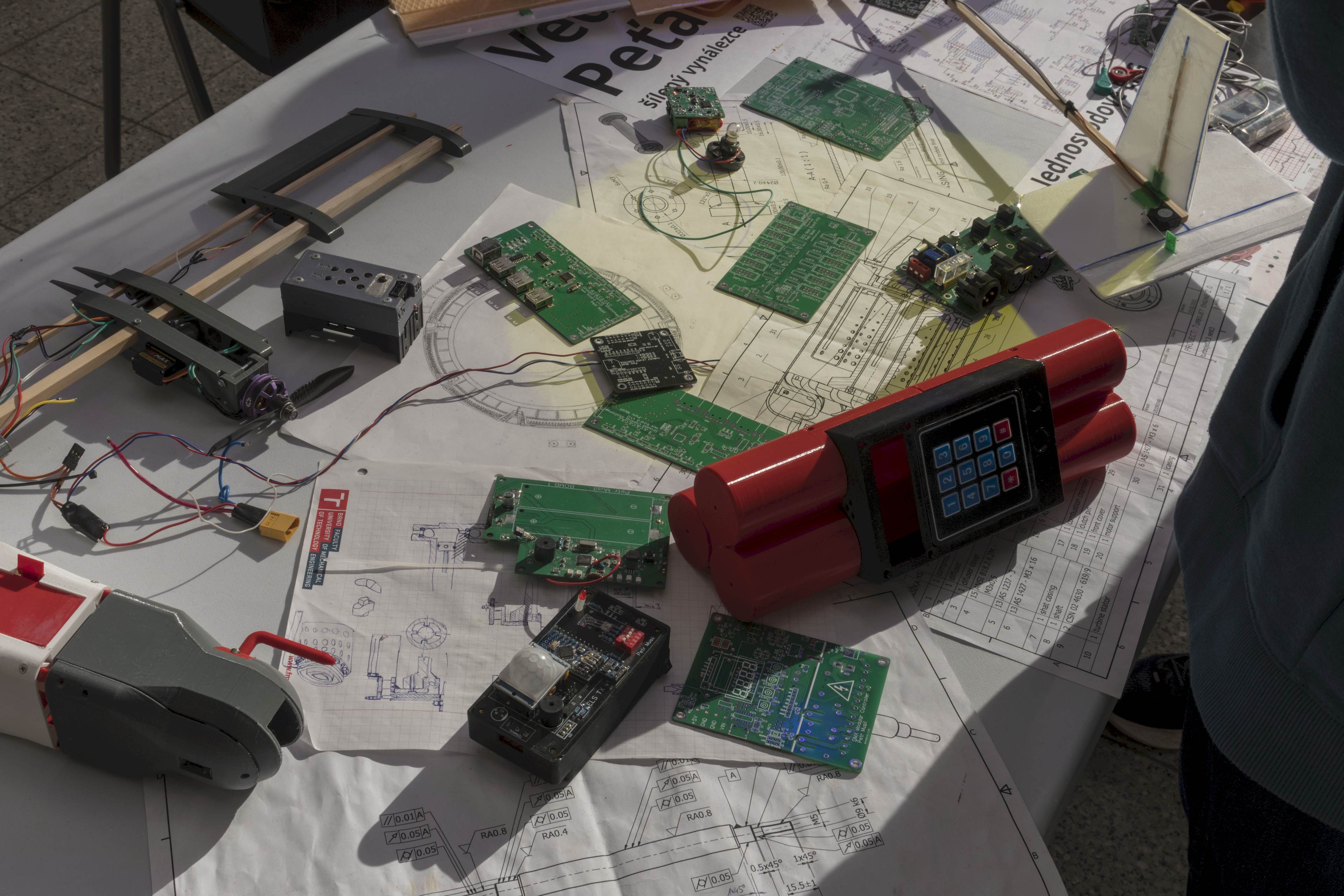
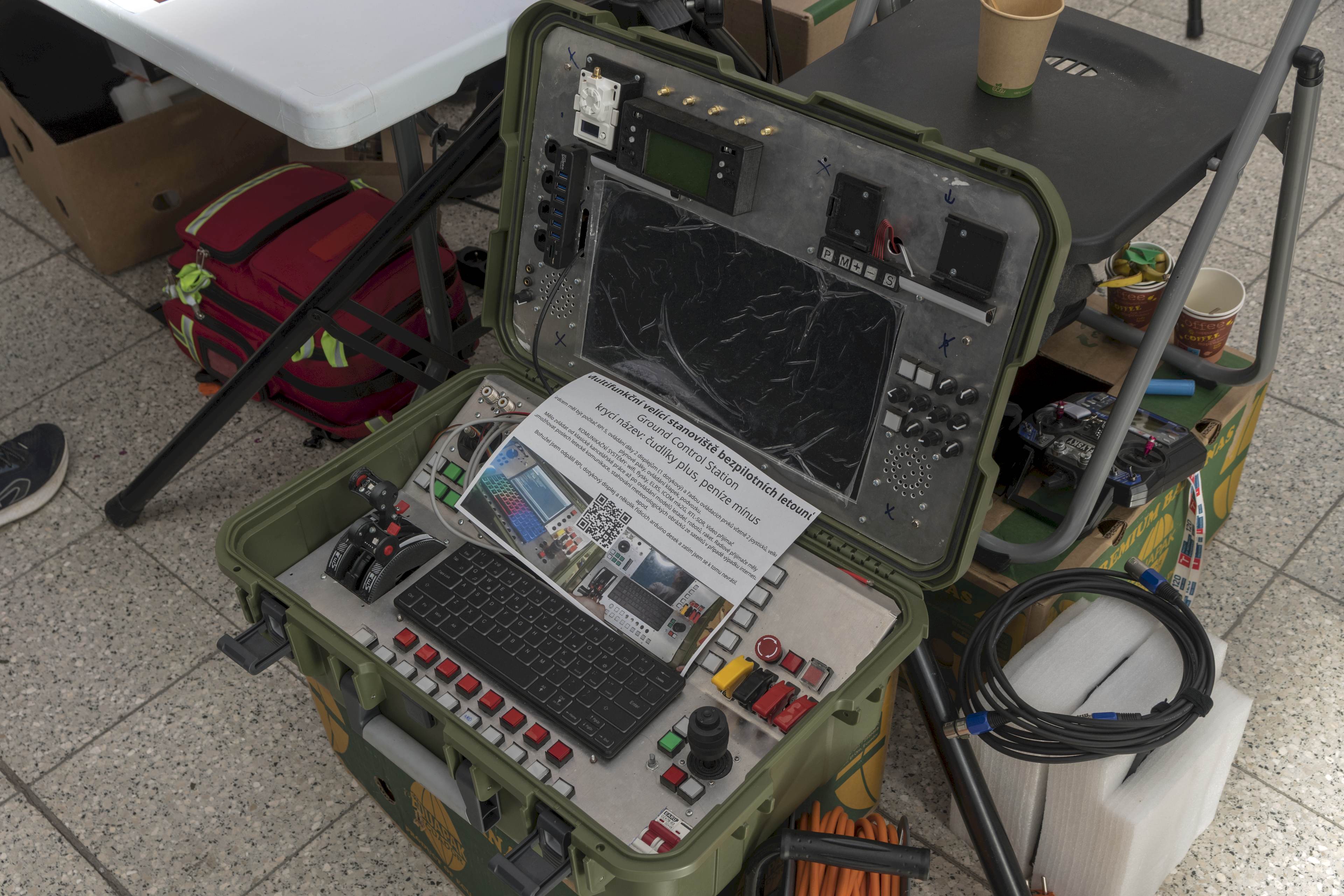
Vědátor Peťa (Brainiac Peťa), whom Czech community might also know from social media and YouTube, exhibited his home technical projects and inventions built on Arduino, utilizing 3D printing and commonly available components. His stand was focused on fun experiments that often combine electronics, mechanics, and a bit of mischief—for example, a motorized shopping cart, small drones, artifacts from Stargate, or various “crazy” creations that sometimes even bang or catch fire.
All this to show that even from ordinary parts, one can build functional and original devices at home, and to motivate visitors not to be afraid to experiment and create in their own way.



Another locally well-known YouTuber, Peca—who also enjoys building fun contraptions that don’t necessarily make sense—demonstrated a charger that uses Peltier modules, heated from below by a set of candles and cooled from above by water, to charge a mobile phone. He says a single charge using tea lights would cost about two euros.

Base48 is a Brno-based hackerspace, a community workshop that has been operating since 2010. It brings together people interested in electronics, programming, 3D printing, and other technologies. Members share tools, knowledge, and projects, creating an environment for collaborative learning and experimentation. You could try your hand at activities like lockpicking. At Maker Faire, they regularly present examples of their work and explain how the hackerspace functions and how anyone who enjoys creating can get involved.


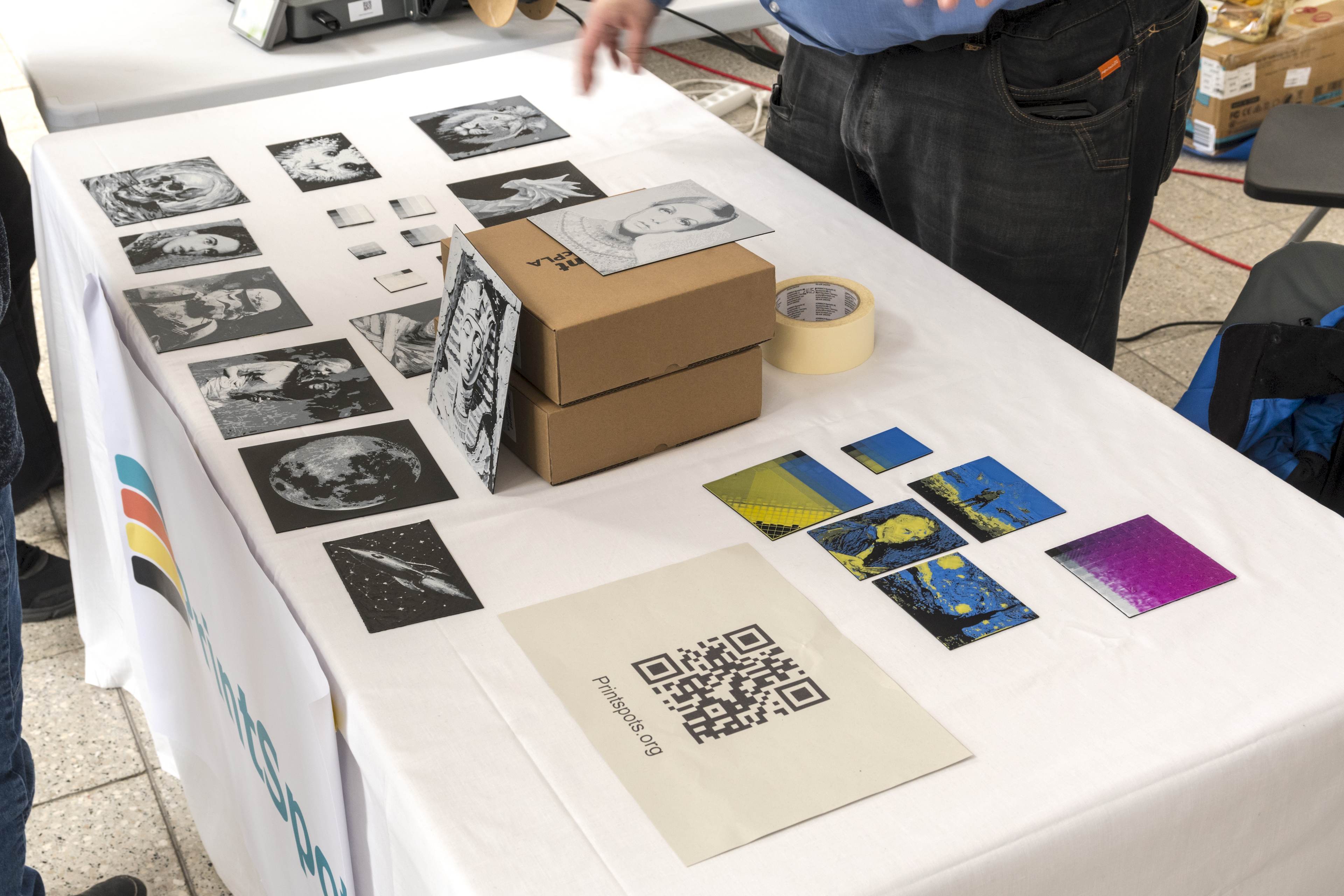
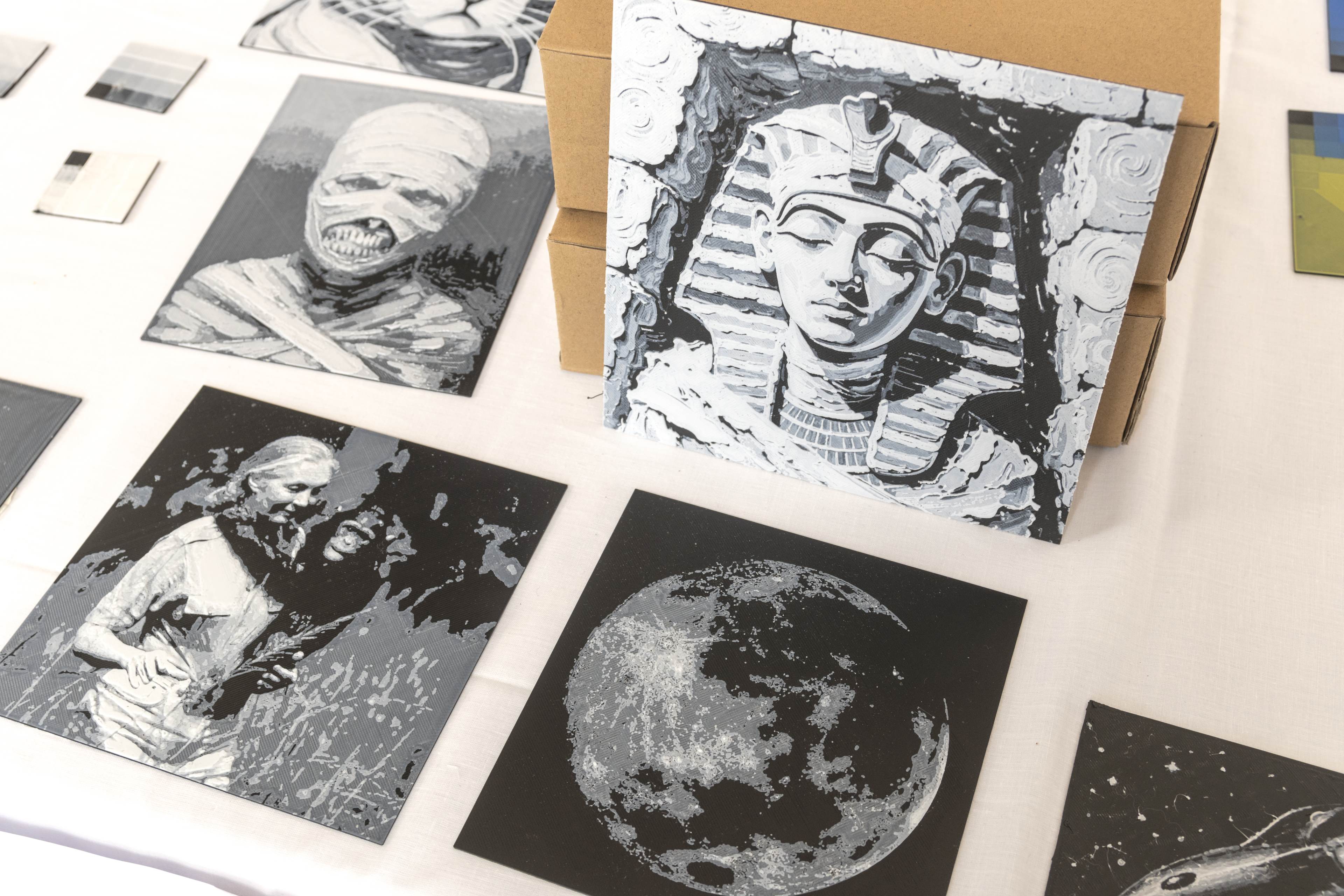
The Printspots project demonstrates a process in its early development stages, showing how to create relief “pictures” with multiple colors or shades of grey on a standard FDM 3D printer without special hardware. It utilizes a standard 3D printer, at least two filament spools, and software procedures for splitting a design into layers/segments.
The stand showcased data preparation (printing a calibration table, converting a 2D template into a height relief, color/channel separation), G-code generation in a standard slicer, and practical printing demonstrations. The samples also illustrate the differences between single-color, multi-color, and “grayscale” approaches, including the resolution limits imposed by the nozzle, layer height, and the precision of retractions/filament switching.


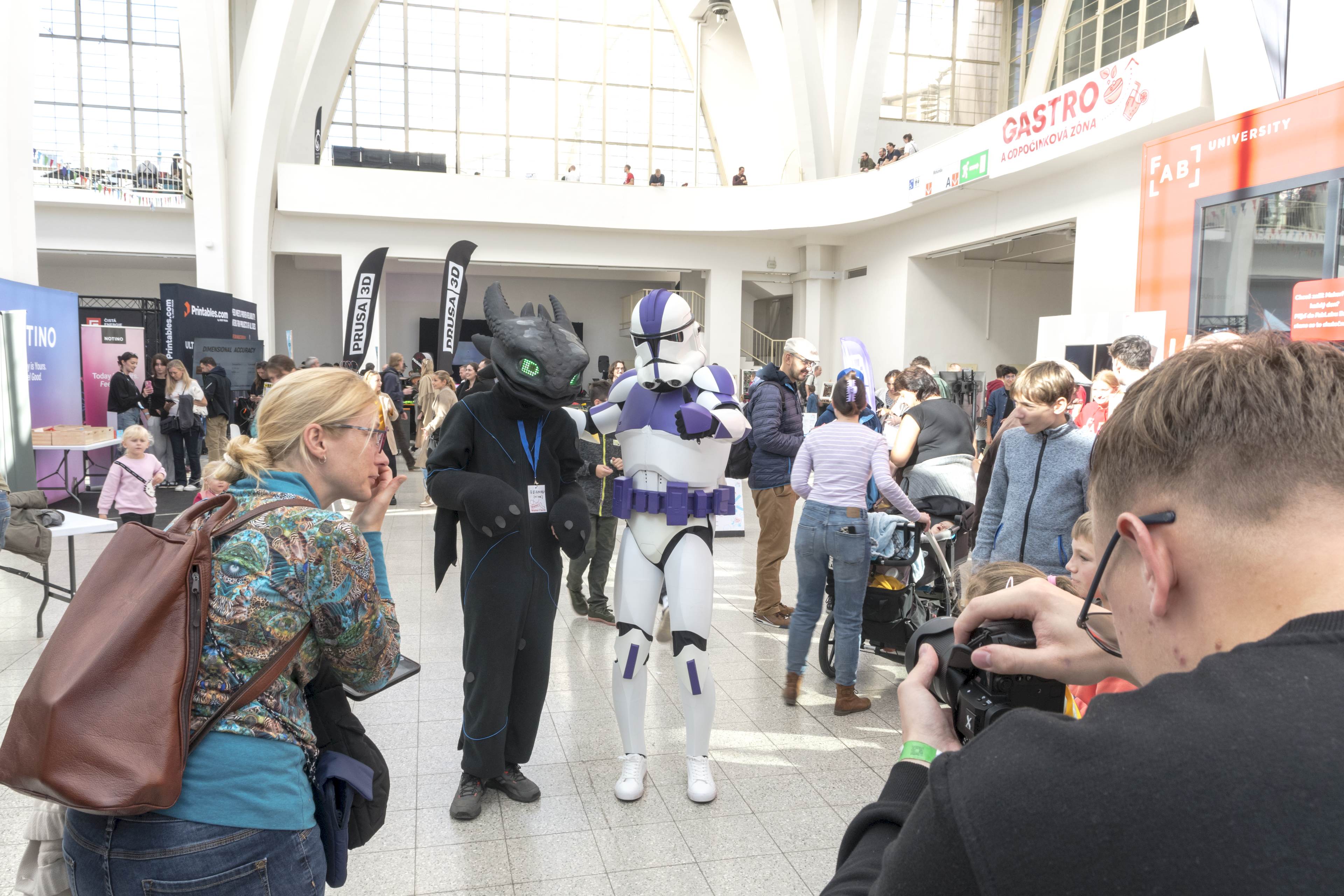
In the hall, technical projects intersected with cosplay. Next to Toothless with glowing eyes, a clone trooper from Star Wars in full 3D-printed and painted armor was posing for photos.

From the same vein was a replica of the Ghostbusters car in a homebrew style—a conversion of an old van with accessories made from commonly available parts, tubes, and lights. A fan project that shows that even an iconic movie car can be brought to life through DIY and imagination.

Maker Martin Hladík demonstrated a wireless control system for a model railway with two model layouts, one of which could be operated in automatic mode using a PLC, and the other only in manual mode.

TrackVision is a project that connects model railways with modern technologies and interactive elements. The authors presented a functional model railway layout where trains can be controlled via a mobile phone, you can try buying a ticket at an interactive terminal, or experience a ride in virtual reality that transports you directly “onto the tracks”.
Part of the exhibition were also complementary smart features—a voice assistant, sensors, and automation, which show how traditional model building can be expanded with elements of smart home and game interaction. The project originated in Slovakia and focuses on how to transfer classic railway modeling into the digital age.

Another maker, Jakub Průcha, showcased his robust, self-designed high-speed printers and other projects.

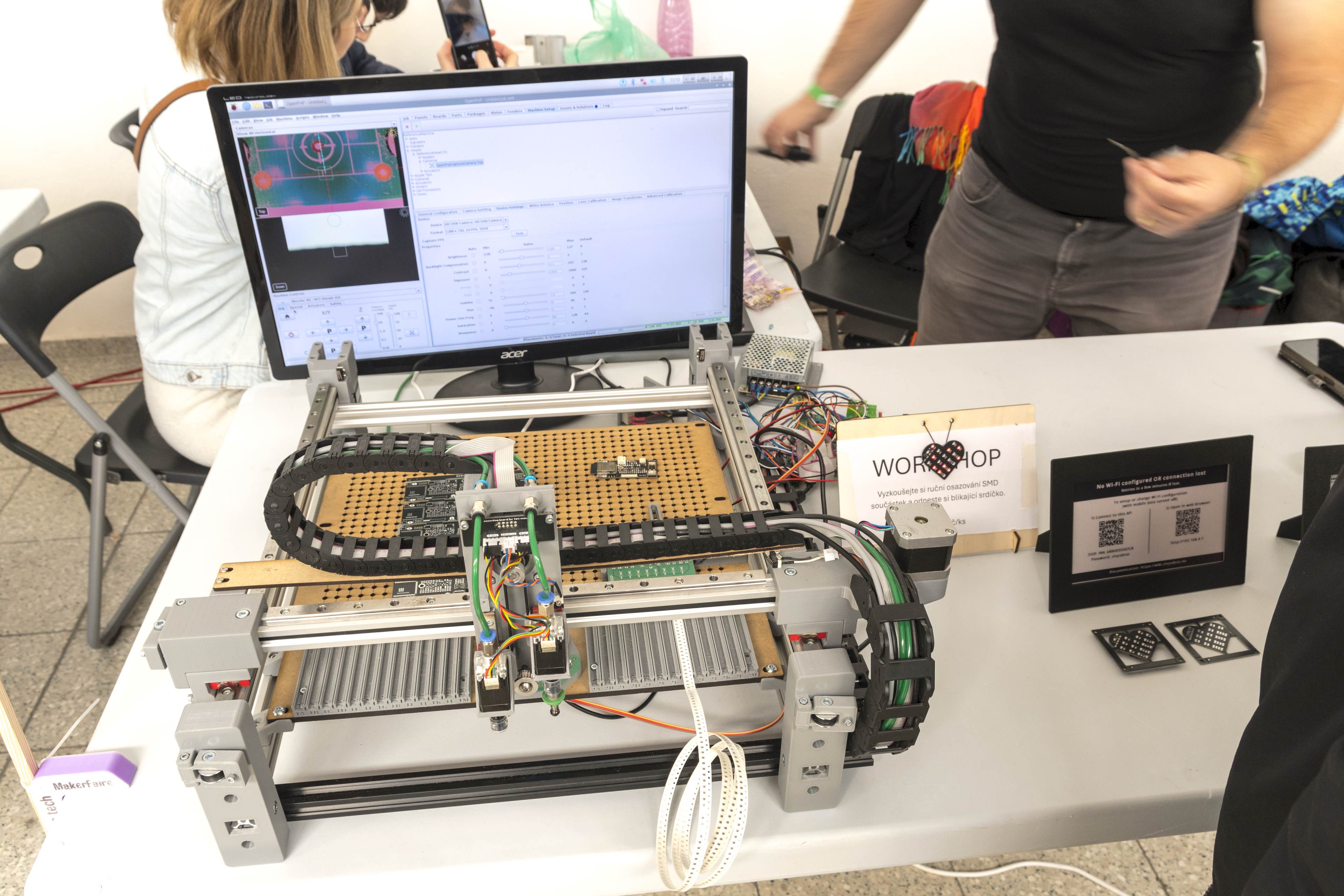
A PCB pick-and-place machine built from 3D-printed parts uses a vacuum gripper and precise positioning. The design is optimized for easy assembly and maintenance. Its positioning system lets it place components on the board repeatedly and with high accuracy.
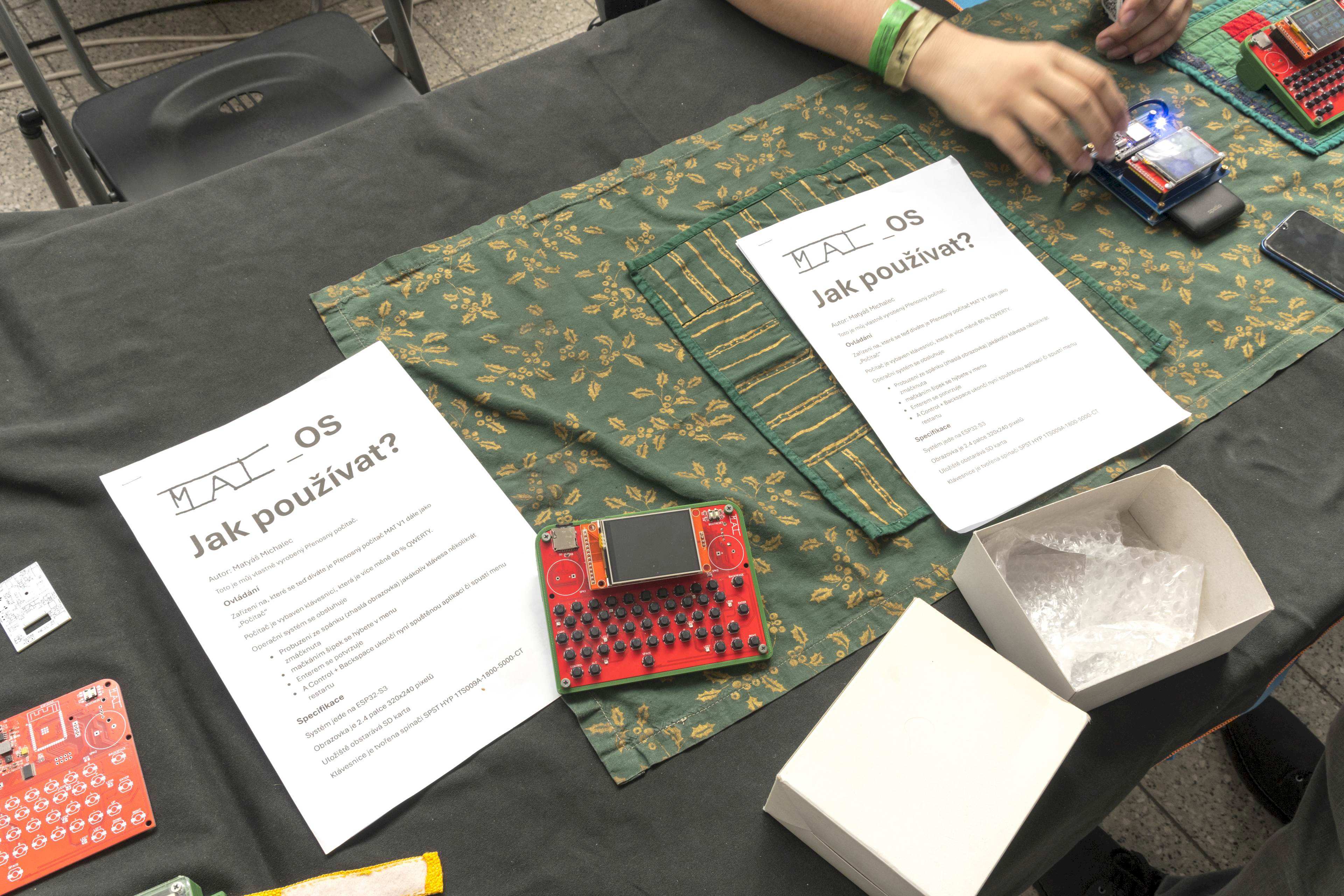
Matyáš Michalec exhibited his portable computer based on ESP32, which he completely designed and built himself—from the hardware to his own operating system—to show that even an individual can create a functional and aesthetically refined device.
At his stand, he had a functional prototype that visitors could touch and try out. The presentation focused on the technical solution, software development, and practical construction experience. Since last year’s event, the project has moved forward—new features have been added to the system and design modifications have been made to the device.

Open Footwear is a personal project by a designer with over twenty-five years of experience in the footwear industry. The goal is to search for a new, more sustainable approach to shoe manufacturing—combining digital design tools, running practice, and environmental consideration.
The stand featured prototypes of shoes designed with an emphasis on an open approach: freely available designs, the possibility of custom modifications, and the combination of traditional craftsmanship with modern technology. The project showed that even footwear can be created as open-source—with an emphasis on local production and an individual approach instead of mass production.


The project “The Art of Restoration: the Secrets of the Restorer’s Craft” was focused on the repair and conservation of furniture, gilding, and plaster surfaces. At the stand, they demonstrated traditional restoration techniques and explained to visitors how to recognize when an item can be repaired by oneself and when it’s better to seek a professional. It showed work with materials—for example, mixing glue-based adhesives, applying shellac polishes, or preparing bases for gilding. The entire project showed that restoration combines manual craft, an eye for detail, and knowledge of historical technologies.

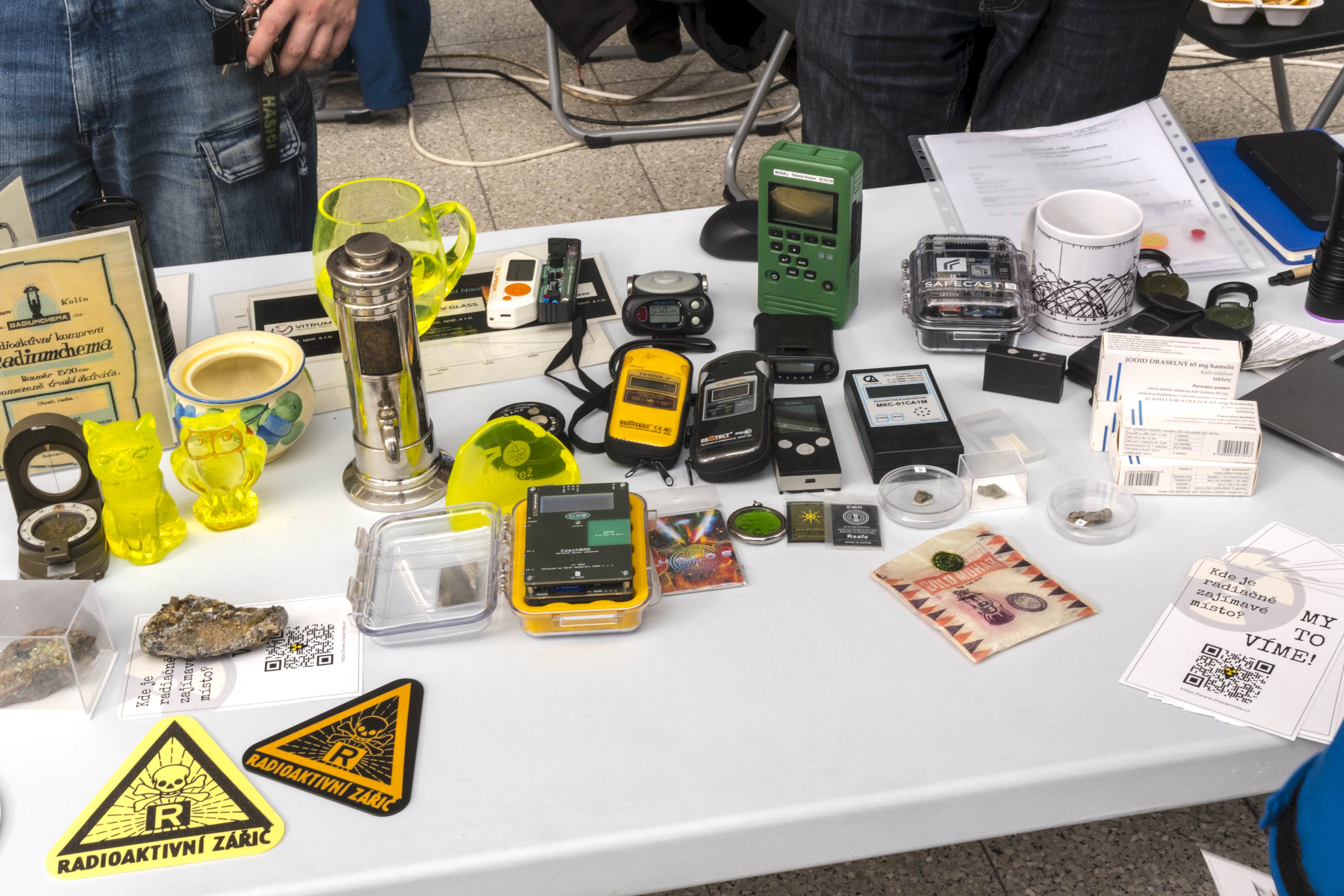
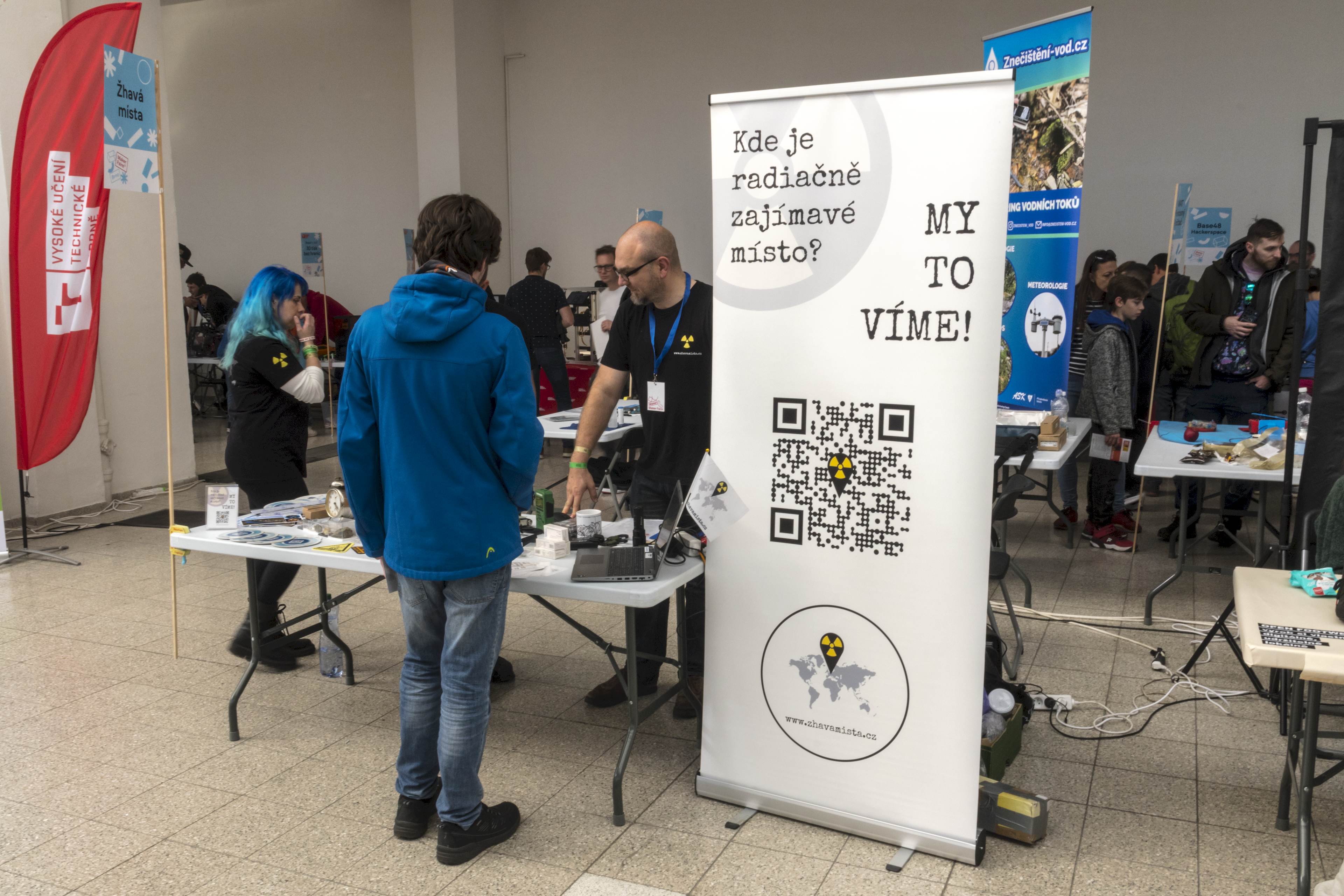
The team behind “Radioactive Sites in the Czech Republic” collects and maps locations with higher natural radioactivity and remnants of uranium mining. At their booth, they showed portable dosimeters, live demonstrations of radiation measurement, and an interactive map with the data they’ve gathered. Visitors could try measuring the radioactivity of everyday objects and learn how this kind of data is handled in the field and analyzed for research.

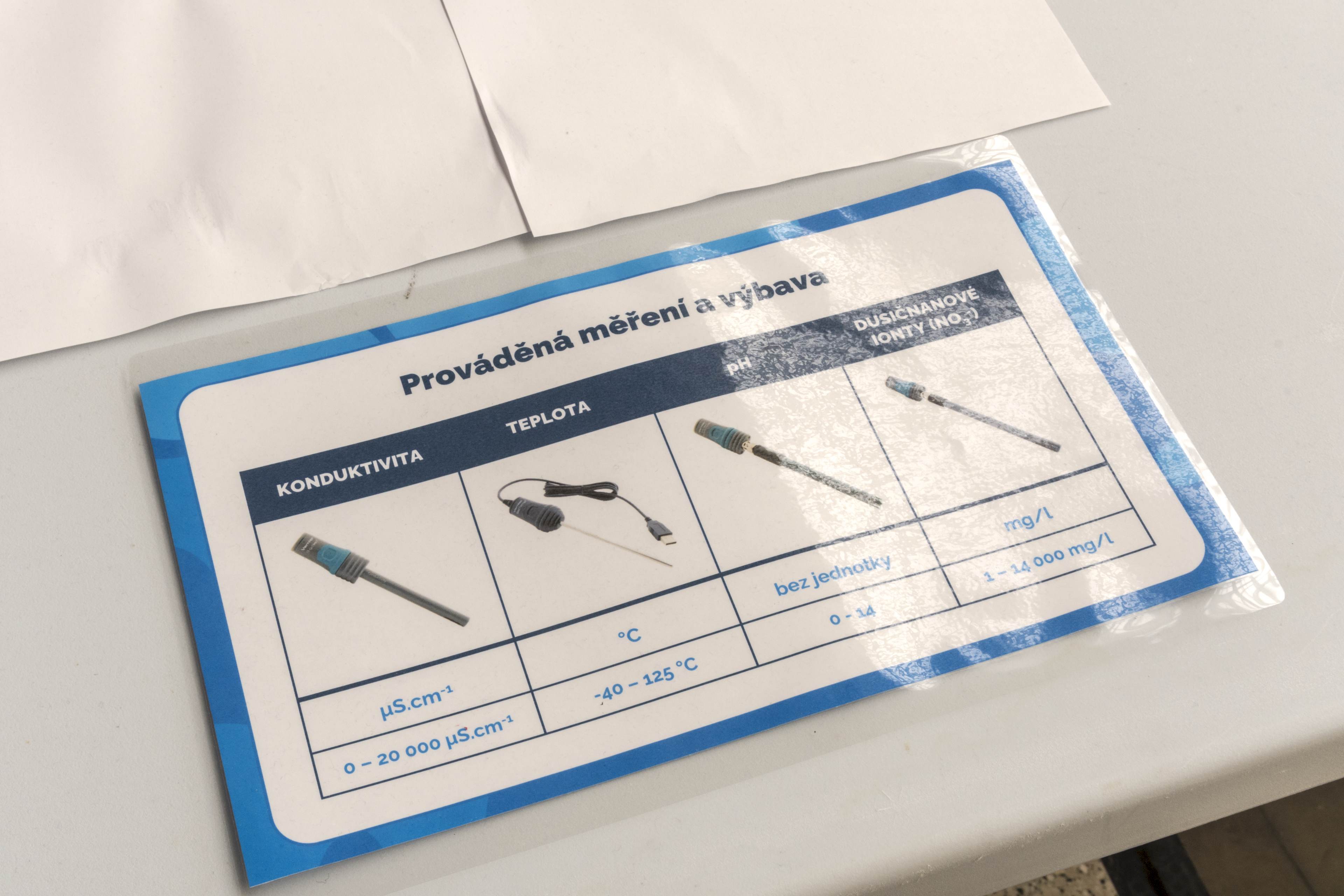
“Water Under Control” focused on measuring and assessing water quality using sensors and open hardware. Visitors could check out a portable monitoring station that tracks pH, conductivity, temperature, and dissolved oxygen in real time. The team also showed ways to visualize the data and how the system can be used in schools, labs, or for environmental monitoring.

⠀


