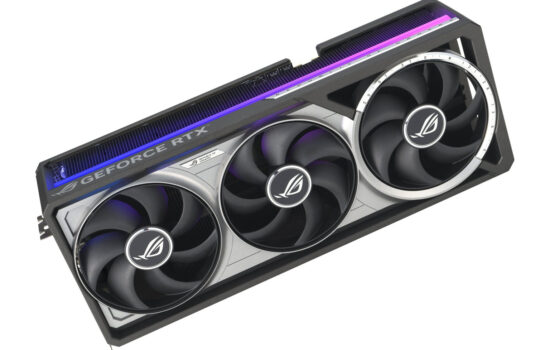
Nvidia skipped the RTX 4050 in its GeForce RTX 40 lineup, leaving only the aging RTX 3060 and 3050 as budget options. The new GeForce RTX 5050 replaces both and adds modern features and standards. It’s the weakest—but also the cheapest—Blackwell-architecture card and can run every game at lower resolutions without without major sacrifices in image quality. That said, its price still makes the RTX 5060 the more attractive choice.
Final thoughts
We never saw the release of the RTX 4050 in the previous generation. Nvidia stopped the desktop GPU lineup at the RTX 4060. So it’s clearly a positive development that the RTX 50 series brings back the xx50-tier card with the RTX 5050.
The drawbacks seen with the RTX 5060 are even more pronounced with the cheaper RTX 5050. The better-equipped model already struggled in some scenarios when ray tracing, DLSS, and frame generation were combined. And it appears that in extreme settings—where 8 GB of memory isn’t enough (ray tracing, DLSS, and frame generation together)—the RTX 5050 experiences significant frame rate drops down to single digits more often than the RTX 5060. A smaller L2 cache could be the reason behind this.
Similar to the RTX 5060, these are typically game settings that are already barely playable due to the limited GPU performance. While frame rates between 28–35 fps may look relatively smooth, there’s noticeable input lag, making it likely you’ll lower detail settings and probably enable DLSS anyway.
With a bottom-tier card, you can hardly expect more than Full HD gaming. And in that space, the card had virtually no issues. The only real exception is the demanding path tracing in Cyberpunk. In RT Overdrive mode, even DLSS set to Performance won’t help at 1080p. Frame generation also causes highly inconsistent performance. But with hybrid ray tracing (RT Medium or RT Ultra) combined with DLSS, it’s generally playable.
In Satisfactory running on Unreal Engine, issues only started showing up at 1440p when DLSS and frame generation were enabled. At 4K with high details, the game is unplayable due to both memory and GPU performance limitations, with frame rates dropping to single digits. Even DLSS can’t help unless you reduce visual details.
But expecting the cheapest model to deliver maxed-out settings with DLSS in every game under all conditions is unrealistic. In the most demanding games, just lowering detail settings slightly and enabling DLSS will still give you playable results with decent image quality. You can’t really call the RTX 5050 outright unusable—the main concern is its price-to-performance ratio.
When the budget doesn’t allow for anything else
GeForce RTX 5050 prices start 260 EUR. For the factory-overclocked RTX 5050 Gaming OC from Gigabyte, you’ll pay about 40 EUR more, with store listings starting at roughly 295 EUR. The MSRP of base RTX 5060 models in our regional market is 329 EUR including VAT, and with the dollar weakening, they can already be found a few euros cheaper. The actual price gap is therefore significantly smaller than the performance difference.
How appealing the RTX 5050 becomes will depend on future pricing trends. Right now, with an MSRP of 250 USD, the RTX 5050 isn’t cost-effective purely in terms of price/performance—the 8GB RTX 5060 typically delivers 30–40% more performance across various titles, while costing only about 50 USD more. So for roughly a 20% price premium, the RTX 5060 gives you about a third more performance.
The RTX 5050’s performance relative to the 12GB RTX 3060 and 8GB RTX 4060 varies by title. It clearly outperforms the RTX 3060, except in scenarios where its own memory limit is reached. But even then, the RTX 3060 struggles because its GPU core can’t usually handle used detail levels. When compared to the RTX 4060, the RTX 5050 is sometimes faster and sometimes slower.
Under these circumstances, it clearly makes sense to spend a bit more on the RTX 5060. The RTX 5050 only makes sense if the RTX 5060 is out of budget and you’re considering something like an RTX 3050 or RTX 3060. Or if you’re just looking for the cheapest card offering the latest RTX 50-series features—modern video encoders, updated display output standards, or DLSS frame generation. In that respect, the RTX 5050 clearly outclasses the older RTX 3050 and RTX 3060.
Gigabyte RTX 5050 Gaming OC: A compelling card built on a weak foundation
Focusing purely on the build quality and operating characteristics of the RTX 5050 Gaming OC from Gigabyte, , it’s hard to find anything to fault. The cooler is significantly oversized, keeping both the GPU and memory at low temperatures. Its generously oversized cooler keeps GPU and memory temperatures low, while noise levels remain well below those of typical budget cards—approaching premium-card quietness—all for just a €30 premium.
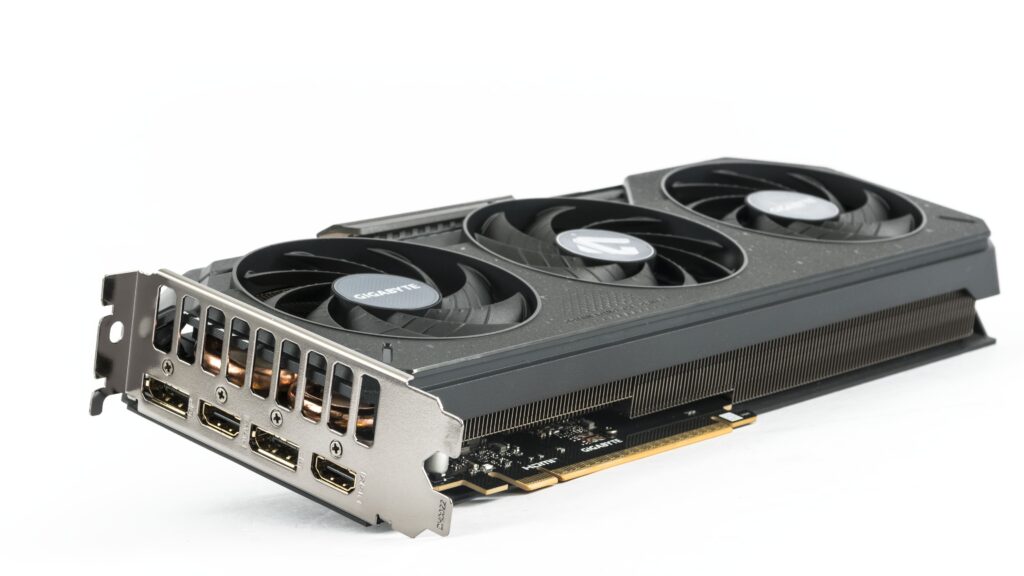
Thermal performance is excellent, and the same goes for acoustics. Coil whine is almost imperceptible, and the card’s design—within the limits of this price segment—is quite decent. The only thing some users might miss is RGB lighting.
The problem is that the RTX 5050 itself isn’t a good value next to the RTX 5060. And with a small price gap between the two, even that modest extra cost further undermines the RTX 5050’s already weak price-to-performance ratio.
English translation and edit by Jozef Dudáš
Pros and Cons
+ Performance sufficient for playing most games at 1080p on ultra or high settings
+ Capable of 1440p gameplay if you reduce graphics quality modestly and turn on DLSS
+ Low power consumption (though higher than the 115W RTX 4060)
+ Boasts newer technologies and expanded functionality compared to the RTX 3050/3060
+ Outstanding acoustics paired with low operating temperatures
+ Quiet cooler with ample headroom
+ Factory overclocked
+ Allows power‐limit adjustments to push overclocks further
− The price should have been lower
− Noticeable performance drop compared to the RTX 5060
− Price difference doesn’t align with performance gap
− Significantly worse price-to-performance ratio than the RTX 5060
− Only 8 GB of VRAM
− In older systems without PCIe 5.0, operating at ×8 bandwidth loses a few percent performance
Nvidia GeForce graphics cards are available in the Datacomp e-store.

⠀