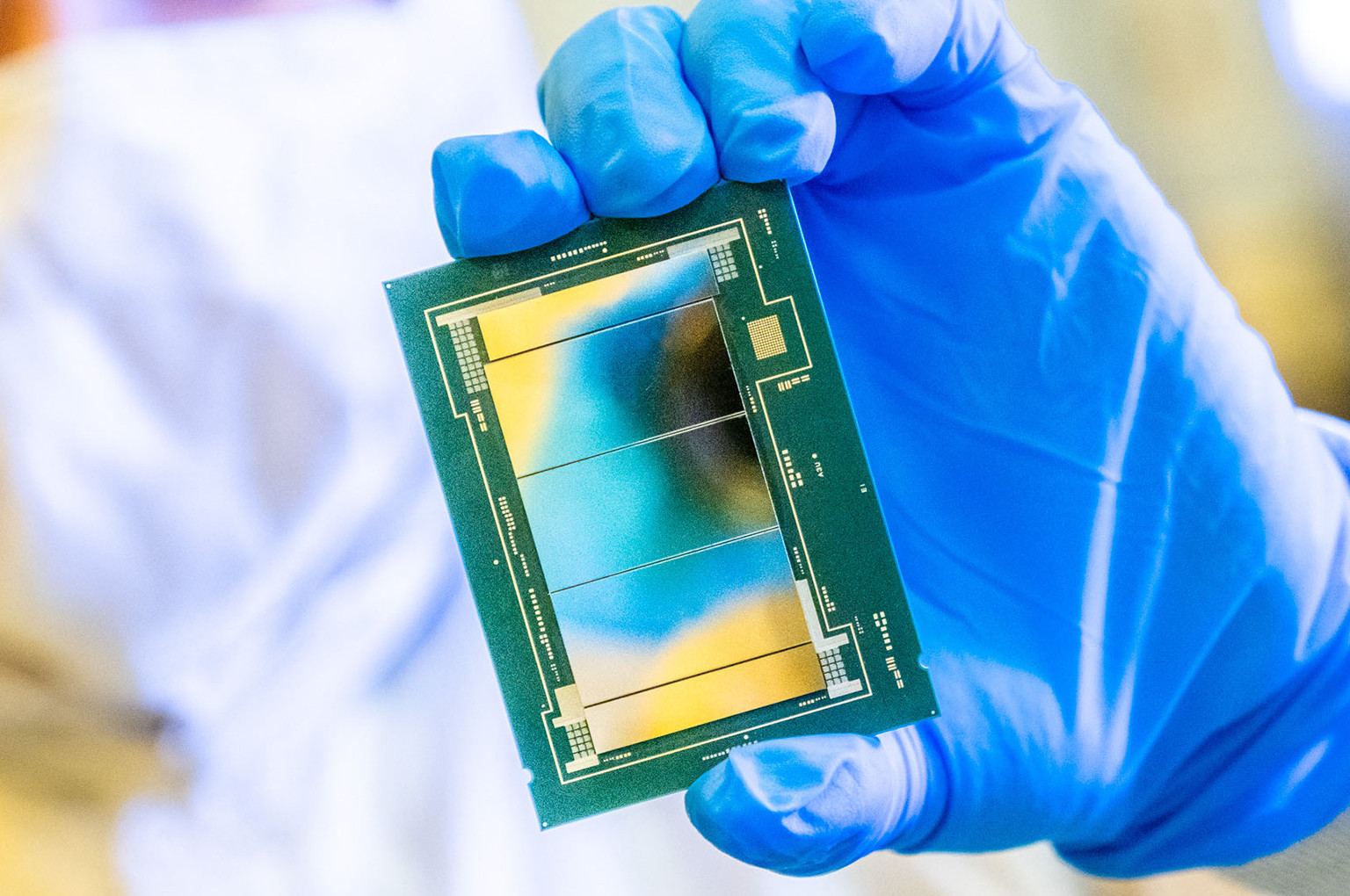
We are slowly approaching the release of Intel’s new generation of desktop CPUs, dubbed Arrow Lake. These will bring new, significantly improved CPU architectures, advanced chiplet design and also the new LGA 1851 platform. Last but not least, it will also replace the failure-prone Raptor Lake processors, hopefully improving reliability a lot. Now, we’ve learned from leakers when these CPUs will come out, as well as the detailed specs.
This information came from two sources. The parameters of the processors were published both by a leaker with the nickname Jaykihn, who appeared on Twitter in June and who in a short time revealed a large amount of data about the upcoming Intel processors, apparently from insider sources, and in addition to this also from the BenchLife website, which may thus be a second independent source. The information likely comes from the parameters of QS samples, whose clock speeds and other characteristics match those of production units.
It should be said that this leak only covers a subset of the processors, namely those with “stepping B0”. As with Raptor Lake, this indicates a version with a maximum of 8 P-Cores + 16 E-Cores. The CPU chiplet with 8+16 cores is manufactured on TSMC’s 3nm node (it should be the basic N3B version). Intel will later start selling another version with a 6+8 core CPU chiplet, which will be manufactured in the company’s in-house fabs on a 2nm node (Intel 20A).
Release date
BenchLife also provides a date when the first Arrow Lake desktop processors will start selling. It’s supposed to be in October, more precisely October 10 (and this should be the actual launch day, which means the day of availability in stores). In this first wave, however, only 125W K-series models (or probably also their KF versions without iGPUs) will go on sale accompanied by boards based exclusively on Z890 chipset. The K and KF models will be unlocked for overclocking again, the other SKUs (launching later) will not.
Models
You can see an overview of the models that will be released in the October date in the table below. However, the leaks give a little more detail on the boosts of the processors. The most powerful Core Ultra 9 285K model with 8+16 cores will have a maximum E-Core boost of 4.6 GHz. The maximum clock speed of the big P-Cores will vary depending on the number of cores loaded. With 3–8 P-Cores active, the maximum will be 5.4 GHz. With a maximum of two, the clock speed can be 5.5 GHz (Turbo Boost 2.0), or 5.6 GHz on the preferred cores (which means when using Turbo Boost Max 3.0) and finally the processor has Thermal Velocity Boost, which will allow up to 5.7 GHz on one or two cores, but this will be subject to the temperature not exceeding a certain level.
Judging by this, it appears that Arrow Lake will have all the varying types of turbo boost known from previous generations of Intel processors. So, in the end, perhaps the clock management overhaul we kind of expected from the Lion Cove architecture didn’t happen, and the different boost types weren’t combined into one united mechanism with more flexible operation that would include temperature dependency and preferred cores.
The slightly cheaper Core Ultra 7 265K model will have 8+12 cores and will no longer use Thermal Velocity Boost (which will be the privilege of Core Ultra 9 models, as it was with Core i9), but only Turbo Boost Max 3.0 (the use of preferred cores). The clock speed of the E-Cores will reach the same a maximum of 4.6 GHz, but the maximum clock speed of the P-Cores will be reduced by 200 MHz. A maximum of 5.2 GHz will be possible on 3–8 P-Cores. On 1–2 cores, a maximum of 5.4 GHz will be possible, or 5.5 GHz on preferred cores.
Next comes the Core Ultra 5 245K, which has 6+8 cores, and this time there are none of the extended boost modes. The clock speed of the E-Cores is also 4.6 GHz (also for all cores), the maximum clock speed of the P-Cores is 5.0 GHz for 3–6 active cores and 5.2 GHz for 1–2 cores.
All three K models have full-fat integrated GPU configuration with 512 shaders (64 EU / 4 Xe Cores). The first two models run at 2.0 GHz, but in the case of Core Ultra 5, the clock speed is reduced to 1.90 GHz. There will also be a Core Ultra 7 265KF model, which will be the same as the 265K but without the integrated graphics core, and the Core Ultra 5 245KF model, which in turn will be the 245K with the GPU disabled.
Arrow Lake will also bring an upgrade in memory support, the processors will officially support DDR5-6400.
| Model | Cores P+E/threads |
P-Core Base |
P-Core Boost |
E-Core Base |
E-Core Boost |
GPU shaders | GPU clock speed | TDP / PL1 | Node |
| Core Ultra 9 285K | 8+16/24 | 3,7 GHz | 5,7 GHz | 3,2 GHz | 4,6 GHz | 512 | 2,00 GHz | 125 W | TSMC 3nm |
| Core Ultra 7 265K | 8+12/20 | 3,9 GHz | 5,5 GHz | 3,3 GHz | 4,6 GHz | 512 | 2,00 GHz | 125 W | TSMC 3nm |
| Core Ultra 7 265KF | 8+12/20 | 3,9 GHz | 5,5 GHz | 3,3 GHz | 4,6 GHz | – | – | 125 W | TSMC 3nm |
| Core Ultra 5 245K | 6+8/14 | 3,6 GHz | 5,2 GHz | 4,2 GHz | 4,6 GHz | 512 | 1,90 GHz | 125 W | TSMC 3nm |
| Core Ultra 5 245KF | 6+8/14 | 3,6 GHz | 5,2 GHz | 4,2 GHz | 4,6 GHz | – | – | 125 W | TSMC 3nm |
Unfortunately, we do not yet have confirmed maximum turbo power consumption figures for the production models. Preliminary information based on ES samples indicates that the 125W Core Ultra 245K and 245KF models will have a PL2 of 159 W, and the Core Ultra 7 265K (and KF) model will have it set to 250 W. The highest-performance Core Ultra 9 285K model will probably have a maximum turbo power consumption of 250 W on those boards that use the “Performance Profile”. But boards that would use “Extreme Profile” can set its maximum power consumption up to 295 W.
Reduction in clock speeds of big cores
This seem to confirm that Arrow Lake will achieve lower clock speeds than Intel was able to achieve with its 7nm node. This will limit the performance a bit. The P-Cores, which determine single-threaded and gaming performance, are supposed to have a 14% higher IPC, according to Intel, but since the clock speed will be lowered, the overall performance increase over Raptor Lake/Core 14th Gen will be lower. Fortunately, the clock of the E-Cores is a few hundred MHz higher and their IPC is also supposed to increase dramatically (more than the P-Cores), so multi-threaded performance may improve a lot even though Lion Cove P-Cores have lost their HT capability.
- Tip: Intel’s new P-Core: Lion Cove is the biggest change since Nehalem
- Tip: Skymont architecture analyzed: Intel little core outgrows the big?
Further models: 65W and 35W series
The leaked information also covers some of the specs for the 65W mainstream locked models and the low-power T models, but not all of them – there’s no information on the models that will use Intel’s 2nm chiplet. There is one exception: the inexpensive 6+4 core Core Ultra 5 225 (and its derived model Core Ultra 5 225F). These SKUs will have both versions with a 2nm chiplet and versions with a 3nm B0 chiplet. So it will be exactly like the Core i5-13400(F) and Core i5-14400(F), this processor is obviously their successor.
- Tip: Not every Core i5-13400F is the same: Raptor (B0) vs. Alder (C0) Lake
- Tip: The Core i5-14400F analysis is complete. Rare stepping (C0) tested
This will allow Intel to make use of various low-binning and/or partially defective silicon, including pieces with defects in the GPU part, as the 225 will have a cut down GPU with only 2 Xe Cores / 256 shaders, at 1.80 GHz. Its P-Core clock speed will be 4.7 GHz for 3–6 cores and 4.9 GHz for 1–2 cores, while the E-Cores will have a maximum clock speed of 4.4 GHz.
Next there should likely be Core Ultra 5 235 (similar to the i5-14500, has a GPU with 384 shaders) and Core Ultra 5 245 (similar to the i5-14600, has a GPU with 512 shaders) SKUs, but they are not yet confirmed. These will have 6+8 cores and a 2nm CPU chiplet, but their other specs are not yet clear. The maximum turbo power consumption should reportedly be set to 121W for all Core Ultra 5 SKUs with 65W TDP, but yet again this is not confirmed so far. At the bottom of the range, there should also be Core Ultra 3 215 (or maybe 205, and there will likely also be an F variant without a GPU) with 4+4 cores and a 256-shader GPU and a maximum power consumption of 76W. Again, there are no parameters for it yet, as it will use a 2nm chiplet.
For the higher-end 65W Core Ultra 7 and Core Ultra 9 models, we already know the parameters, because they will have a 3nm stepping B0 chiplet. The higher model Core Ultra 9 285 has 8+16 cores. For the E-Cores, the maximum clock speed of 4.6 GHz will still be maintained, even with all cores active. However, there will be boost complications again for the P-Cores. The basic maximum boost for 3–8 P-Cores is 5.3 GHz and for 1–2 cores a clock speed of 5.4 GHz is possible (Turbo Boost 2.0) or 5.5 GHz on preferred cores and up to 5.6 GHz using Thermal Velocity Boost. So the P-Core clock speed is only reduced by 100 MHz compared to the 125W version.
A cheaper alternative will be the Core Ultra 7 265. It has 8+12 cores. For the E-Cores, the maximum is again 4.6 GHz even for all 12 cores active. For P-Cores, the clock speed for 3–8 cores is a maximum of 5.1 GHz, for 1–2 cores 5.2 GHz or 5.3 GHz on preferred cores (Turbo Boost Max 3.0).
| Model | Cores P+E/threads |
P-Core Base |
P-Core Boost |
E-Core Base |
E-Core Boost |
GPU shaders | GPU clock speed | TDP / PL1 | Node |
| Core Ultra 9 285 | 8+16/24 | 2,5 GHz | 5,6 GHz | 1,9 GHz | 4,6 GHz | 512 | 2,00 GHz | 65 W | TSMC 3nm |
| Core Ultra 7 265 | 8+12/20 | 2,4 GHz | 5,3 GHz | 1,8 GHz | 4,6 GHz | 512 | 2,00 GHz | 65 W | TSMC 3nm |
| Core Ultra 7 265F | 8+12/20 | 2,4 GHz | 5,3 GHz | 1,8 GHz | 4,6 GHz | – | – | 65 W | TSMC 3nm |
| Core Ultra 5 245 | 6+8/14 | ? | ? | ? | ? | 512 | ? | 65 W | Intel 20A |
| Core Ultra 5 235 | 6+8/14 | ? | ? | ? | ? | 384 | ? | 65 W | Intel 20A |
| Core Ultra 5 225 | 6+4/10 | 3,3 GHz | 4,9 GHz | 2,7 GHz | 4,4 GHz | 256 | 1,80 GHz | 65 W | TSMC 3nm/Intel 20A |
| Core Ultra 5 225F | 6+4/10 | 3,3 GHz | 4,9 GHz | 2,7 GHz | 4,4 GHz | – | – | 65 W | TSMC 3nm/Intel 20A |
| Core Ultra 3 205 | 4+4/8 | ? | ? | ? | ? | 256 | ? | 65 W | Intel 20A |
| Core Ultra 3 205F | 4+4/8 | ? | ? | ? | ? | – | – | 65 W | Intel 20A |
The graphics core is unchanged from the 125W models – it has 512 shaders at 2.0 GHz. But the 265 model will have a Core Ultra 7 265F version without the GPU. The maximum turbo power consumption of all these three models should be 182 W (this is preliminary information). As you would expect, compared to the 125W models, the base clock speeds of both the P-Cores and E-Cores in these processors have been reduced quite a bit. However, the reduction in PL2 from 250W to 182W may well limit the ability to boost to the claimed maximums on all cores simultaneously as well.
Part of the 35W line-up
In addition, the parameters of two low-power models that use stepping B0 have been leaked. These processors will apparently again be labeled as T series and have a 35W TDP. But as you likely know, this won’t mean much, because the maximum turbo power consumption (which in practice is the value that really matters) will keep being much higher than the TDP, it should be 112W according to the not yet verified information on Arrow Lake PL2s.
The highest-performance 35W model (Core Ultra 9 285T) has 8+16 cores. For the E-Cores the maximum clock speed will be 4.6 GHz, but only up to 12 active cores, for 13 or more E-Cores it will be only 4.5 GHz. For P-Cores, there will no longer be Thermal Velocity Boost. The base maximum boost for all P-Cores active is 4.7 GHz, 5.1 GHz is possible for 3–6 cores, and 5.3 GHz is possible for 1–2 cores (Turbo Boost 2.0) or 5.4 GHz on preferred cores. Thus, with the exception of the all-core boost, the P-Core clock speed is reduced by 300 MHz compared to the 125W version. However, the processor will probably be limited mainly by the 112W PL2 value when boosting multiple cores, and will probably not be able to reach the maximum all-core boost in many tasks.
The cheaper Core Ultra 7 265T has 8+12 cores. For the E-Cores, the maximum is again 4.6 GHz for 1 to 8 cores, but only 4.5 GHz for 9 to 12 active cores. For P-Cores, the maximum is 4.6 GHz for 7–8 cores, 5.0 GHz for 3–6 cores, 5.2 GHz for 1–2 cores or 5.3 GHz on preferred cores (via Turbo Boost Max 3.0). So maximum single-threaded performance will also be 300 MHz below the 125W version, but multi-threaded performance will likely also be seriously limited by the power consumption limit.
The base clock speeds of these two models are only 1.4 GHz, or 1.5 GHz for the P-Cores, and only 1.2 GHz for the E-Cores (the base clock speeds are so low because they are supposed to allow running at these clock speeds with all cores active at a power consumption that is not exceeding TDP, i.e. 35 W here).
| Model | Cores P+E/threads |
P-Core Base |
P-Core Boost |
E-Core Base |
E-Core Boost |
GPU shaders | GPU clock speed | TDP / PL1 | Node |
| Core Ultra 9 285T | 8+16/24 | 1,4 GHz | 5,4 GHz | 1,2 GHz | 4,5 GHz | 512 | 2,00 GHz | 35 W | TSMC 3nm |
| Core Ultra 7 265T | 8+12/20 | 1,5 GHz | 5,3 GHz | 1,2 GHz | 4,5 GHz | 512 | 2,00 GHz | 35 W | TSMC 3nm |
The T series will probably have a full range of models with Core Ultra 5 and Core Ultra 3 SKUs as well, but the other processors apparently rely on 2nm silicon from Intel, so we don’t know about them yet.
35W and 65W models only in January
As mentioned, the 65W and 35W models won’t be coming out in the first launch phase, they won’t hit the market until January during or after CES 2025. Boards with the cheaper H810 and B860 chipsets will also only come out alongside them in 2025.
- Tip: Arrow Lake, LGA 1851, Lunar Lake: connectivity and platform details
- Tip: Intel Arrow Lake chipsets: Z890/B860/H810 specs and differences
So it seems that we already know the most important things. The October 10 release date means that there are just over 50 days until Intel’s next generation CPU and their new platform become a reality. Less than three years from the release of Alder Lake and LGA 1700 in 2021, Intel will once again introduce new CPU architecture and features and will get their opportunity to counter AMD’s new Ryzen 9000 processors.
English translation and edit by Jozef Dudáš
⠀