


The GeForce RTX 5070 Ti targets Nvidia card buyers wanting more VRAM without jumping to the much pricier RTX 5080 or 5090. MSI’s Gaming series traditionally delivers premium features and excellent operating characteristics rivaling high-end models, but at a more competitive price. The GeForce RTX 5070 Ti 16G Gaming Trio OC Plus stands out among mid-range options with a cooler that runs quiet and has thermal headroom to spare.
Fan behavior, noise level
Fan speeds can be set between 30–100%, which translates to roughly 700–3100 RPM. Noise levels at those speeds ranged from 29.2–58 dBA on the sound meter.
At the upper end, fan RPMs differ slightly. As power draw ramps up to 90%, the first fan topped out at 3582 RPM. The second climbed to 3771 RPM, and the third reached 3814 RPM. This likely isn’t intentional, but a result of either regulation design or fan-to-fan variation.
The fans bottom out at 1100 RPM, producing 30 dBA. At full load, the fastest one hits 3800 RPM and the measured card noise is 55.4 dBA.
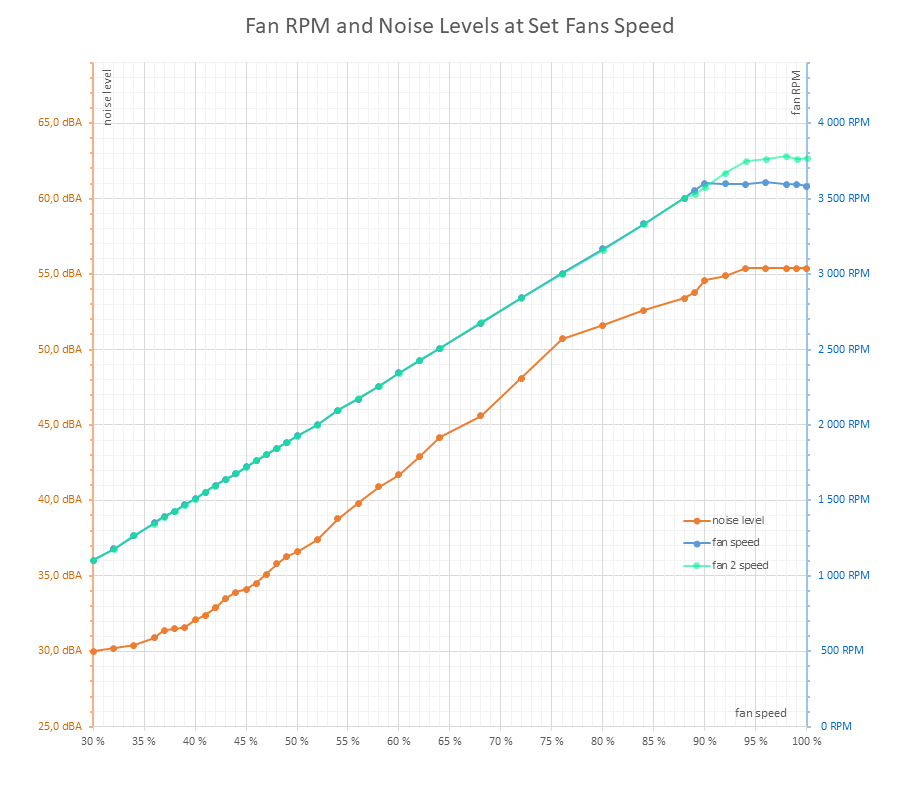
The RPM variation and fluctuation between fans under load is slightly higher than with other GeForce cards. Those typically vary by 0–6 RPM, MSI’s differ mostly within 10 RPM, sometimes up to 20. It may stem from MSI’s custom triple-header setup instead of a standard two-header one.
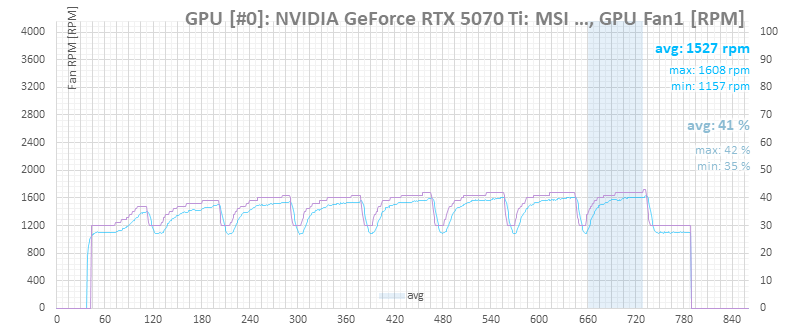
In the default Gaming mode, fan speeds during operating tests maxed out between 1608–1745 RPM, corresponding to 32.4–34.4 dBA.
In Silent mode, operating peaks ranged between 1422 and 1469 RPM, roughly 31.5–31.6 dBA. Noise is so low that fans will likely be inaudible once the card is installed—coil whine might be more noticeable.
Cyberpunk 2077, RT Medium, 3840 × 2160 (Gaming)
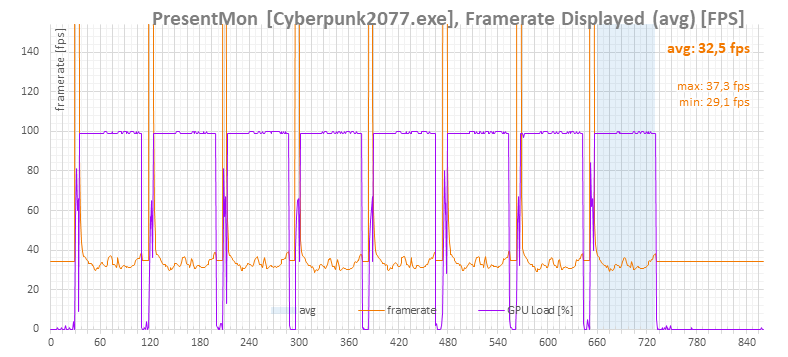
For testing operating characteristics of high-end graphics cards, I use Cyberpunk 2077 with RT Medium settings at a resolution of 3840 × 2160 pixels. The test consists of eight benchmark runs in a row.
Monitoring reports 100% GPU load (purple line in the graph below), but since the card isn’t consistently hitting its power limit, the GPU likely isn’t running at full throttle.
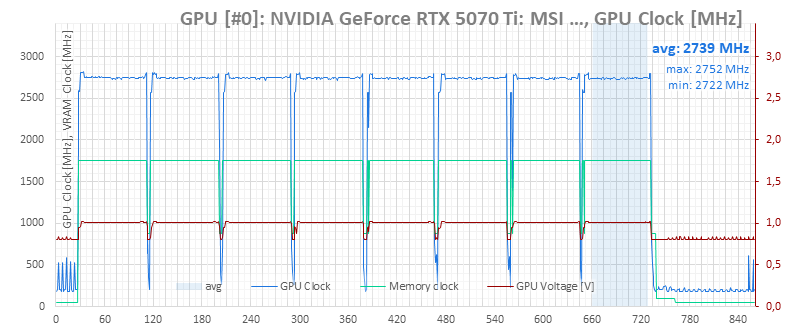
During the final test loop, the heated GPU clocks hovered between 2722 and 2752 MHz, averaging 2739 MHz.
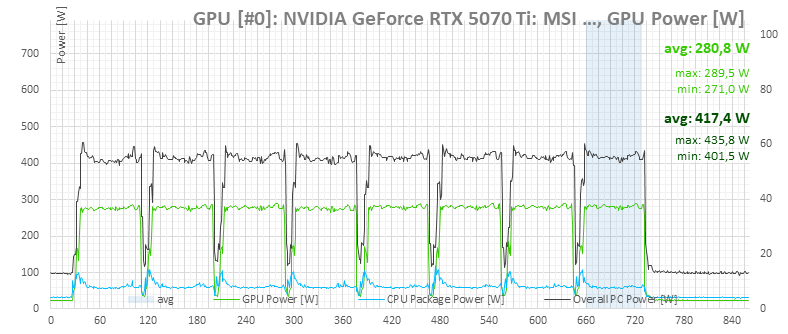
The light green line shows fluctuations—it’s not flat along the 300 W power cap. GPU power consumption hovers around 280.8 W. A recently tested Asus card averaged 295 W, a difference of ~15 W. However, total system draw differs by only 1 W, suggesting MSI’s card omits something in its reported consumption.
According to the chip sensors, peak temps reached around 69.4 °C, which is far from thermal throttling territory. Memory temperatures mostly sat at 70 °C. Hotspot temps are not displayed on the new GeForce models.
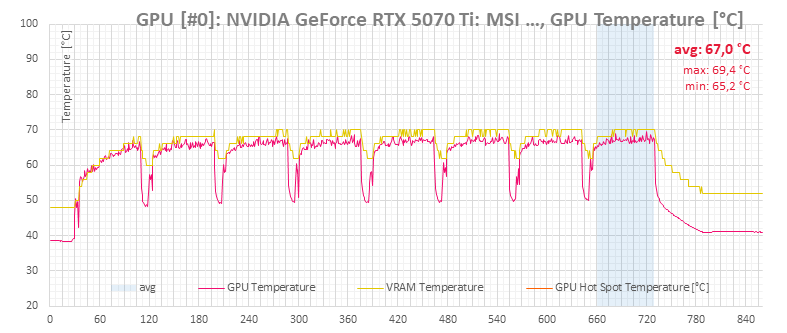
Slightly lower temps come at the cost of a small noise increase in Gaming mode. But compared to Silent, the difference isn’t as big as with other cards. Even at 1600 RPM and 33 dBA, the card stays reasonably quiet.
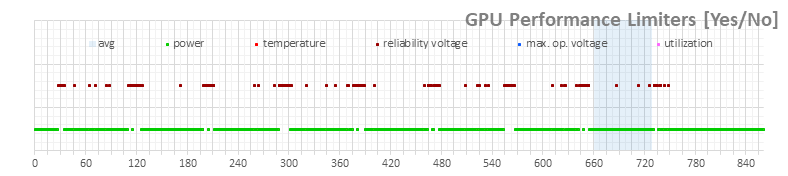
Even though the card doesn’t appear to consistently hit its power limit on the graph, GPU Boost limit symptoms suggest clocks are mostly power-constrained.
⠀
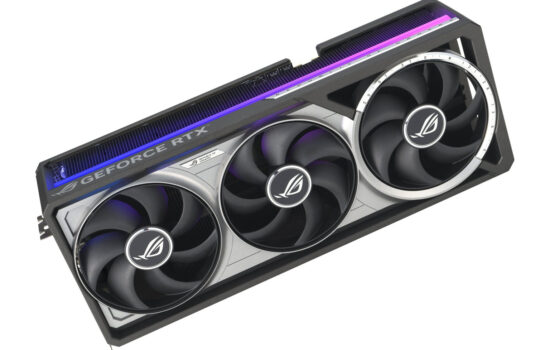




I bought this exact a card a few months ago as it’s among the most quiet RTX 5070 Ti cards out there, and I’m quite happy with it. No noticeable coil whine either, but then the PC is under the desk and the Fractal Define 7 probably dampens it anyway. I do wish the fan speed could go lower than 30% as I can hear them when it’s very quiet, like late in the evening.
It was expensive, though, so I just held my nose when I bought it.
I think, if memory serves me correctly, that FanControl can also control NVIDIA graphics cards… and maybe it can go even lower. 😛
https://getfancontrol.com/
❤ ❤ ❤