


The GeForce RTX 5070 Ti targets Nvidia card buyers wanting more VRAM without jumping to the much pricier RTX 5080 or 5090. MSI’s Gaming series traditionally delivers premium features and excellent operating characteristics rivaling high-end models, but at a more competitive price. The GeForce RTX 5070 Ti 16G Gaming Trio OC Plus stands out among mid-range options with a cooler that runs quiet and has thermal headroom to spare.
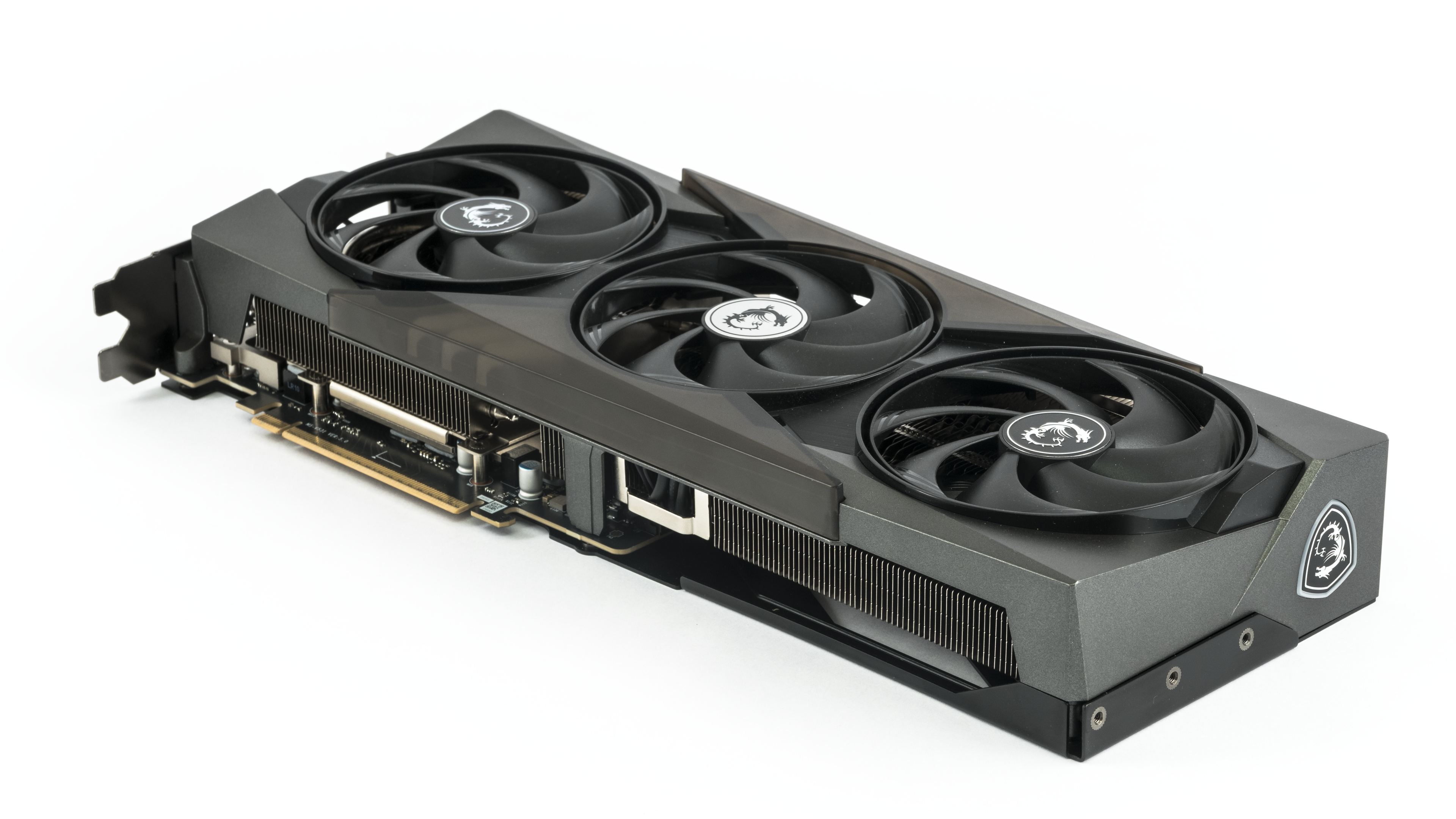
The card is fitted with a 2.5-slot cooler and three fans blowing down on a heatsink with transverse fins. The shroud combines several plastic types: metallic gray as the base, black accents, and sections made of dark translucent plastic.



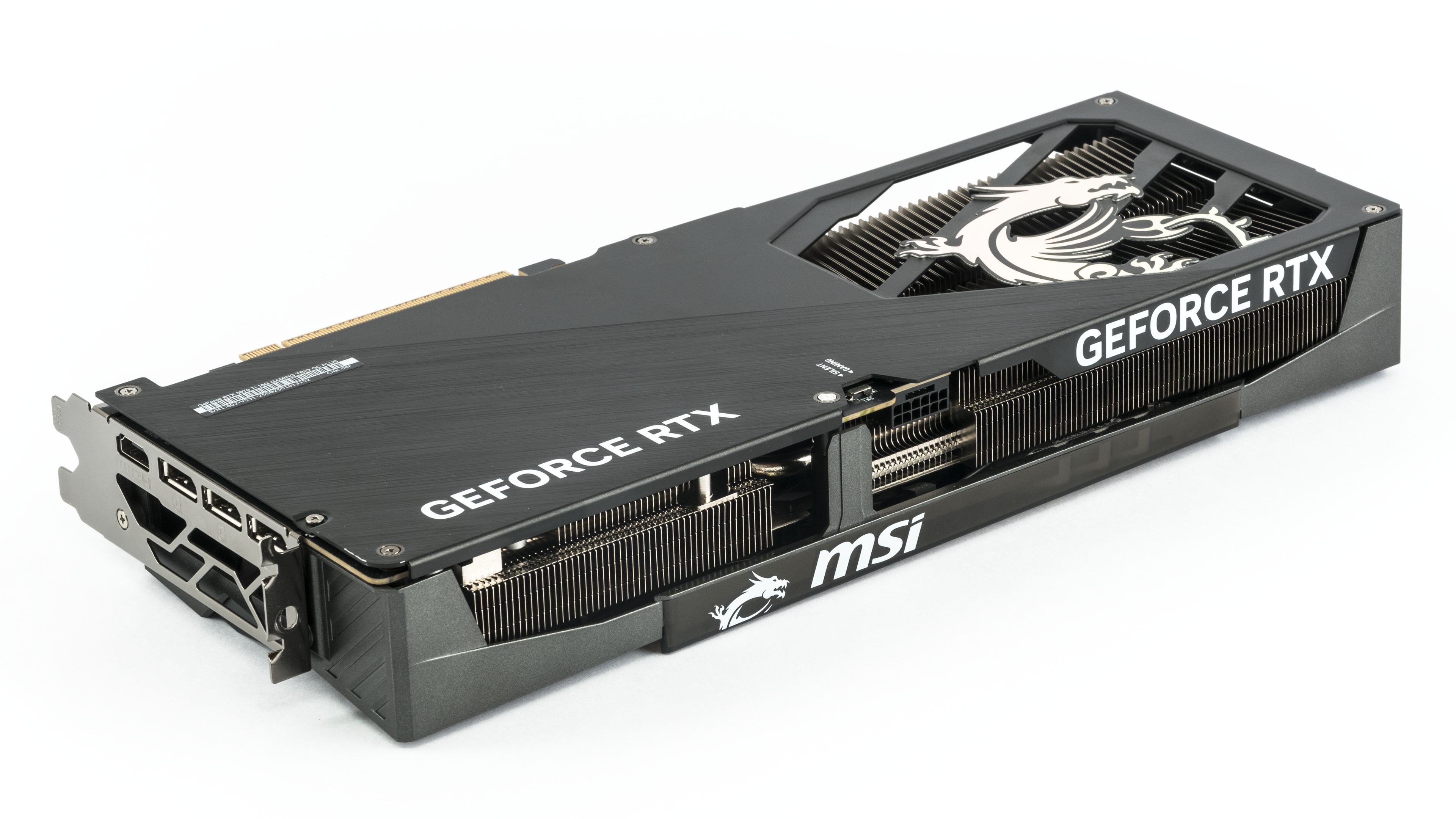
The backplate is metal. At the rear end, there’s an opening allowing some hot air to pass through. Ahead of that, there’s another perforated section in the backplate. The silver logo and stripes at the PCB’s end are illuminated with addressable RGB LEDs. The dragon logo above the opening looks flashy, but blocking the ventilation hole with it doesn’t make much sense, especially when there’s unused space nearby on the metal plate. Aesthetic choices clearly won out over function.

From above, you can see three fins under the translucent plastic along both sides of the card. These are lit with addressable RGB LEDs. Much of the finned area is open, mainly behind the rear fan but also partly behind the middle one.


The transverse-finned heatsink fills most of the space under the shroud. A nice detail is that the fins at the back of the heatsink extend closer to the backplate, even beyond the PCB.


The fan impellers have a diameter of 9.6 cm and a height of about 9 mm—mid-sized overall, which suggests they’ll run at higher RPMs. That often leads to the impression that the cooler is louder than it really is. Aerodynamic noise may not actually be worse than on slower, larger-blade fans.


A close-up reveals the cooling setup for the MOSFETs and coils on the power delivery. They’re cooled directly by the large heatsink via thermal pads.
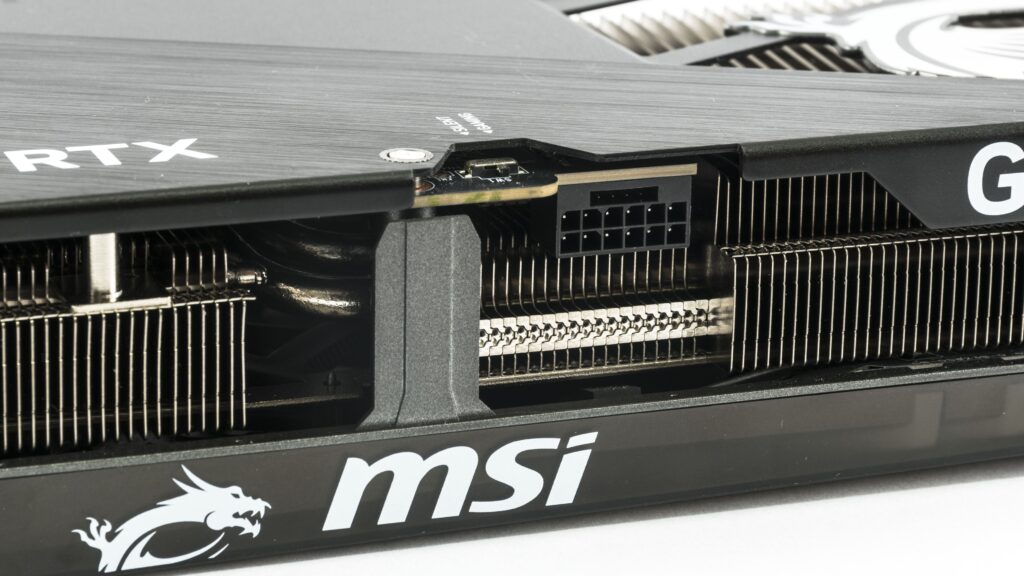
The card measures roughly 34 cm from the bracket. Width-wise, the cooler extends about 3.5 cm beyond the bracket. The power connector is located along the edge of the cooler, so some extra clearance behind the case side panel is necessary to avoid bending the power cable too much.
In height, the cooler measures about 5 cm, occupying two and a half slots. It’s ideal to leave the fourth slot open for better airflow to the fans. Given the card’s length and that it doesn’t take up a full three slots, a smaller card below likely won’t impact cooling performance significantly.


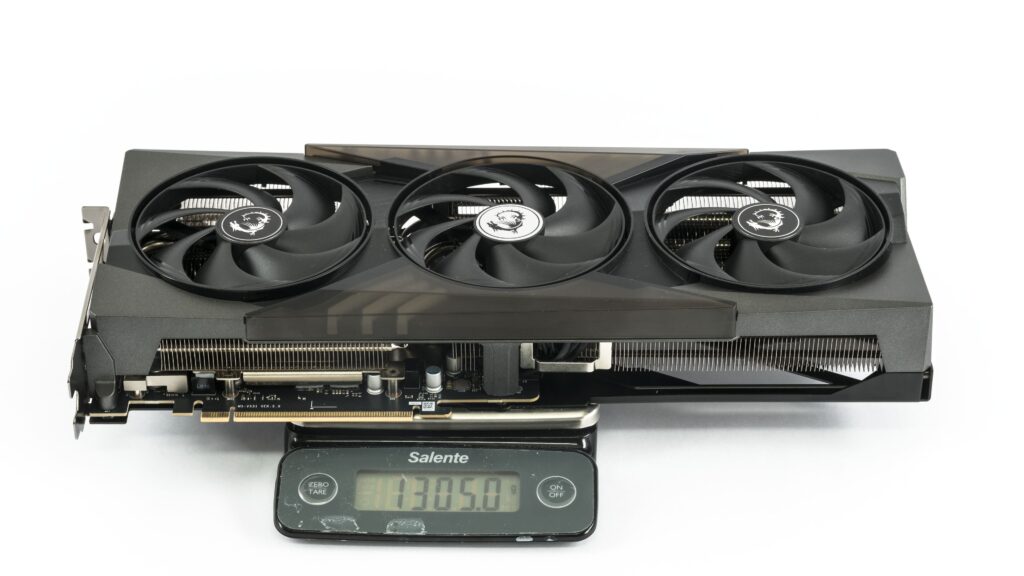
The card weighs 1305 grams. The triple 8-pin adapter adds around 45 g.
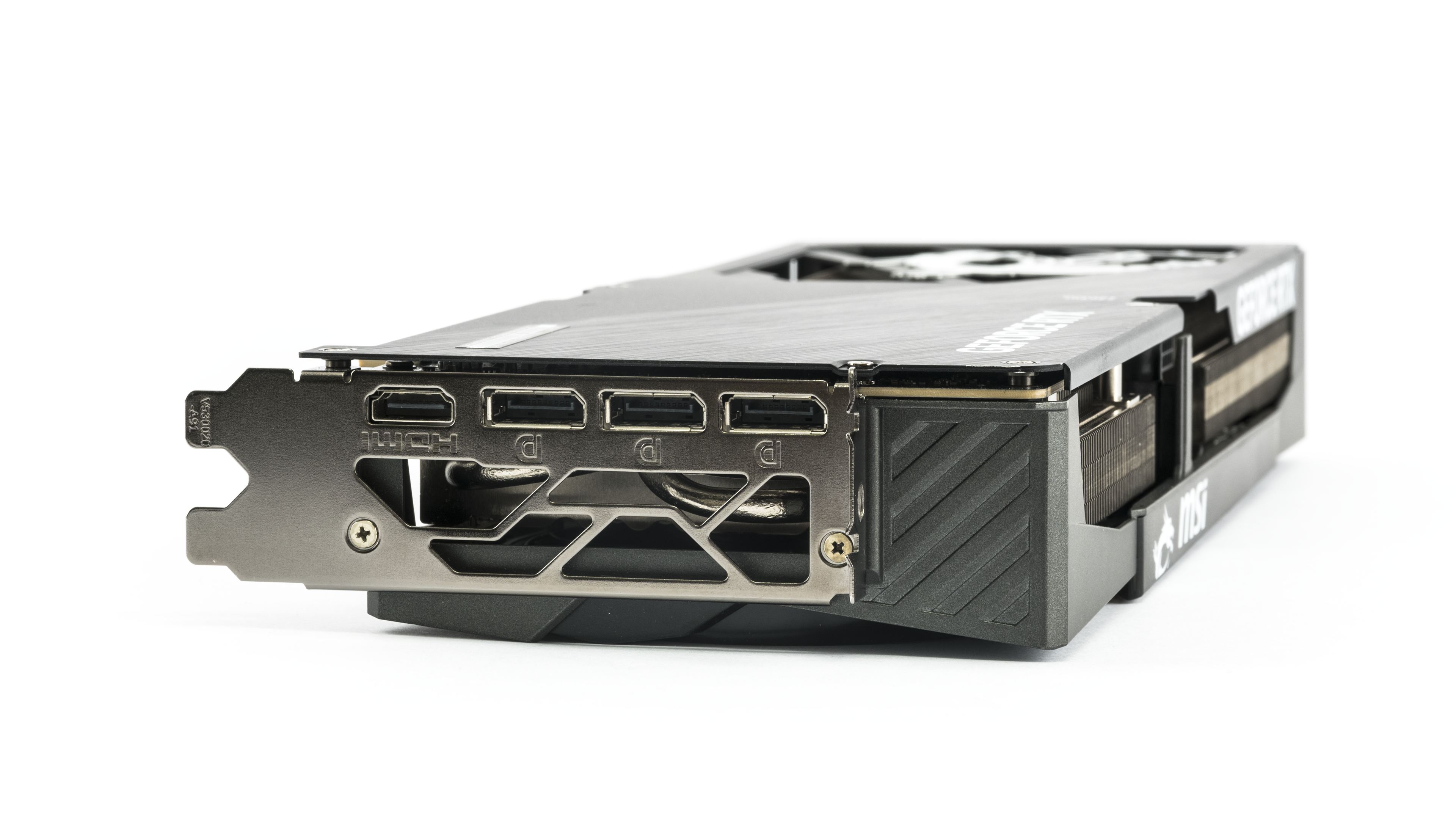
GeForce cards usually come with three DisplayPort 2.1b connectors with UHBR20 and one HDMI 2.1b. MSI sticks to this unofficial standard. The bracket’s perforation isn’t particularly practical. It looks cool, but when plugging cables in blindly, it adds five extra holes where the connector can get misaligned.
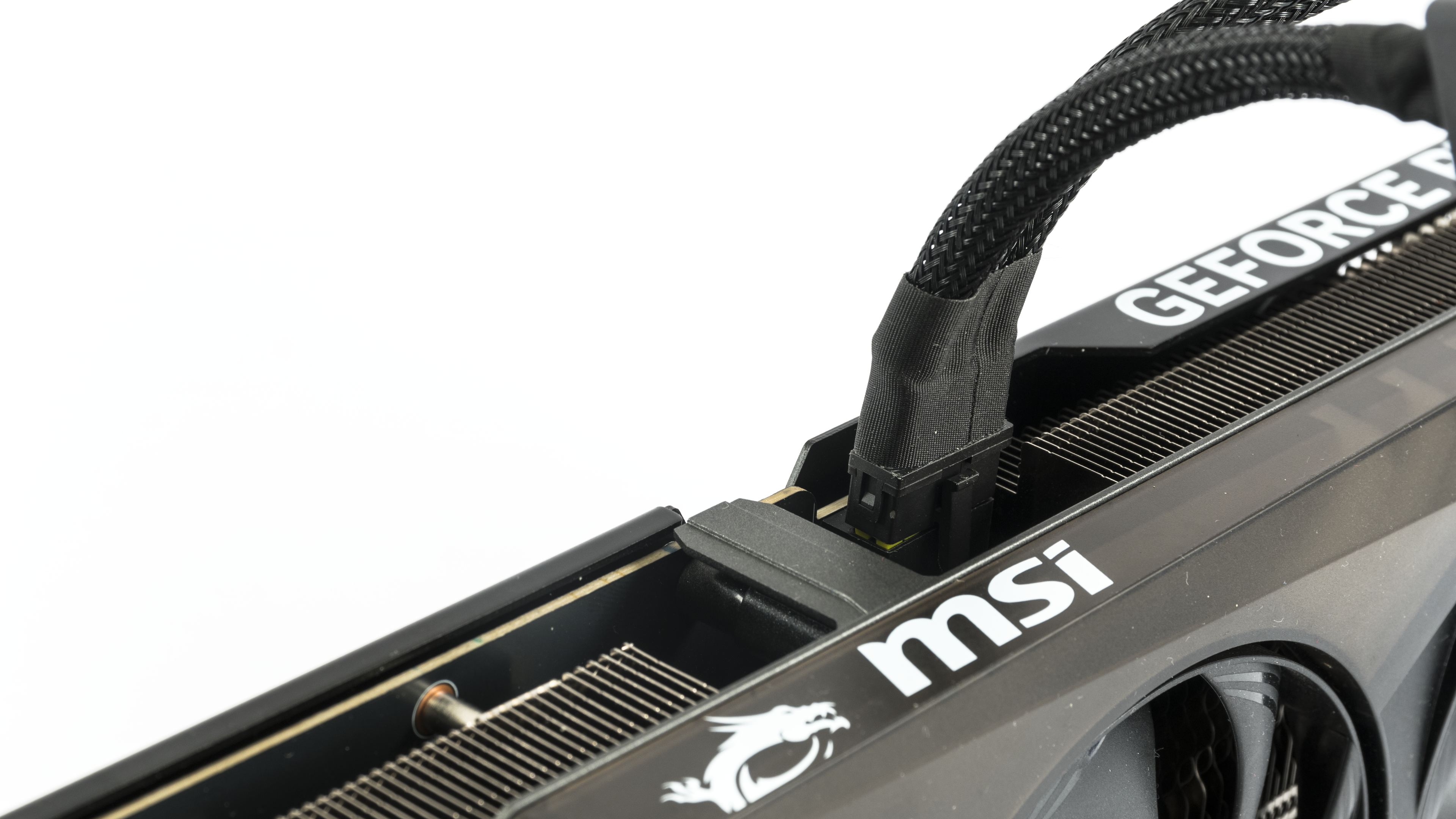
For power, the card uses the newer 16-pin 12V-2×6 connector, oriented with the latch facing down. A distinctive MSI feature is the yellow pins, which make it easier to see whether the connector is fully inserted. If you can still see the pins, like in the photo, push it in a bit more.
We’ve covered the design, now let’s take a look at the test build and test results.
⠀





I bought this exact a card a few months ago as it’s among the most quiet RTX 5070 Ti cards out there, and I’m quite happy with it. No noticeable coil whine either, but then the PC is under the desk and the Fractal Define 7 probably dampens it anyway. I do wish the fan speed could go lower than 30% as I can hear them when it’s very quiet, like late in the evening.
It was expensive, though, so I just held my nose when I bought it.
I think, if memory serves me correctly, that FanControl can also control NVIDIA graphics cards… and maybe it can go even lower. 😛
https://getfancontrol.com/
❤ ❤ ❤