




When the RX 9070 launched, nearly all reviews focused on pricier, factory-overclocked 245 W versions. Cards with reference clocks are far less common. We’re examining one of them—the basic Sapphire Pulse RX 9070—with stock specs: a 2520 MHz boost and a reduced 220 W power limit. In practice, though, at reference clocks the card seems to ends up a little slower in tests than it should be.
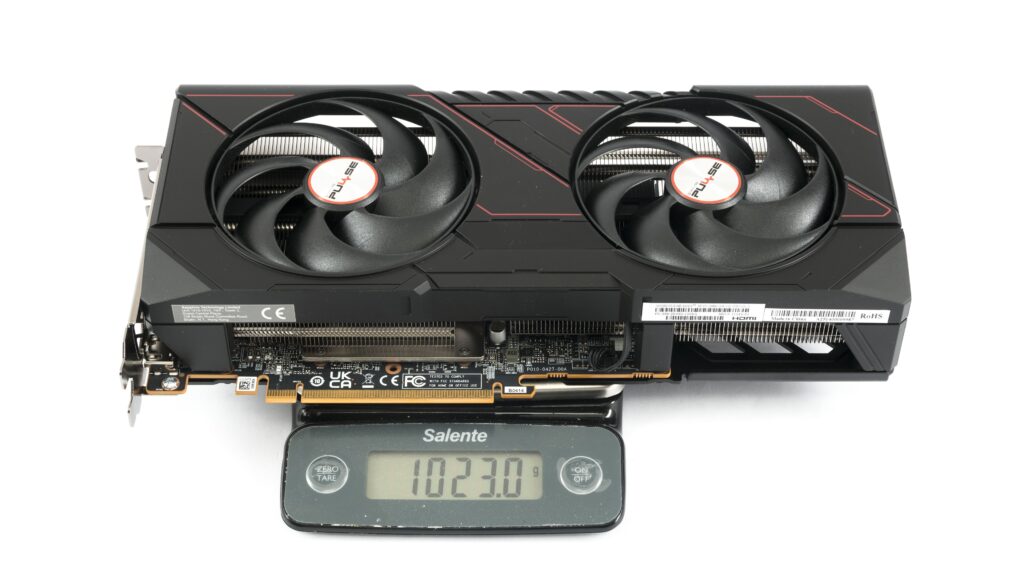
The card is equipped with a 2.5-slot cooler. Its design is conventional—it has a black plastic shroud housing two fans that blow down onto a heatsink with transverse finning. The cooler shroud is accented with red elements.
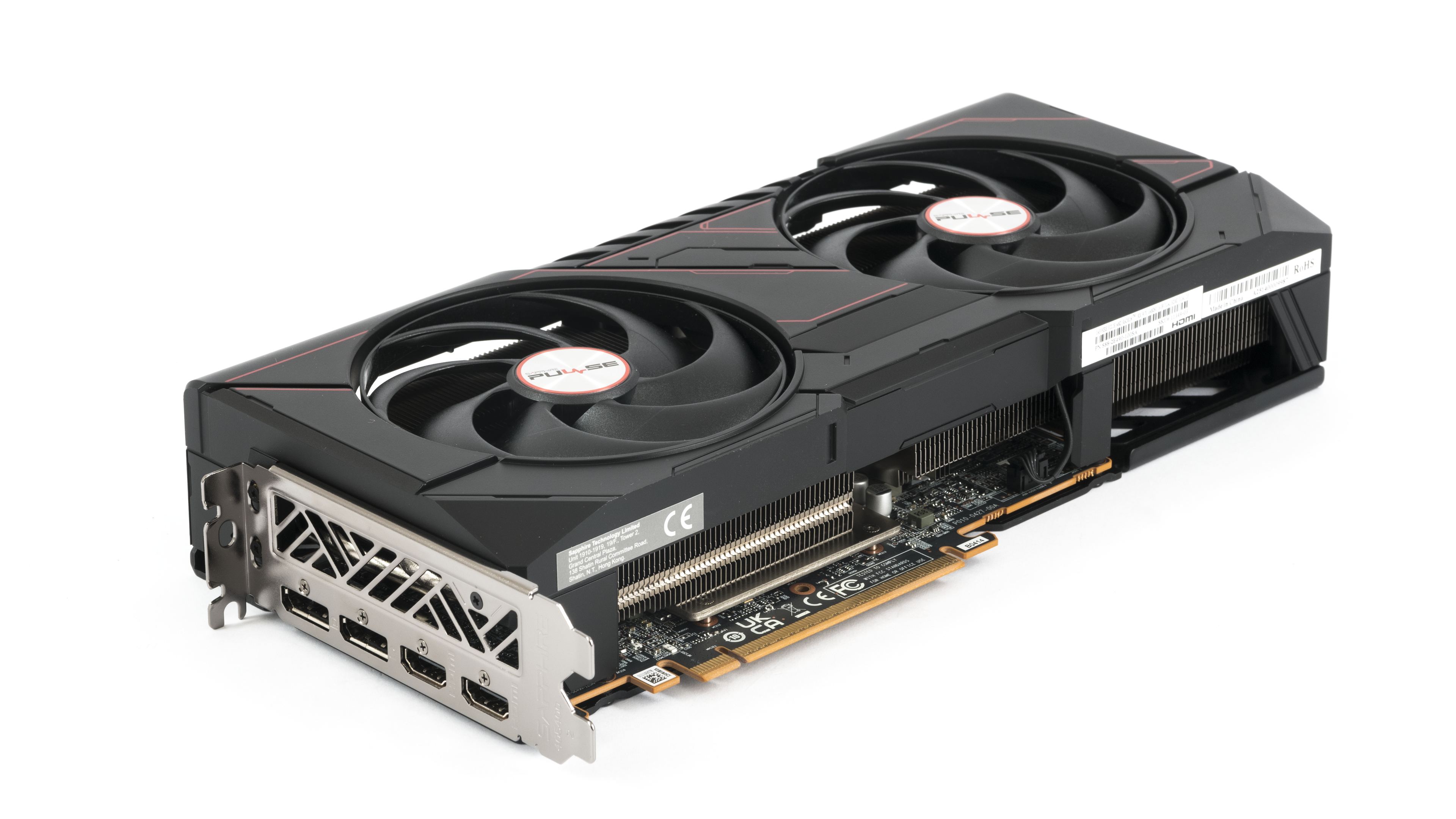
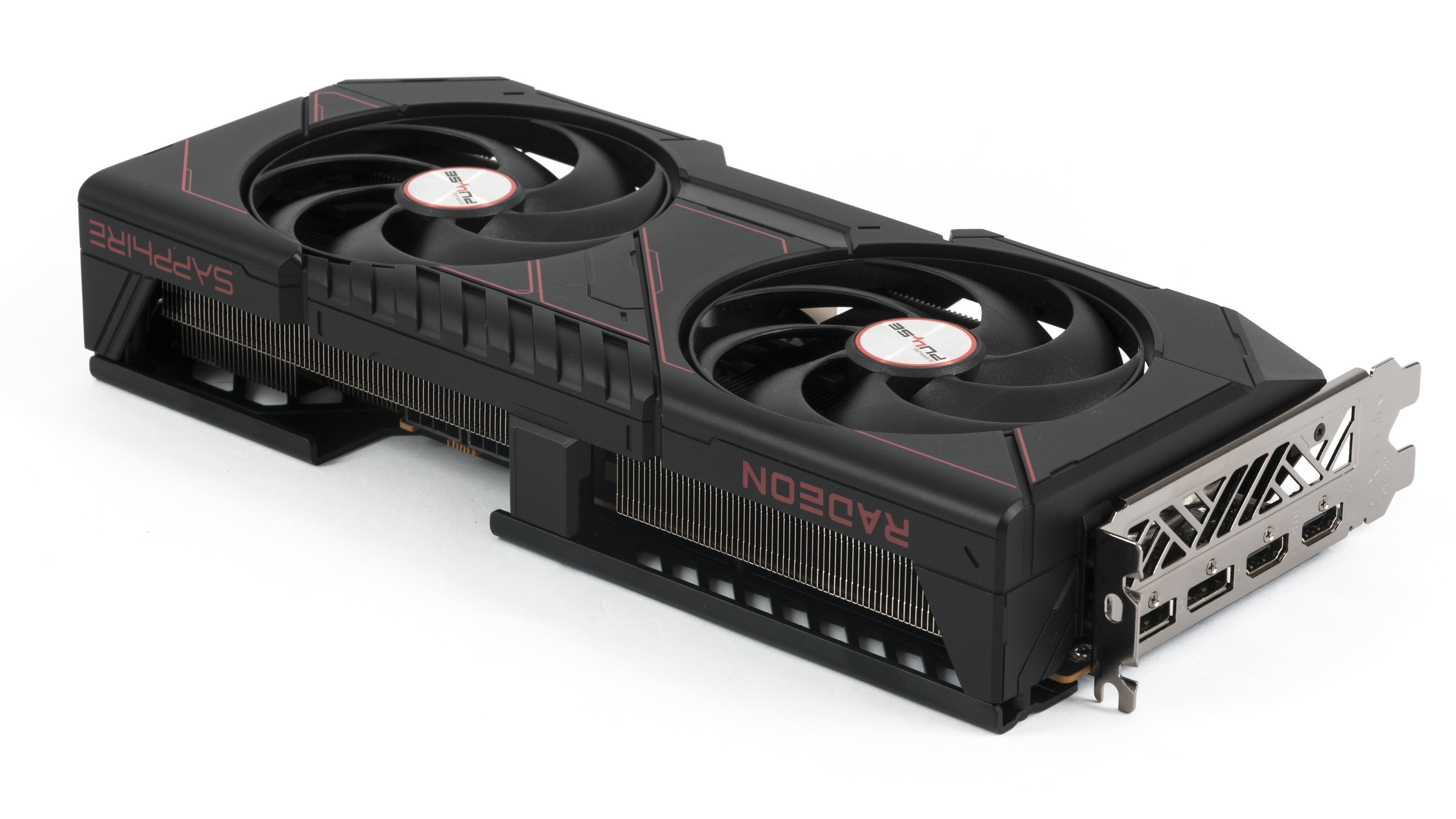
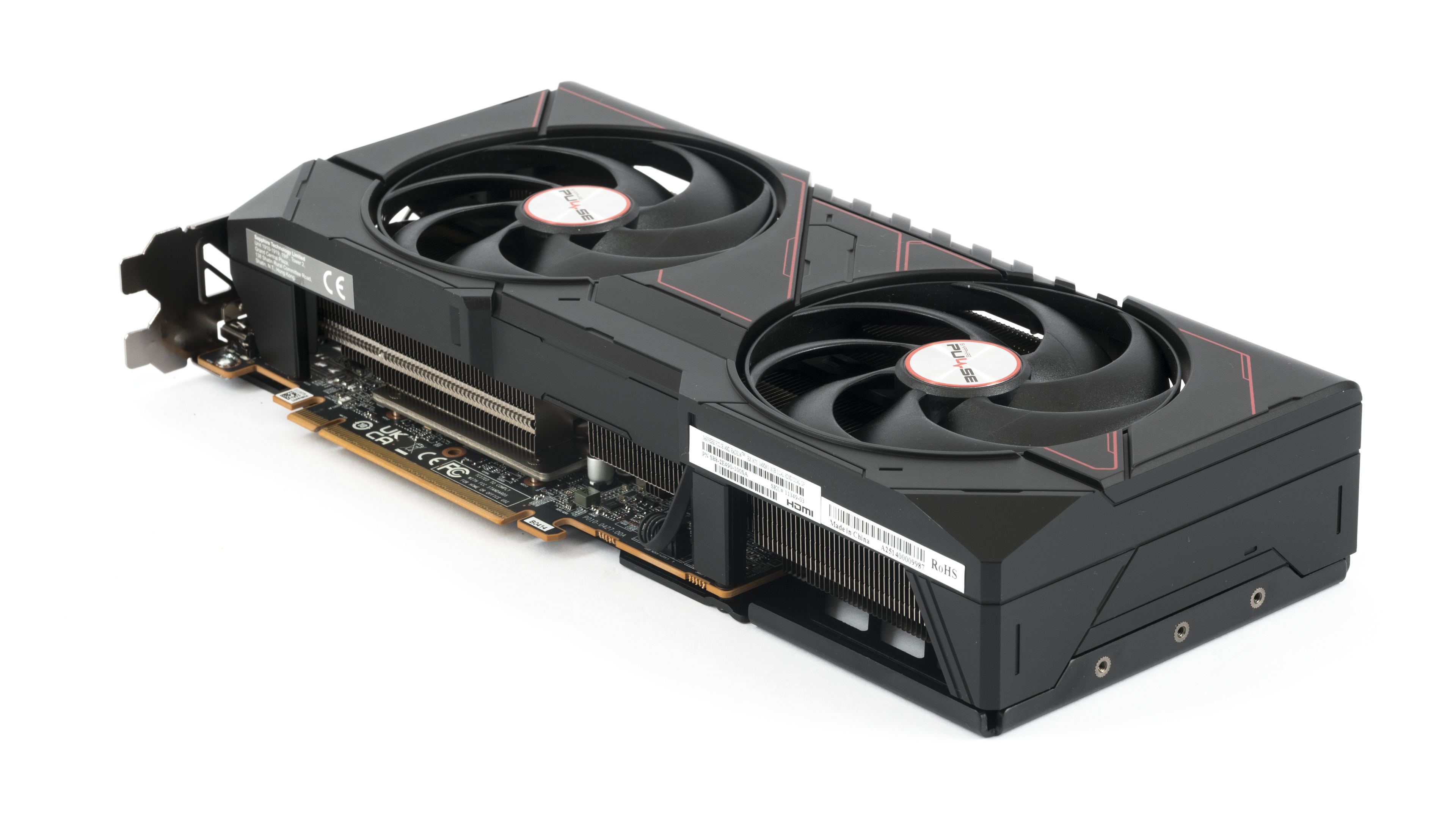
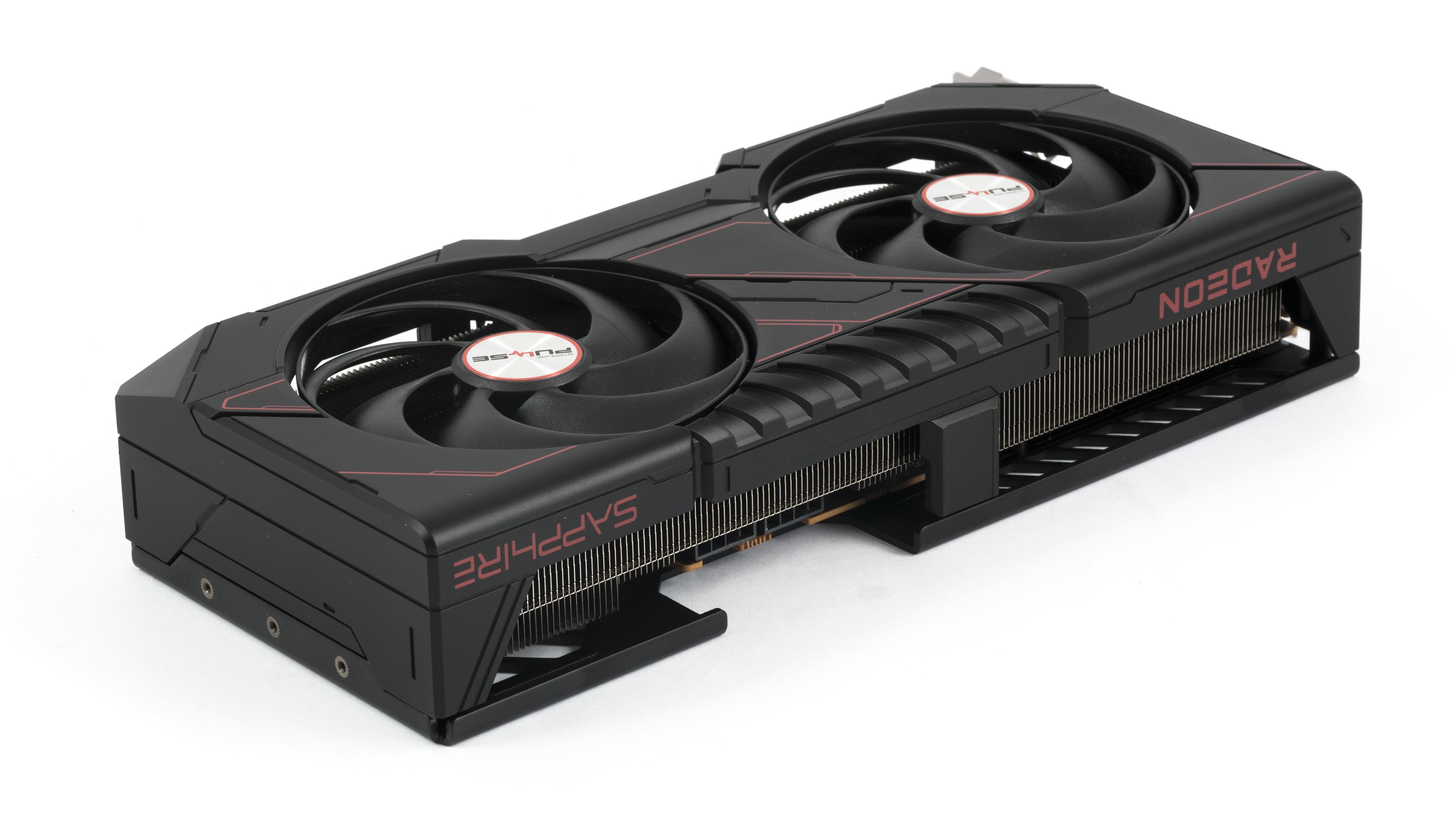
The heatsink is smaller than on the higher-end Pure RX 9070 model, but thanks to the lower power limit the card also generates less heat.
The rear part of the cooler is open, but the heatsink is shorter, so not the entire rear fan is unobstructed—only part of it.
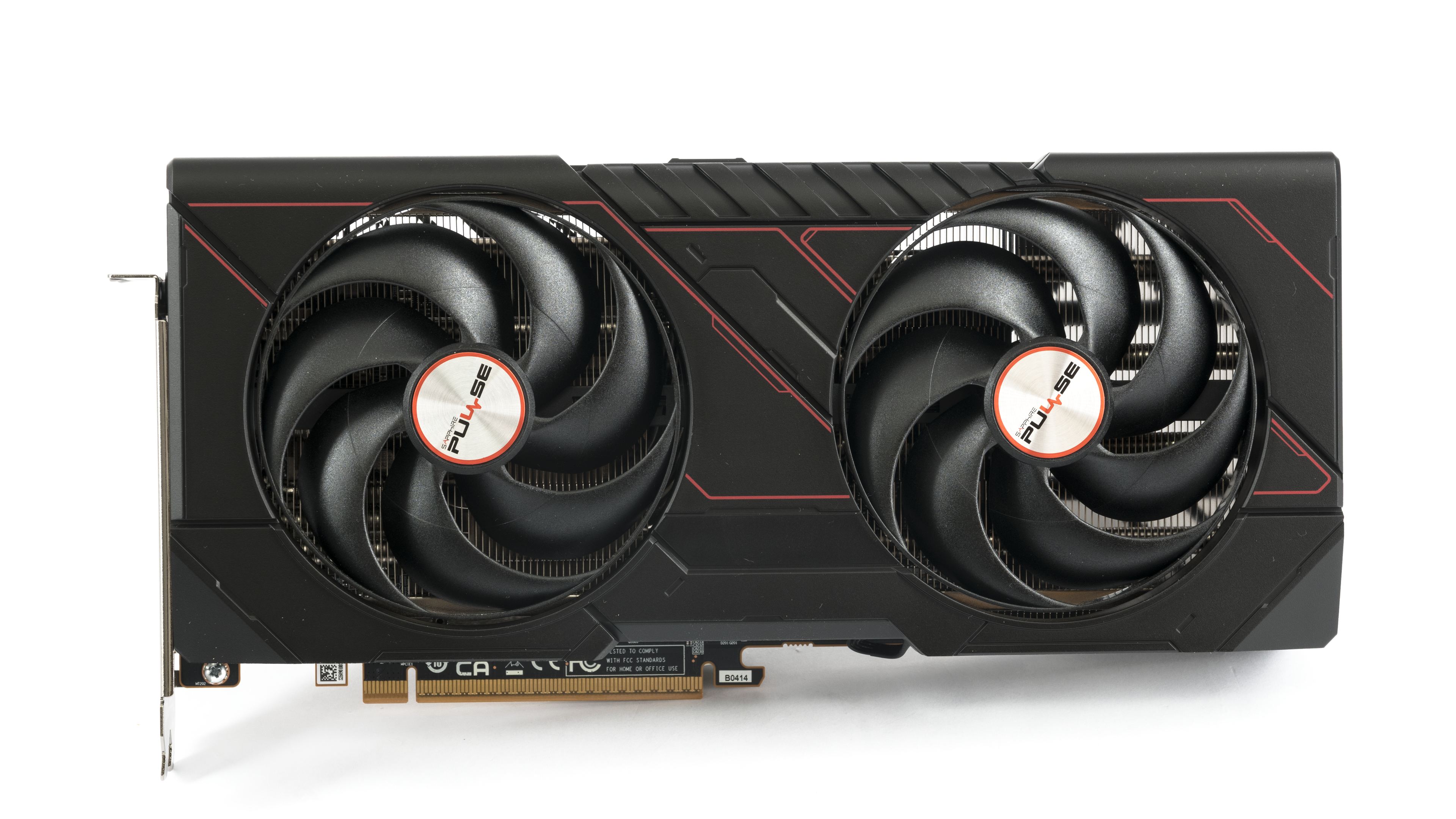
The fans are 11 mm tall and 10 cm in diameter, placing them among the larger ones.
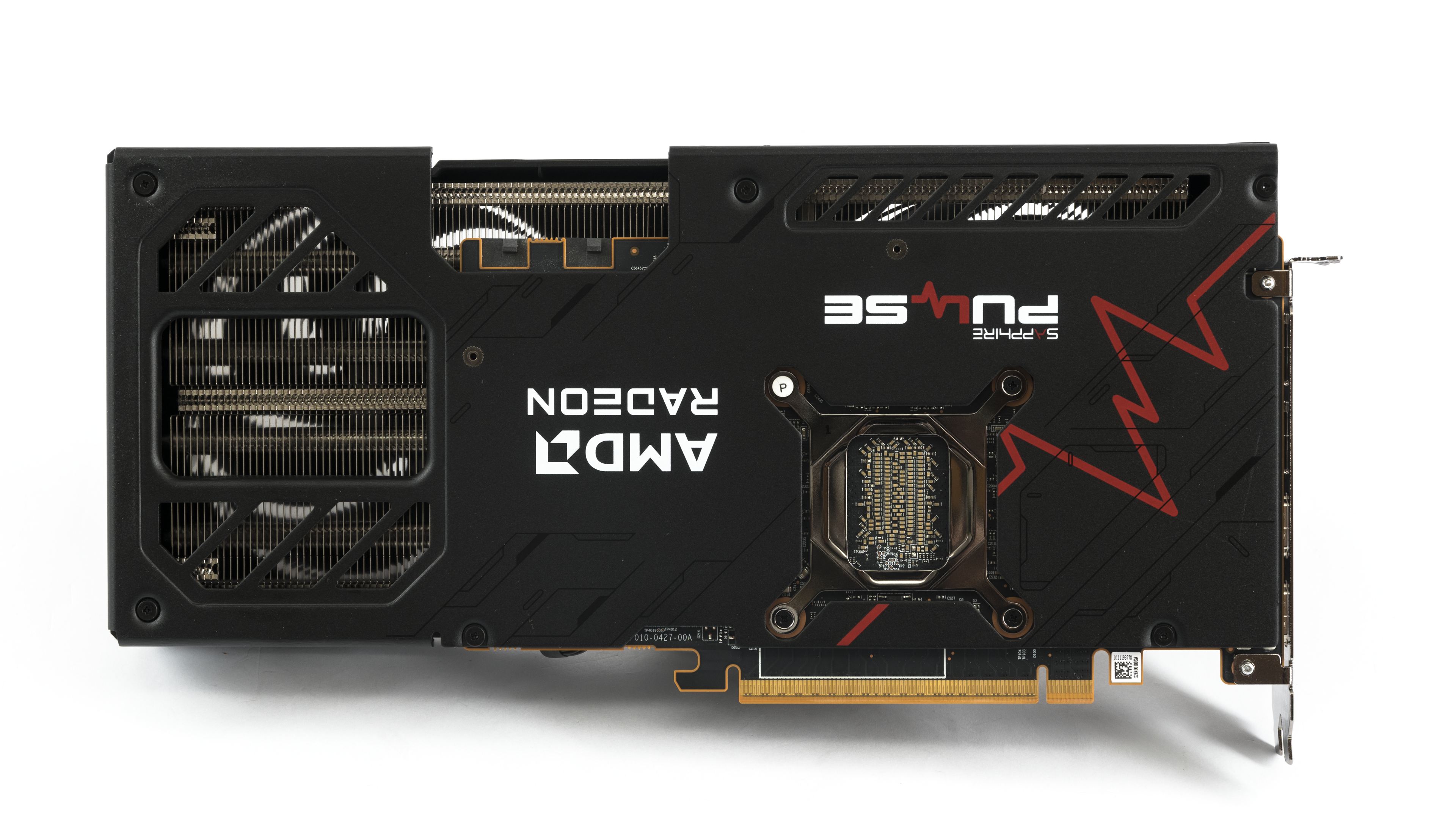
The back of the card is protected by a metal backplate. There is significant perforation at the side of the card and at the rear, allowing air heated by the cooler to pass above the card.
Through thermal pads, heat from the GPU and memory is transferred to the heatsink base. Between the PCB and metal backplate there are also thermal pads that help remove heat from the memory.
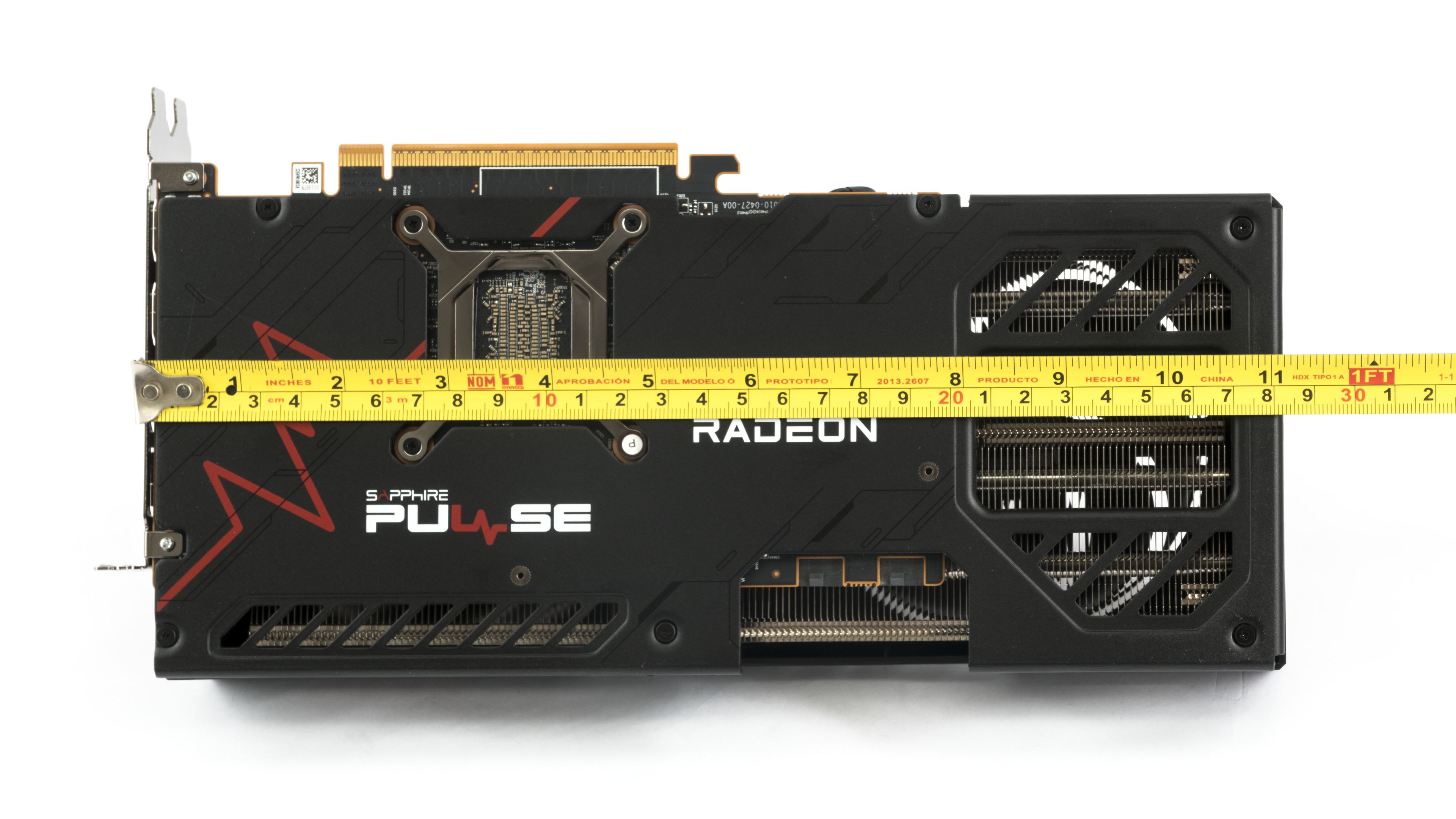
The length of the card slightly exceeds 28 cm from the bracket. The shroud extends 3 cm past the corner of the bracket. Its height is only 5.3 cm, so it occupies just under three slots.
The card weighs only 1.02 kg, making it one of the lighter ones.
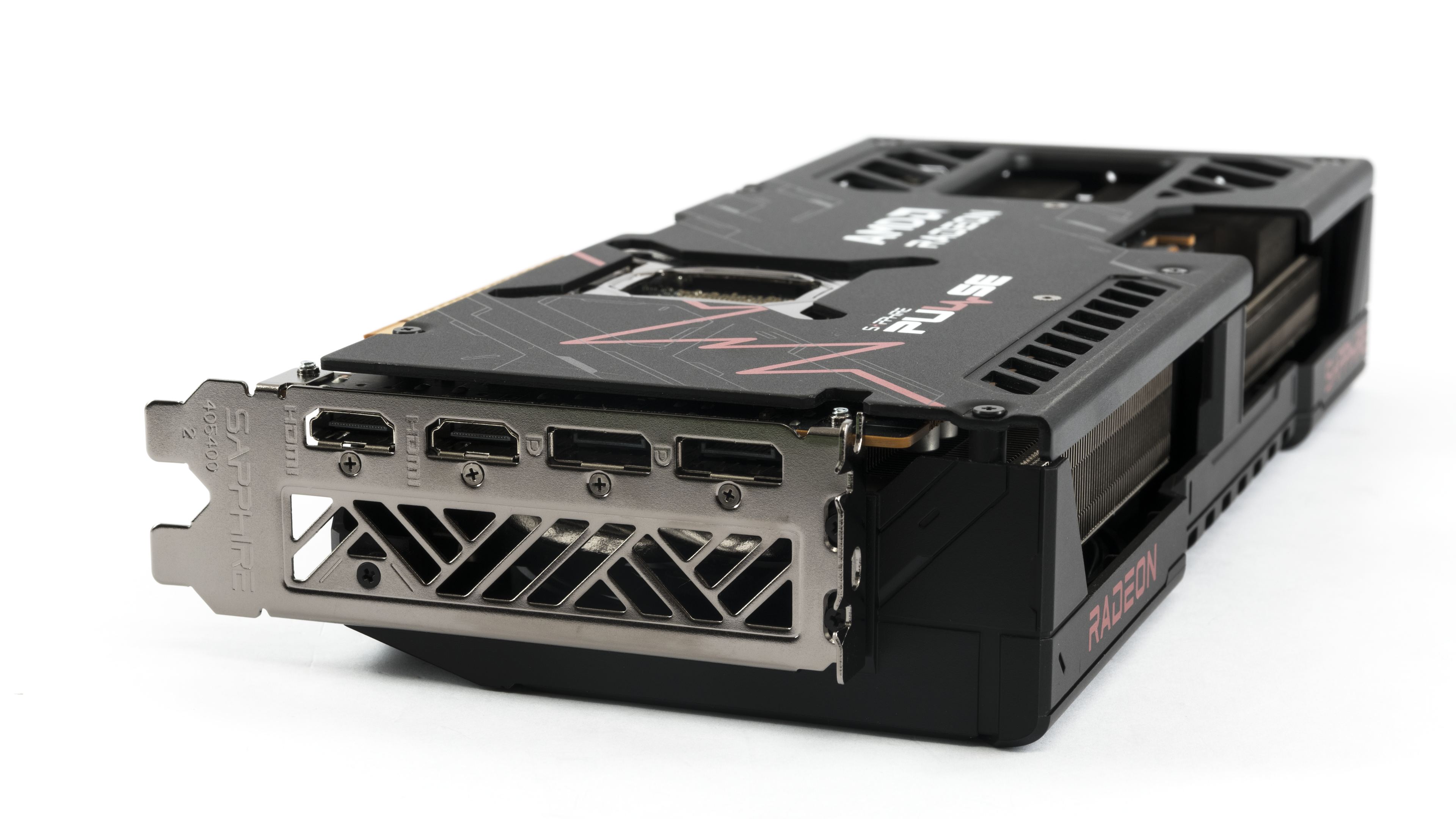
The most common combination of outputs is a trio of DisplayPort 2.1a with UHBR13.5 and one HDMI 2.1b. Sapphire used a combination of two DisplayPorts and two HDMI connectors.
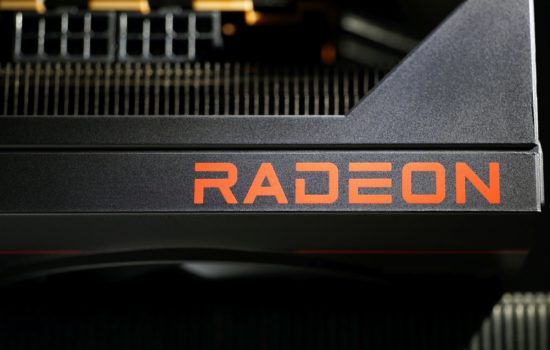
Two classic eight-pin power connectors are used for auxiliary power. Both have fuses, so if your card shuts down under load, it could indicate not only overheating but also issues with the power cables.
With the design covered, we move on to the test build and test results.
⠀




– It is obvious that a big advantage of this card are its dimensions. This is never mentioned in the review.
– I always power-limit my GPU during gameplay as a way to optimize (1) fan noise, (2) case temperate, (3) adjust for summer vs. winter room temperature and (4) to lower the electricity bill.