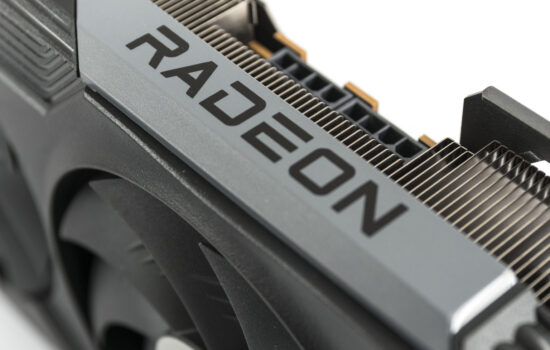
At the top of Asus’ new Radeon lineup is the TUF Gaming Radeon RX 9060 XT 16GB GDDR6 OC Edition. A large cooler with three fans, combined with a smaller, more power-efficient GPU, allows the card to deliver excellent cooling and low noise levels. It’s one of the quietest and best-performing RX 9060 XT models available. The only downside is its price, which reaches the level of entry-level GeForce RTX 5060 Ti 16GB cards.
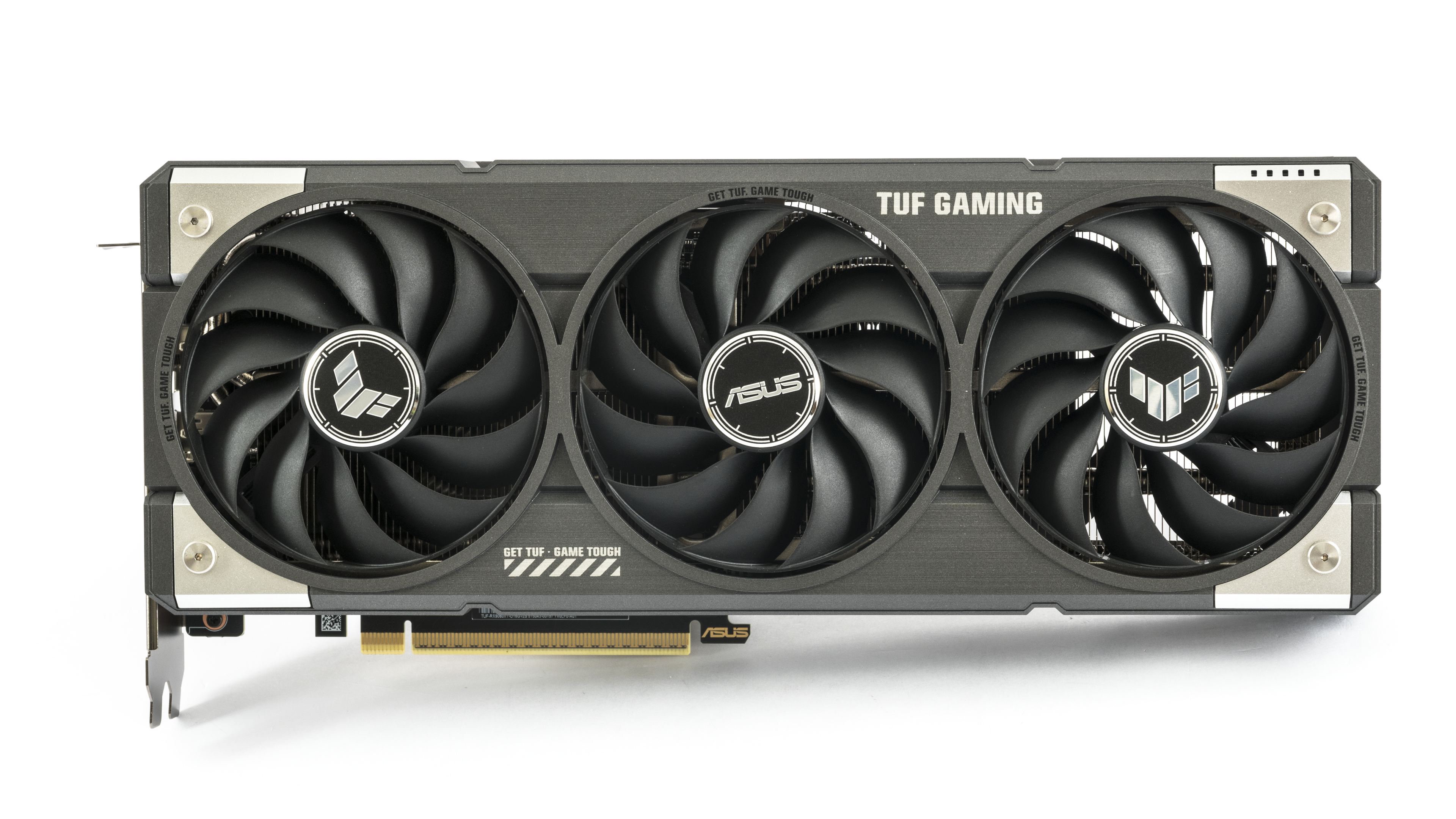
The cooler shroud is made of robust plastic in a metallic gray color. Its design is accented by silver elements in the corners that mimic metal, along with a metallic gray printed pattern. Three large low-profile fans are embedded in the shroud, blowing air through a heatsink with transverse finning.
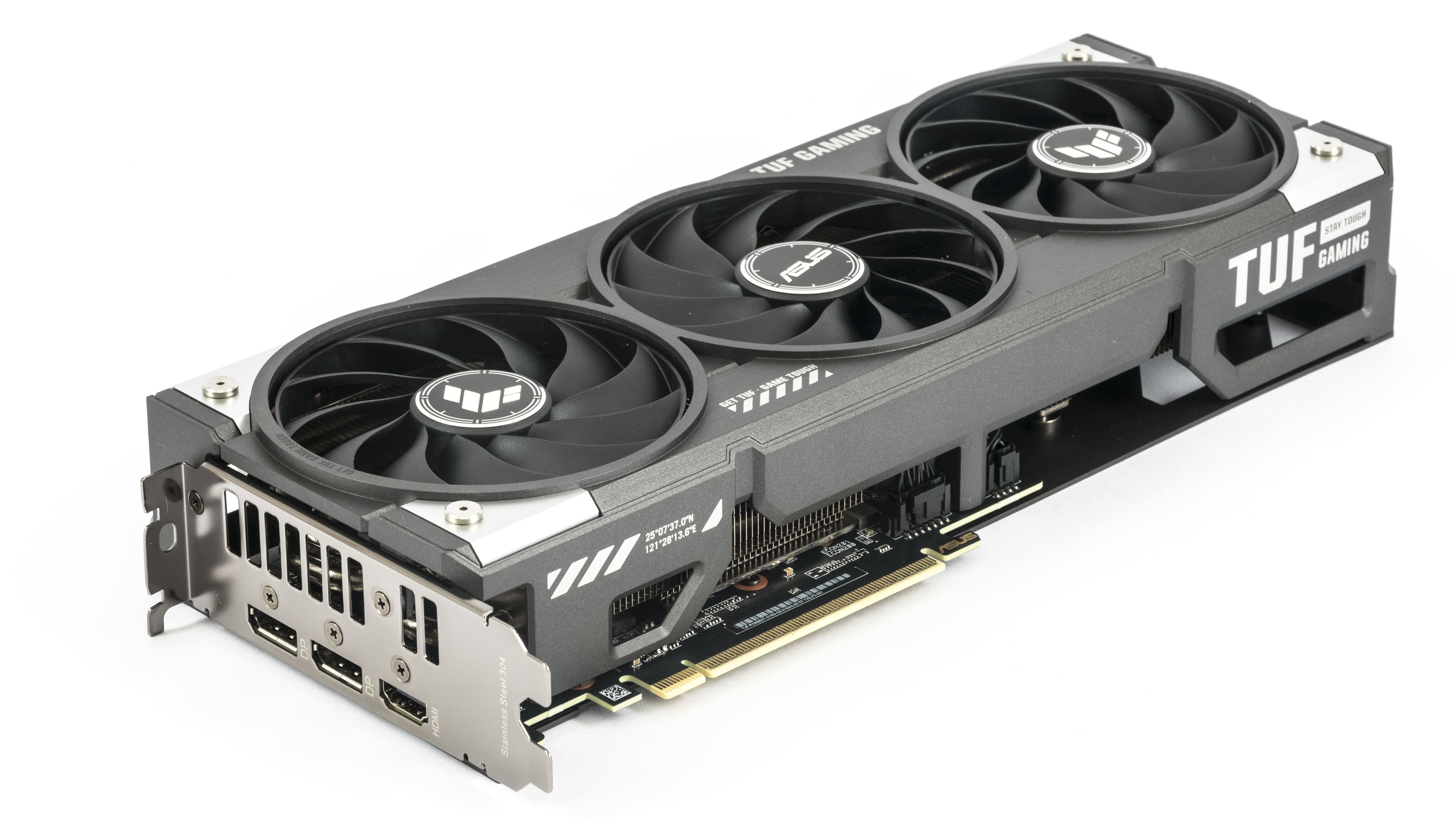

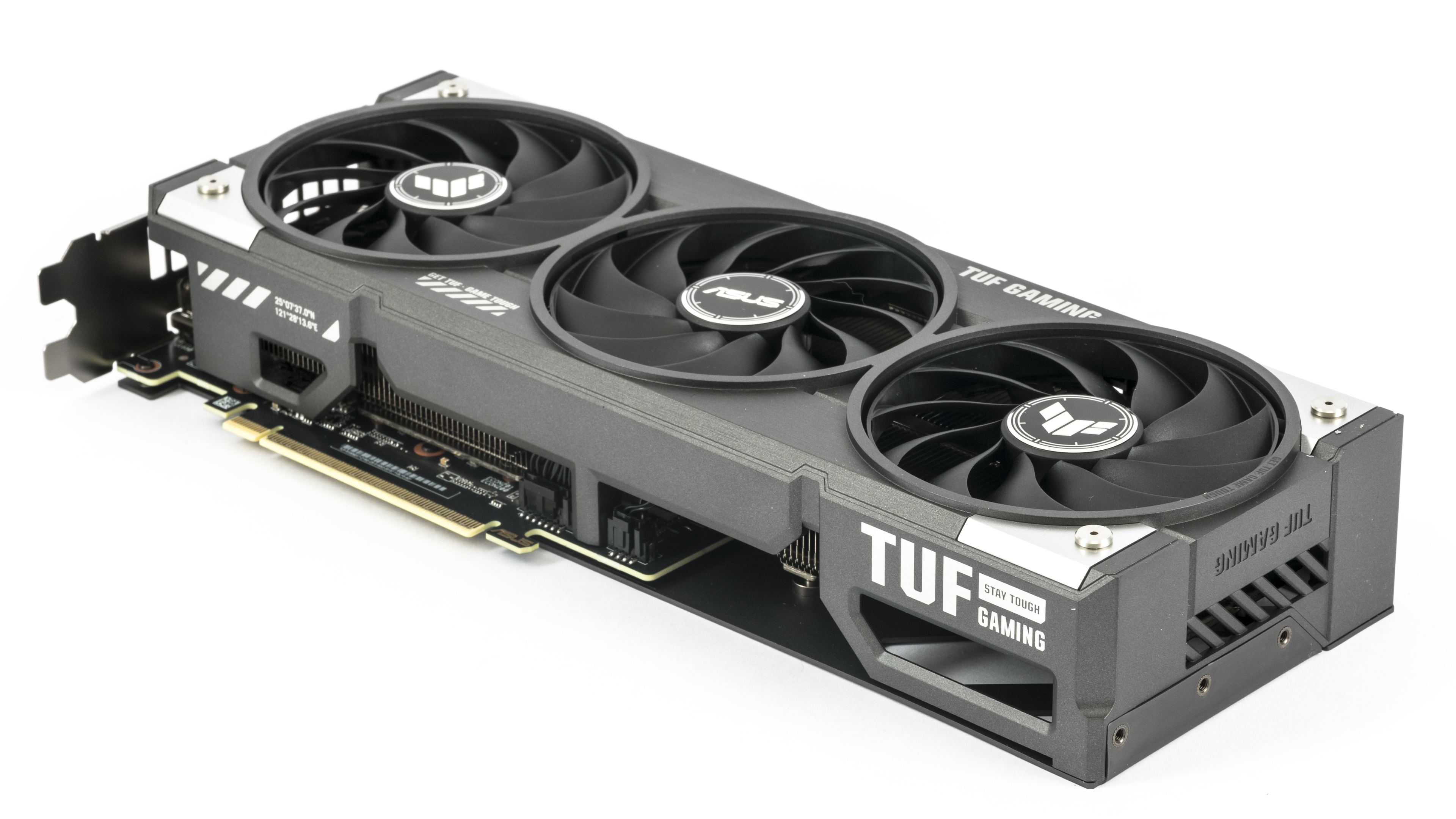
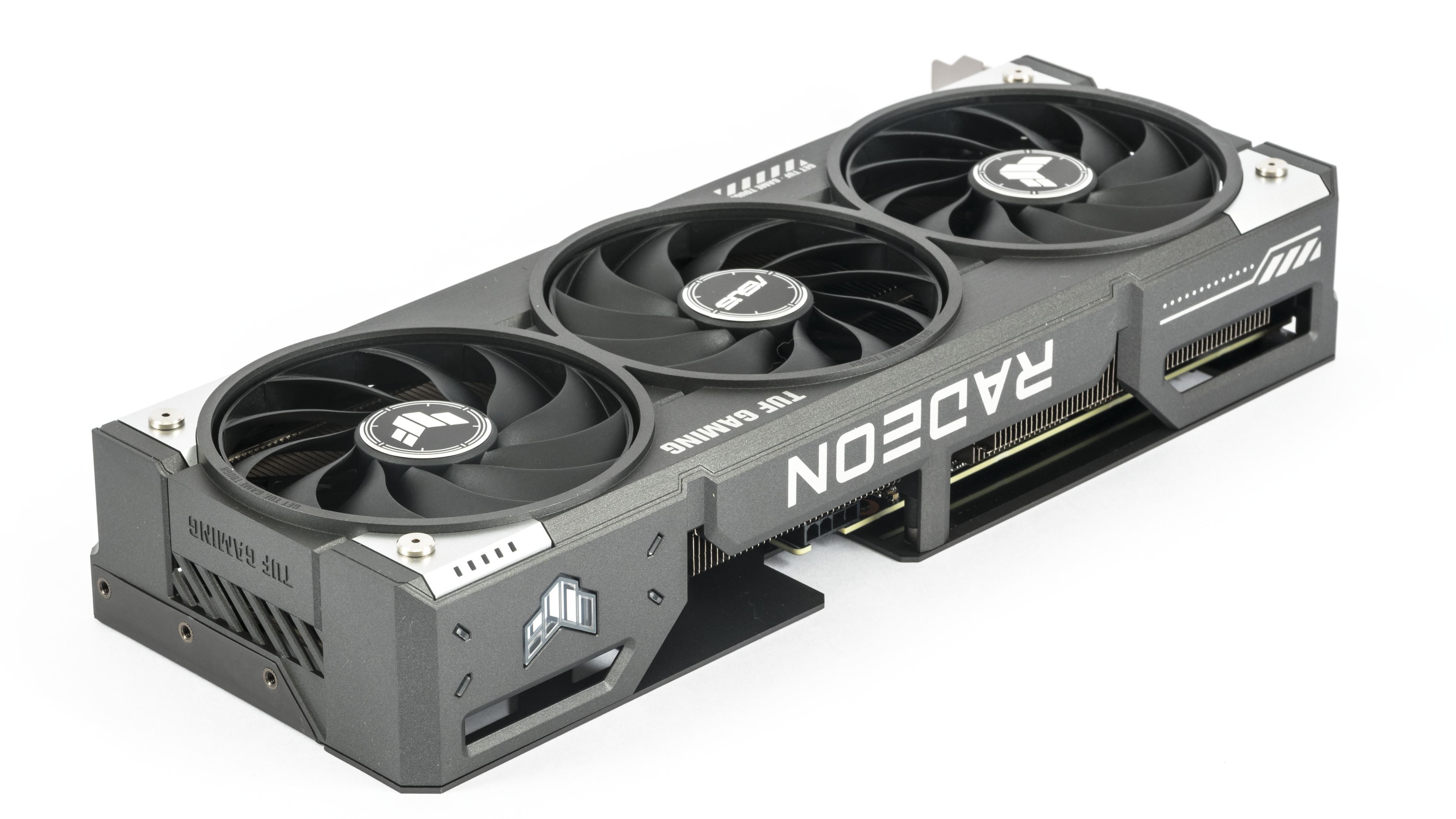
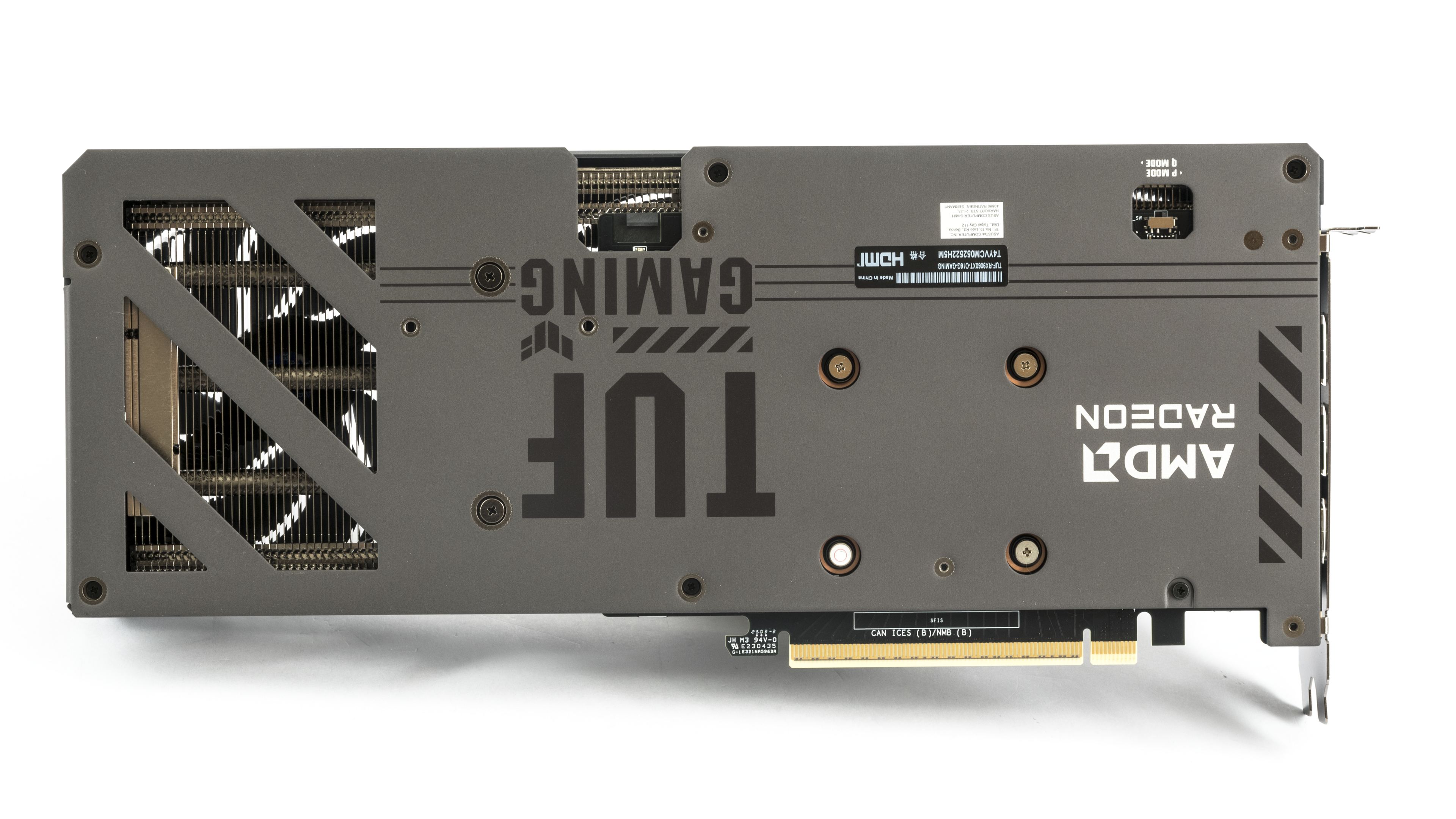
The backplate on the PCB is metal. At the rear, there’s a cutout through which hot air can flow above the card. Unlike the GeForce RTX 5060 Ti and RTX 5060 in the TUF series, the backplate lacks ARGB LED-lit logo perforations. Only the TUF logo on the side near the back of the card is illuminated. All screws securing the cooler shroud are accessible from the underside, allowing you to remove it without disassembling the main heatsink from the GPU.
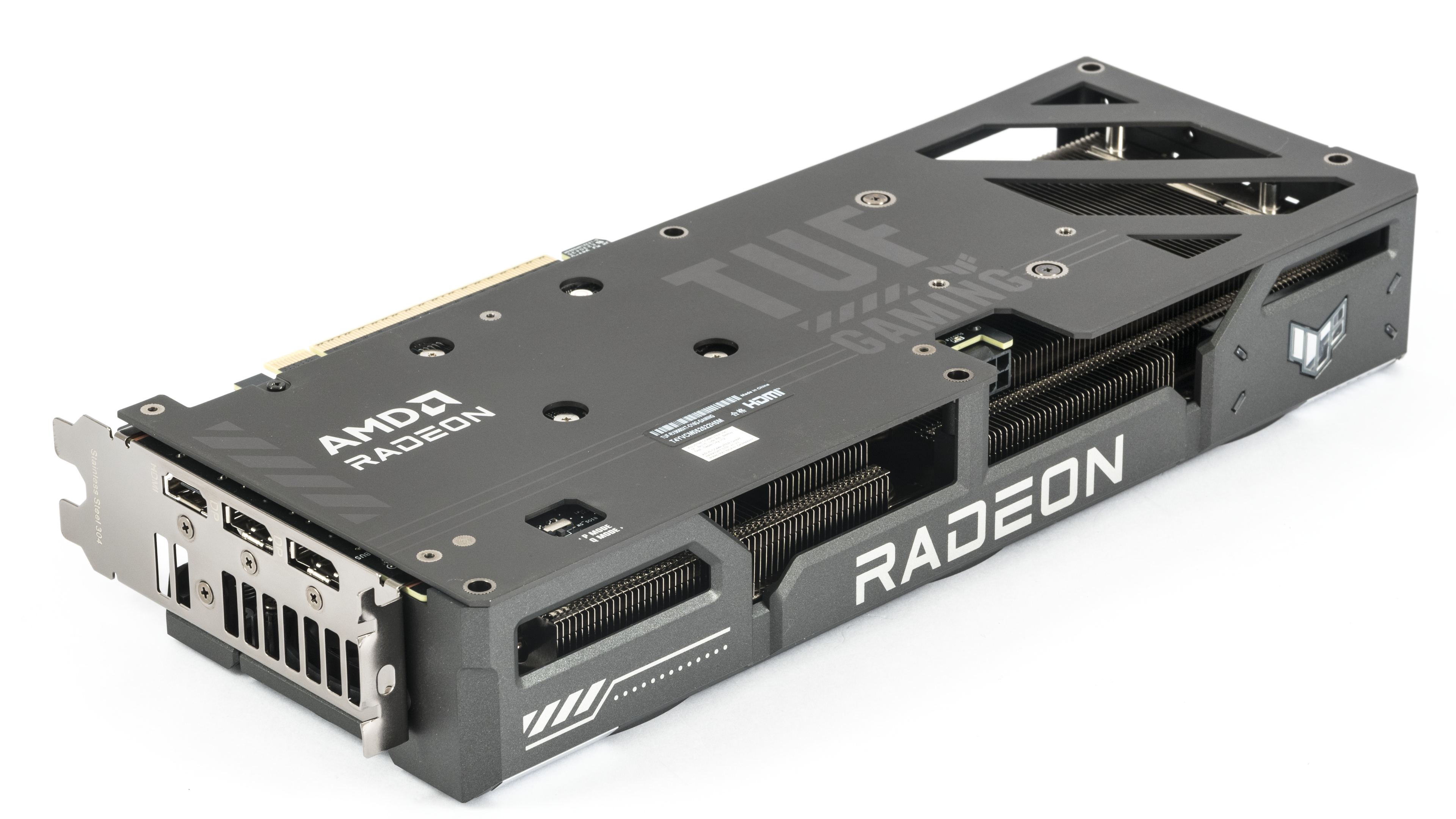
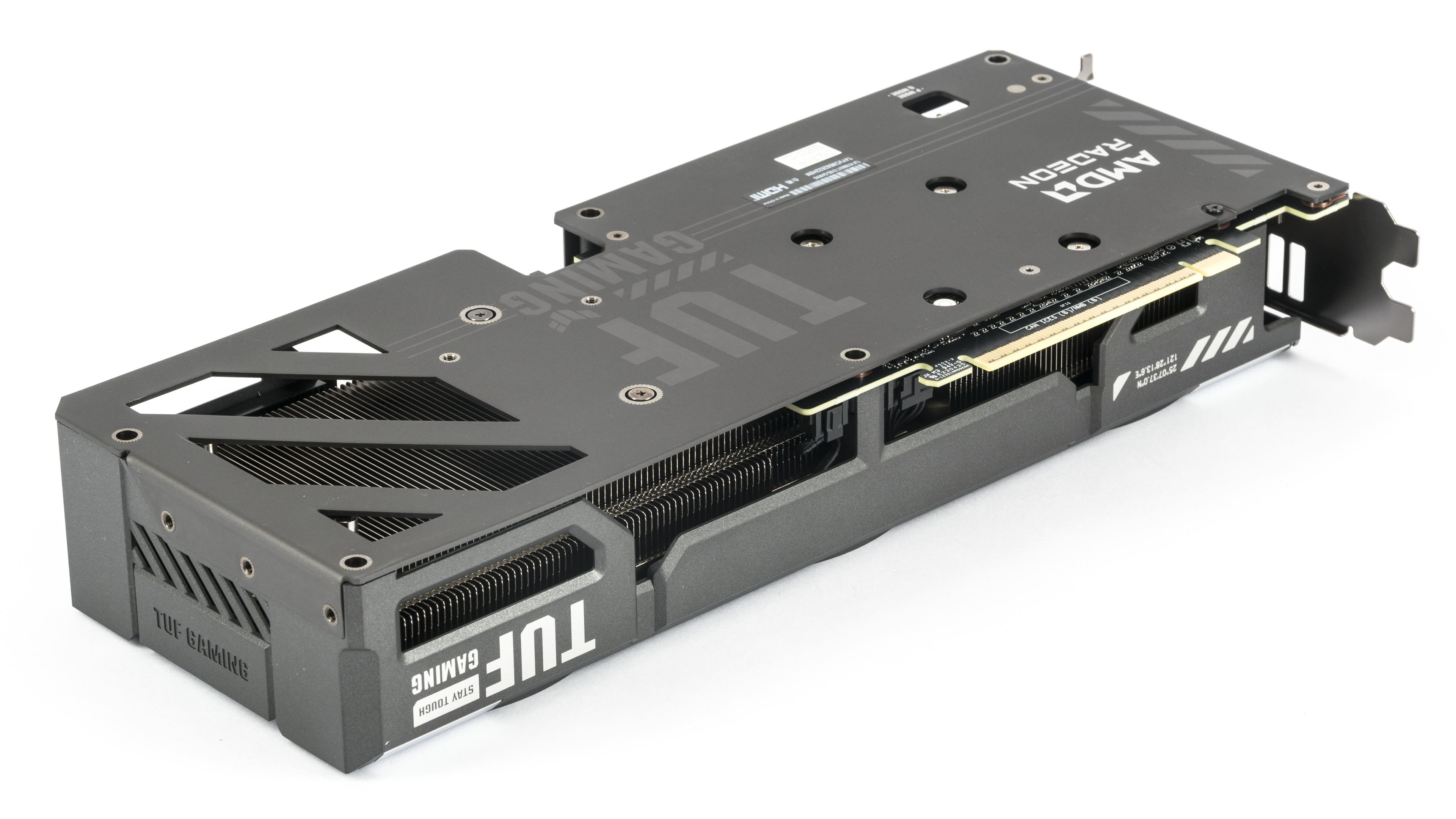
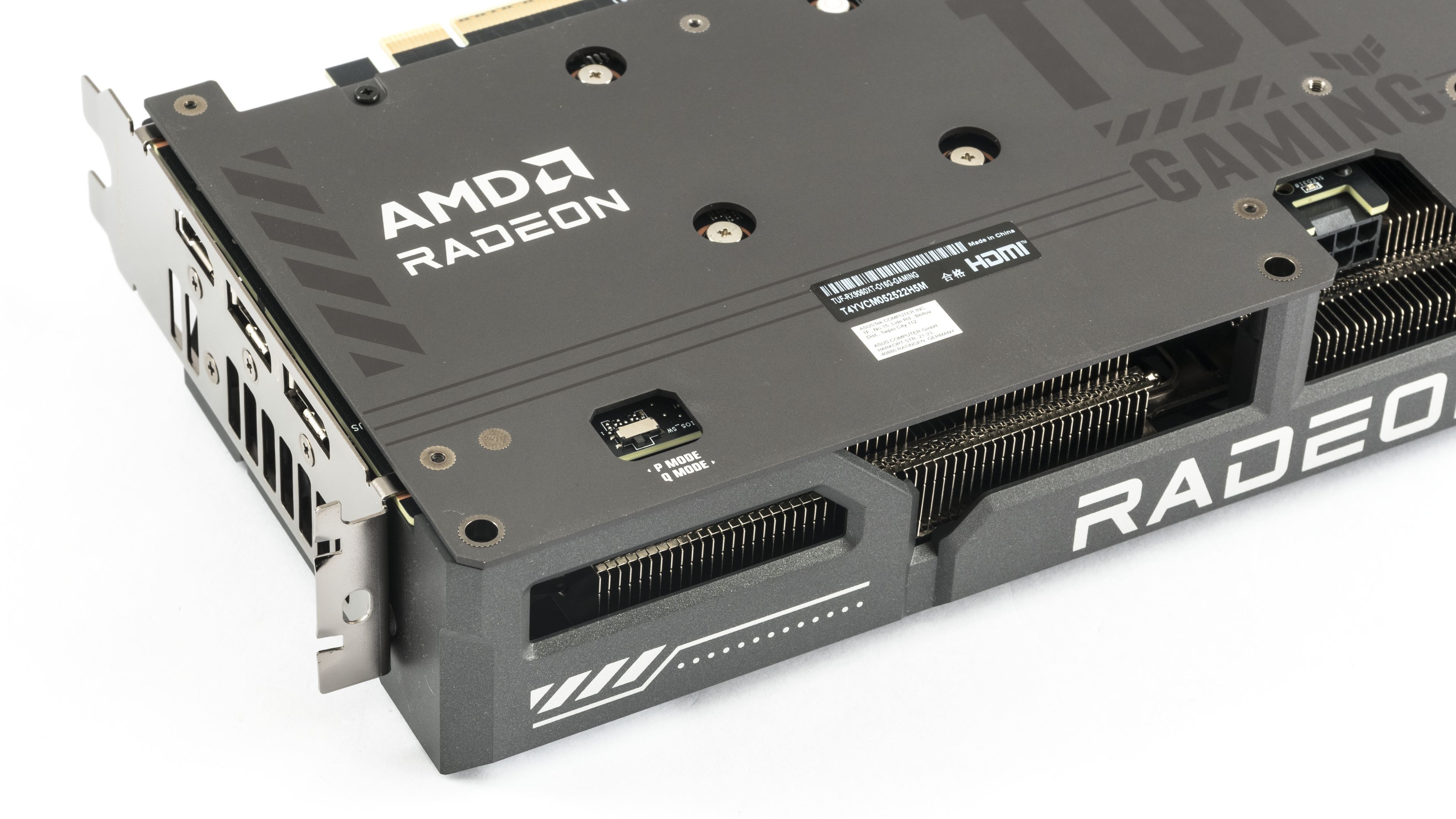
There’s a BIOS switch near the bracket. By default, it’s set to Performance (P Mode).
From above, you can see that a large part of the rear fan is left open for airflow. The middle fan spins in the opposite direction. Where the blades of adjacent impellers meet, they don’t interfere with each other – instead, they push air in the same direction. This leads to more stable fan RPMs and a smoother acoustic profile.
The heatsink fills most of the space beneath the shroud. The fin stack could have been taller, but in silent mode, you’re more likely to notice coil whine than cooler noise anyway.
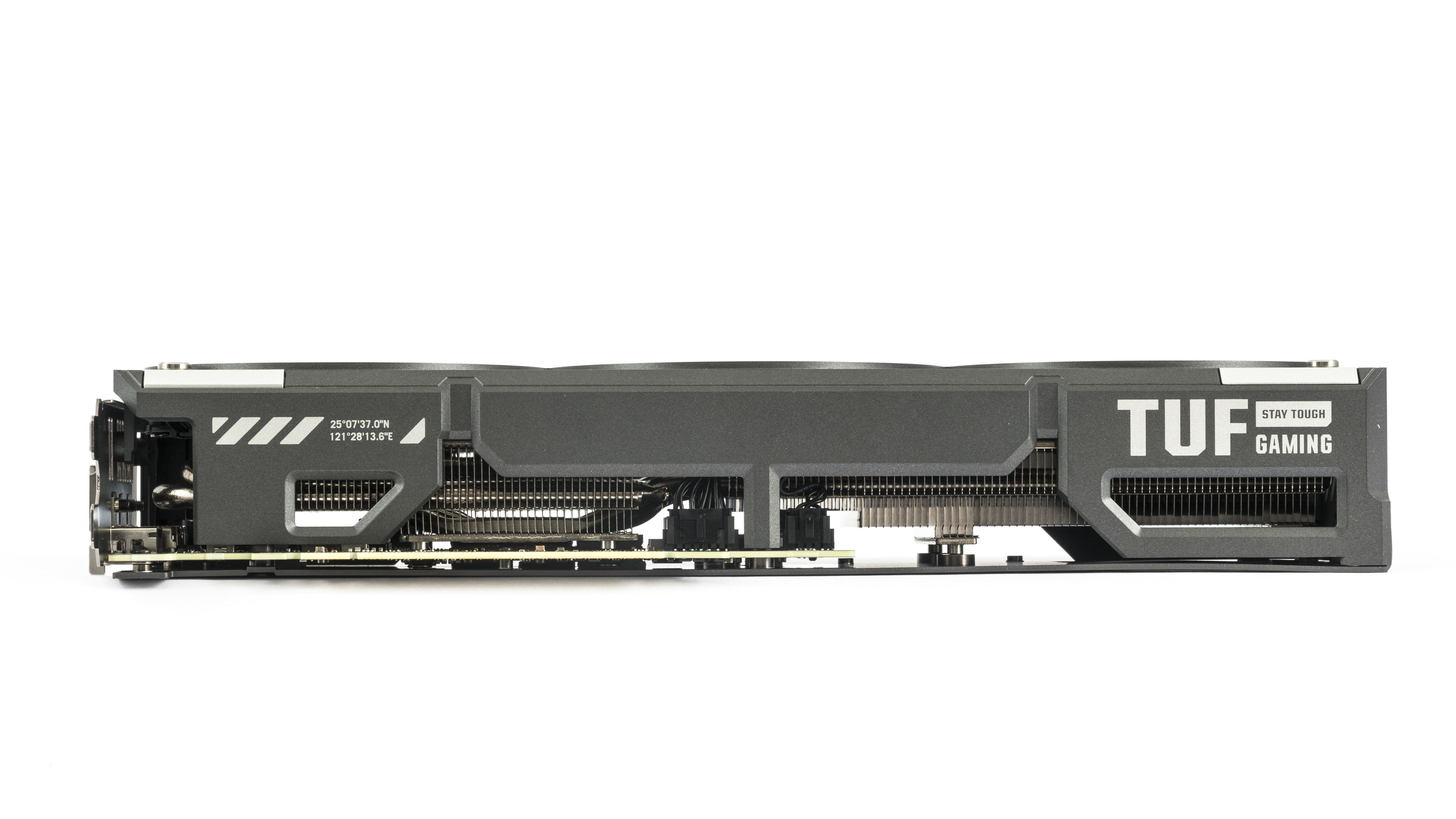
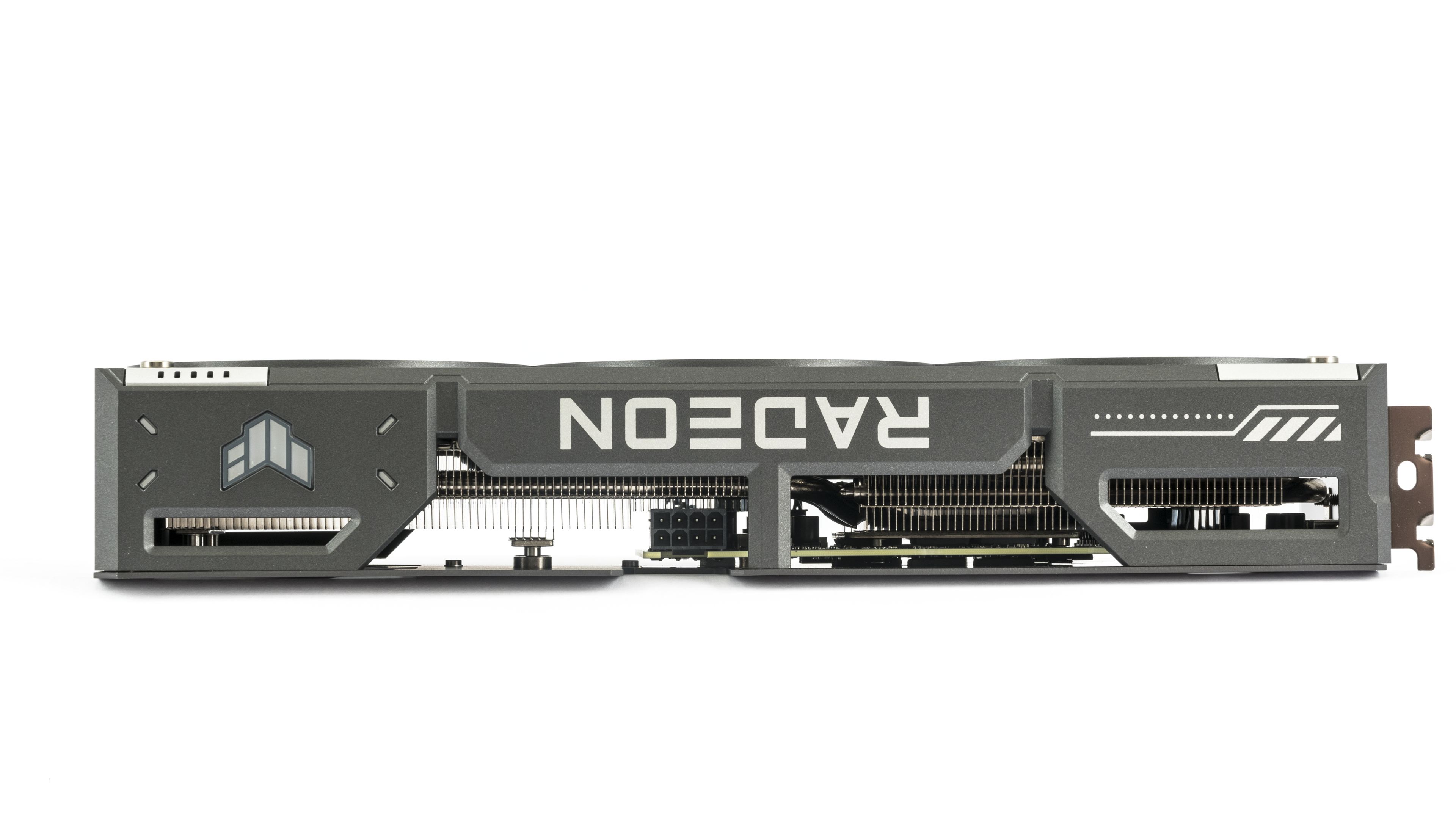
A few screws securing the shroud are also located on the bracket. On the back of the card, there are threaded mounting holes for support brackets or chassis mounting.
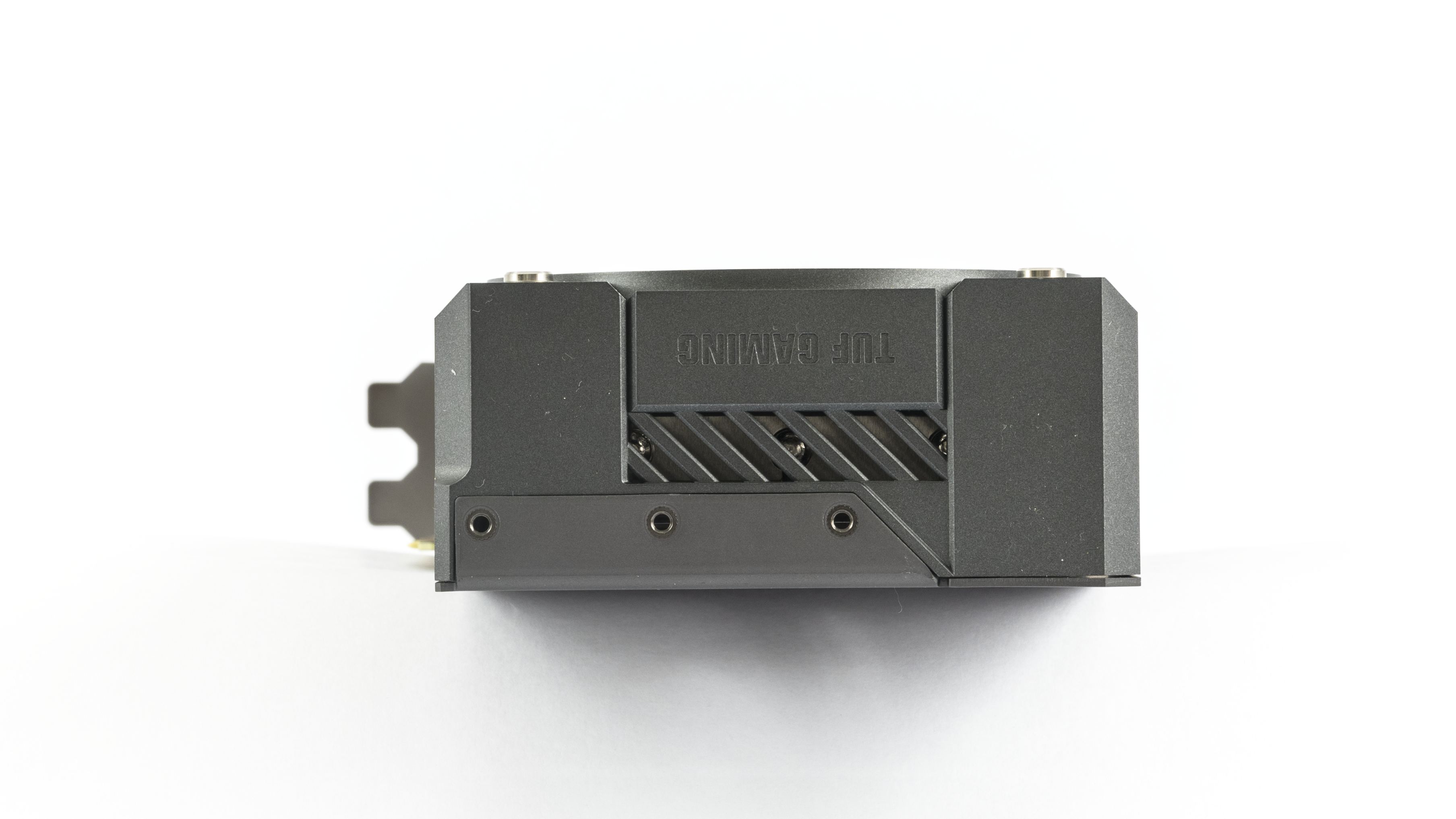
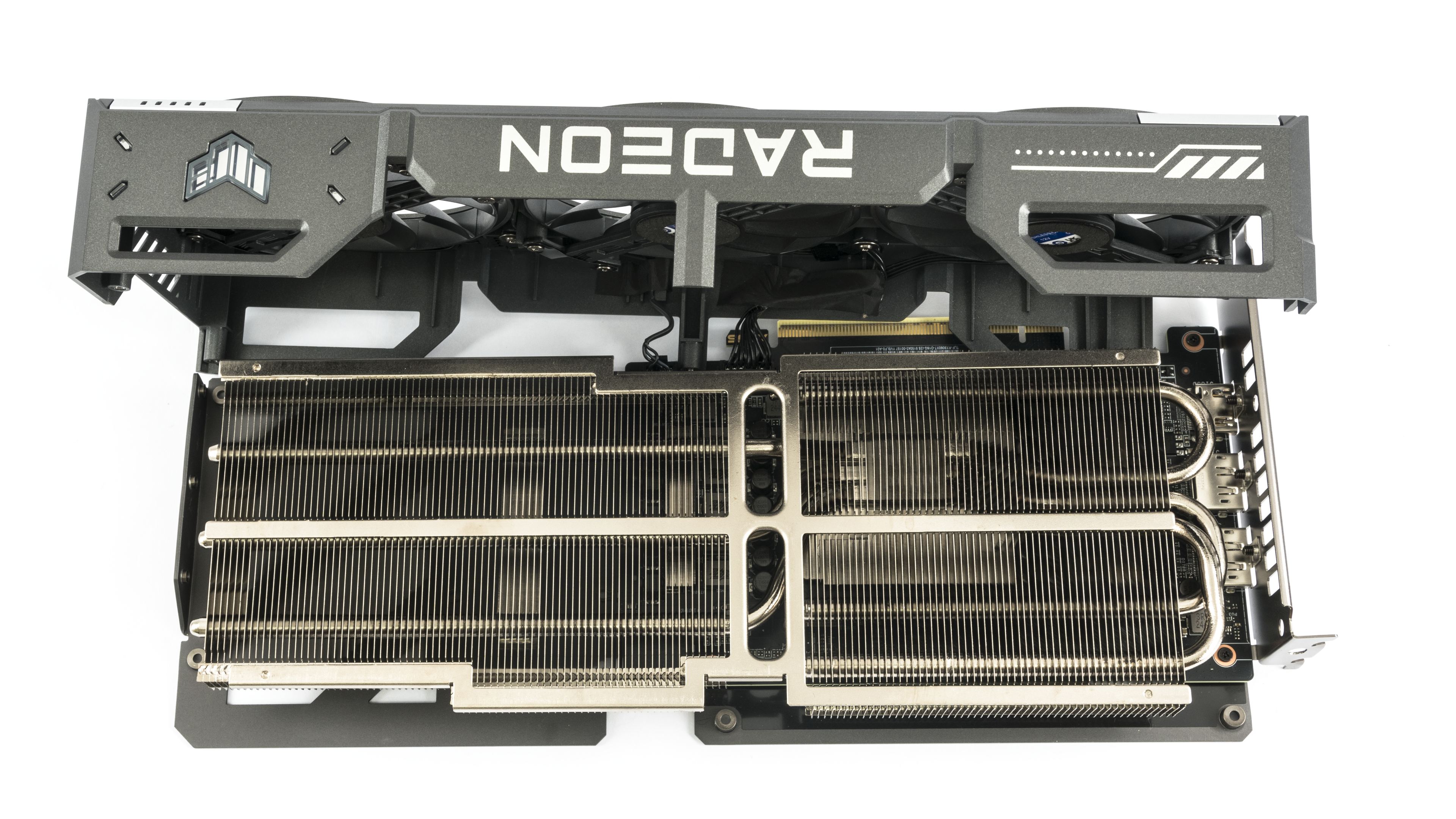
The heatsink itself is considerably larger than the one on the Sapphire card we tested yesterday. In a side view with the shroud removed, you can clearly see the thermal pads between the PCB and the backplate.

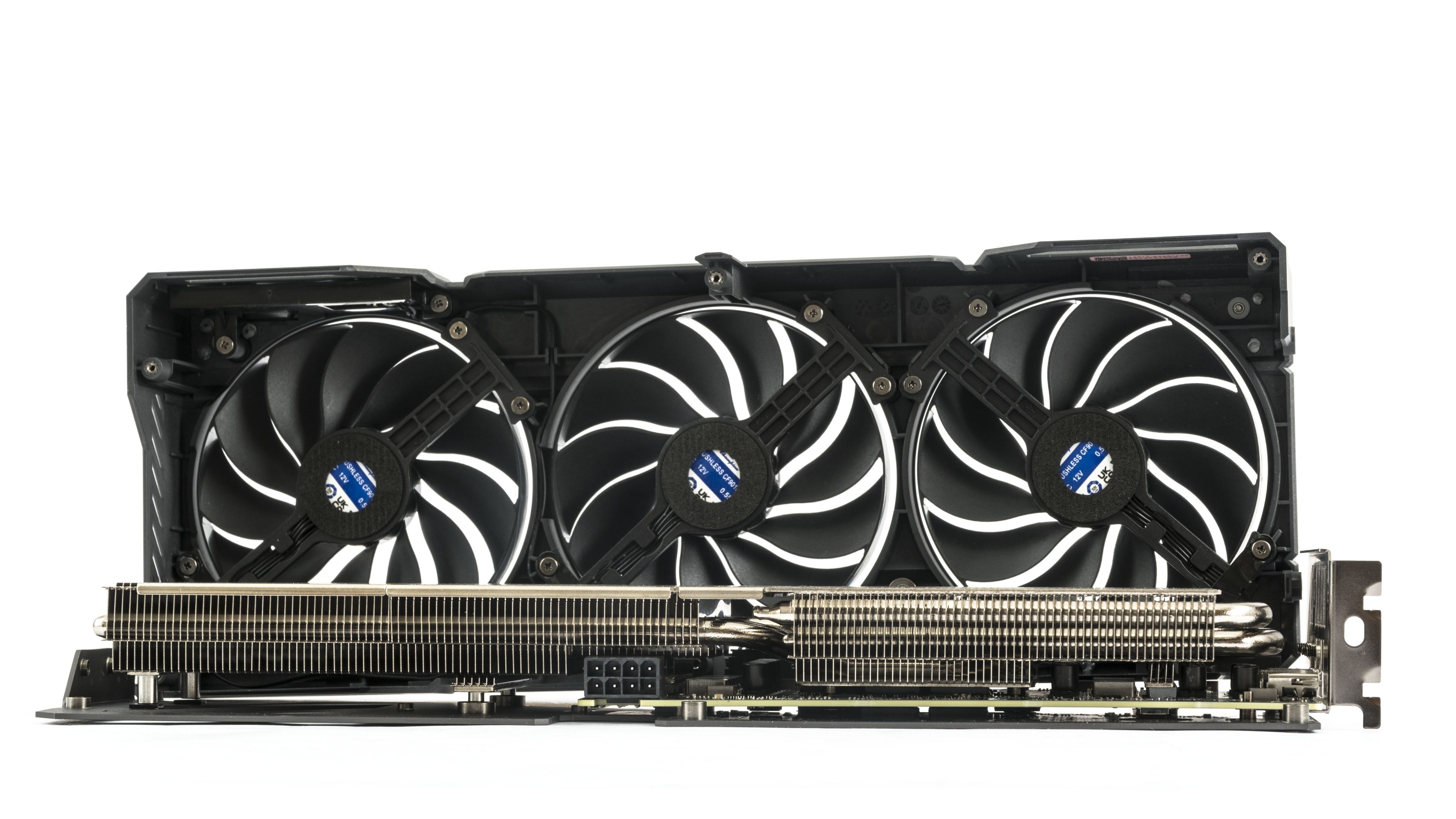
A close-up reveals the cooling of the MOSFETs and coils on the VRM. Heat from the MOSFETs is transferred via a thermal pad into the base of the large heatsink, while the coils are cooled by airflow.
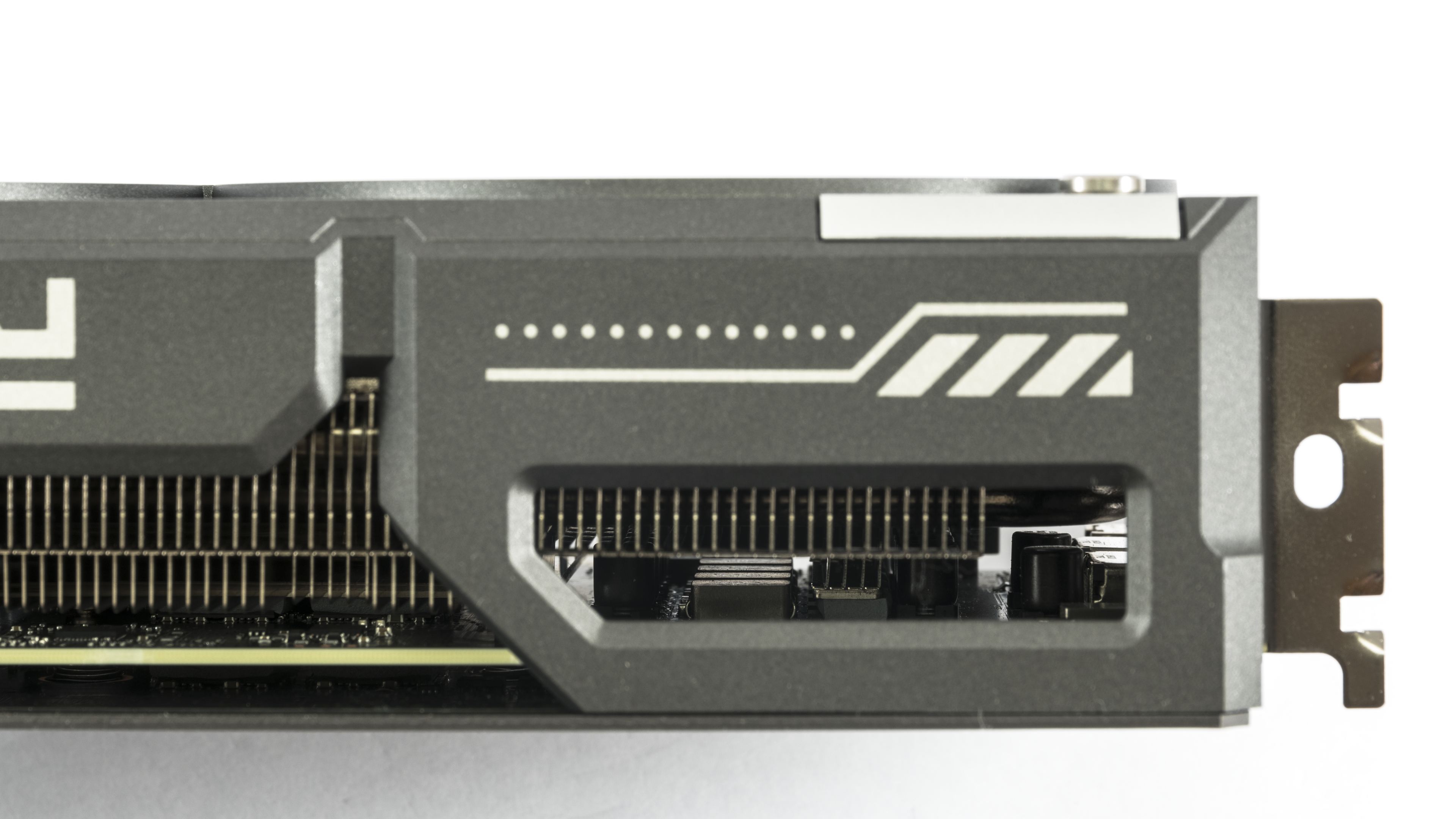
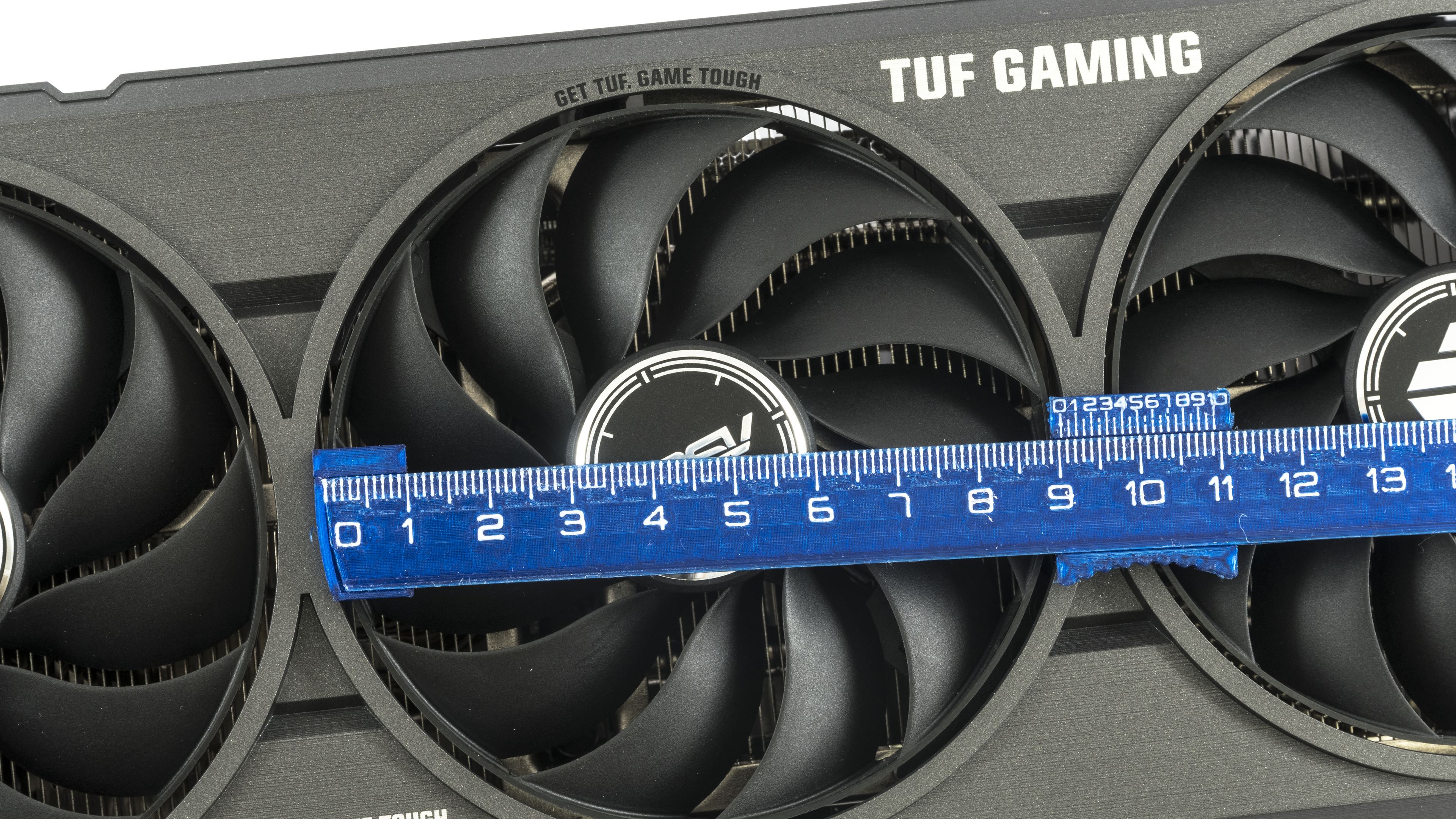
The fans fall somewhere in the middle of today’s standard sizes – impellers measure about 89 mm in diameter and are roughly 9 mm tall. That makes them low-profile and relatively slender. Compared to taller fans with broader blades, they tend to be quieter at similar RPMs.

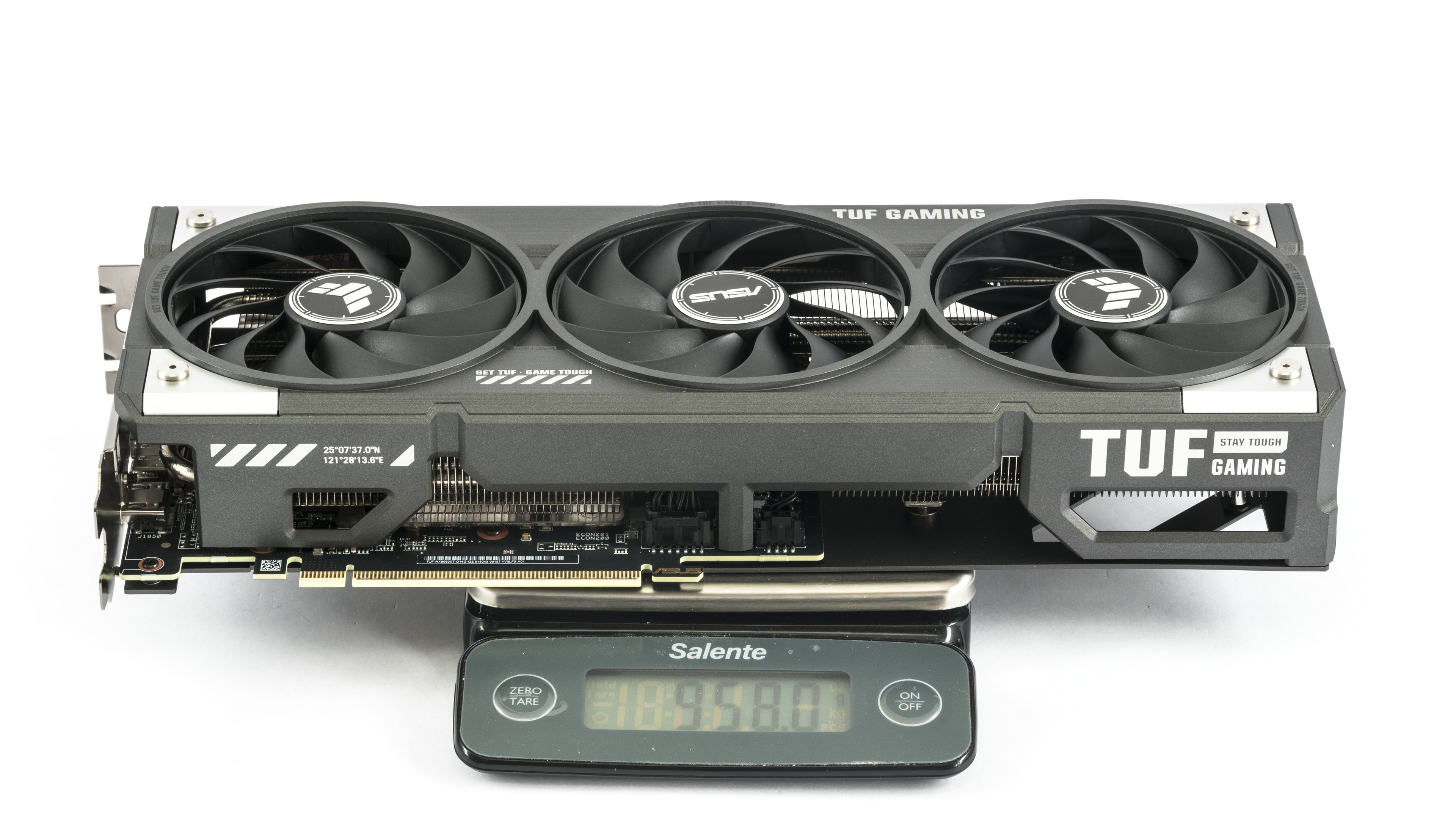
Weighing in at just 958 g, the card is among the lighter ones. The similarly designed TUF RTX 5060 and RTX 5060 Ti had slightly taller and heavier heatsinks.
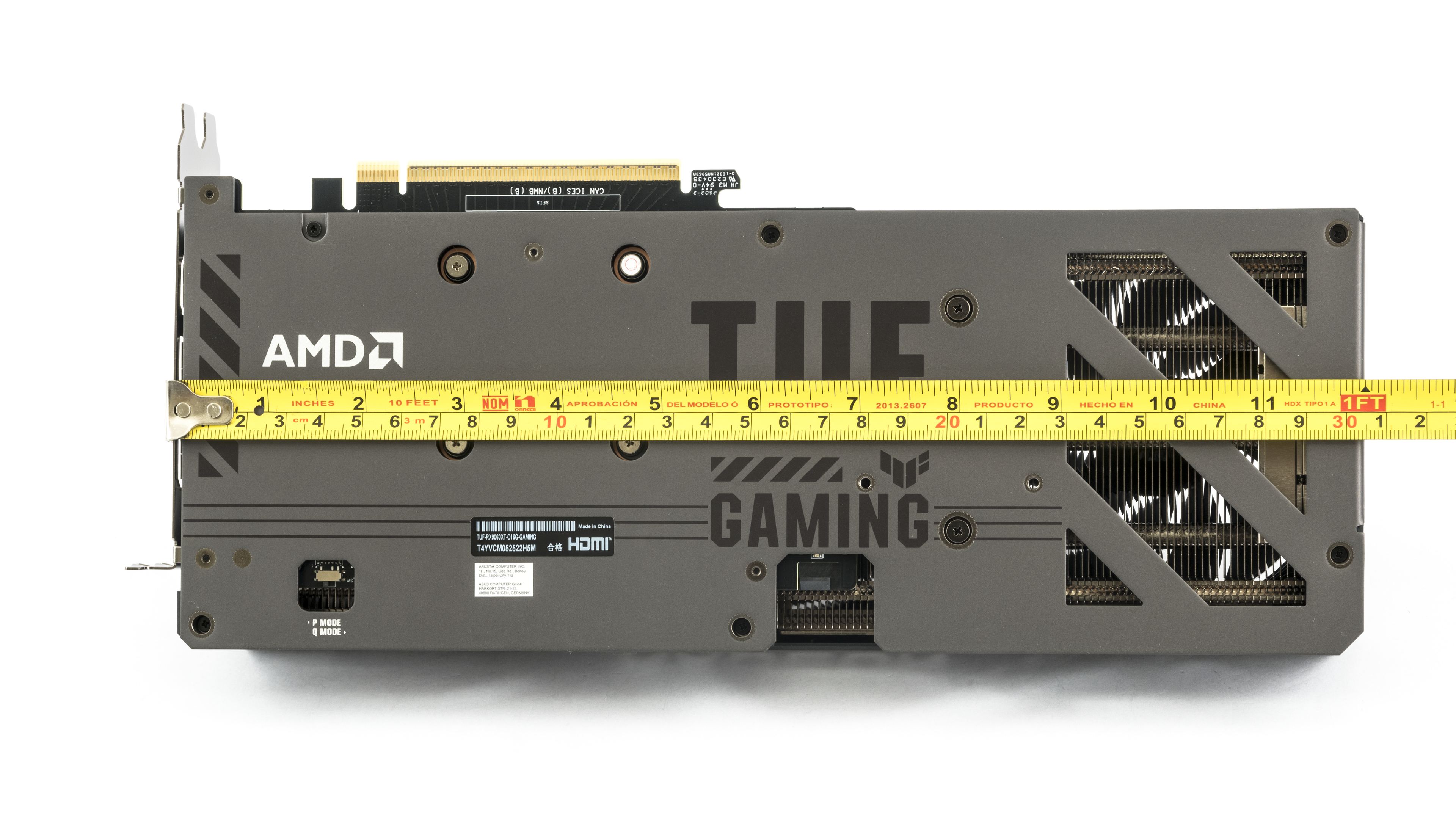
The card is 30,5 cm long and it extends beyond the bracket in width by only 2 cm. Height-wise, it’s 5 cm and takes up slightly more space than two slots.
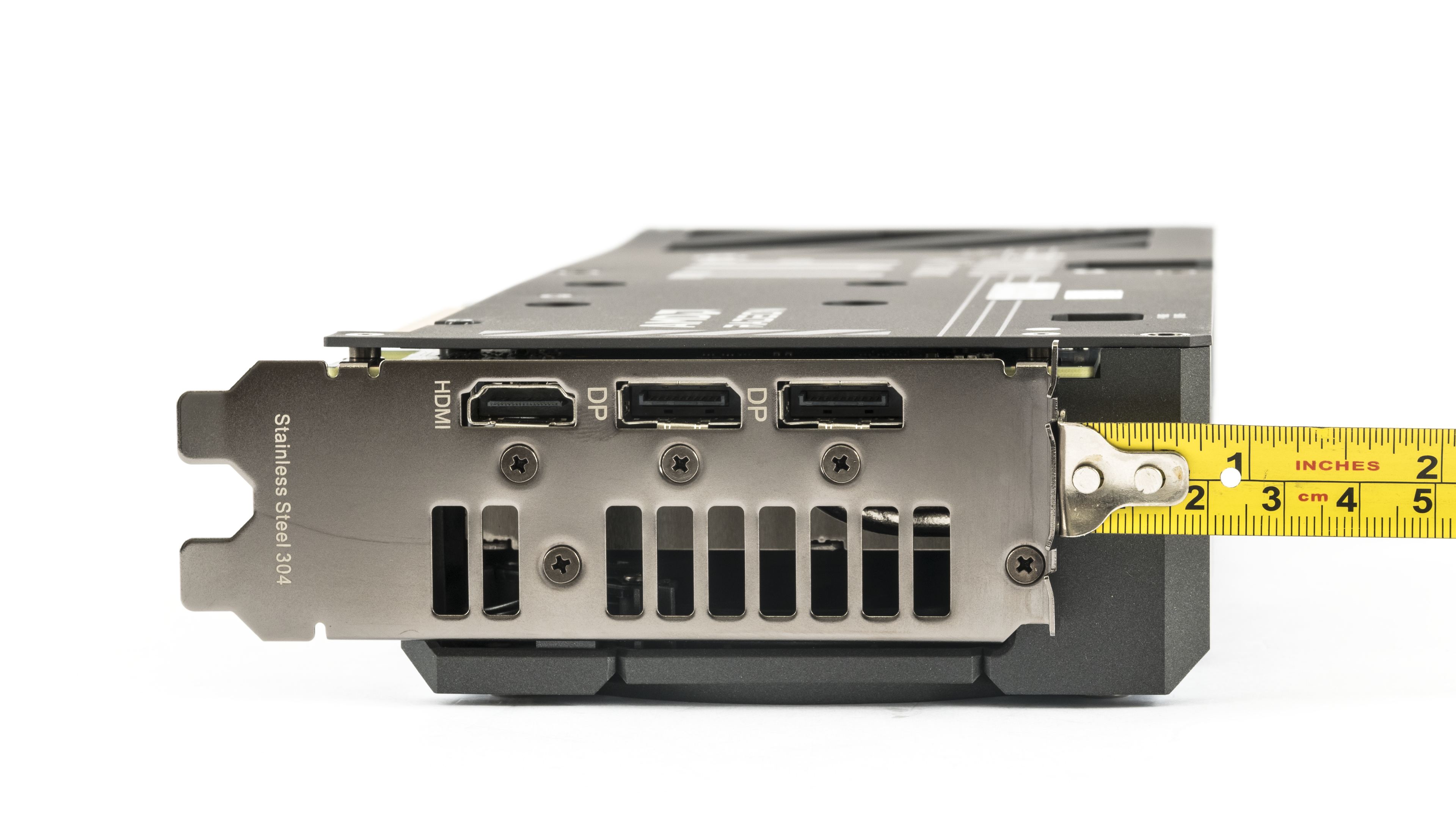
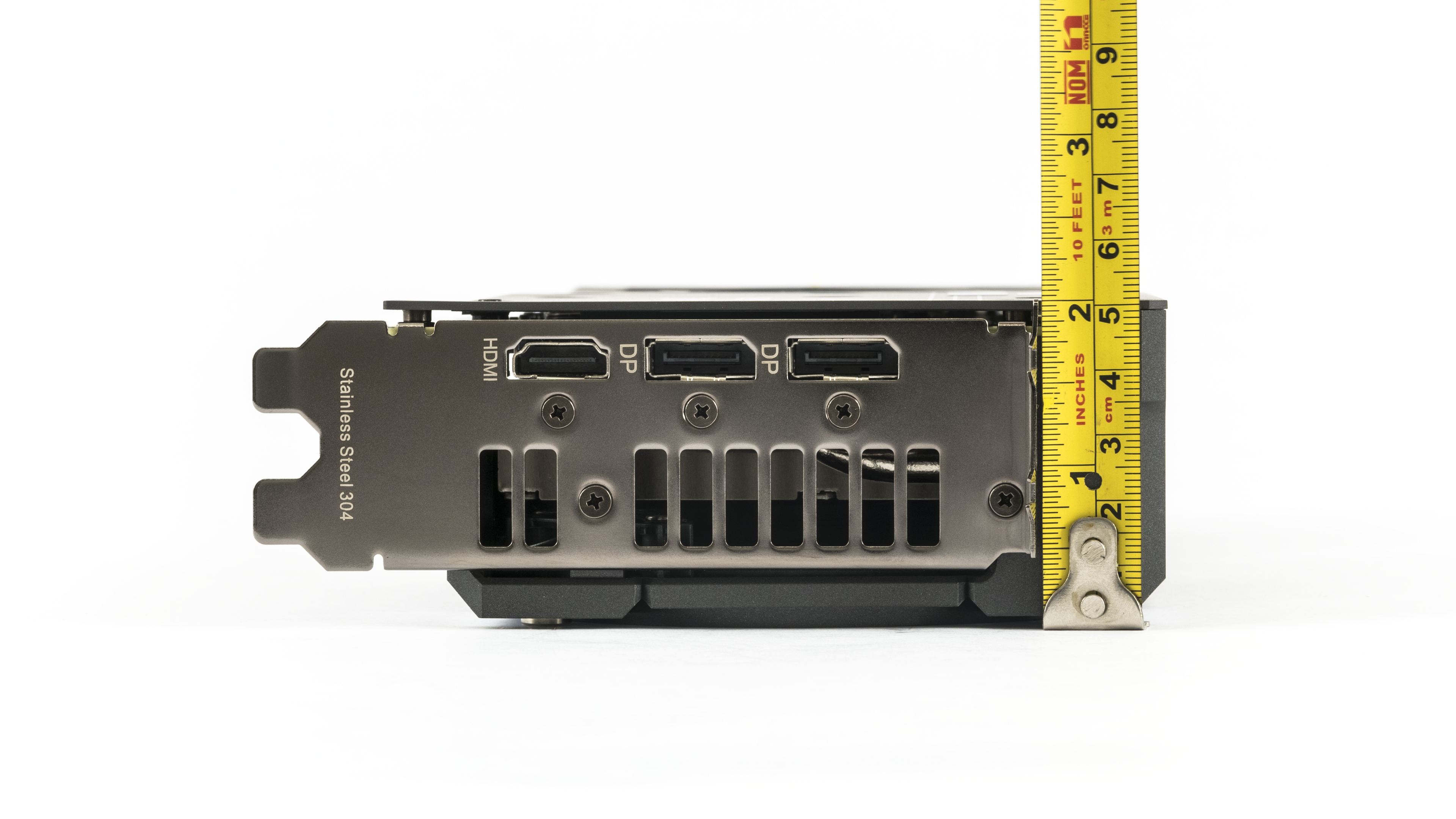
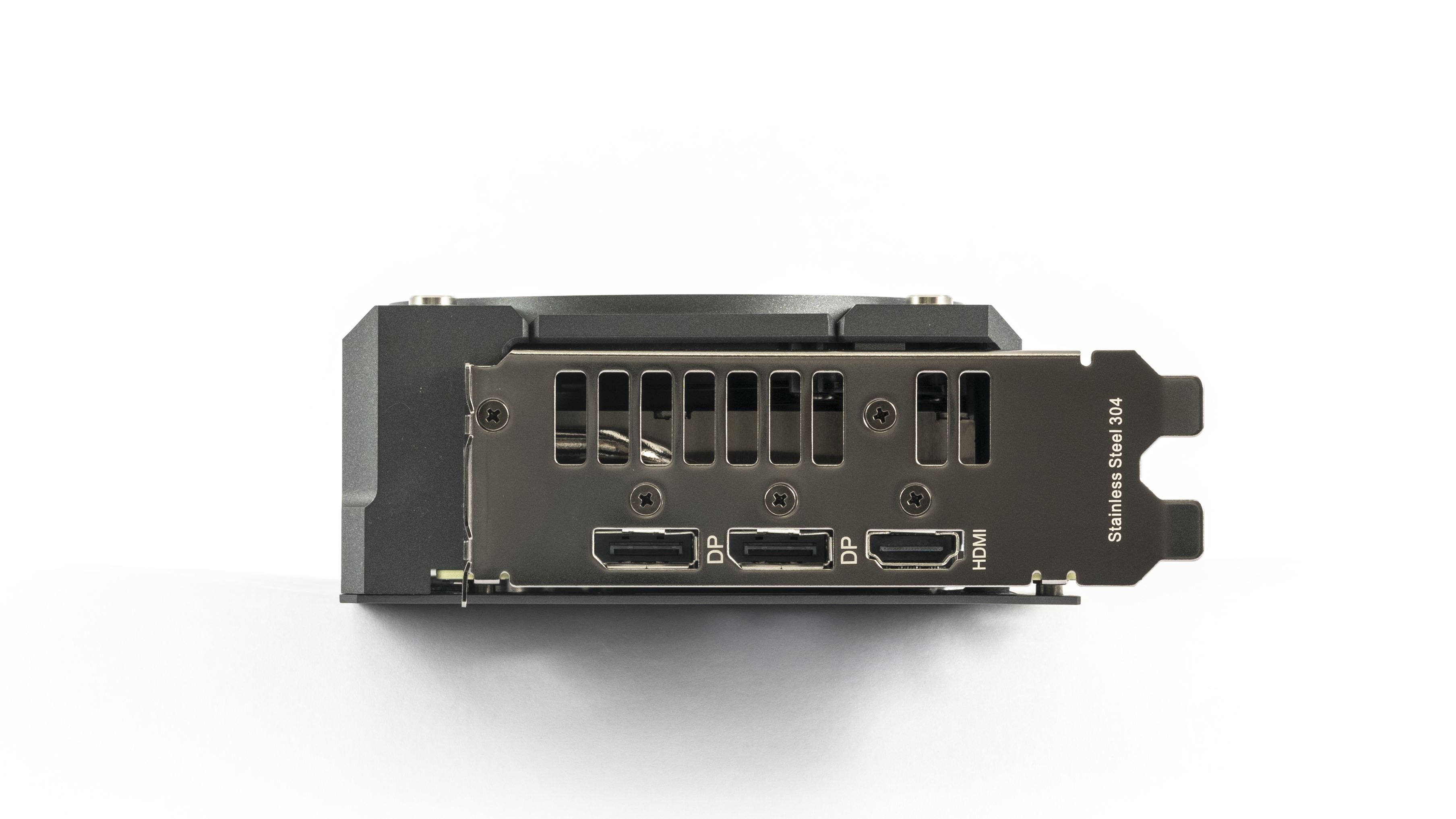
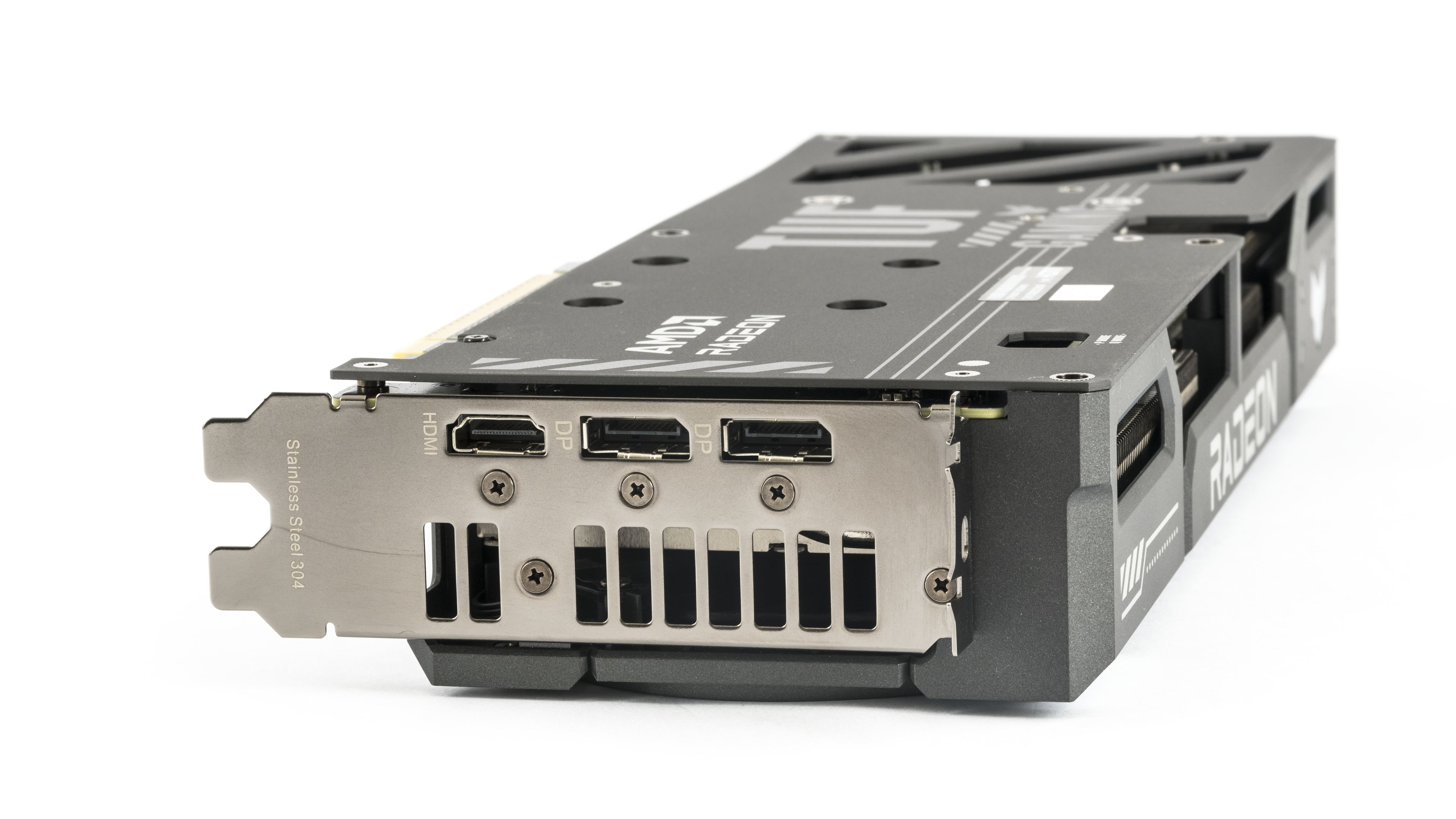
Instead of the usual four display outputs, the Radeon RX 9060 XT comes with just three. The Asus card offers one HDMI 2.1b and two DisplayPort 2.1a connectors supporting UHBR13.5. Compared to older RX 7000 Radeons with UHBR10, it’s an improvement. Against GeForce RTX 50 cards with UHBR20, it falls slightly behind. Still, for a card like the RX 9060 XT which is not meant for extreme 4K gaming, lower DisplayPort bandwidth won’t be an issue.
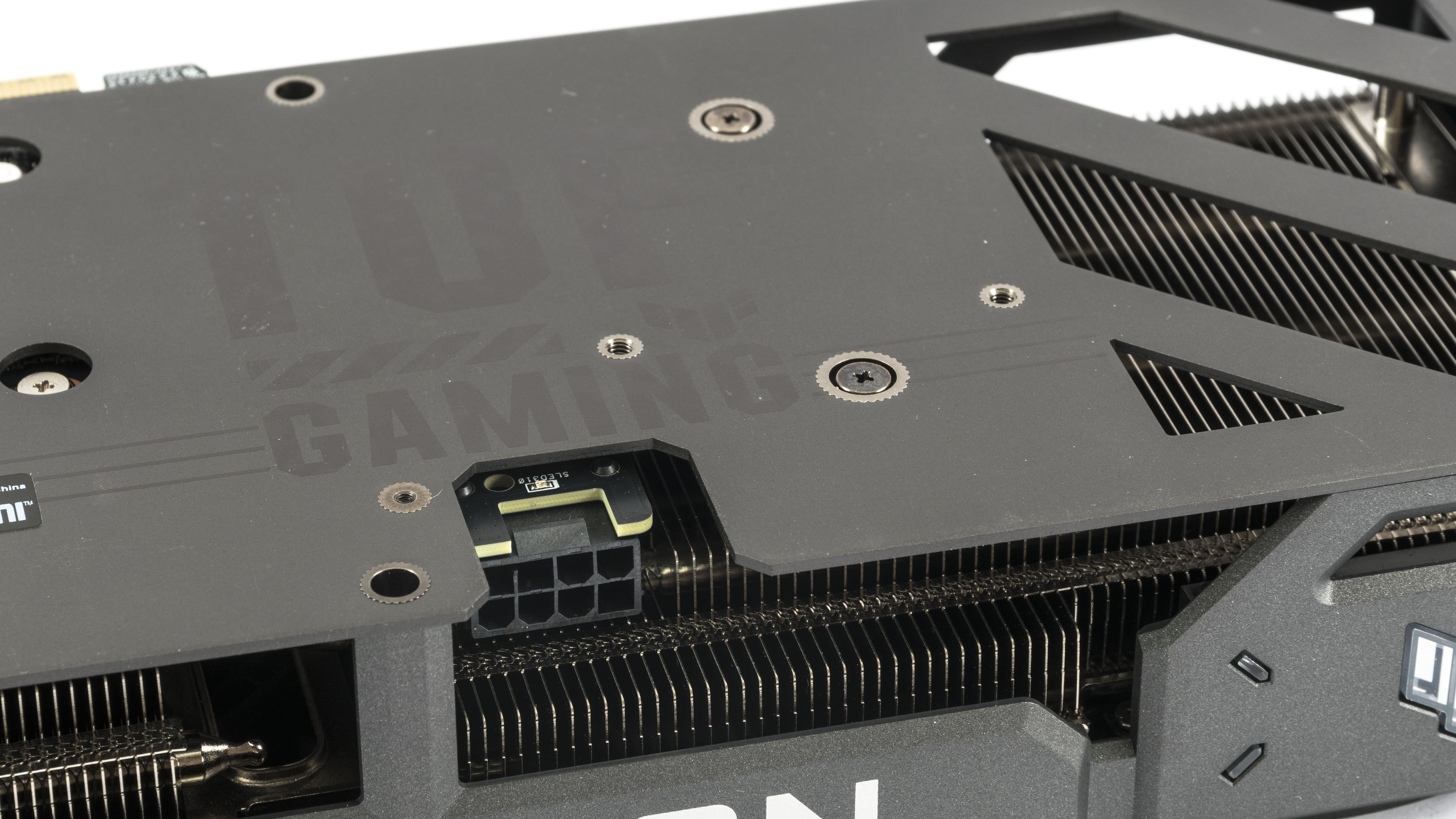
For auxiliary power, the card requires only a single 8-pin connector, with the latch facing upward.
We’ve covered the design, now let’s take a look at the test build and test results.
⠀