DLSS 5 Now Running on Intel GPUs Too: Support Vibe Coded by AI

Nvidia’s clearly intended the DLSS 5 game AI image-enhancement technology to be exclusive for GeForce GPUs—as with previous DLSS versions—if not outright a “vendor lock-in” to stifle competition. Ironically, it currently seems to be the DLSS tech easiest to get running on competing hardware, hough actual practical viability of the unofficial ports remains unclear. And modders have now managed to get it running on Intel GPUs as well. Read more “DLSS 5 Now Running on Intel GPUs Too: Support Vibe Coded by AI” »

New Nvidia and AMD GPUs Not Coming Until 2028. Except for one

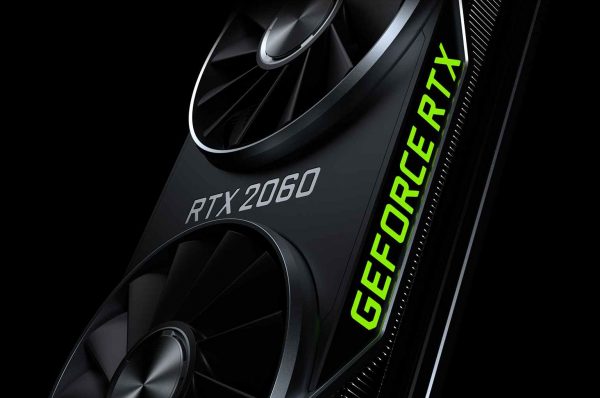
It used to be the case that new generations of graphics cards would arrive every two years. GeForce RTX 3000 and Radeon RX 6000 at the end of 2020, RTX 4000 and Radeon RX 7000 at the end of 2022. However, the last generation already went off track, and things are looking to get even worse: the GeForce RTX 6000 series reportedly won’t launch until 2028. The same is reportedly true for next-gen Radeons—although perhaps not quite. Read more “New Nvidia and AMD GPUs Not Coming Until 2028. Except for one” »

Intel Adds High-NA Tech to 1.8nm, Already Using it in Production

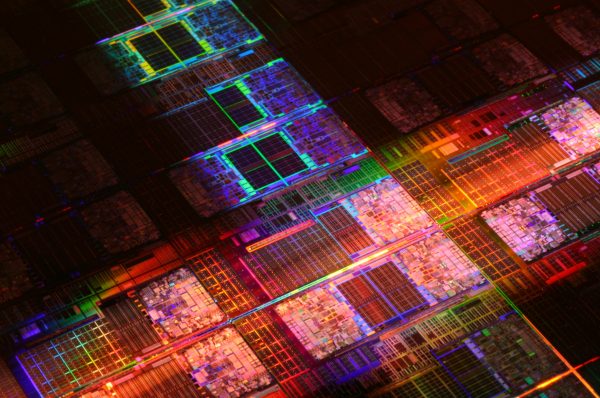
Last week, at the SPIE Photomask Technology + Extreme Ultraviolet Lithography conference, Intel and ASML announced a surprising development. In cooperation with ASML, Intel has already manufactured one million silicon wafers using High-NA, which is a technology representing the next major leap in advanced chip manufacturing after EUV litography. Prior to this, High-NA was expected to be deployed only several years from now. Read more “Intel Adds High-NA Tech to 1.8nm, Already Using it in Production” »

Arm’s C2-Ultra Core raises 1T Performance by up to 15% [Analysis]

It’s not just Apple’s new A20 Pro mobile chip. Arm, the company designing the instruction set used by mobile SoCs as well as full core designs licensed by companies such as MediaTek, Nvidia, and others, is now introducing a new generation of CPU architectures as well. Arm replaced the Cortex cores with the Lumex C1 series last year, and now follows up with a new C2 generation that pushes the single-threaded performance further. Read more “Arm’s C2-Ultra Core raises 1T Performance by up to 15% [Analysis]” »

AMD Releases New Budget CPUs. Even for the AM4 Socket

It looks like whole ten years since the time AMD officially launched the AM4 platform (initially for the Excavator architecture and only on the OEM market, in 2016), a new CPU will now be released for this socket. But not a completely new one. AMD has now released two configurations that did not previously exist, but are based on 2020 and 2022 silicon, and the first of them is coming to the older platform using DDR4. Read more “AMD Releases New Budget CPUs. Even for the AM4 Socket” »

Nvidia Changes Course, DLSS 5 Coming to Some Older Cards

Nvidia finally released DLSS 5 last week, which you could read about here (and we covered the impact on performance and power draw here). There were also some unpleasant news: when Nvidia announced the first game launch (the release of NBA2K27), the company stated DLSS 5 support would only be available on GeForce RTX 5000 cards, not on older generations. Now, however, there has been a change of course. Read more “Nvidia Changes Course, DLSS 5 Coming to Some Older Cards” »

Next-gen Radeon GPUs: RDNA 5 architecture clock targets leaked

2027 is approaching with new generations of GPUs, although they will be delayed compared to the previous two-year cycles. AMD has GPUs with the new RDNA 5 architecture coming, which could incorporate fairly major changes compared to today’s RDNA 4 based  GPUs, as well as a new manufacturing process. Thanks to the latter, clock speeds will apparently increase, although perhaps not by as much as one would have expected. Read more “Next-gen Radeon GPUs: RDNA 5 architecture clock targets leaked” »

mVolt+ Unlocks Forbidden GeForce RTX 5000 Overclocking Options

Overclocking graphics cards is quite different from how “OC” works on CPUs. GPUs generally operate at fairly low voltages and clock speeds, and their overclocking is mostly artificially limited by various power or voltage limits in the drivers and firmware. The same is true of Nvidia’s current cards. But the artificial OC limits have now been bypassed, so it may be possible to extract significantly higher performance from them, although not without risks. Read more “mVolt+ Unlocks Forbidden GeForce RTX 5000 Overclocking Options” »

DLSS 5: First Game Out, Inner Workings and Performance Cost

The files of the AI game image enhancement technology DLSS 5 have leaked last week, and modders added the filter to the first games—unofficially. However, the official launch was not far behind. Nvidia has announced that it is now officially launching in the first game, NBA2K27, which is also the title from which the files previously leaked. Starting tomorrow, you will be able to try out what it looks like and what its costs are. Read more “DLSS 5: First Game Out, Inner Workings and Performance Cost” »

Intel Power Limit Inflation Is Back with 296W Nova Lake CPUs

Cautiously optimistic news have been coming about the upcoming Intel Nova Lake processors lately (if a 9% 1T performance boost is a reason for optimism). Unfortunately, leaks that paint a bleaker picture are also coming in. Although Nova Lake processors will transition from a 3nm to a more advanced 2nm process, which would normally be expected to improve efficiency, their power consumption will reportedly increase instead. Read more “Intel Power Limit Inflation Is Back with 296W Nova Lake CPUs” »

Nvidia Has Launched Improved DLSS 4.5 with Ray Reconstruction

In spring, Nvidia announced a new version of the DLSS 4.5 gaming upscaling technology coming in August, promising improved output quality, through settling a debt of sorts: The DLSS 4.5 technology eliminated the Ray Reconstruction technology (originally introduced as part of DLSS 3.5), so you lost access to it when enabling DLSS 4.5. Now this incompatibility has been solved, and Ray Reconstruction is also coming to DLSS 4.5. Read more “Nvidia Has Launched Improved DLSS 4.5 with Ray Reconstruction” »

IBM’s Processor Supports Two Instruction Sets at Once: Z and Arm

We wrote that AMD has once again canceled its plans to produce Arm processors. However, the industry veteran IBM is now moving in the opposite direction, actually adopting the Arm instruction set. But it is doing so in an interesting way—it is not replacing its existing architecture (or at least not yet), but is introducing a processor that features its own instruction set while also being fully compatible with the Arm architecture. Read more “IBM’s Processor Supports Two Instruction Sets at Once: Z and Arm” »

Surprise Triumph for Intel? Razor Lake has a new P-Core

We recently reported that Intel is preparing special laptop CPUs with BLLC, its equivalent of AMD’s 3D V-Cache. CPUs with BLLC will feature up to 144 MB of L3 cache promising significant boost in games. BLLC will come to laptops in the Razor Lake lineup, but that will not be the only interesting thing about them. A leaker has shared further details, suggesting that this could be a surprisingly powerful generation. Read more “Surprise Triumph for Intel? Razor Lake has a new P-Core” »

First Intel Nova Lake Processors Spotted, with AVX-512 and APX

While AMD is preparing its next-gen Zen 6 CPUs, Intel is also approaching the launch of a significant next-gen CPUs codenamed “Nova Lake”. With 2nm process and a new architecture, it could improve the competitiveness of Intel’s chips after the  somewhat disappointing Core Ultra 200 “Arrow Lake” generation. The first functional and running Nova Lake chips have now apparently emerged, revealing these CPUs for the first time. Read more “First Intel Nova Lake Processors Spotted, with AVX-512 and APX” »

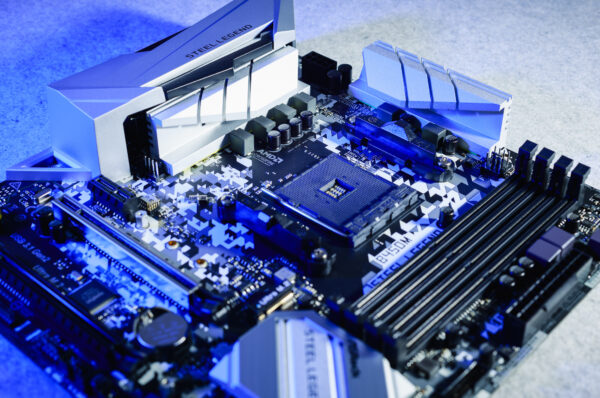
How a Motherboard Works. Intended for Secondary Schools

The motherboard is a component that’s commonly not even listed in the hardware specifications provided by PC vendors or sellers, ironically. Yet it is one of the most important components, because it interconnects almost all the other parts and has to handle a lot of work. In this article, we’ll look at what you should know about desktop computer motherboards and how to handle them when building a PC or performing maintenance. Read more “How a Motherboard Works. Intended for Secondary Schools” »