AMD Chipset Cards Adding PCIe, SATA Lanes Emerge in China

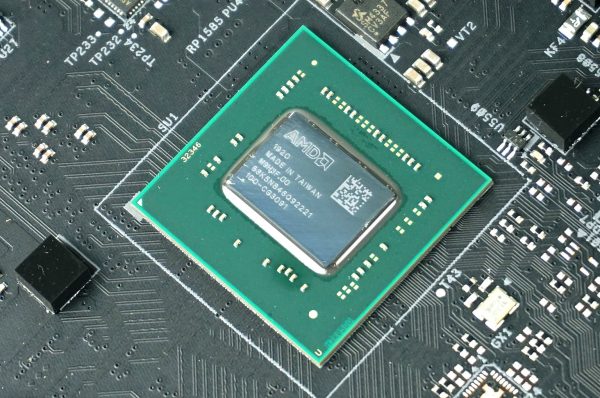
Although chipsets are considered a specialized component characteristic of motherboards, a chipset is actually not all that critical (or even required at all) on AMD’s AM4 and AM5 desktop platforms. Chipsets such as the B650 are just bridges that expand PCIe 4.0 (and SATA) connectivity. And as it turns out, they can do this as add-in cards as well. You can even use one to add M.2 or SATA interfaces to an Intel processor. Read more “AMD Chipset Cards Adding PCIe, SATA Lanes Emerge in China” »

What can Instinct MI455X tell us about RDNA 5 GPUs? [Analysis]

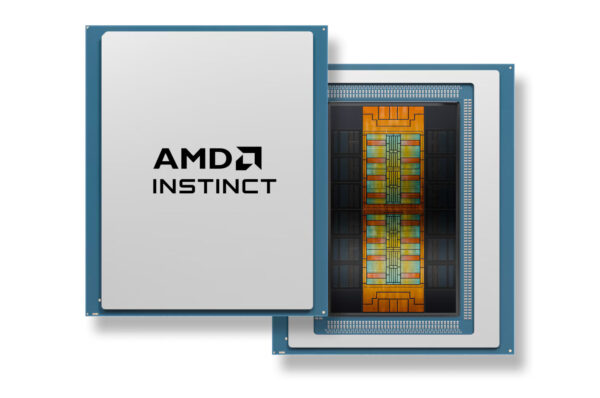
Last month, AMD unveiled its CDNA 5 architecture-based Instinct MI455X AI accelerators. This matters even outside AI and server workloads, because CDNA 5 is now related to the RDNA 5 architecture that will power the next generation of Radeon gaming GPUs. Let’s take a look at what the new Instincts reveal about RDNA 5 and what else has leaked about this architecture. This includes one change that is rather surprising. Read more “What can Instinct MI455X tell us about RDNA 5 GPUs? [Analysis]” »

Intel CPUs To Get Hyper‑Threading Back in Two Years

One of the signs—or perhaps more a symbol—accompanying Intel’s decline in the processor space the company was an unchallenged leader of just a few years ago, was the removal of HT or Hyper‑Threading, a technology processing two threads on a single core that significantly boosted multithreaded performance. So much so that the new CEO promised a reintroduction. Intel has now confirmed this, providing an outlook on when it will happen. Read more “Intel CPUs To Get Hyper‑Threading Back in Two Years” »

HWiNFO Now Shows Temps of Individual Video Memory Chips

Not long ago, HWiNFO gained the ability to monitor GPU hotspot temperatures—local hotspots with significantly higher temps than the average having been reported by Nvidia chips. This has been followed by another improvement in graphics card temperature monitoring. You will now be able to look at the temperatures of all memory chips on the card, which can reveal cooling problems in much the same way as the GPU hotspot temperature. Read more “HWiNFO Now Shows Temps of Individual Video Memory Chips” »

Instinct MI455X and the Helios Rack: Can AMD beat Nvidia in AI?

AMD unveiled Zen 6-based server processors at the Advancing AI 2026 event, dubbing them the best generation it has ever released. The company is focusing on complete solutions including its own Helios server racks, though, which incorporate a new generation of GPUs: the Instinct MI455X, the first GPU based on an architecture derived from the RDNA gaming GPU family and a product that is intended to take AMD to a new level in the AI market. Read more “Instinct MI455X and the Helios Rack: Can AMD beat Nvidia in AI?” »

China Getting Their Own Chipmaking Machines—But No EUV Yet

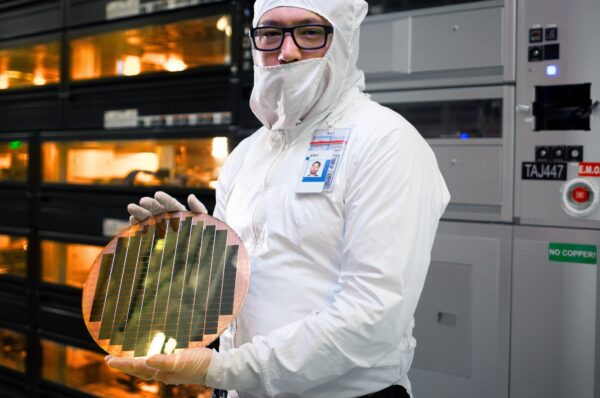
Technology sanctions—like those imposed on China—are often criticised as something that compels affected states to develop self-reliant alternatives, boosting their economy. It is not that simple, but China now appears to be making progress in its efforts to make its technology industry self-sufficient and capable of manufacturing everything domestically: not only locally fabbed chips, but also machines for making them. Read more “China Getting Their Own Chipmaking Machines—But No EUV Yet” »

How Does a Processor Work? Intended for Secondary Schools

The processor, also referred to as the central processing unit (CPU), is the most fundamental and the most important part of a computer. It is the part that executes all tasks (instructions) that are fed to the computer through program code. At the same time, peripheral devices, RAM and storage (hard drives, SSDs, oreven tape in the past) are connected to it in various ways. It is therefore truly the central element of a computer. Read more “How Does a Processor Work? Intended for Secondary Schools” »

Nvidia unveils its most powerful GPU yet: 3nm Rubin for AI

Presenting at SIGGRAPH 2026, Nvidia has revealed more details about its latest upcoming GPU generation—Rubin. We are talking about the Rubin GPU for data centers and artificial intelligence though, not gaming graphics cards. The Rubin AI accelerator will be more important to Nvidia, though, as it promises the company hundreds of billions of dollars more in revenue from various firms hoping to establish themselves in the AI sector. Read more “Nvidia unveils its most powerful GPU yet: 3nm Rubin for AI” »

Intel resumes investing in EU. Ireland will get a 3nm node Fab

Under Patrick Gelsinger, Intel planned to build its first semiconductor fab in continental Europe, in Magdeburg, Germany to expand the company’s manufacturing capacity and turn Intel into a foundry rivalling TSMC. The project was also intended to help develop semiconductor manufacturing within the EU. Intel’s financial difficulties and cutting costs was the end of the project, but it seems Europe investments are back on the table now. Read more “Intel resumes investing in EU. Ireland will get a 3nm node Fab” »

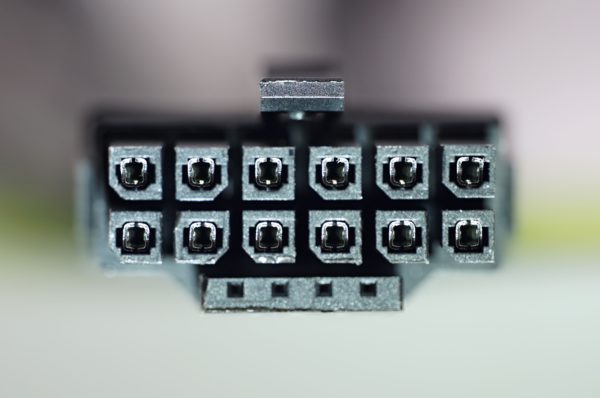
Even a Temperature Sensor Failed to Prevent 12V-2×6 Cable Melting

The new 12VHPWR—later renamed to 12V-2×6— power connector is plagued with persistent reliability issues involving random overheating, melting, and even burning ever since Nvidia graphics cards adopted it. Since then, every conceivable company—that notably not including Nvidia itself—has been trying out various workarounds. However, it seems that the connector’s tendency to fail is so consistent that even thermal protection cannot stop it. Read more “Even a Temperature Sensor Failed to Prevent 12V-2×6 Cable Melting” »

Multi-frame generation coming to Radeon GPUs, drivers show

Last year, Nvidia introduced multi-frame generation that inserts 2, 3, or even 5 AI-interpolated “fake” frames between real frames (though only for GeForce RTX 5000-series cards—with users of older GPUs out of luck). Since then, Intel has also introduced multi-frame generation, but it has never been available on Radeon graphics cards. That now appears to be changing, as AMD seems to be preparing the feature for an upcoming driver release. Read more “Multi-frame generation coming to Radeon GPUs, drivers show” »

Nvidia plans GeForce RTX 5090 SE graphics. A chance for gamers?

A few days ago, we reported that the previously canceled GeForce RTX 5080 Super card is once again on track for launch. It was expected to be the fastest model in the Blackwell refresh lineup, but Nvidia is apparently preparing another model above it. However, it will not officially carry the “Super” designation, since it will be a cut-down sibling of the flagship GeForce RTX 5090. As such, it could prove to be an attractive card for gamers. Read more “Nvidia plans GeForce RTX 5090 SE graphics. A chance for gamers?” »

Geekbench benchmark leak reveals Zen 6 core performance

It has been two years since AMD released Zen 5 Ryzen CPUs, and the launch of the next-gen Zen 6 CPUs should slowly be approaching—or at least we hope so. So far, there have not been many leaks indicating what kind of performance to expect, but this week a Geekbench database entry appeared showing a processor that appears to be a laptop Zen 6 sample—a Medusa APU. However, the performance scores raise more questions than answers. Read more “Geekbench benchmark leak reveals Zen 6 core performance” »

Intel reportedly solves the yield issues of its 1.8nm process

Intel’s chip technology has been plagued by problems over the past decade. The infamous 10nm node only became viable after years of delays and while the successor 7nm node was ultimately successful, it still came late. Since then, the company has never fully succeeded with the 4nm, 3nm, 2nm, nor with the1.8nm process which was supposed to mark a turning point. But latest reports suggest that Intel has finally managed a breakthrough. Read more “Intel reportedly solves the yield issues of its 1.8nm process” »

Seasonic confirms Nvidia’s incoming GeForce RTX 5080 Super GPU

If you’re planning to buy an Nvidia graphics card, it may be worth waiting. Nvidia apparently works on a “Super” branded refresh GeForce RTX 5000 cards. In the past, Super models have often offered significantly better specs and a superior price-to-performance ratio than the first wave of cards in a given generation, so the RTX 5000 Super lineup could also improve the product stack like that—including upping the problematic VRAM capacity. Read more “Seasonic confirms Nvidia’s incoming GeForce RTX 5080 Super GPU” »