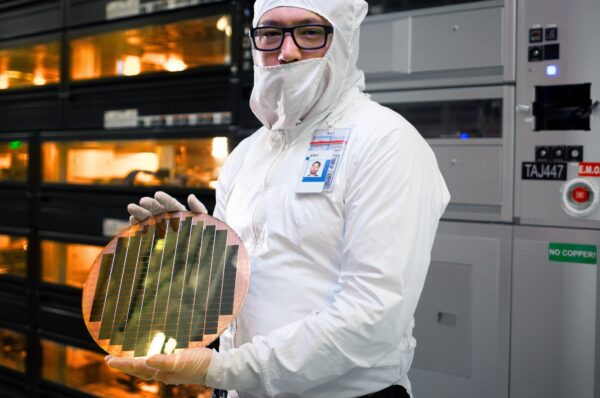
Back when the groundbreaking Ryzen processors launched, AMD was still manufacturing almost all of its products at GlobalFoundries, with the exception of chipsets designed by ASMedia. But now, by contrast, it is almost fully tied to the fortunes of TSMC. However, it looks like there could soon be some diversification in place. Samsung-made chips are coming to low-cost processors and they’ll also appear in Radeon graphics cards later. Read more “AMD to produce lowend CPUs and GPUs using Samsung’s 4nm node”
Author: Jan Olšan
AMD’s Zen 5 is said to be 40% faster over Zen 4. Can that be real?
The day when AMD releases processors with the new Zen 5 core, allegedly the biggest upgrade since the first Zen, is closing in. Their performance remains quite unclear though – on the one hand AMD’s materials talk about a 10–15% or a little bit more performance increase per 1 MHz, but at the same time there are rumors talking about 30% or now even 40% performance increase. So what to believe and what to watch out for? Read more “AMD’s Zen 5 is said to be 40% faster over Zen 4. Can that be real?”
FSR 3.1 improves quality, can add frame generation to DLSS
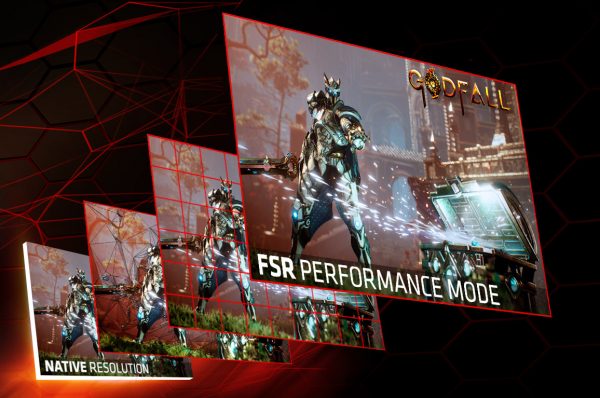
At GDC 2024, AMD unveiled the 3.1 version of its FidelityFX Super Resolution (FSR) game upscaling. This is an evolution based on last year’s FSR 3.0 and is designed to improve image quality, but also brings an interesting change. Previously, a frame generation technology (analogous to Nvidia’s frame generation in DLSS 3 and 3.5) was introduced in FSR 3. In FSR 3.1, it can now also be used separately, even combined with DLSS. Read more “FSR 3.1 improves quality, can add frame generation to DLSS”
Ray tracing on AMD RDNA 4 will be twice as fast thanks to BVH8
A few days ago, information leaked on Sony’s upcoming PlayStation 5 Pro console, which will feature upgraded hardware with a significantly stronger GPU and AI acceleration to enable AI-based PSSR upscaling. Other details have now emerged, however, with implications for the upcoming Radeon RX 8000 graphics, as they talk about the capabilities of RDNA 4 architecture’s GPUs in ray tracing. They are set to improve by quite a bit. Read more “Ray tracing on AMD RDNA 4 will be twice as fast thanks to BVH8”
GDDR7 memory for next-gen GPUs is ready, up to 48GHz clocks
Nvidia’s new generation of graphics cards, GeForce RTX 5000, and upcoming cards from AMD (Radeon RX 8000) and Intel are likely planned to use new GDDR7 graphics memory technology to deliver better bandwidth than both GDDR6 and GDDR6X. This technology has now been finalized by the JEDEC consortium and will allow effective speeds of up to 48 GHz, so there will be significant increases in bandwidth, up to 2–3× compared to current GPUs. Read more “GDDR7 memory for next-gen GPUs is ready, up to 48GHz clocks”
DirectSR unifies DLSS, XeSS and FSR, end of incompatible games
It’s five years since Nvidia began pushing upscaling into gaming with first-generation DLSS on GeForce RTX 2000 GPUs. The approach has caught on, and now both AMD and Intel have their own alternatives in FSR and XeSS. The big drawback is that each of these technologies has to be added to games separately. Microsoft is now coming to the rescue, standardizing upscaling within DirectX, so you’ll no longer be limited by whose GPU you own. Read more “DirectSR unifies DLSS, XeSS and FSR, end of incompatible games”
FurMark 2 is out. New GPU stress test now available for Linux
Back in the days when GPUs didn’t have sophisticated power management, the FurMark test was widely used to test their power consumption (and potentially stability). It was something of a stress test that exposed what maximum levels of power consumption and temperatures GPUs could reach. The test, dating back to 2007, has now been given a new version, the FurMark 2. It uses more modern technology like Vulkan and is also multiplatform now. Read more “FurMark 2 is out. New GPU stress test now available for Linux”
Radeon RX 7900 GRE now available worldwide, new models added
The Radeon graphics lineup is getting a new SKU slotted between Radeon RX 7800 XT and the Radeon RX 7900 XT. AMD launched the Radeon RX 7900 GRE into that gap last summer even ebfore the launch of the RX 7800 XT, but initially it was a China specific SKU. The cards started to be available in the western markets later though and AMD has now made this official – the Radeon RX 7900 GRE is coming out globally and with a larger selection of models. Read more “Radeon RX 7900 GRE now available worldwide, new models added”
Intel announces 1.4nm process, first node with high-NA technology
This year, Intel is expected to complete its 2nm and 1.8nm production nodes (designated Intel 20A and Intel 18A) in culmination of their plan to develop five nodes (Intel 7, 4, 3, 20A and 18A) in four years and catch up with the technological lead of TSMC. Now, the company has revealed the next step that will come after this cycle, and a roadmap for enhanced nodes, reminiscent of the plus sign suffixes familiar from 14nm node era. Read more “Intel announces 1.4nm process, first node with high-NA technology”
Zen 6 finally brings more advanced 2.5D chiplets, has RDNA 5 GPU
So far, little information has emerged about what to expect from AMD Ryzen processors with the Zen 6 architecture. The core itself should be an evolution of Zen 5, given AMD’s model resembling “tick-tock”, where even-numbered cores are less aggressive enhancements of tech introduced in odd-numbered ground-up redesigns. But it looks like everything else in the SoC could be a radical shift from the aging concept of Ryzen processor uncores. Read more “Zen 6 finally brings more advanced 2.5D chiplets, has RDNA 5 GPU”
Microsoft tightens Windows 11 requirements, breaks all Core 2 PCs
Windows 11 came out with fairly strict hardware requirements, causing worries with mandatory TPM2 for a while, for example. It also officially supports only a very limited list of new processors, with the vague threat that future updates may not work on older ones. Now Microsoft has quietly tightened the screws. Fortunately, it is not going to enforce this whitelist, but the system will stop working on a number of older processors. Read more “Microsoft tightens Windows 11 requirements, breaks all Core 2 PCs”
AMD confirms Zen 5 details: 6 ALUs, full-performance AVX-512
Zen 5-based AMD processors will launch this year (perhaps in Q3). Unlike Zen 4 which was just Zen 3 refined, Zen 5 will be another big upgrade, and according to various hints including statements by the architect Mike Clark, it could be AMD’s most interesting core since the first Zen. Interestingly, up until now, the only information about it has come from a single YouTuber source. But it has just been officially confirmed directly by AMD. Read more “AMD confirms Zen 5 details: 6 ALUs, full-performance AVX-512”
12-pins on GPUs melting again: Both fans and critics are wrong
Yet again, reports of melted 12-pin power connectors and damaged GeForce graphics cards are coming in – this time involving hundreds of CableMod adapters – and with that, the debate about whether the 12-pin is dangerous is back. Unfortunately, it’s full of black and white arguments that are pretty much off the mark. We will try to point out such fallacies. The issue is in fact much more complicated than the positions usually taken on it. Read more “12-pins on GPUs melting again: Both fans and critics are wrong”
Non-hybrid Intel gaming CPU? Bartlett Lake to have 12 big cores
Although releasing a fresh LGA 1851 desktop platform with brand new Arrow Lake processors this year, news are coming that Intel also plans another refresh of Raptor Lake processors as a plan B. But these chips, called Bartlett Lake, may yet be more interesting than one would expect. In fact, they might feature an entirely new, more powerful chip without E-Cores aimed at gaming performance, that would still run on the LGA 1700 socket. Read more “Non-hybrid Intel gaming CPU? Bartlett Lake to have 12 big cores”
Arrow Lake CPU spotted. Missing HT and AVX-512 confirmed
Couple days ago, documents leaked on Arrow Lake-S processors and Generation 800 chipsets – Intel’s next-gen desktop platform with the new LGA 1851 socket, due out in the second half of the year. Besides the things we already analysed, those documents also indicate that Arrow Lake P-cores have only one thread. This has now been confirmed by a log from testing a sample of this CPU. After 22 years, Intel processors are dropping HT. Read more “Arrow Lake CPU spotted. Missing HT and AVX-512 confirmed”


Latest comments