



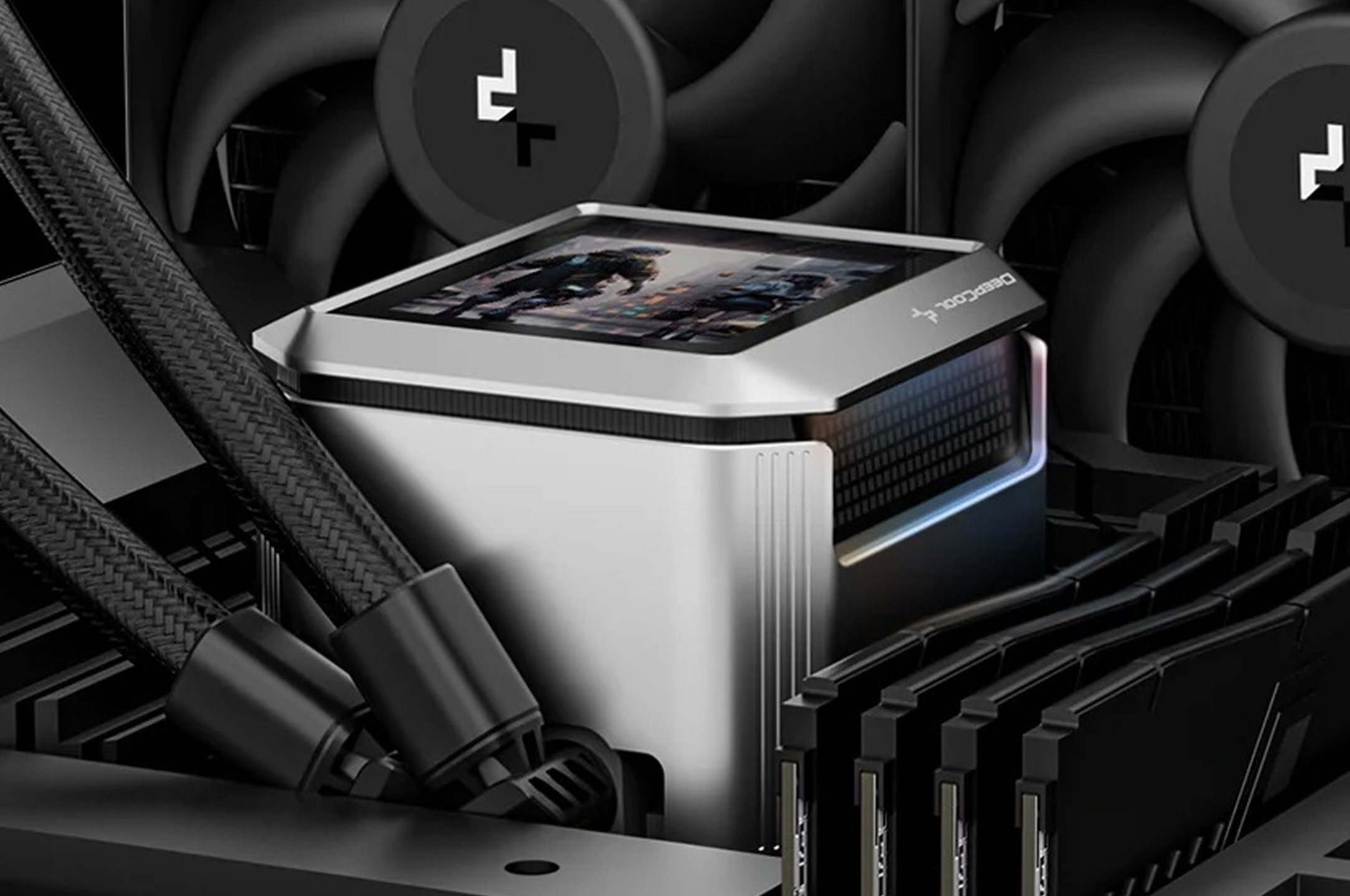
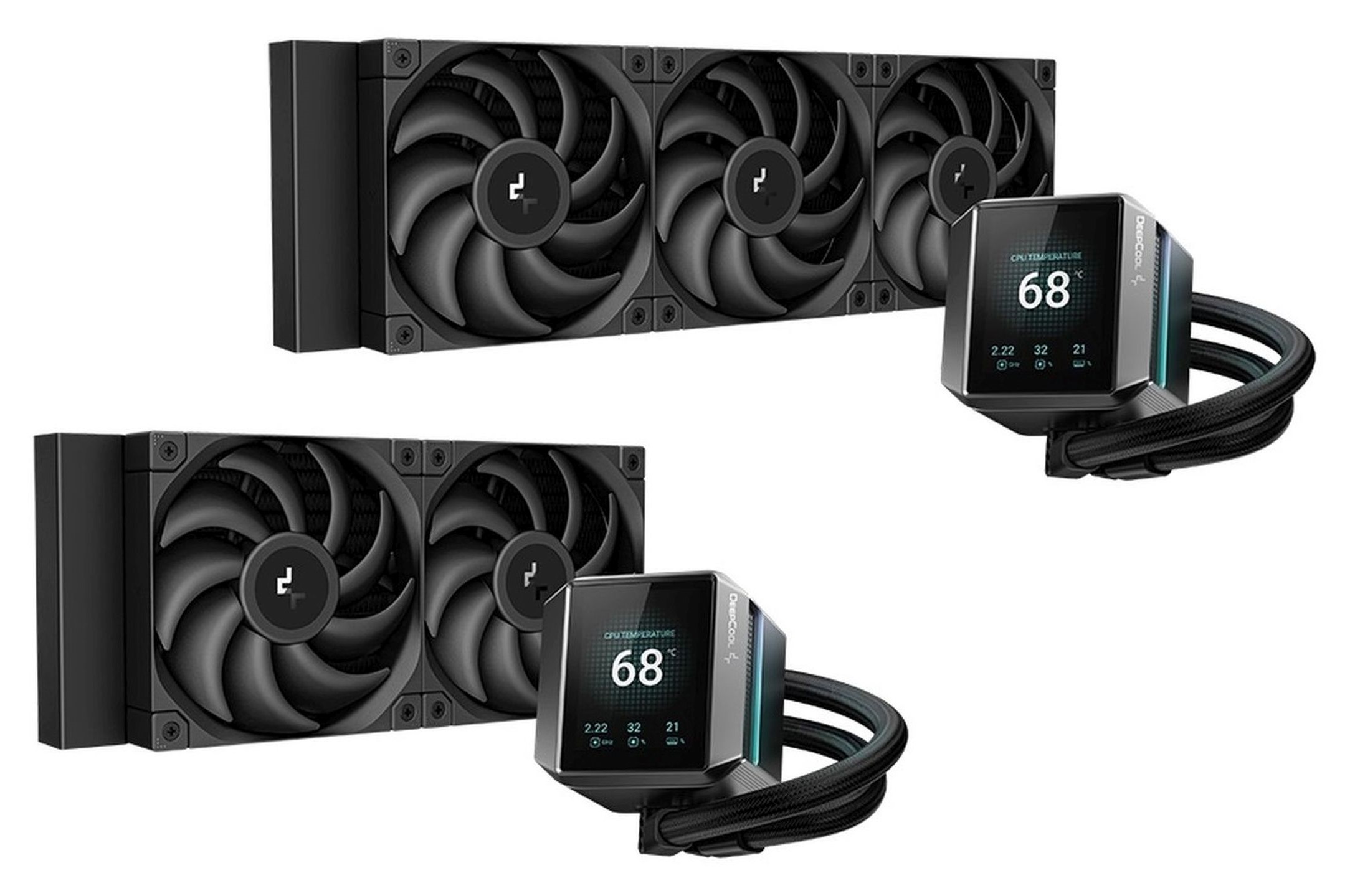
In a move marked by broader changes, DeepCool is releasing the Mystique line of liquid coolers. Of the main things that affect cooling efficiency, the design of the pump, coldplate, and fans have all been affected. The attractiveness is also supposed to be enhanced by the addition of a brightly colored display for monitoring CPU activity, for example. Price-wise, Mystique coolers are among the cheaper ones when compared to similarly equipped competitors.
Two DeepCool Mystique coolers are coming to the stores. One with a larger (360 mm) and one with a smaller (240 mm) radiator. The radiators themselves are fairly “common”, aluminum ones with a profile height of 27 mm. DeepCool doesn’t give information on the FPI, but even from the available drawing it seems that it won’t be anything out of the ordinary in this regard and will be around 20 (waves/fins per square inch). Everything else is already more impressive (than the radiator) though.
The pump has moved to the fifth generation, which differs from the fourth one by a higher speed (3400 rpm instead of 3100 rpm) and probably also by a higher flow rate (although at the expense of a slightly higher noise level). The motor uses three-phase torque, which should ensure lower vibration and therefore smooth running, which shouldn’t be too much of a source of secondary noise.
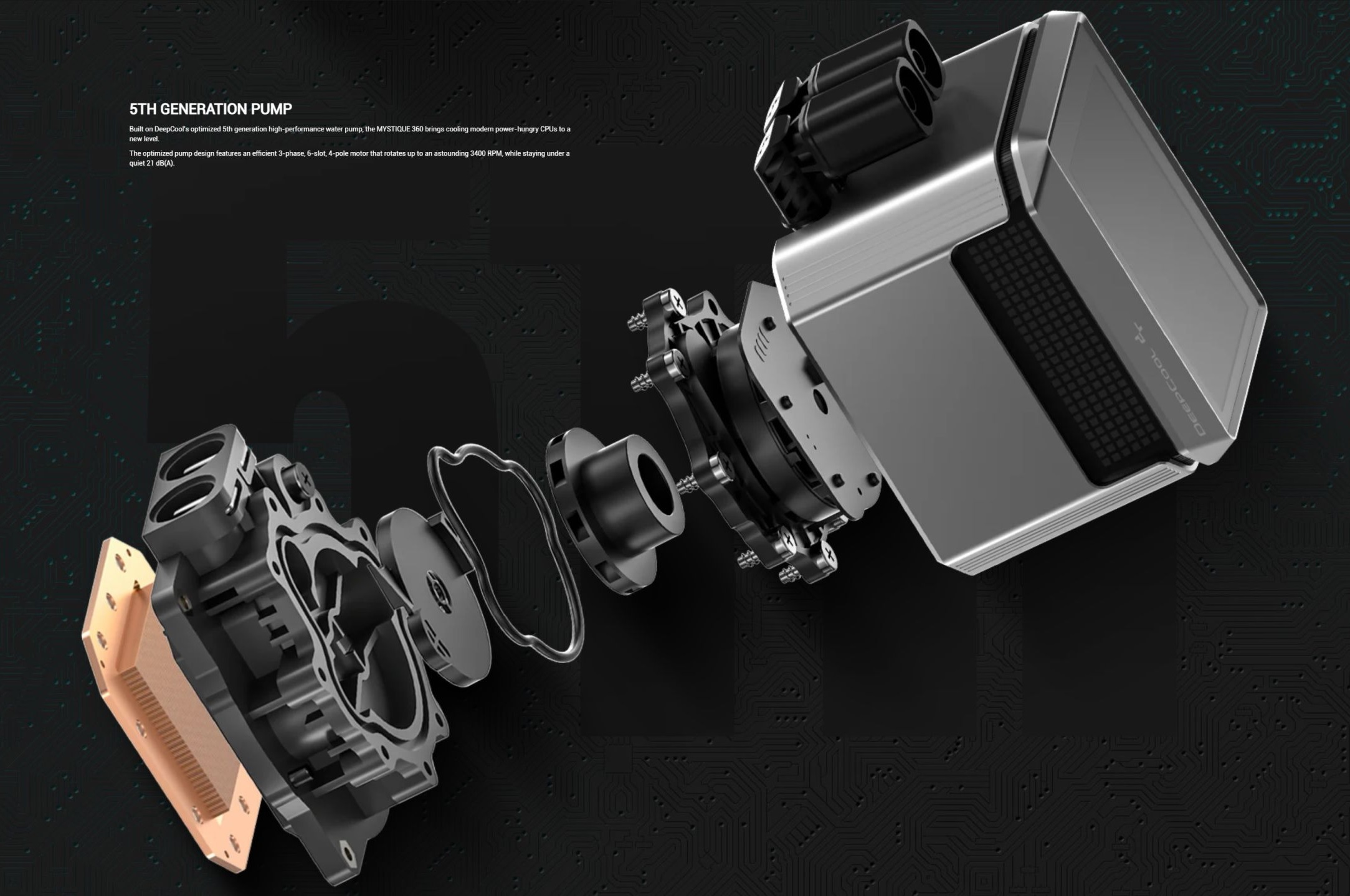
DeepCool also puts emphasis on the coldplate, which, compared to older liquid coolers, should have a redesigned microchannel structure to better respond to processor hotspots. To which ones exactly the public materials do not mention, so it can mean all topologies, both Intel’s centered models and AMD’s with asymmetric chiplet layout. The inter-channel divider, which ensures more efficient fluid flow inside the block is also supposed to contribute to the fast heat exchange.
And then there are the new FT12 SE PWM fans. These differ geometrically from the previous FK120 or FC120 fans with shorter blades. This change could have a positive effect on lower vibrations and smaller tonal peaks, which can be considered one of the biggest shortcomings of older fans. The speed range of the new 120-millimeter fans is 500–2150 rpm, with a maximum airflow of 123.1 m3/h.
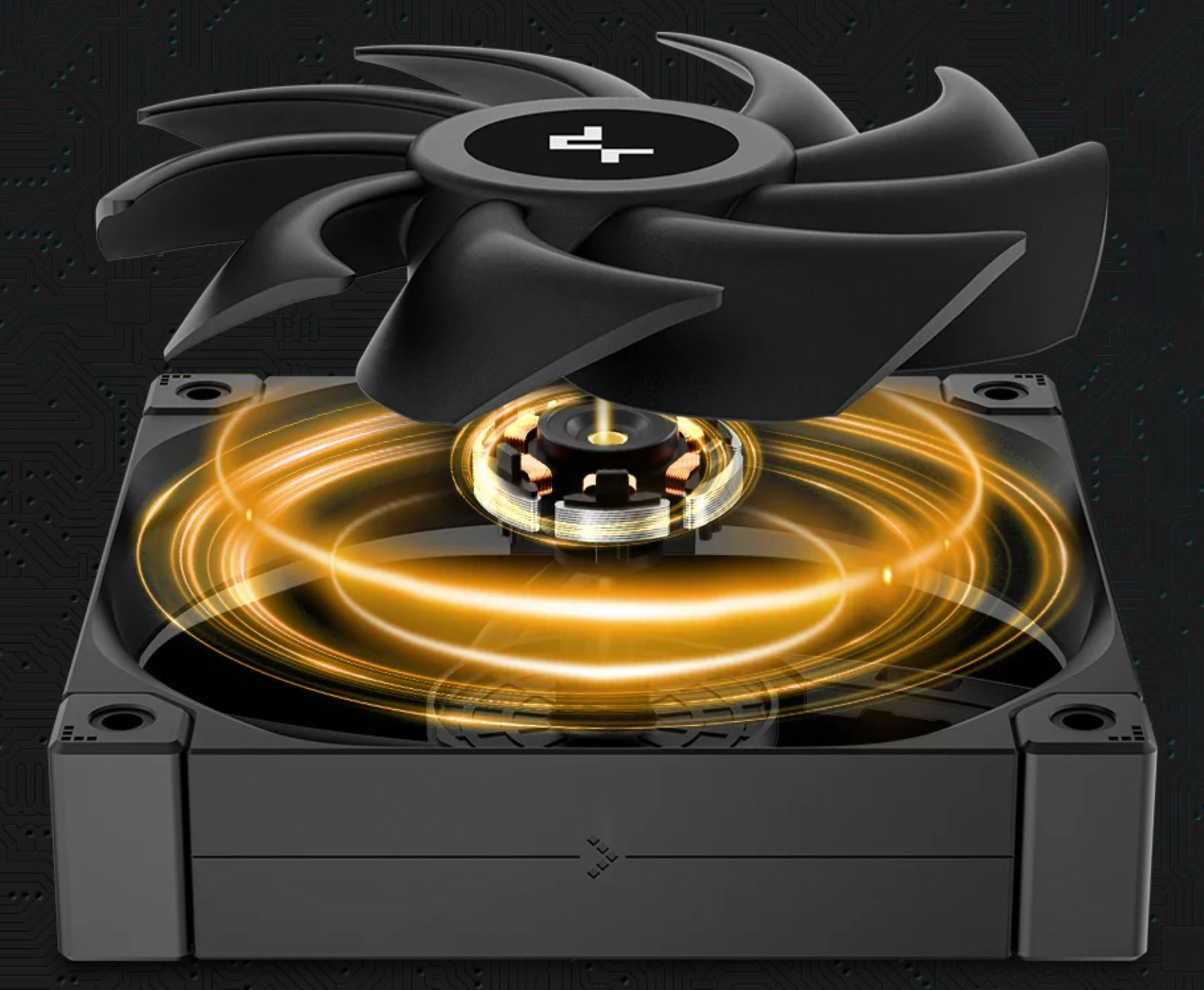
The fan’s static pressure is specified to be as high as 4.32 mm H2O, a value that seems a bit high, but we’ll see. If these fans are also sold separately, which is quite likely, they will certainly be subject to detailed testing. They are also notable for their six stator slots, indicating that these will be more on the higher end. The fan bearings are fluid dynamic (FDB).
The third prominent feature is the top of the block with a 2.8″ (640×480 px) display. The latter should have reasonably good image properties. The matrix used means wide viewing angles from all sides. In addition to custom images or GIFs, the display also offers the ability to display real-time temperature, CPU clock speed and the like. Among the side indicators on the bottom bar (in smaller font) there can also be information about the voltage on the individual rails. The DeepCreative application is used to manage the display.

There have been several coolers with a proper colour display, think the MSI MPG CoreLiquid K360 or the Asus ROG Ryujin II 360, but at a significantly higher price than DeepCool is charging for the Mystique coolers. The suggested price of the 360 mm variant is 180 EUR, the smaller 240 mm variant is 30 EUR cheaper (150 EUR). Availability in stores starts on February 20, today.
DeepCool Mystique coolers support AMD AM5/AM4 and Intel LGA 1700/1200/115x platforms.
English translation and edit by Jozef Dudáš




The fans remind me a bit of the Endorfy Stratus, which with slight changes could become excellent. Maybe it’ll even outperform the FK120.
Sure, there is quite a resemblance, although the Endorfy Stratus have specifically bevelled tips on the trailing edges of the blades. But sure, the features will be similar, although I believe that DeepCool fans will be doing better, for reasons including the more expensive (and technically superior) design.