Radeon RX 9070 XT: Samsung or Hynix? GDDR6 performance test

I already compared the clocks, temperatures, and power consumption of two samples of the same model, the Gigabyte AMD Radeon RX 9070 XT Gaming OC. They differed in memory—the first had Hynix GDDR6 chips and the second Samsung. However, the two tests were months apart. Now I have both units on hand, so I can test performance under identical conditions. We’ll also look at the impact of enabling the fast memory timing option.

Default vs. Fast Memory Timing

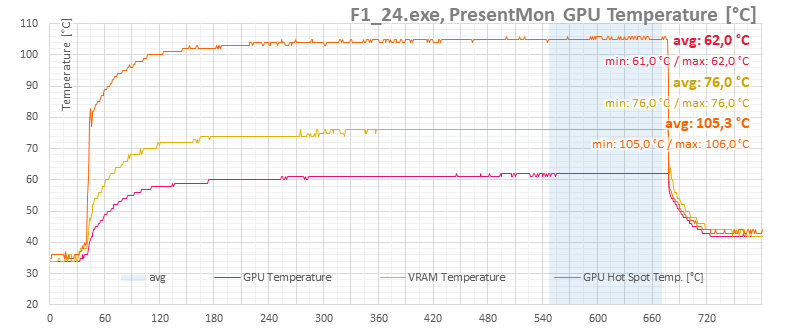
Before presenting the results on how memory timing affect performance, we’ll first check how much GPU clock speed and other factors affect card behaviour when switching from the default timing to Fast Memory Timing under a sustained load in F1 24. If the GPU clocks differed significantly, it wouldn’t be fair to attribute performance differences to memory alone.

This is our standard operating-behavior test at 3840 × 2160 (Ultra), five laps on the Singapore track in wet conditions. There’s no drop in load between loops, and the card stays fully warmed up throughout.

Based on the measurements, switching from the default settings to Fast Memory Timing doesn’t meaningfully change the card’s operating behavior. So the measured performance differences can largely be attributed to the timing change.

default timingfast timing

The differences in the measured operating characteristics are within the usual measurement error.

default timingfast timing


default timingfast timing


default timingfast timing


default timingfast timing


Multi-frame generation coming to Radeon GPUs, drivers show

Last year, Nvidia introduced multi-frame generation that inserts 2, 3, or even 5 AI-interpolated “fake” frames between real frames (though only for GeForce RTX 5000-series cards—with users of older GPUs out of luck). Since then, Intel has also introduced multi-frame generation, but it has never been available on Radeon graphics cards. That now appears to be changing, as AMD seems to be preparing the feature for an upcoming driver release. Read more “Multi-frame generation coming to Radeon GPUs, drivers show” »

Geekbench benchmark leak reveals Zen 6 core performance

It has been two years since AMD released Zen 5 Ryzen CPUs, and the launch of the next-gen Zen 6 CPUs should slowly be approaching—or at least we hope so. So far, there have not been many leaks indicating what kind of performance to expect, but this week a Geekbench database entry appeared showing a processor that appears to be a laptop Zen 6 sample—a Medusa APU. However, the performance scores raise more questions than answers. Read more “Geekbench benchmark leak reveals Zen 6 core performance” »

AMD confirms development of little “LP” core for Zen 6

When AMD came back nine years ago with the Zen core, its strategy was to eliminate the split between big and little (Bobcat and Jaguar) cores and cover the entire market with a single, balanced architecture. Intel, on the other hand, moved to hybrid (big.LITTLE) CPUs. AMD is apparently going there too, now. It has used classic and compact cores where both shared the same architecture so far, but now there will be a separate low-power core. Read more “AMD confirms development of little “LP” core for Zen 6″ »

Leave a Reply

Your email address will not be published. Required fields are marked *