Over a few months, two nearly identical Gigabyte RX 9070 XT Gaming OC cards passed through my hands. They use GDDR6 chips from different manufacturers. The older card had Hynix; the newer uses Samsung GDDR6, known for lower power draw and temperatures. We’ll examine how this change affects performance, memory temperatures and power, GPU temperatures and clock speeds, and overall card power consumption in our tests.
The Radeon RX 9070 XT and RX 9070 hardly need an introduction at this point. We’ve already tested several models on HWCooling. Now I got my hands on another sample of the Gigabyte Radeon RX 9070 XT Gaming OC, which I reviewed at launch. This one was produced a few months later, and if the diagnostic software is correct, it uses GDDR6 memory from a different vendor than the card we previously tested. The only way to be sure would be to take it apart, but I’ve already explained why we don’t disassemble review samples.
Today I want to focus on how big the differences are between two different cards, and to what extent memory chips from different manufacturers affect card behavior. There’s plenty of chatter about this—cards with Samsung chips are said to run at lower memory temperatures, which is tied to lower power consumption. Memory timing should also differ, which could influence performance in some tests—this should be measurable for example in 3DMark benchmarks.
First, a reminder of the specifications of the Radeon RX 9070 and RX 9070 XT:

And here again is the RX 9070 XT Gaming OC itself, already described in detail in the first review.

The card has a dual BIOS. You can switch between Performance and Silent modes, which differ only in their cooling profiles. Below are screenshots of the BIOS Performance settings from the card tested in March.
The boost clock is raised from the reference 2970 MHz to 3060 MHz. The listed typical game clock increases from 2400 to 2520 MHz. In practice, clock speeds are again higher. Alongside these raised clocks, the power limit (TBP) also goes up from the reference 304 W to 330 W.


The second set of screenshots is also from the March-tested card but taken from the Silent BIOS.
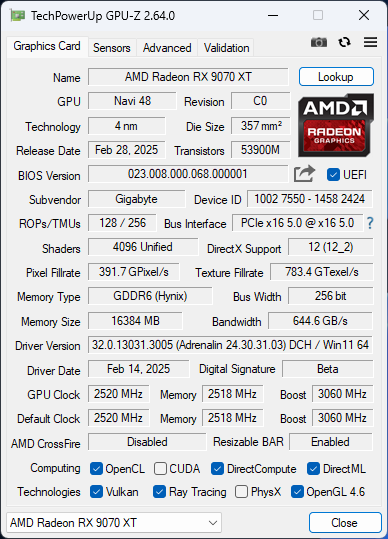
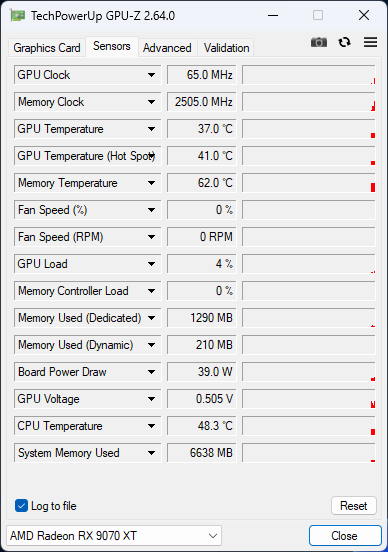
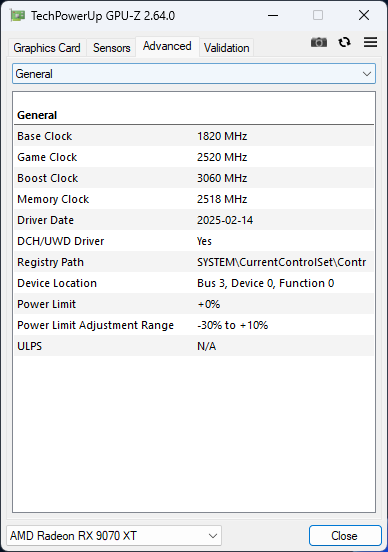
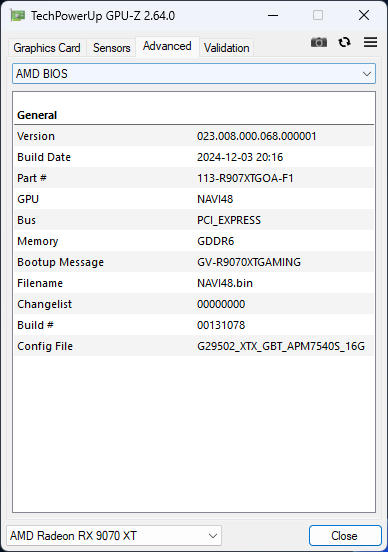
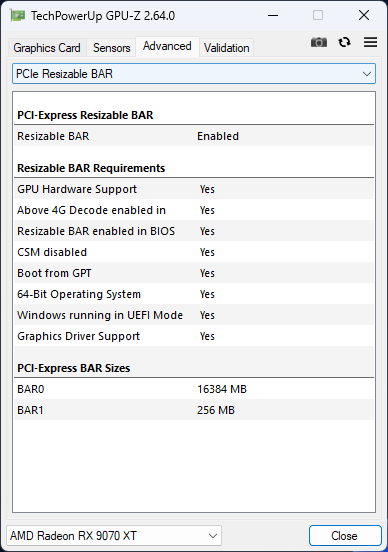
In the Memory Type field you can see that on the newer card, Samsung is listed in brackets after GDDR6. Otherwise the BIOS versions, release dates, and everything else are the same

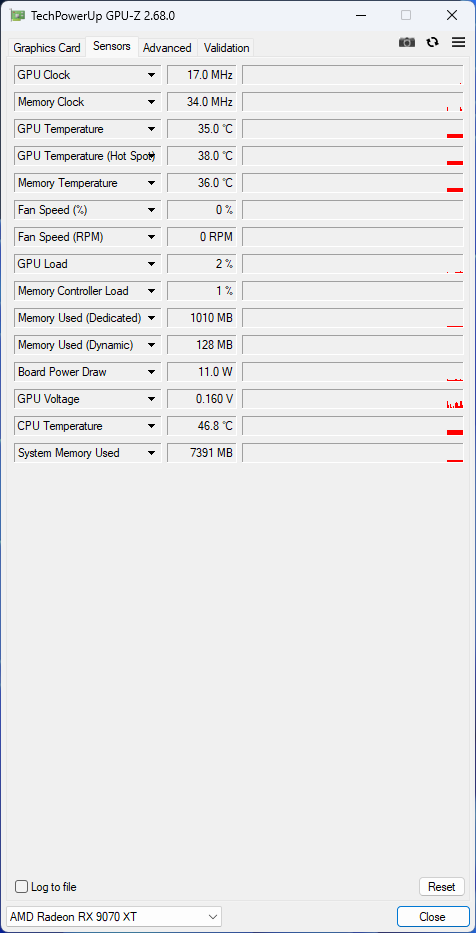
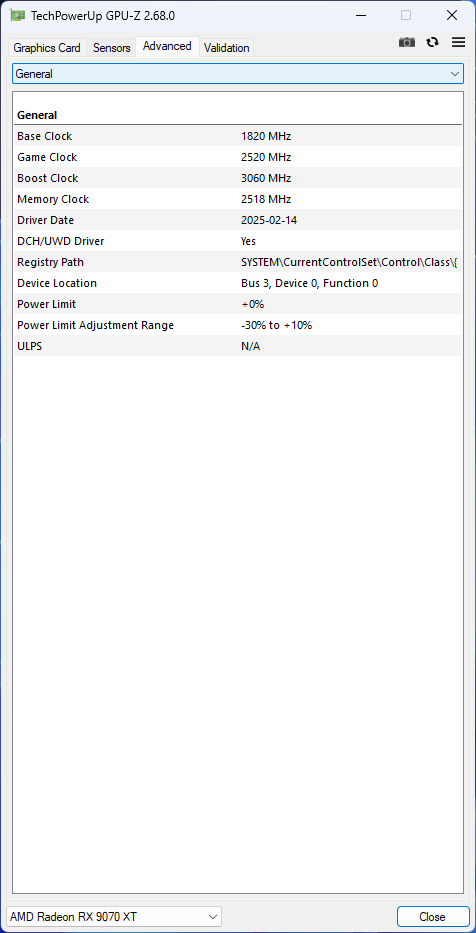
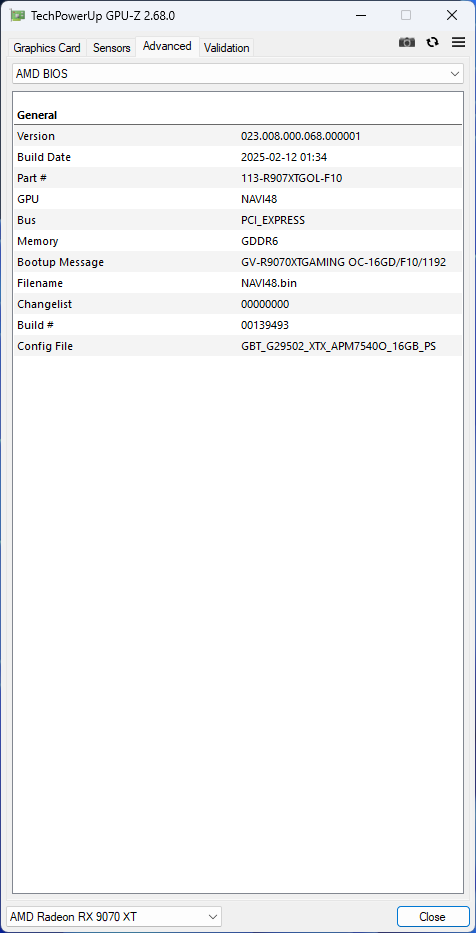
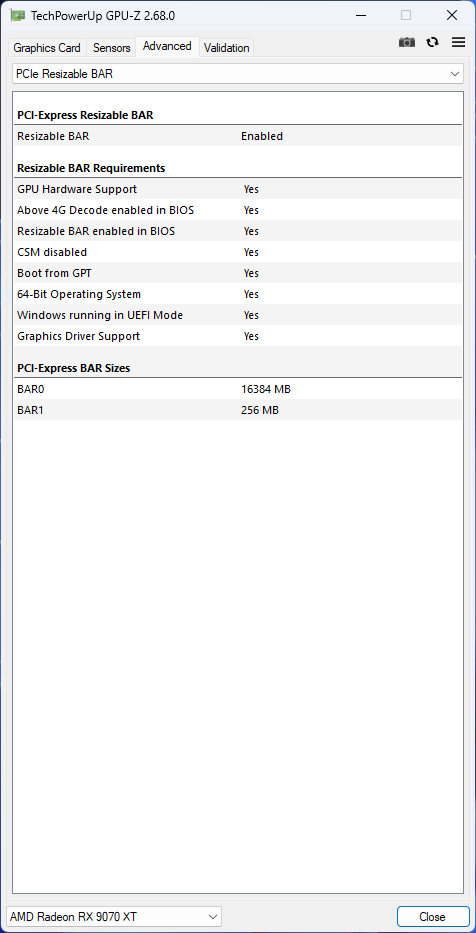
Secondary BIOS of the card with Samsung chips shows the same parameters.
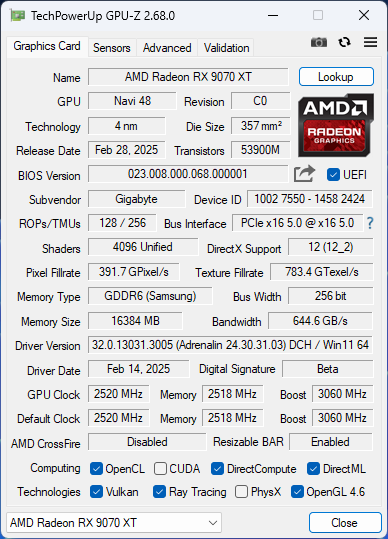
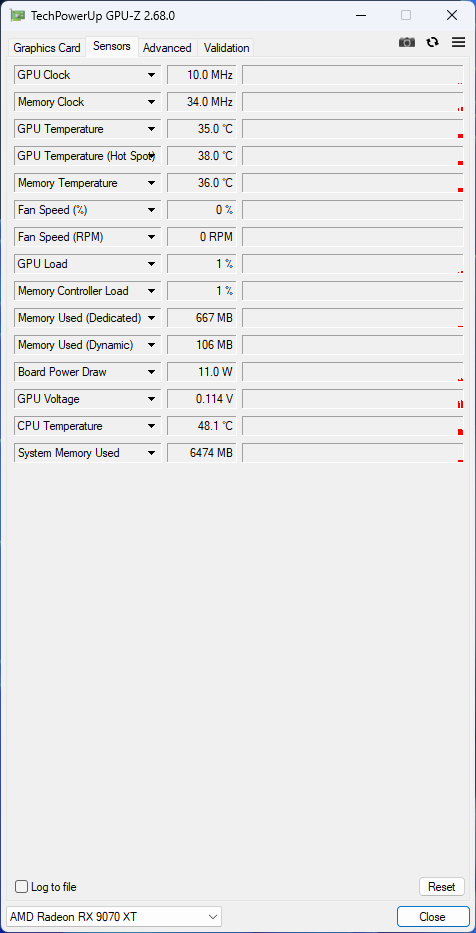
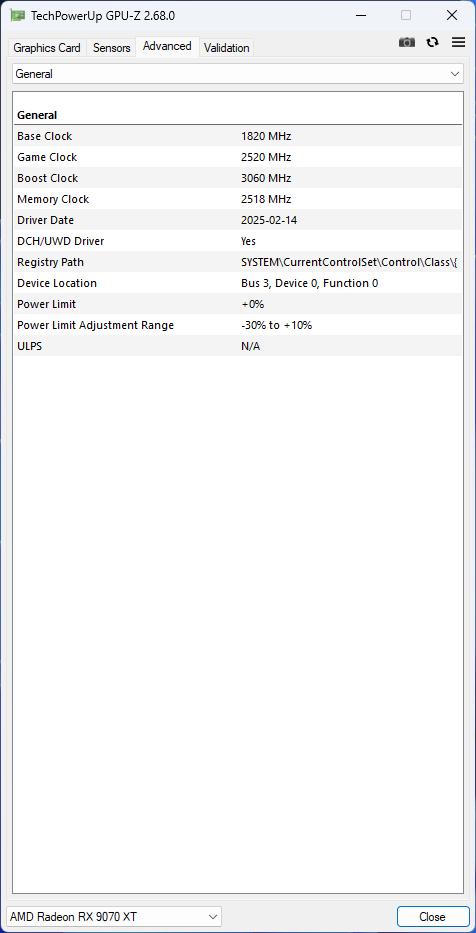
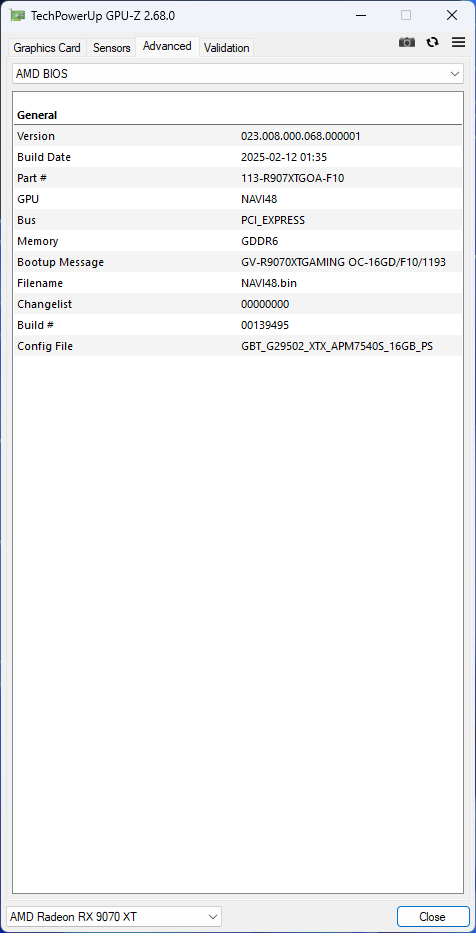
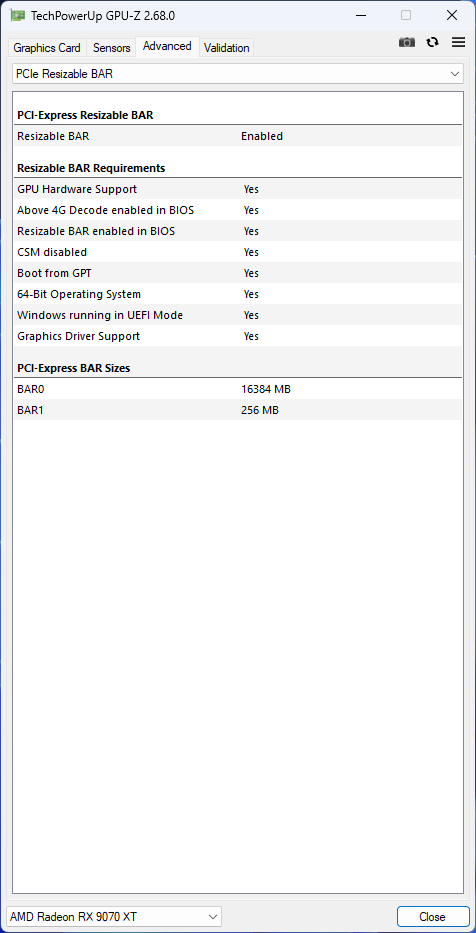
HWiNFO also reports the memory as Samsung GDDR6.
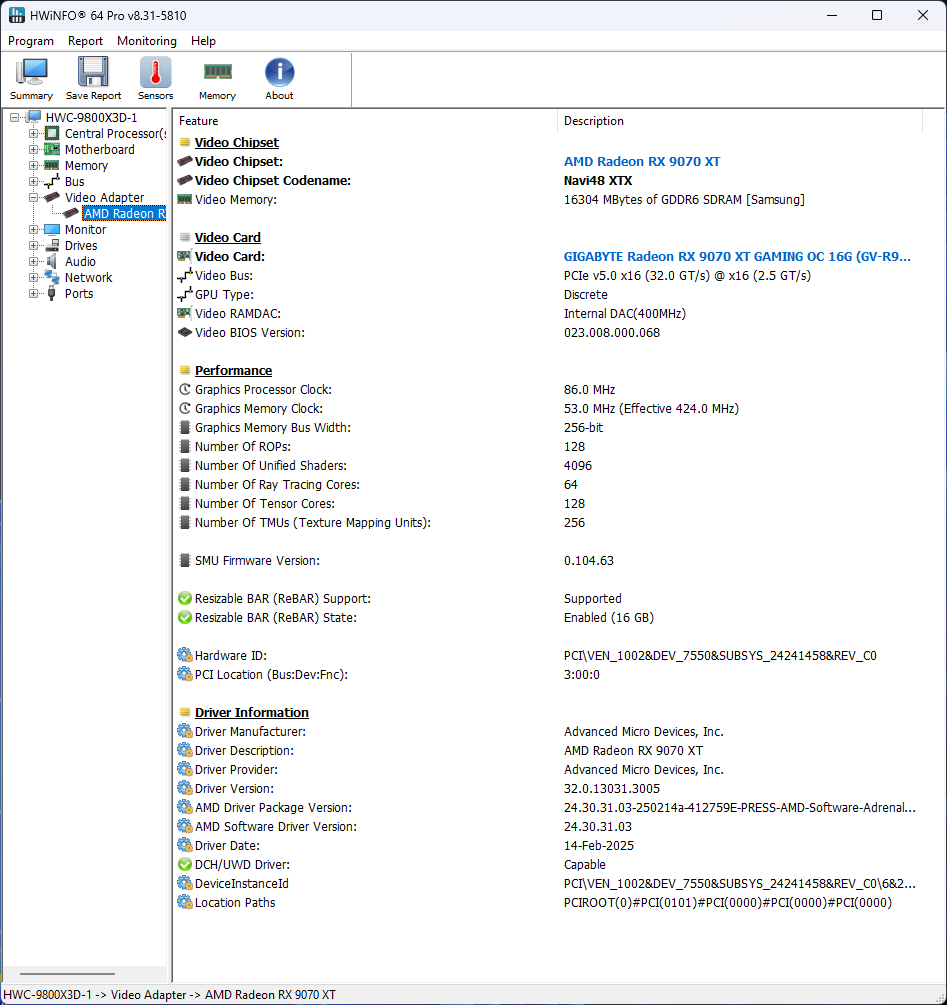
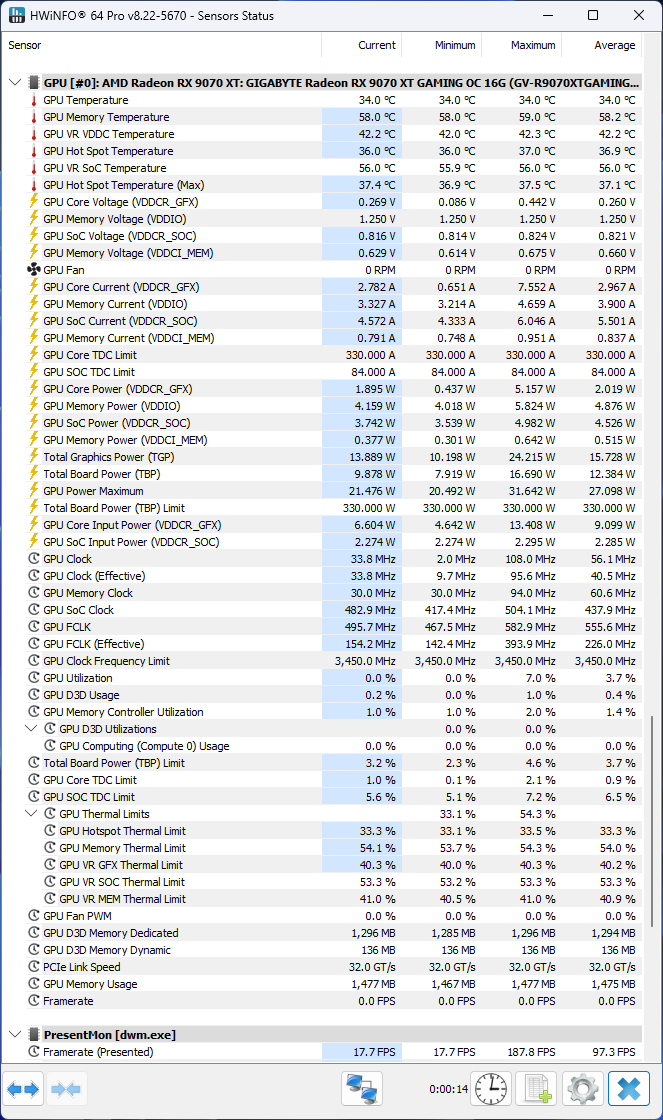
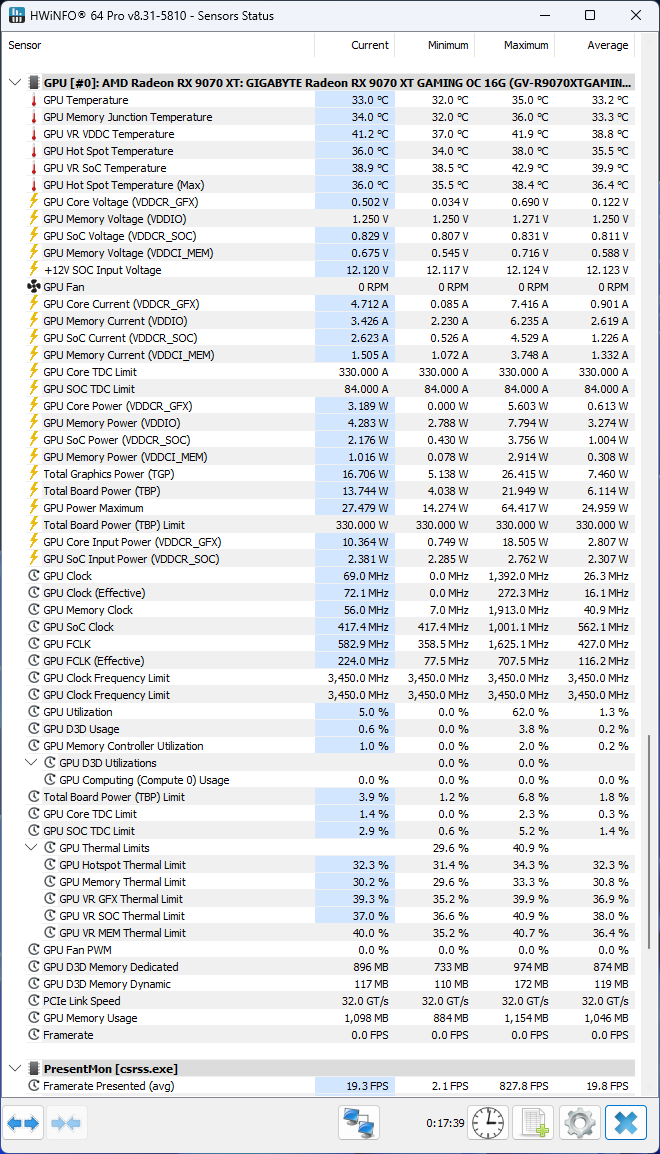
Since March, HWiNFO has added one sensor and updated the labels for many others. On the left is the March version, on the right the current readout from the newer Radeon with Samsung memory chips.
The next chapter will detail the usual test system, followed by a comparison of clock speeds, temperatures, and power consumption between the cards with Hynix and Samsung memory chips.
⠀