


We were very excited to see the results of the Grand Tornado 120. It looks good geometrically and is also one of the cheapest LCP models out there. Scythe has also informed us that the Grand Tornado 120 is set to outperform the legendary Gentle Typhoon (D1225C). And it’s true, it does outperform it, though perhaps in different ways than you’d expect. But the LCP fan from Scythe gets along really well with radiators.
Measurement of static pressure…
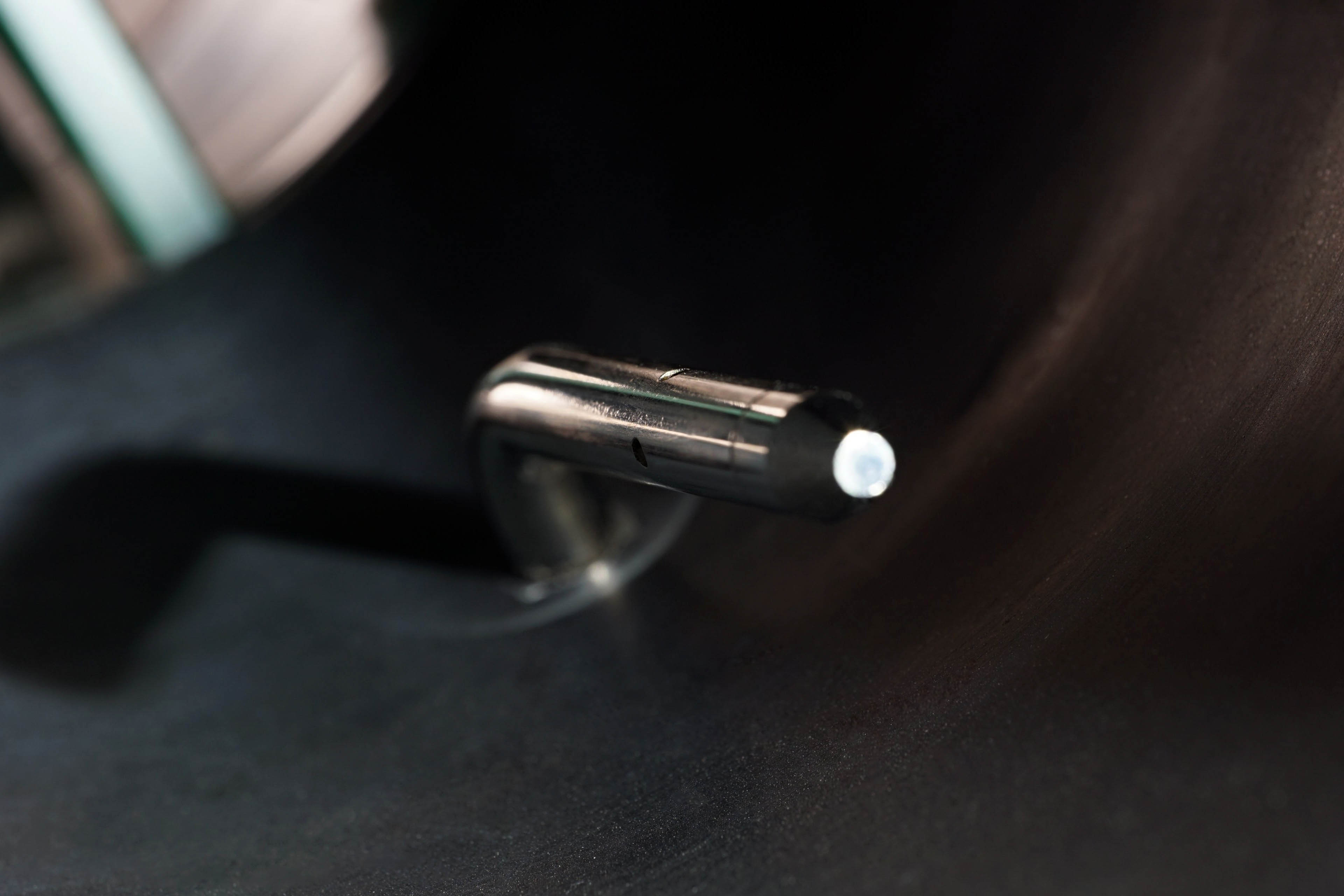
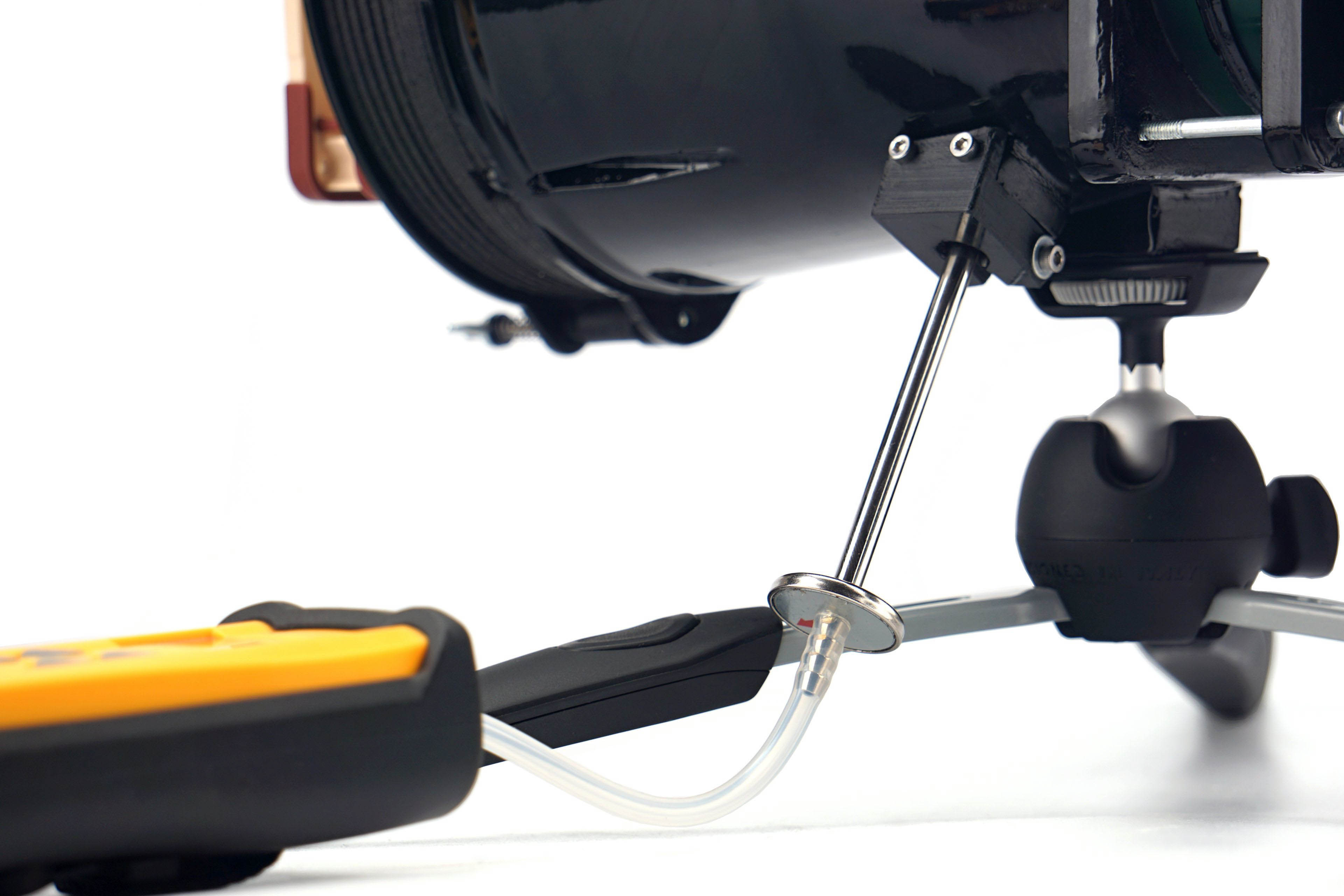
Finally, it is time to move further down the tunnel a bit. Just behind the fan is a static pressure sensing probe. Its position has been chosen with maximum measurement efficiency in mind. In other words, the sensors are placed at the points of highest pressure (although this is virtually the same everywhere in the unconstrained part of the tunnel).
The Fieldpiece ASP2, which is connected to the Fieldpiece SDMN5 manometer, is used to measure the static pressure in the tunnel. The latter also allows measurements in millimetres of water column, but we measure in millibars. This is a more finely resolved base unit for this meter. And only from there we convert the measured values into mm H2O to allow easy comparison with what the manufacturers state.
While we wrote when measuring noise levels that our results could not be compared with the parameters, that is no longer the case here. As long as the fan manufacturers do not embellish the parameters, they should quote approximately the same pressure values as our tests show. The most significant deviations can only arise at the level of varying accuracy of the measuring instruments, but these are negligible percentages.
The greater the difference between the manufacturer’s claimed values and ours, the less the specifications correspond to reality. If the claimed values are significantly higher, it is certainly an intention to artificially give an advantage to the fans on the market. However, if the manufacturer quotes a lower pressure value than we do, it points to something else. Namely, a weaker tightness of the measuring environment. The less tight the tunnel is, the lower the pressure you naturally measure. This is one of the things we tuned for an extremely long time, but in the end we ironed out all the weak spots. Whether it’s the passage for the probe itself, the flanges around the anemometer, even the anemometer frame itself, which is made up of two parts, needed to be sealed in the middle. Finally, the flap at the tunnel outlet must also be perfectly tight. That’s because static pressure has to be measured in zero airflow.

But there is one thing that often lowers the pressure of the fans a bit. And that’s protruding anti-vibration pads in the corners or otherwise protruding corners. In other words, when the fan doesn’t fit perfectly to the mounting frame at the inlet, and there are small gaps around the perimeter, that also affects what you measure. But we have not gone into this because it is already a quality feature of the fan. In the same way, it will “stand out” and perform a bit weaker than it has the potential to do with better workmanship, even after application by the end user.


DNF at the very high target of 31dB(A) means it isn’t cheap, it means no matter the price it’s too expensive
additionally knowing it starts at around 680RPM and it still doesn’t pass that target means it’s just bad acoustically
it may find a niche, people are frequently mentioning this or that dethroning Noctua while the performance is only slightly higher at one very specific and extremely high noise target so at some point it may be a decent option, but I just wouldn’t bother, no reason to stand that noise when I can just set A12x25 a tiny bit below this ones starting speed and have it perform better and stay silent
This is subjective. It depends on who is looking for what. If the priority is the highest possible airflow regardless of noise level, while also weighing low vibration or extra durability, then the Grand Tornado 120 can be a great choice. In the context of that potentially high durability (if Scythe doesn’t exaggerate the MTBF value…), we also discussed the server concept of the Scythe Grand Tornado 120 fan in the discussion below the text in another language…
for separate-room-home-server I’d likely go with Noctua PPC or T30 (or NH-P1 due to superior reliability if the heat load was lower, though AC has the advantage of providing a decent heatsink that will prevent your system from shutting down even if fans stop, LC on the other hand…), for regular server room with regular server fans like Delta
for living/working space silence is a requirement impossible to give up on so the silent performance is all that matters
I really love its name (GT), indicating the intention for it to succeed Gentle Typhoon. Unfortunately, I don’t think it’s worthy of that title. Even if the argument is that it’s better in peak performance, remember there’s the GT-HI (https://www.e-jpc.com/wp-content/uploads/gentle-typhoon-d1225cen-2.pdf) that goes up to 5400 RPM!