


We were very excited to see the results of the Grand Tornado 120. It looks good geometrically and is also one of the cheapest LCP models out there. Scythe has also informed us that the Grand Tornado 120 is set to outperform the legendary Gentle Typhoon (D1225C). And it’s true, it does outperform it, though perhaps in different ways than you’d expect. But the LCP fan from Scythe gets along really well with radiators.
… and of airflow
With airflow measurements, we can well explain why the test tunnel is shaped the way it is. It doesn’t consist of two parts just so that the “exhaust” can be conveniently clogged for pressure measurements. The anemometer (i.e. the wind speed measuring instrument) is held together by two parts, two formations, through the flanges.
The front part, at the beginning of which the fan is mounted, becomes steadily narrower and from about two thirds of the way through the cross-section is smaller than that of a 120 mm fan. The reason for this is that the cross-section of the anemometer is always smaller than that of the fans tested. The taper towards the anemometer fan is as smooth as could be chosen and the tunnel walls are smooth. This has minimized the occurrence of unnatural turbulence.
The difference between the cross section at the intake (fan under test) and at the constriction point (anemometer) also means a difference in dynamic pressure, the principles of the Venturi effect apply here. In order to avoid distortion at this level and to ensure that the fan airflow is not different from what it actually is, the Bernoulli equation must be applied to the measured values (for maximum accuracy, the calculation also takes into account the internal cross-sectional area of the anemometer, i.e. its inactive part ). After all this, it is again possible to confront our results with the paper parameters.
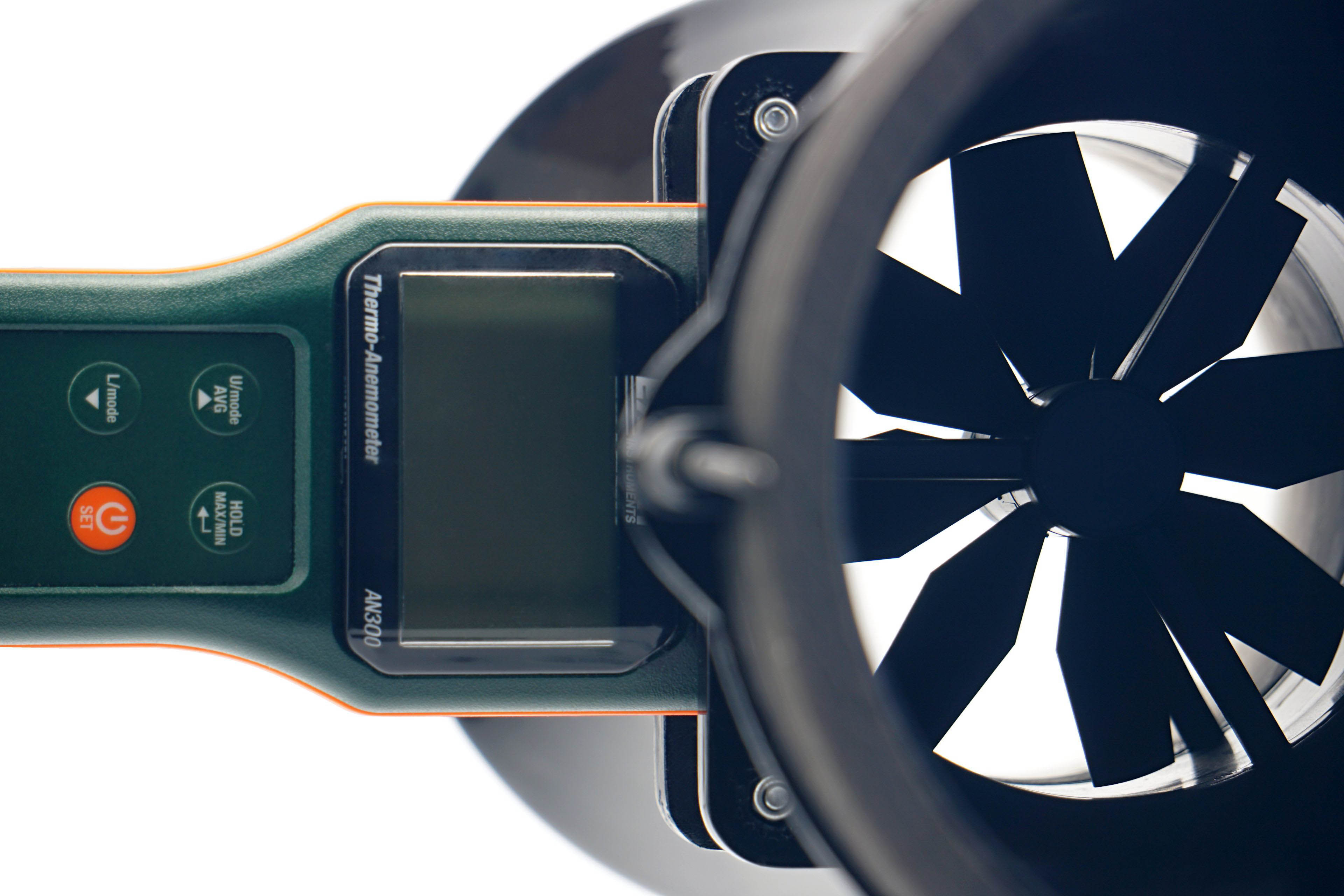
We use an Extech AN300 anemometer with a large 100 mm fan for the measurements. Its big advantage over other anemometers is that it is made for bidirectional sensing. This allows tests at different fan orientations. However, the “pull” position is more suitable or accurate for measurements, even though it may not seem so at first glance, but we’ll explain.
Here, we get to the second part of the tunnel, the part behind the anemometer. It is part of the whole device, mainly to allow a laminar flow of air to arrive at the impeller of the anemometer. Otherwise, uncontrolled side whirls would be reflected in the results, which are inconsistent with accurate measurements. Therefore, we will test the flow in the pull position. If anyone would like us to elaborate more on this topic, we can elaborate further at any time in the discussion below the article. Ask away. 🙂
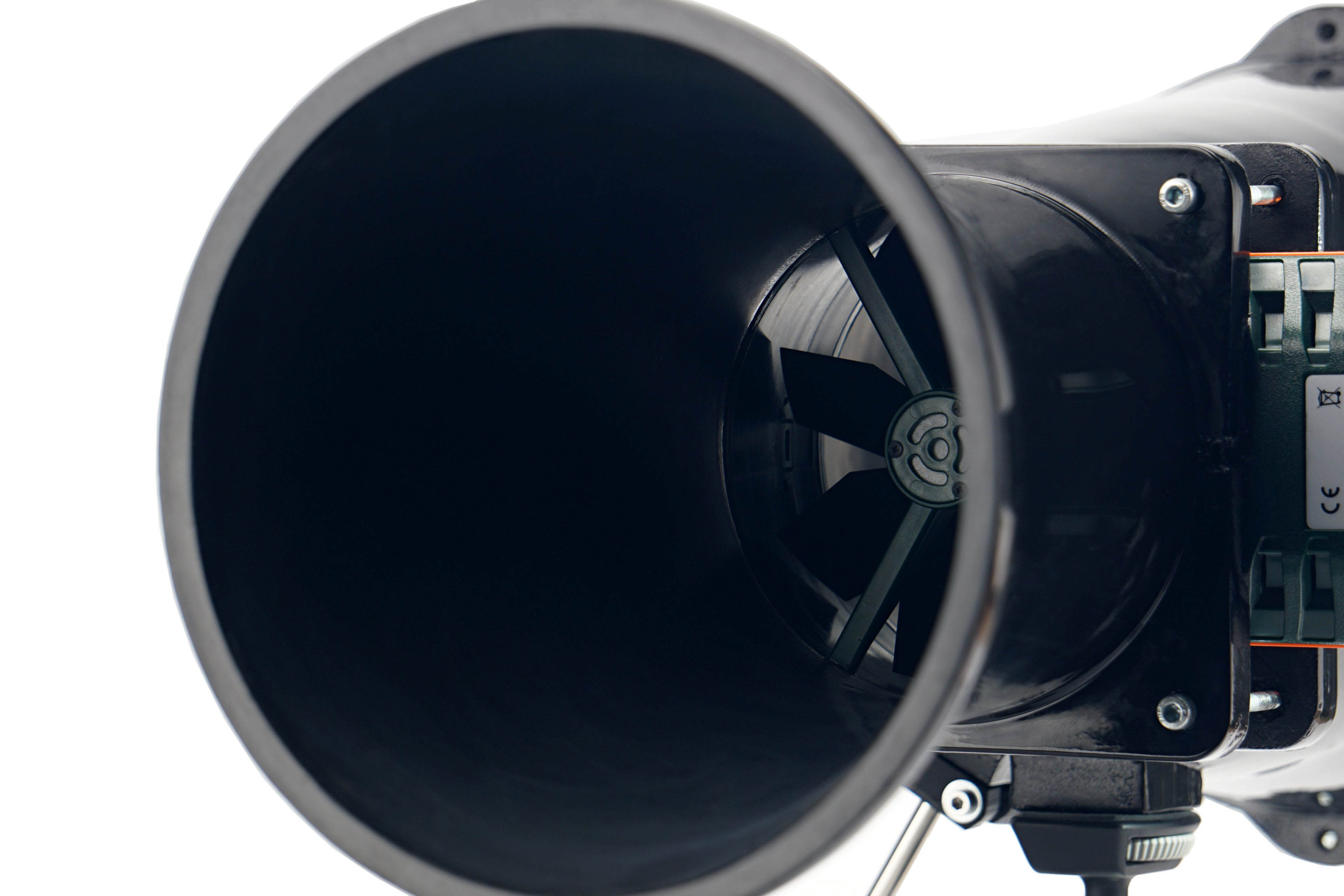
In regard to the anemometer, we shall return for a bit to noise measurements and to setting modes according to fixed noise levels. It may have occurred to you as you were reading that the anemometer fan is also a source of sound that needs to be filtered out when measuring fans. For this reason, we insert a securing pad between the frame and the anemometer fan before each measurement and mode setting according to the fixed noise level. This, by the way, also holds the anemometer fan during static pressure measurements.


DNF at the very high target of 31dB(A) means it isn’t cheap, it means no matter the price it’s too expensive
additionally knowing it starts at around 680RPM and it still doesn’t pass that target means it’s just bad acoustically
it may find a niche, people are frequently mentioning this or that dethroning Noctua while the performance is only slightly higher at one very specific and extremely high noise target so at some point it may be a decent option, but I just wouldn’t bother, no reason to stand that noise when I can just set A12x25 a tiny bit below this ones starting speed and have it perform better and stay silent
This is subjective. It depends on who is looking for what. If the priority is the highest possible airflow regardless of noise level, while also weighing low vibration or extra durability, then the Grand Tornado 120 can be a great choice. In the context of that potentially high durability (if Scythe doesn’t exaggerate the MTBF value…), we also discussed the server concept of the Scythe Grand Tornado 120 fan in the discussion below the text in another language…
for separate-room-home-server I’d likely go with Noctua PPC or T30 (or NH-P1 due to superior reliability if the heat load was lower, though AC has the advantage of providing a decent heatsink that will prevent your system from shutting down even if fans stop, LC on the other hand…), for regular server room with regular server fans like Delta
for living/working space silence is a requirement impossible to give up on so the silent performance is all that matters
I really love its name (GT), indicating the intention for it to succeed Gentle Typhoon. Unfortunately, I don’t think it’s worthy of that title. Even if the argument is that it’s better in peak performance, remember there’s the GT-HI (https://www.e-jpc.com/wp-content/uploads/gentle-typhoon-d1225cen-2.pdf) that goes up to 5400 RPM!