


Why put connectors from the front of the motherboard when they can be from the back? This is what Asus and other manufacturers are thinking with boards with, say, an inverted connector layout. The TUF B760M-BTF WiFi (D4) model has all connectors moved from front to back. This, with the current trend of glass side panels, mainly contributes to a nicer look. But we’ll also be interested in other, measurable things as part of our analysis.
Conclusion
In the case of the TUF B760M-BTF WiFi D4, you are dealing with a solid mATX motherboard with the added value of atypical connector placement on the back. In terms of compatibility with cases, this can be taken as a disadvantage, after all, you can’t install such a board everywhere. But if you can find a supported case that suits you, the TUF B760M-BTF WiFi D4 is attractive for builds that are also looking for the most attractive price/performance ratio. In this case, there are none of the markups that are common with non-traditional components. And you won’t overpay on a compatible case, where the Asus A21, for example, also features good affordability.
For those users who are bothered by the sight of cables on conventional motherboards, this is a good choice for the cheaper PC build segment. The TUF B760M-BTF WiFi D4 can handle CPUs at over 300W, but you’ll achieve more efficient operation with lower power models.
The VRM is robust enough even for the Core i9-14900K(F) without power limits. Even with a processor this powerful, critical spots will be below 100°C (and thus far from VRM throttling), even in a case with average airflow. Our heat maps do show a hundred degrees Celsius, but that’s a situation without the passive coolers and with them there, it won’t be as dramatic.

In our extensive compute and gaming tests, we didn’t see any anomalies or anything that the Asus BTF board couldn’t handle. Among the results, though, you’ll come across one where the B760M-BTF WiFi D4 ends up on the tail of the charts, but that’s with minimal speed losses, which can also be determined by the relatively slower memory, for example. It should be noted again that the tested variant of this motherboard supports DDR4 type memory. These are significantly cheaper compared to DDR5 memory, and if a lower speed is sometimes achieved, the differences in it definitely do not correspond to the differences in the amount of money that is saved with this motherboard (with DDR4 memory instead of the more expensive DDR5).
The M.2 slots aren’t out of the average in terms of speed either, where even the one on the back of the PCB performs as expected. The same goes for USB ports or ethernet connectivity – over 280 MB/s in both directions. Slightly below average are only the SSD coolers, which are quite small. For the VRM coolers, however, Asus has already used more material, which is also quite nicely sectioned longitudinally and transversely and thus has increased the total radiation area and thus the cooling efficiency.
Internal connectivity is quite extensive, three PCI Express slots and three M.2 slots for SSDs are definitely above standard on an mATX board in this price class. The rest is already mediocre, be it the four SATA slots or the single 19-pin for two USB ports on the front panel of the case.
We can recommend the TUF B760M-BTF WiFi D4, as a motherboard for a cheaper gaming setup to help make the computer look as visually pleasing as possible as well, with a clear conscience. And taking into account its uniqueness, we award it the “Smart buy!“. Lastly, and once more – you will not fit this motherboard into any case and compatibility is required to respond to the unconventional placement of the connectors at the back, or on the opposite side of the PCB to the normal.
English translation and edit by Jozef Dudáš
| Asus TUF B760M BTF WiFi D4 |
| + Rare connector layout, on the back of PCB... |
| + … with the potential for a clean look with no visible cables |
| + Decent 14-phase power delivery (VRM)... |
| + ... it won't be surprised even by a Core i9-14900K with no power limits |
| + Attractive price/feature ratio |
| + Three PCI Express slots even on a smaller footprint |
| + Two fast M.2 slots for SSDs... |
| + … and as many as three external USB-C ports (including one 3.2 gen. 2×2) |
| + Fast Ethernet connectivity |
| + Detailed fan management options |
| - Weak support of cases |
| - Relatively lower efficiency with more powerful CPUs |
| - Only four SATA connectors |
| Suggested retail price: 187 EUR |
Niektoré z testovaných dosiek sú dostupné aj v e-shope Datacomp

Special thanks also go to Blackmagic Design (for a DaVinci Resolve Studio license) and Topaz Labs (for DeNoise AI, Gigapixel AI and Sharpen AI licenses)
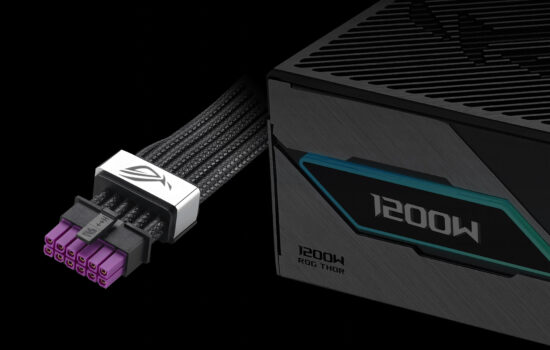





One small note on supported cases. Asus BTF motherboards are also supported by Corsair’s now available 6500 and 2500 series cases. The 2500D Airflow, 2500X, and 2500X RGB models also fit nicely with the TUF B760M-BTF WiFi D4 in terms of form factor, as the combination of a mATX motherboard with a midi-tower case is mentioned.
I’ve been following the “hidden connector” trend for a bit, but this deep dive into the TUF B760M-BTF really highlights some functional pros I hadn’t considered. It’s not just about the “fish tank” aesthetic with the glass panels. The article mentions how moving the CPU power connectors to the back actually allows for larger VRM heatsinks because they can encroach into space that usually has to stay clear for plugs.
Coming from a background of messing with older Dell PowerEdge servers https://serverorbit.com/power-supplies/server-power/poweredge, I’m used to those highly optimized layouts where every millimeter of airflow matters and cables are tucked into specific channels. Seeing consumer boards adopt this “backside” approach feels like a nod to enterprise-level cable management, even if the primary goal here is style. In my experience with high-wattage server PSUs, cable routing is usually very rigid, so I’m curious how this translates to home builds. You’re bending those thick 24-pin cables in a much tighter space behind the tray now.
Do you think we’ll start seeing PSU manufacturers releasing specific “short-head” or ultra-flexible cable kits for these BTF boards, or will standard modular cables be enough to clear the back side panels?
Thank you for the very thoughtful idea. As for your question: personally, I don’t know and wouldn’t want to speculate whether motherboard designs with rear connectors will prompt PSU manufacturers to respond with shorter connectors or similar adjustments.
We don’t have any information in this area, and as always, time will show what actually makes it to end users. That said, your idea definitely makes sense—now it just needs someone in a position to act on it and actually produce such cables. 🙂