


This is a first – a fan with the leading edges of the impeller blades on the opposite side to normal ones. This is primarily done for a better view of “fans without stator struts” in cases with glass side panels. In addition, such an unconventional design also has quite clear and measurable advantages and disadvantages, also in terms of functional characteristics. Let’s take everything in turn.
Measurement of static pressure…
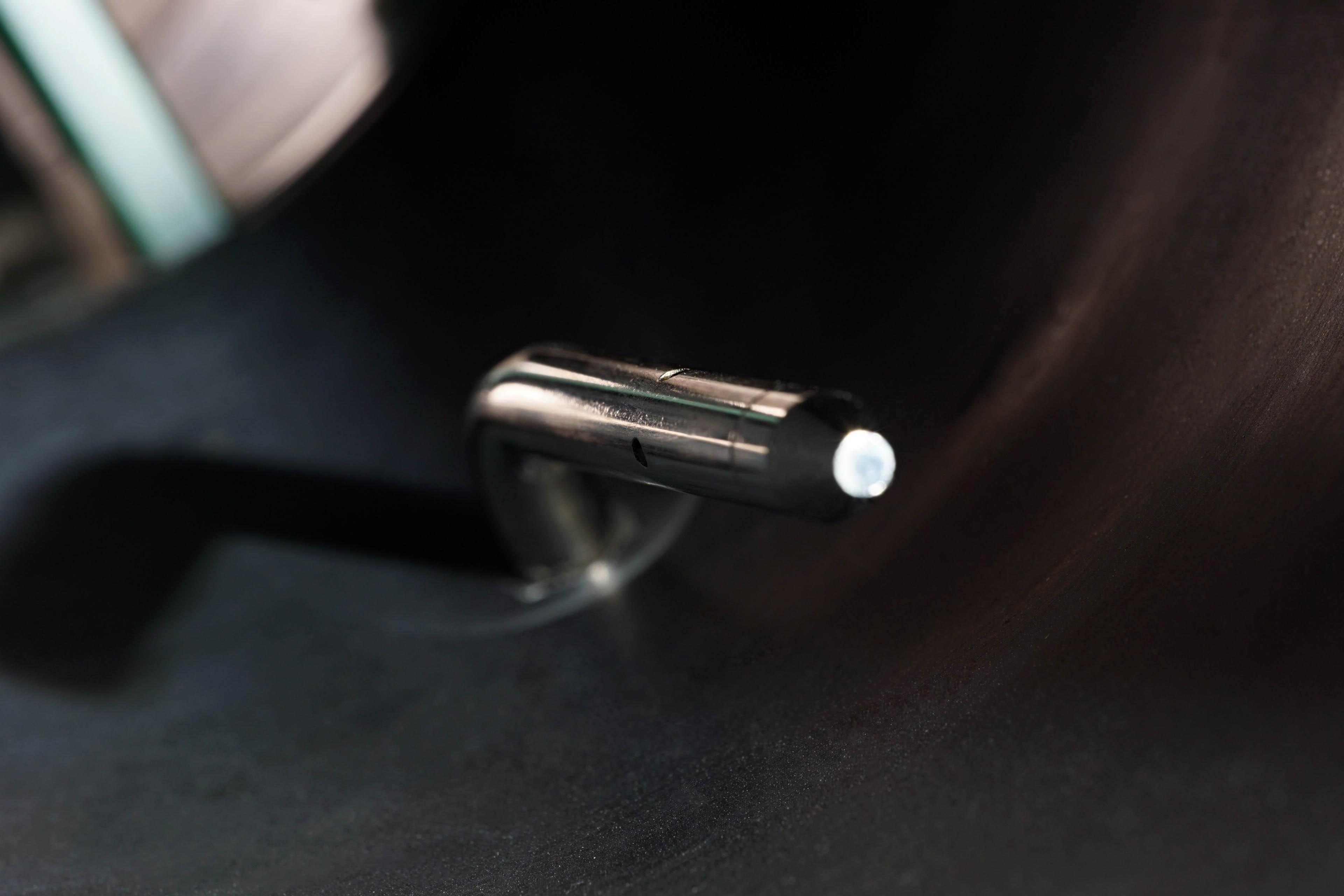
Finally, it is time to move further down the tunnel a bit. Just behind the fan is a static pressure sensing probe. Its position has been chosen with maximum measurement efficiency in mind. In other words, the sensors are placed at the points of highest pressure (although this is virtually the same everywhere in the unconstrained part of the tunnel).
The Fieldpiece ASP2, which is connected to the Fieldpiece SDMN5 manometer, is used to measure the static pressure in the tunnel. The latter also allows measurements in millimetres of water column, but we measure in millibars. This is a more finely resolved base unit for this meter. And only from there we convert the measured values into mm H2O to allow easy comparison with what the manufacturers state.
While we wrote when measuring noise levels that our results could not be compared with the parameters, that is no longer the case here. As long as the fan manufacturers do not embellish the parameters, they should quote approximately the same pressure values as our tests show. The most significant deviations can only arise at the level of varying accuracy of the measuring instruments, but these are negligible percentages.
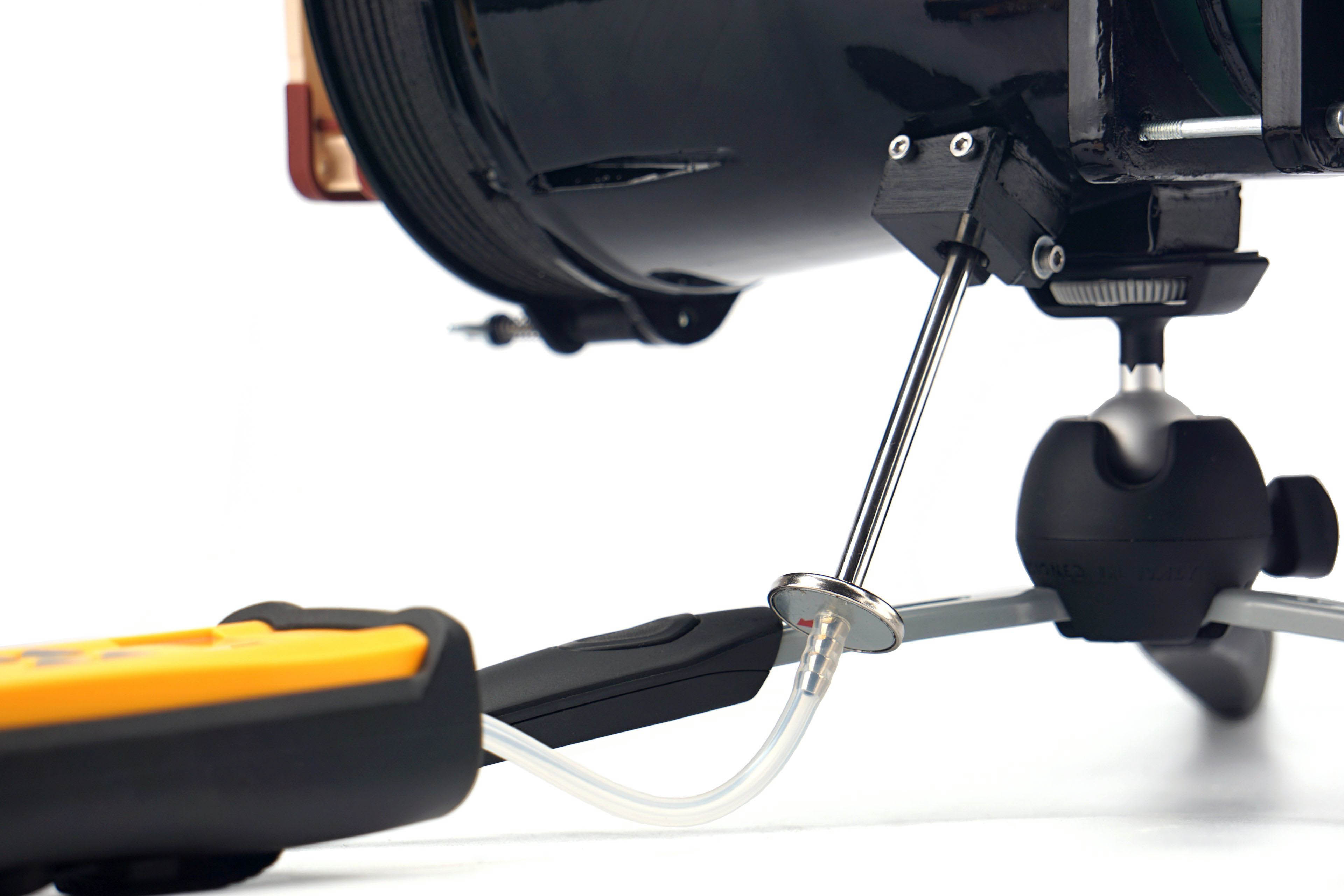
The greater the difference between the manufacturer’s claimed values and ours, the less the specifications correspond to reality. If the claimed values are significantly higher, it is certainly an intention to artificially give an advantage to the fans on the market. However, if the manufacturer quotes a lower pressure value than we do, it points to something else. Namely, a weaker tightness of the measuring environment. The less tight the tunnel is, the lower the pressure you naturally measure. This is one of the things we tuned for an extremely long time, but in the end we ironed out all the weak spots. Whether it’s the passage for the probe itself, the flanges around the anemometer, even the anemometer frame itself, which is made up of two parts, needed to be sealed in the middle. Finally, the flap at the tunnel outlet must also be perfectly tight. That’s because static pressure has to be measured in zero airflow.
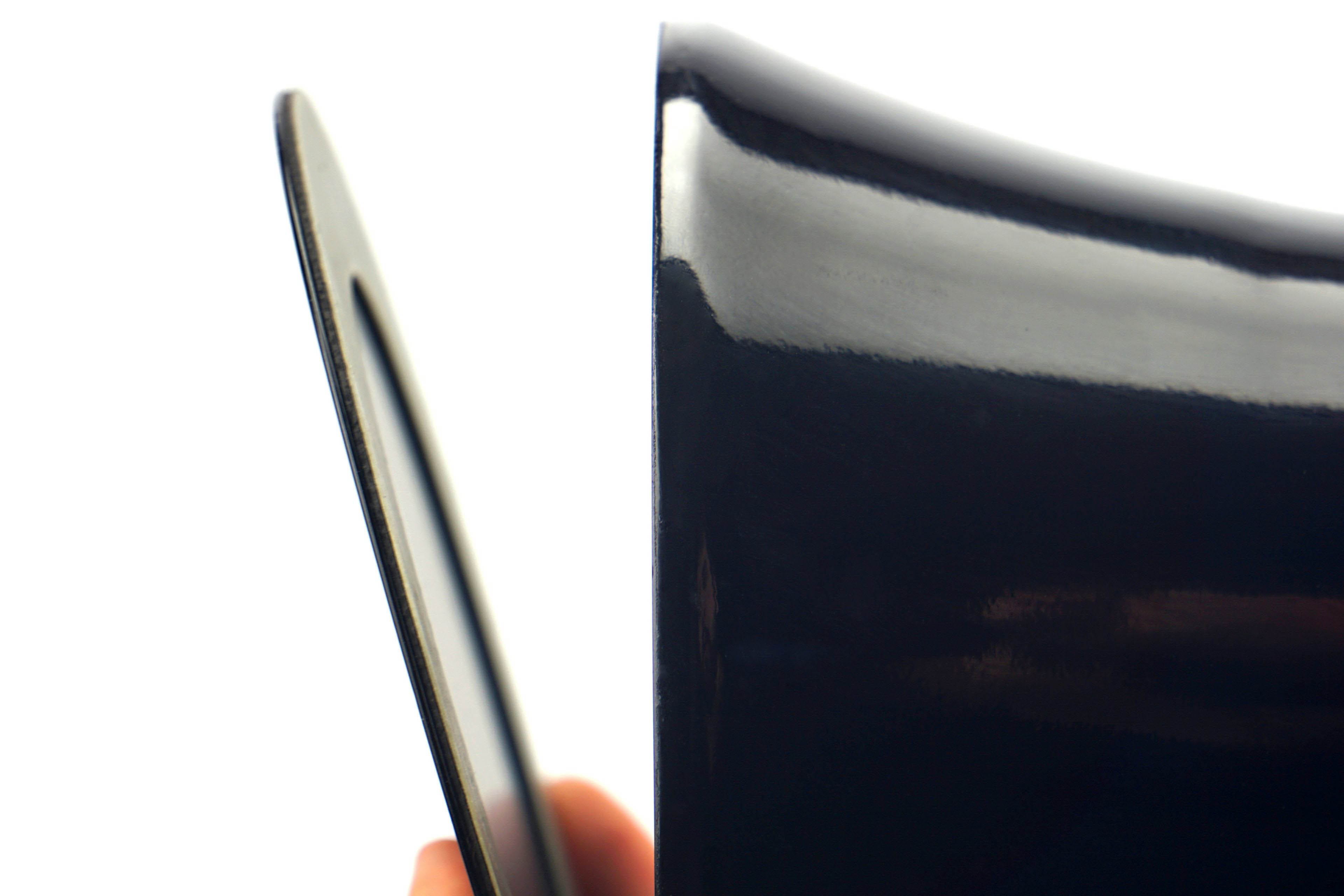
But there is one thing that often lowers the pressure of the fans a bit. And that’s protruding anti-vibration pads in the corners or otherwise protruding corners. In other words, when the fan doesn’t fit perfectly to the mounting frame at the inlet, and there are small gaps around the perimeter, that also affects what you measure. But we have not gone into this because it is already a quality feature of the fan. In the same way, it will “stand out” and perform a bit weaker than it has the potential to do with better workmanship, even after application by the end user.





Any plans for tests of the non-reverse variant, and also spacers (like Noctua NA-IS1)? To me they would be the logical next steps for topics raised in this test.
We do not plan to test the standard variants of TR120 fans in the near future. In the long run, the basic plan remains the same – we have to compare all the fans that exist, haha. Only time will tell where we will really end up. 🙂
We’ve had the NA-IS1 frames in our editorial office since their introduction. Of course it would be really useful to get to them and one day it will come. I still can’t make space for them – there is always something “more important”.
Always looking forward to your tests, whatever they are🙂
One additional question though, could you further elaborate what’s going on with the hexagonal grille tests for this fan? First time I’ve seen a fan that somehow has parts of the data missing in the middle (33 and 36 missing, but not 31 and 39). You say unstable tonal peaks, so is the RPM unstable at those noise levels, or is it due to something else?
I think it’s happened before. But maybe it was for the quietest or loudest mode of normalised noise and then it can be attributed to another reason? Anyway, I will explain.
It is important to realize how we bring the fans to the “same noise level”. It’s not like we set the fan somehow and it’s stable at, say, 36 dBA. It’s that we set the fan so that the average of 30 samples ends up at 36 dBA. The interval of these samples can be in the range of 35,9–36,1 dBA during the measurements, for example, but possibly also in a much wider range, for example 32–38 dBA, and now I am not exaggerating. This latter case is similar to trying to get the TR120 into the 33 and 36 dBA modes, which failed. With no PWM setting (nor after very fine tuning of the pulse strength with voltage in single digits of mV), we could not set the fan on the grille so that the average of 30 samples corresponds to 33 dBA and 36 dBA, respectively. It was always more or less, i.e. not what was required. This is a topic that certainly makes sense to look at in more detail. Especially after Noctua opened this “Beat frequency theory” topic, which is a good basis for understanding the issue by a wider than very narrow spectrum of users.
–“Beat frequency theory”
…well, already during the 1st world war the company on the bridge had to stop marching in order not to shake the bridge.
Wave interferance
https://en.m.wikipedia.org/wiki/Wave_interference
In acoustic
https://en.m.wikipedia.org/wiki/Beat_(acoustics)
Thanks for your detailed explanation. The only other time I have heard the need of averaging noise samples is from ThermalLeft. What’s the sampling rate you’re using?
This phenomenon is definitely worth looking into some day, especially for instances like this where large deviations occur.
The sampling rate of the Reed R8080 is 1s. The settings for the individual modes normalized according to a fixed noise level are based on the arithmetic mean of a 30-second recording. This must always be exactly 31.0; 33.0; 36.0; 39.0; 42.0 or 45.0 dBA after rounding.