Nvidia surprised many by changing the boost limits on the new GeForce RTX 50 series, removing the option to set a temperature limit during overclocking. Now, only the power limit is adjustable, and specs list only the GPU’s maximum temperature. We’ll look at how this affects GPU Boost compared to the RTX 30 series, what happens to clock speeds and performance when limits are hit, and how to tell if your GeForce is overheating.
GeForce RTX 3080 FE, Default Settings, Reduced Airflow
Since the card didn’t hit its thermal limit under default conditions, I covered the case fan openings to simulate poor system airflow.
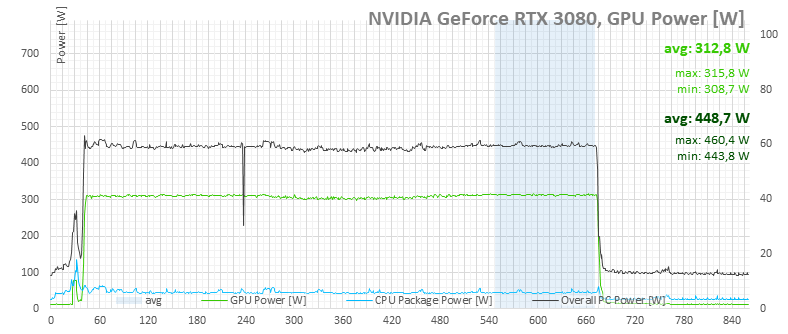
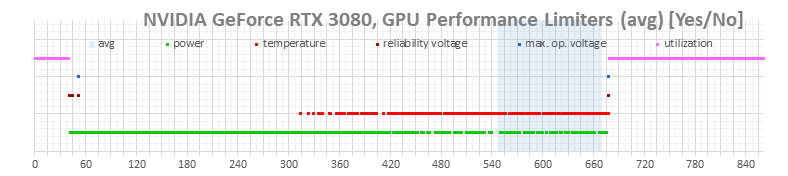
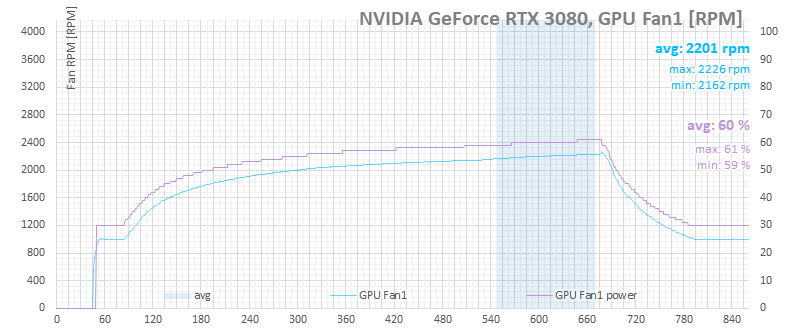
The following set of graphs again shows the GeForce RTX 3080 running at stock settings. While it never reached the thermal limit in a well-ventilated case, with restricted ventilation openings, the GPU temperature eventually climbed to the limit.
Up to around the 240-second mark, the card behaved similarly to the previous test. When the GPU temperature met the thermal limit, the control logic waited briefly. When it became clear the temperature wouldn’t drop on its own, it started lowering the core clocks while simultaneously ramping up the fan speed.

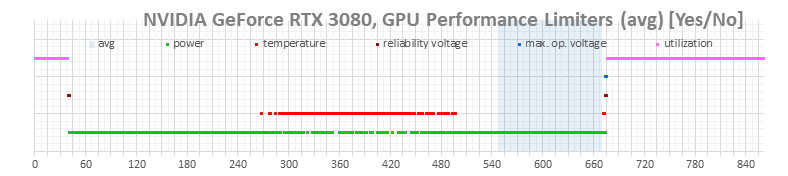
Between 360 and 600 seconds, the fans accelerated until the GPU temperature dropped below the limit. Once that happened, fan speed stabilized, as did the GPU clock speed.
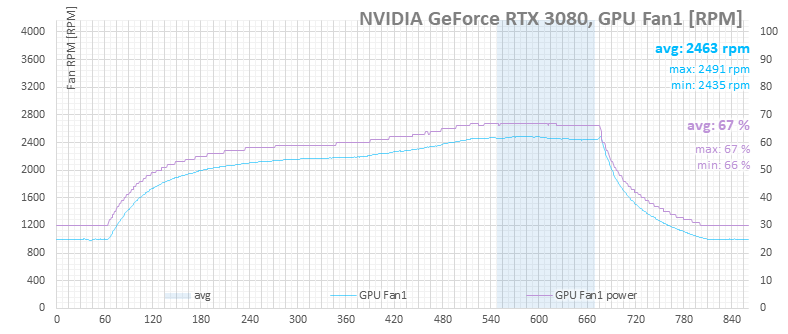
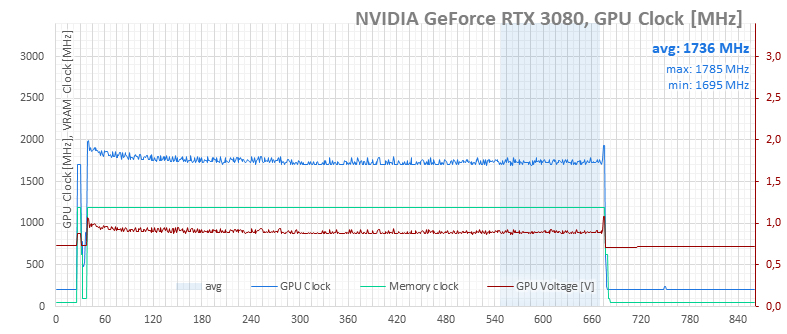
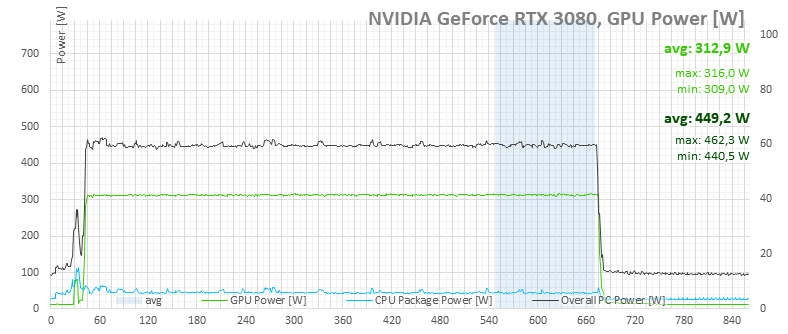
The power consumption chart suggests that once the thermal limit engaged, the card slightly reduced core clock speeds and voltage, causing the power consumption to dip below the limit. As the fans sped up enough to keep the temperature under control, power consumption rose again by a few watts.
GeForce RTX 3080 FE, Thermal Limit at 77 °C, Reduced Airflow
In the same setup, I lowered the thermal limit to 77 °C. The result was surprising—while at default settings the card reacted to hitting the thermal limit by significantly increasing fan speed, this time it only continued gradually raising fan RPM and dropped core clocks.

Toward the end of the test, the fans appeared to accelerate a bit more, but overall, the fan control behaved as if the thermal limit were still at 83 °C.
GeForce RTX 3080 FE, Thermal Limit at 90 °C, Reduced Airflow
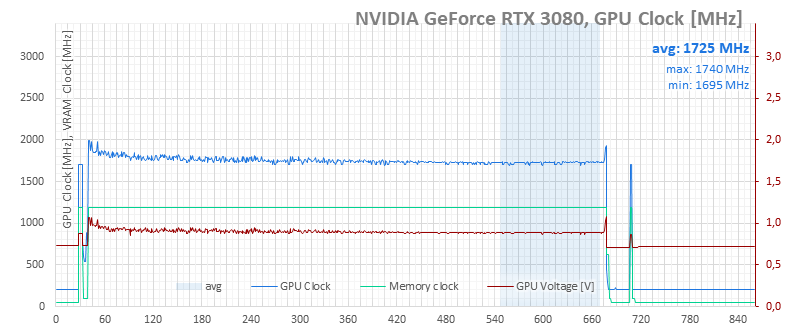
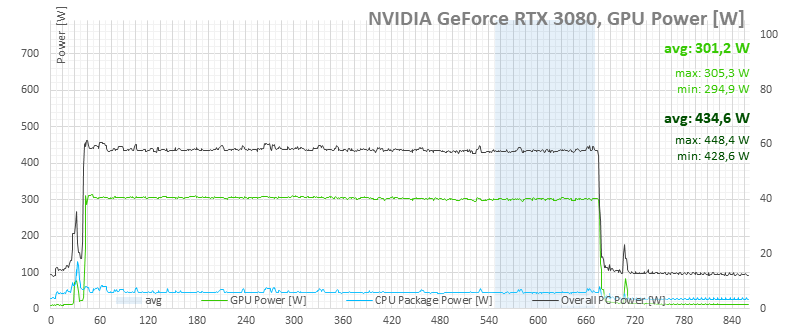
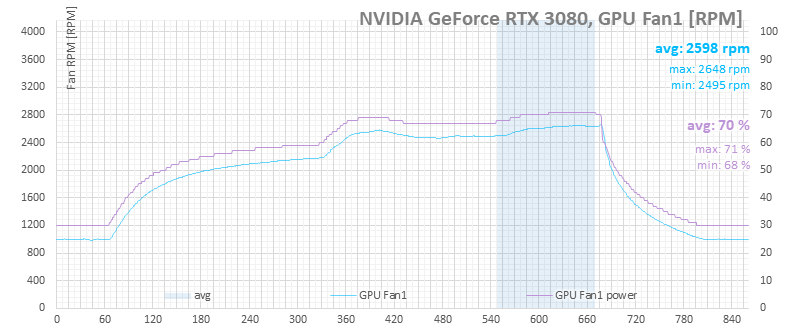
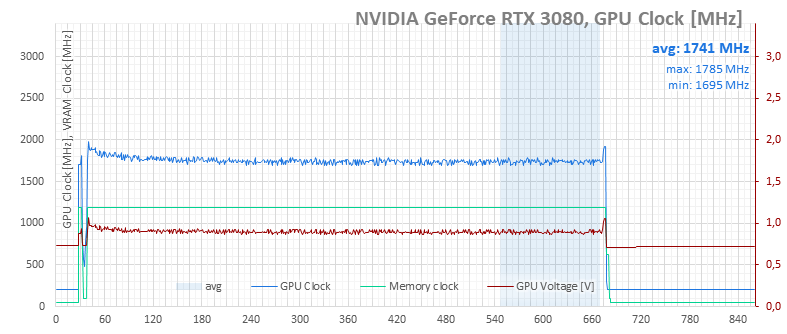
When increasing the thermal limit to 90 °C, something unusual happened. Even though the GPU temperature never reached the set limit and the thermal limit indicator never lit up, the fans suddenly ramped up sharply around the 330-second mark. There are three possible reasons: the hotspot temperature hit 95 °C, memory reached 104 °C, and the GPU itself climbed to about 84 °C.
Clock speeds and power consumption didn’t change—only fan speed increased noticeably in the second half of the test.


⠀