Nvidia surprised many by changing the boost limits on the new GeForce RTX 50 series, removing the option to set a temperature limit during overclocking. Now, only the power limit is adjustable, and specs list only the GPU’s maximum temperature. We’ll look at how this affects GPU Boost compared to the RTX 30 series, what happens to clock speeds and performance when limits are hit, and how to tell if your GeForce is overheating.
In the next set of tests, I increased the heat load even further by raising the power limit to 116% (370 W) in the same airflow-restricted case.
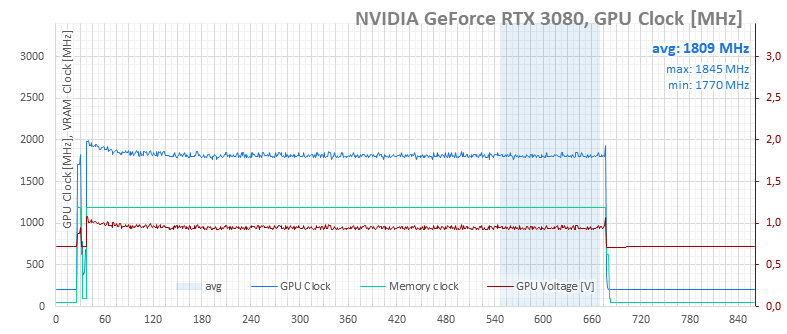
GeForce RTX 3080 FE, Default Settings + Power Limit 116%, Reduced Airflow

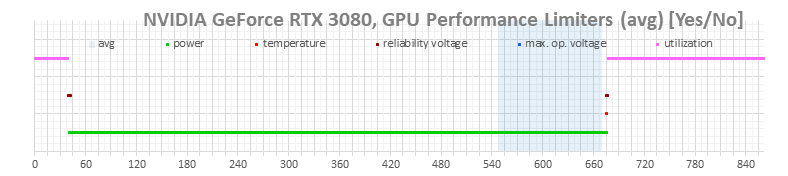


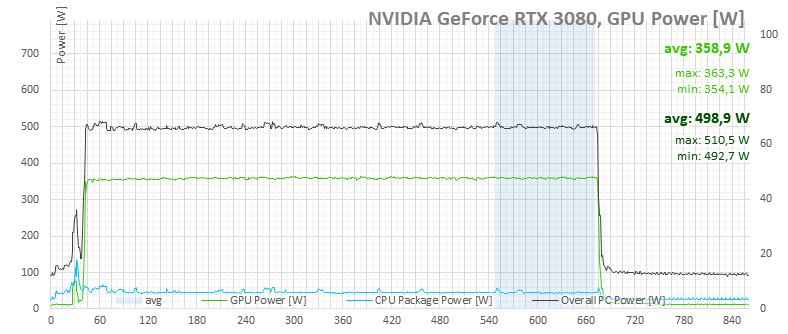
GeForce RTX 3080 FE, Thermal Limit 77 °C + Power Limit 116%, Reduced Airflow


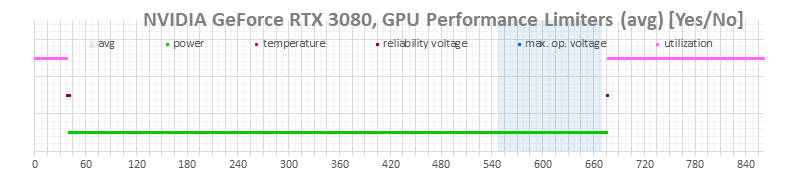
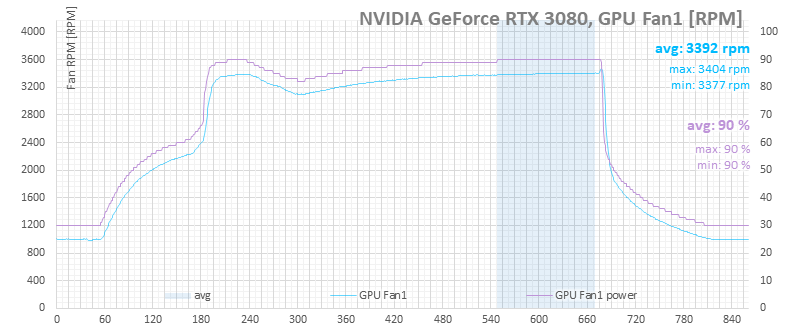
GeForce RTX 3080 FE, Thermal Limit 90 °C + Power Limit 116%, Reduced Airflow
Even here, the graphs don’t reveal much more—all three relevant temperatures rise quickly together. Memory temperature reaches 106 °C, very close to its limit. The hotspot doesn’t seem to trigger any extra control actions, but the overall GPU temperature hits 86 °C. That’s still below the manually raised 90 °C thermal limit, but 3 °C above the default 83 °C threshold.


⠀