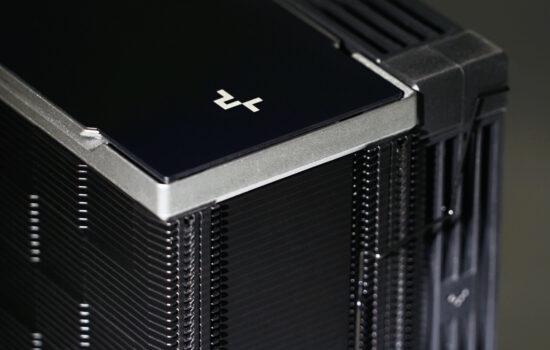
It’s been a long time since we’ve seen the prototype, but the first passive cooler from Noctua with the designation NH-P1 was finally introduced this week. Its design is rather different from usual coolers as the main priority is maximization of heat dissipation to its surroundings. And to increase its efficiency, a new A12x25 LS-PWM fan with very quiet operation was also introduced as complementary accessory for semi-passive cooling.
Key features of the cooler
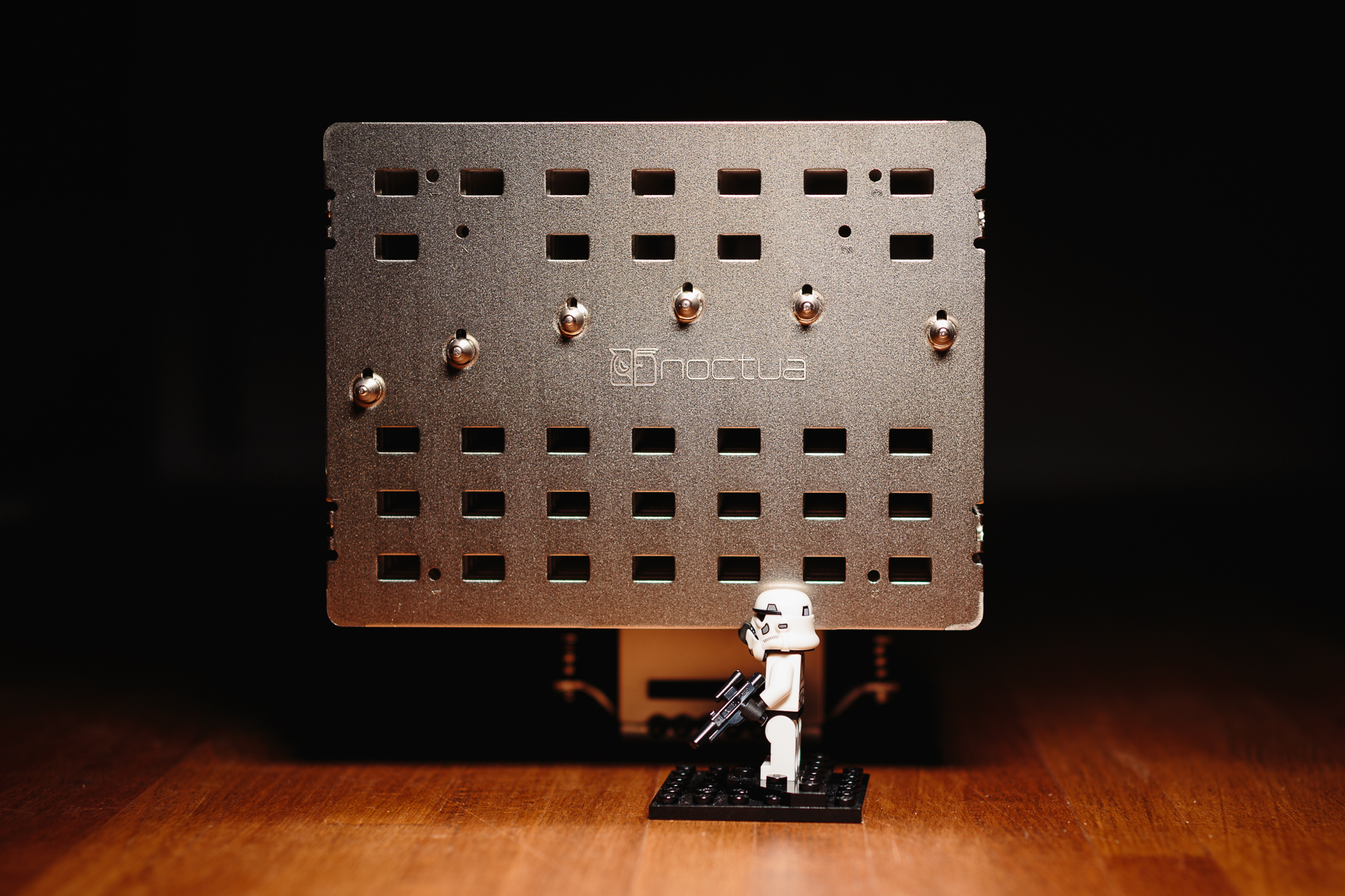
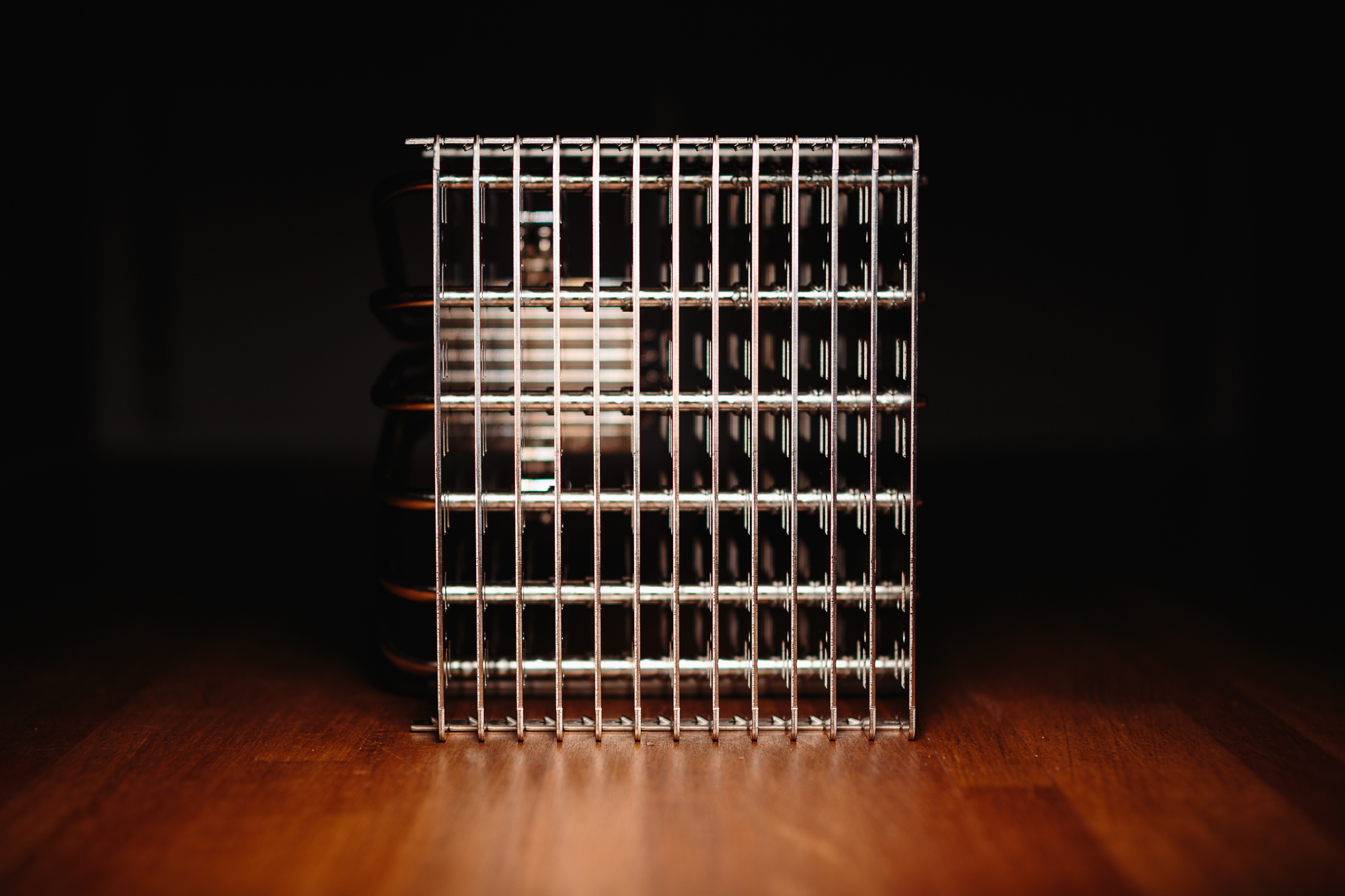
The design of this cooler is very different from conventional coolers, due to its design for passive and semi-passive use cases. Noctua NH-P1 is based on about thirteen thick aluminum fins, each with one millimeter thickness. A total of six copper heatpipes pass through these fins, ending in a large base. The fins themselves are perforated with rectangular holes for better heat dissipation to the surroundings, for the same reason there are also wide gaps between the individual fins.
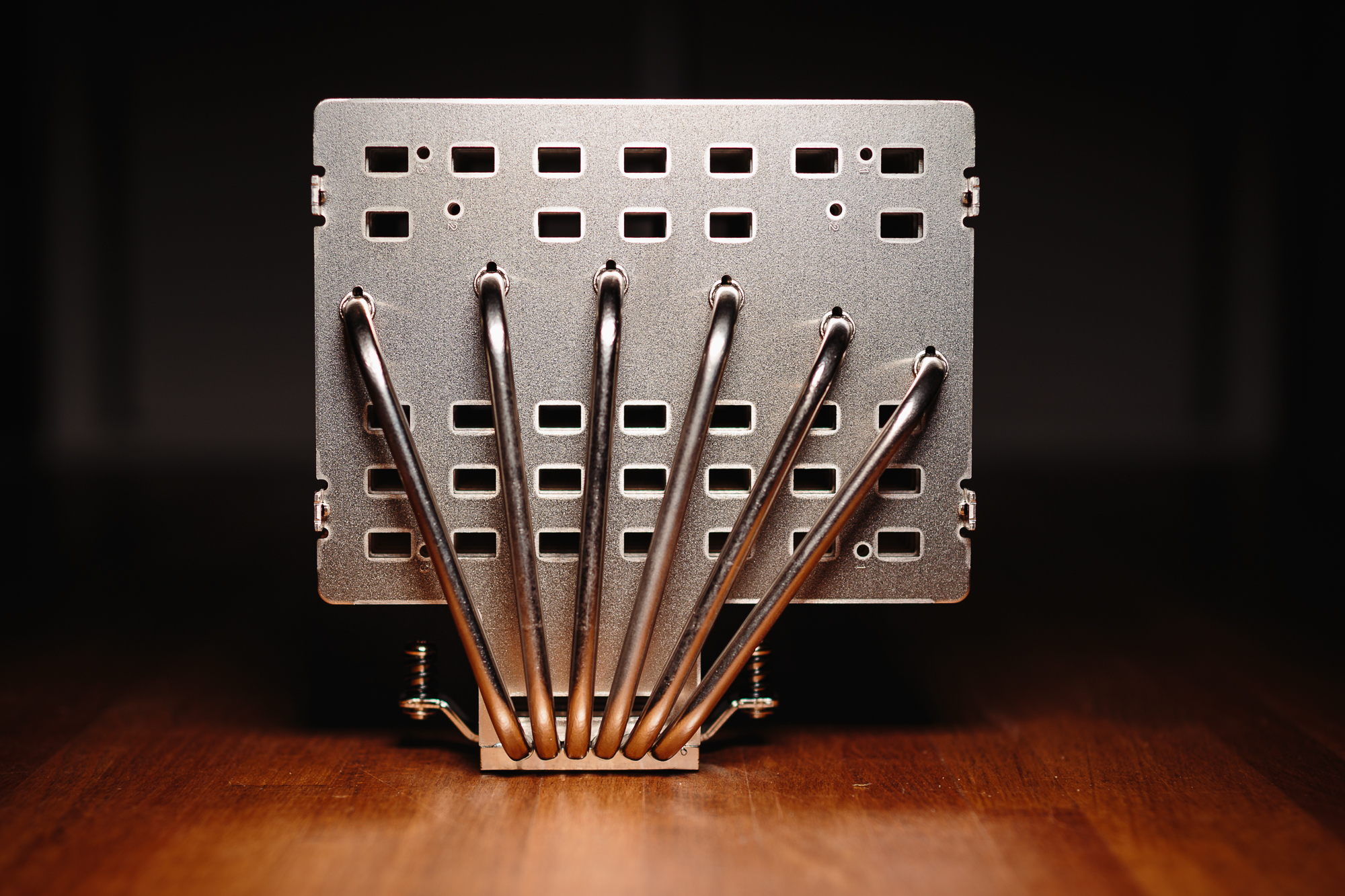
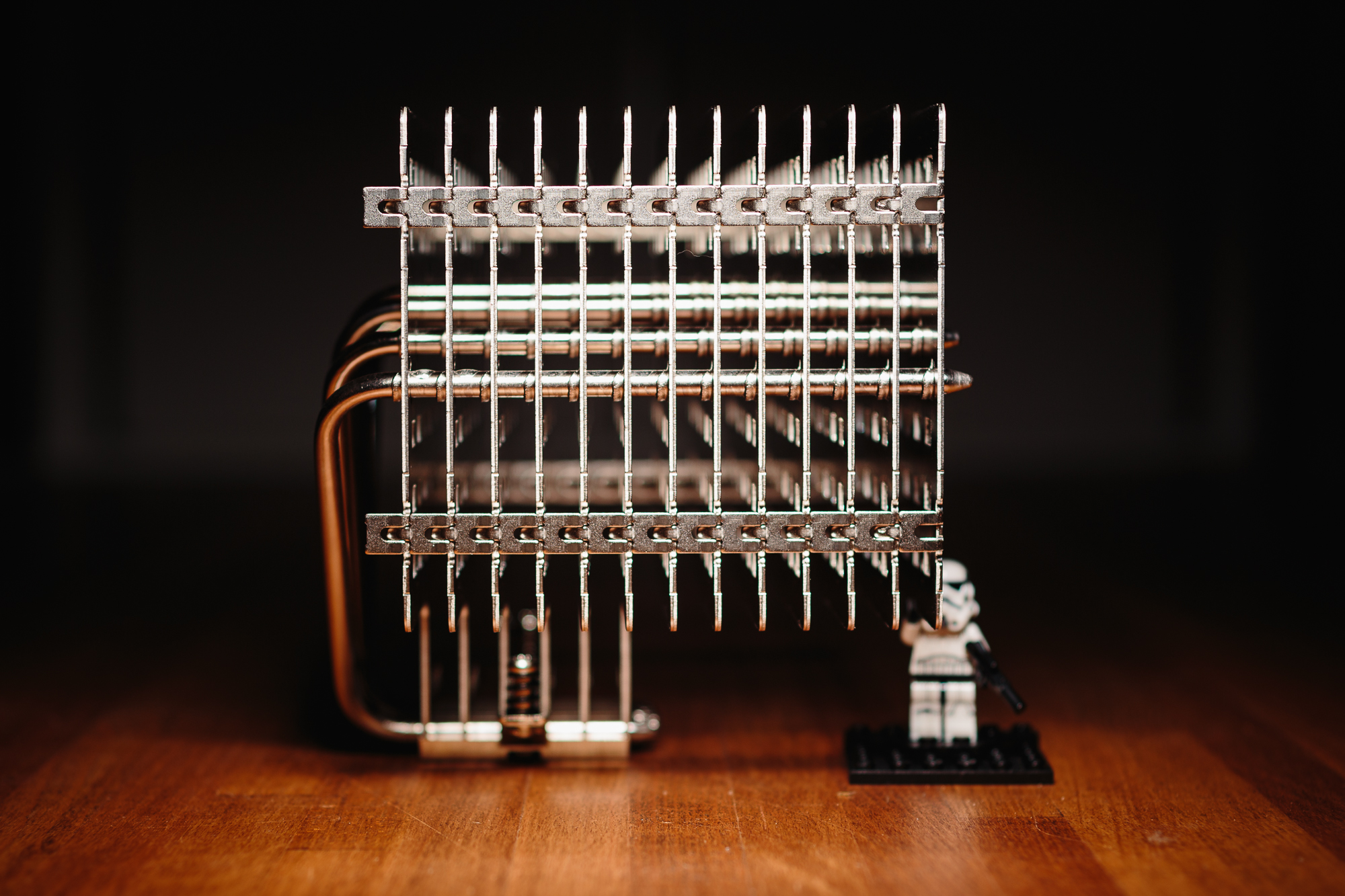
In addition, the cooler is asymmetrically shaped so that it does not collide with the PCI Express slot closest to the processor. And due to the considerable imbalance of the cooler in regard to the central axis, I used the help of a passing-by stormtrooper (which, however, is not part of the cooler’s accessories!), for the needs of photo documentation.

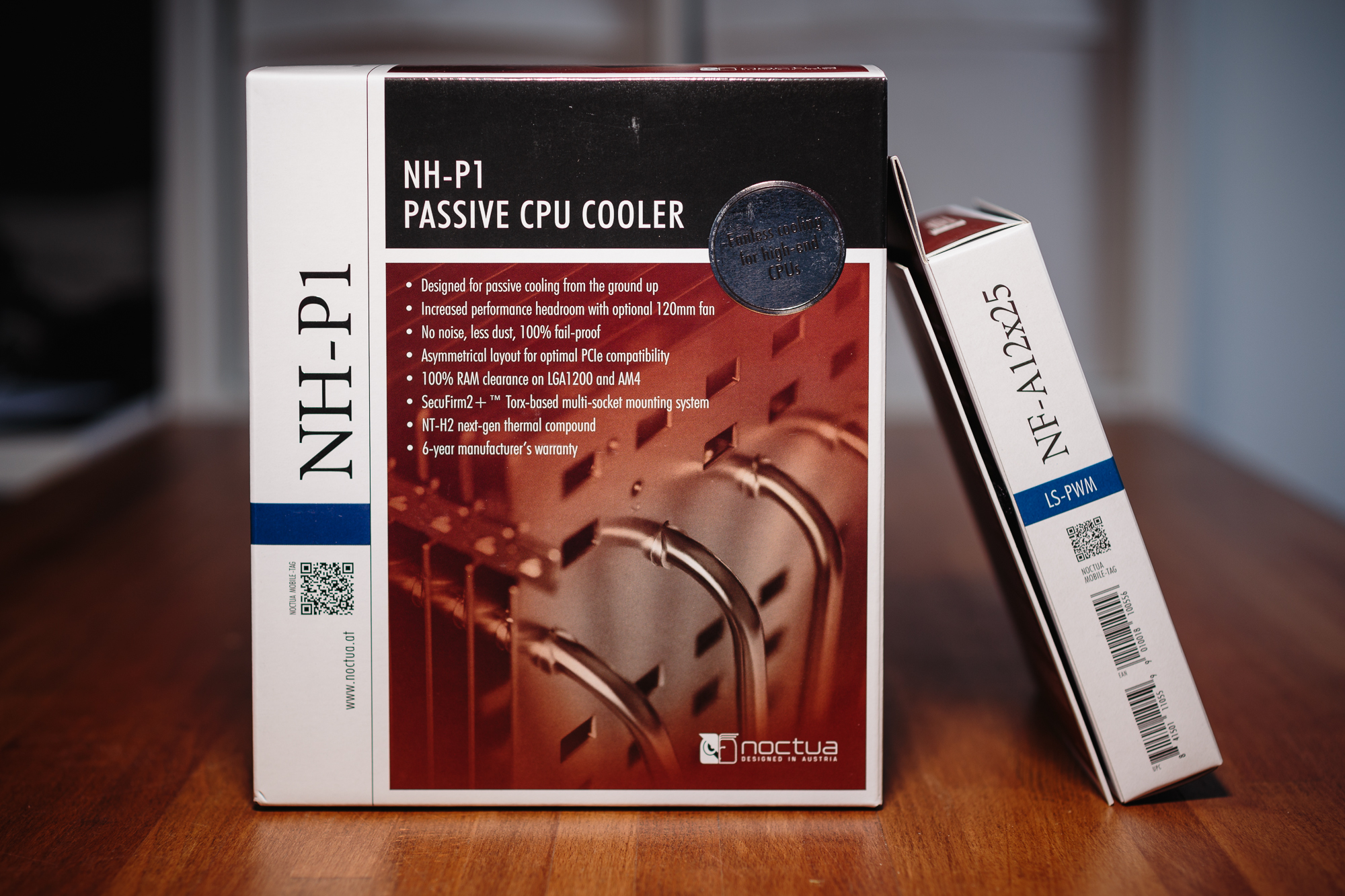
The packaging of this cooler is plentiful. In addition to mounting kits for Intel and AMD sockets, you will also find a cloth for cleaning the processor and cooler from paste leftovers. The included thermal paste is the latest Noctua NT-H2 (finally!). Perhaps it’s a pity that there is only one set of clips for mounting the fan, but on the other hand, this cooler is designed primarily for passive use and the presence of two fans would only disproportionately increase its already large dimensions. I also recommend paying increased attention to the user manual, where you will find a clear diagram of how to optimally install the cooler and how and where to possibly mount a fan.
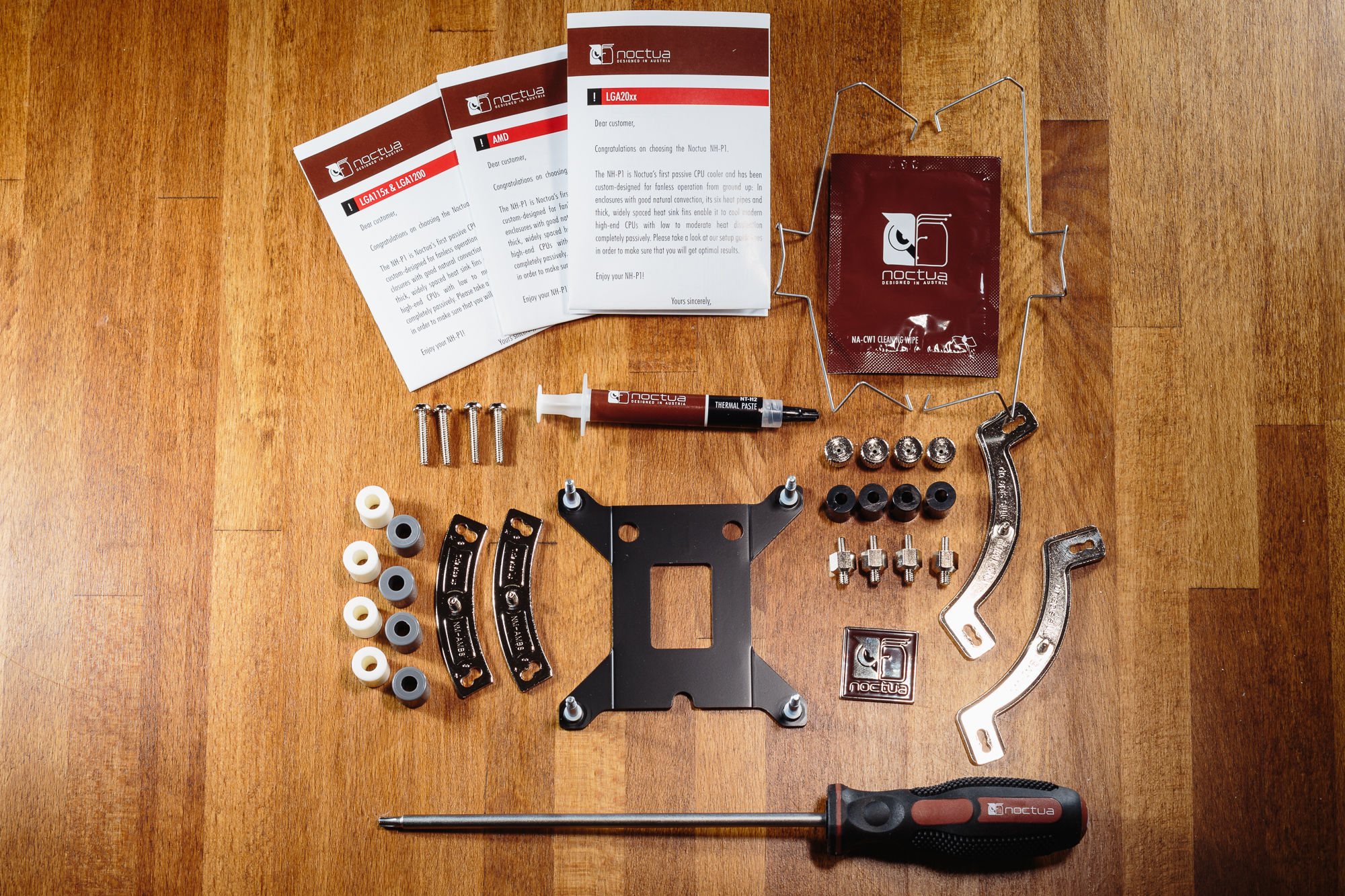
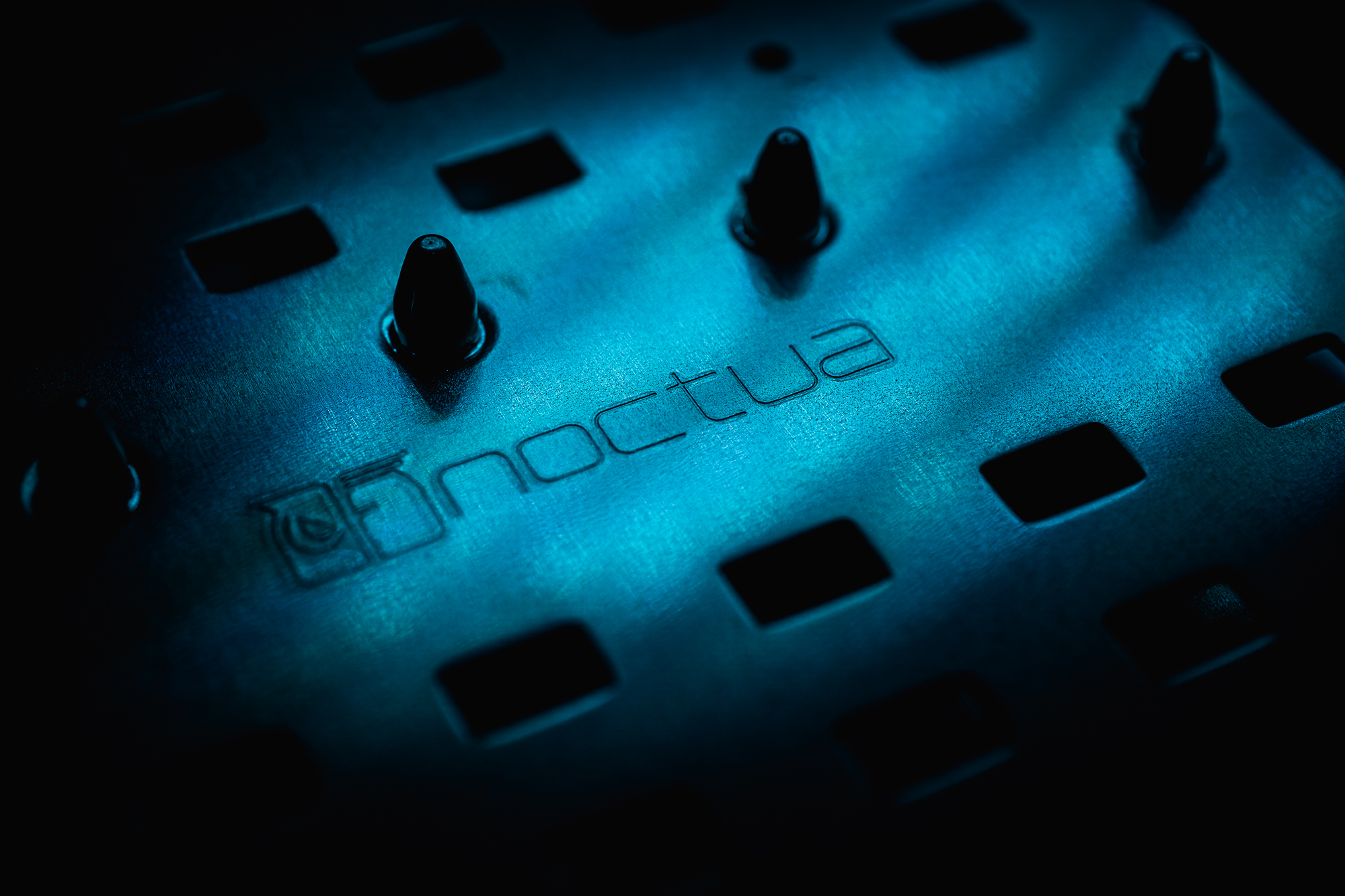
Of course, the proven and user-friendly SecuFirm2 mounting system has been preserved here, only instead of the traditional Phillips head it now uses TORX head screws. I asked a Noctua representative about the reason for this change, and whether the presence of TORX head screws can be expected in other Noctua coolers as well. The answer was that the TORX head wears less due to the larger contact area of the groove and the tip of the screwdriver. If there is sufficient demand and positive feedback, then we can really expect TORX head screws instead of Phillips head for upcoming coolers as well, although it will probably be reserved only for the top tier coolers and not the entire range of Noctua offerings.
Installation and mounting the cooler is a bit more complicated here due to the dimensions and disbalance of the cooler to the center axis of the base, but the whole process is quite fast and you should not encounter any difficulties.
Specs of the cooler and fan
I’ve compared the NH-P1 with two other high-end coolers from Noctua. It is quite nice to see that although the NH-P1 looks like a giant at first glance, the NH-D15 is even bigger and heavier with the fans installed. Of course, if you install a fan on the NH-P1, its overall dimensions will further increase.
It’s a bit more complicated with the maximum height of RAM modules. For the NH-P1 and NH-U12A, it depends on the socket, where the restriction only applies to the LGA 20xx socket and the DIMM slots to the left of the socket. With the NH-D15, the situation is even more complicated and the maximum supported RAM module height depends on the presence and type of fan that is installed on the front tower of the cooler.
| Cooler | Cooler | NH-P1 | NH-D15 | NH-U12A |
| Cooler | Cooler | |||
| Supported sockets | Supported sockets | Intel 115x, 1200, 20xx; AMD AMx, FMx | ||
| Height | Height | 158 mm | 165 mm | 158 mm |
| Width | Width | 154 mm | 150 mm | 125 mm |
| Depth | Depth with fan | 152 mm | 161 mm | 112 mm |
| Weight | Weight | 1180 g | 1320 g | 1220 g |
| Maximum RAM height | Maximum RAM height | 45 mm* | 65/45/32 mm** | 42 mm*** |
| MSRP | Doporučená cena | € 110 | € 110 | € 110 |
The newly introduced NF-A12x25 LS-PWM cooler has a reduced maximum rpm compared to the original NF-A12x25 version > The newly introduced NF-A12x25 LS-PWM fan has its maximum RPM reduced, compared to the original NF-A12x25 version, which of course reduces the maximum air flow and maximum static pressure. However, these parameters are not very significant for the NH-P1 with large gaps between the fins. This fan also offers semi-passive operation, the rotor stops when the PWM signal drops below 20%. And the main advantage of this fan is the extremely low noise level, which is usually the number one priority in passive and semi-passive setups.
| Fan | Fan | NF-A12x25 LS-PWM | NF-A15 HS-PWM | NF-A12x25 PWM |
| Fan | Fan | NF-A12x25 LS-PWM | NF-A15 HS-PWM | NF-A12x25 PWM |
| Bearing | Bearing | SSO2 | SSO2 | SSO2 |
| Speed range | Max speed | 0/450–1200 rpm | 300–1500 rpm | 450–2000 rpm |
| Max. static pressure | Max static pressure | 55.7 m3/h | 140.2 m3/h | 102.1 m3/h |
| Max. airflow | Max airflow | 0.82 mm H2O | 2.08 mm H2O | 2.34 mm H2O |
| Noise level | Noise level | 12.1 dBA | 24.6 dBA | 22.6 dBA |