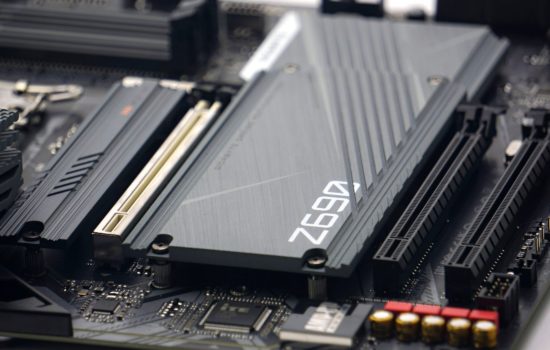
We’re concluding the tests of B850 motherboards with the MSI Tomahawk Max WiFi. In terms of price, it sits between the already tested B850 Aorus Elite WiFi7 and Asus ROG Strix B850-F Gaming WiFi, with its features leaning closer to the latter. In some aspects, it even surpasses it. The word “Max” in its name is well justified – three PCIe 5.0 slots, 5-gigabit Ethernet, more USB ports…
Conclusion
The article’s title briefly reflects what the MSI MAG B850 Tomahawk Max WiFi motherboard is like. Despite being built on a lower-tier chipset (AMD B850), it includes several above-standard features that aren’t typically found on B850 motherboards.
Fast PCI Express 5.0 support isn’t limited to just one PCIe ×16 slot but also extends to two M.2 SSD slots. Thanks to this, we can talk about a future-proof design even on a more affordable motherboard. That is, relatively affordable… it’s certainly not a cheap motherboard, but compared to X870(E) models, such a claim can be made. Of course, the B850 Tomahawk Max WiFi is weaker in many aspects, which is also due to the use of only one Promontory 21 chip (instead of two on X870E motherboards), but then there’s the 5 Gb Ethernet and two internal connectors for USB ports, which are also uncommon. The overall equipment is decent, including the robustness of the VRM, which is well-suited even for Ryzen 9-class processors, meaning higher models with higher power consumption.
The temperatures of critical components is within safe limits even without the VRM heatsink, and the efficiency is sufficiently high. Power consumption under low (ST) load or idle conditions is also lower than on many competing models. That is, by AMD platform standards, where power consumption is also increased by the I/O chip within the processors themselves – something the motherboard manufacturer (MSI) can’t do anything about.
In performance tests, we didn’t encounter anything that degraded performance. All results are as expected. Whether it’s those related to CPU performance or those tied to GPU performance. Similarly, there’s nothing out of the ordinary with SSD speeds in the M.2 slots or USB port speeds. Everything is within what you’d expect. The Ethernet is naturally faster than on many competing boards. This is due to the 5-gigabit adapter instead of the usual 2.5 Gb found on most B850 motherboards. Even faster is the WiFi 7, which the B850 Tomahawk Max WiFi also features.
The USB port configuration can also be considered above standard – there are two internal 19-pin connectors available, which can be used to connect a full front panel, even for cases with four USB (3.2 gen. 2) ports.
There are up to four M.2 connectors for SSDs, although when using the third PCIe ×16 slot (4.0 with four lanes), it operates in a two-lane mode. However, this doesn’t change the fact that, by B850 motherboard standards, the options here are plentiful. The same applies to the use of the Realtek ALC4080 audio adapter. While this isn’t directly tied to the chipset, it is tied to the motherboard itself. Considering the relatively favorable price (given the features and prices of competing models), the MSI MAG B850 Tomahawk Max WiFi deserves an appropriate editorial award – “Smart buy!“.
English translation and edit by Jozef Dudáš
| MSI MAG B850 Tomahawk Max WiFi |
| + Strong 17-phase power delivery (VRM)... |
| + ... capable of handling even the Ryzen 9 9950X without power limits |
| + Up to twelve USB connectors on the rear I/O panel... |
| + ... and up to two M.2 SSD slots with PCIe 5.0 support |
| + Exceptionally detailed fan management options |
| + Clever system for unlatching the card in the first PCIe ×16 slot… |
| + ... and a tool-free, elegant mechanism for (de)mounting the SSD cooler on the first M.2 slot |
| + Support for very fast WiFi (7)... |
| + ... and up to 5 Gb Ethernet connectivity |
| + Attractive price-to-value ratio given the extensive features |
| - Only four SATA connectors |
| Suggested retail price: 276 EUR |
Some of the tested boards are also available in the Datacomp e-store

Special thanks to Blackmagic Design (for licenses for DeNoise AI, Gigapixel AI and Sharpen AI) and Topaz Labs (for licenses for DeNoise AI, Gigapixel AI and Sharpen AI)