




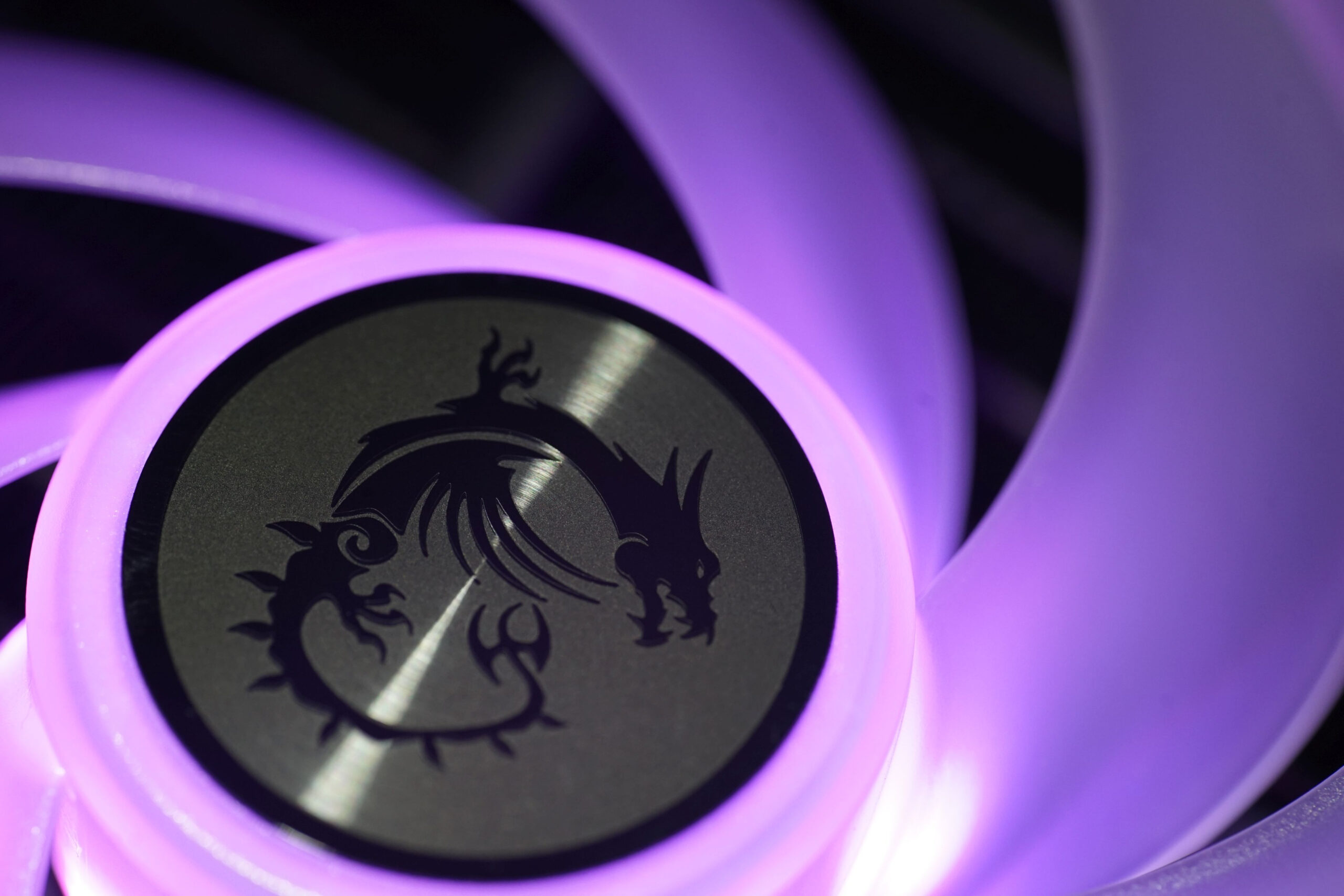
Tests of affordable AIO liquid coolers continue. The CoreLiquid A13 with a 360 mm radiator offers not only cooling performance but also ARGB LED fans with light-guiding impellers (so the lighting can be really striking…) and comes at an attractive price. Given its features, we can talk about a fairly low sum. For this “mix,” MSI’s cooler takes home our editorial award “Smart buy!”.
You’ve already seen MSI coolers in HWC tests. Take for example the CoreLiquid S360—a true top-performer, but also a very expensive cooler. With the CoreLiquid A13 360, it’s different. At least when it comes to price. That is significantly lower here, making it a genuinely accessible option for a wide range of users—even for those convinced that a cooler should never cost a large fraction of the CPU price and ought to be much cheaper. That’s exactly the case with the CL A13 360, which sells for around 100 EUR.
| Basic parameters | MSI MAG CoreLiquid A13 360 | |
| Supported sockets | Intel LGA 1851, 1700, 1200, 115x; AMD AM5, AM4 | |
| Build type | liquid (AIO) | |
| Height (w/ fans) in mm | 55.4 | |
| Length (w/ fans) in mm | 394 | |
| Width (w/ fans) in mm | 119.6 | |
| Height of the liquid block in mm | 56.7 | |
| Length of the liquid block in mm | 67.7 | |
| Width of the liquid block in mm | 82.1 | |
| Tube length in mm | 400 | |
| Daisy chaining of fans | yes | |
| (A)RGB elements | yes | |
| Number of fans and their format | 3× 120 | |
| Weight (with fans) in g | 1576 | |
| Approximate retail price in EUR | 88 |
MSI MAG CoreLiquid A13 360
The construction basics match what you’d expect from other liquid coolers in this price bracket. The 360 mm radiator is aluminum, cooled by three 120 mm fans. The tubes are sleeved with textile braid, and the block side features swivel joints for easier installation on the motherboard. No issues here. The tube length (about 400 mm) is also sufficient to reach the CPU from the front position in larger PC cases.
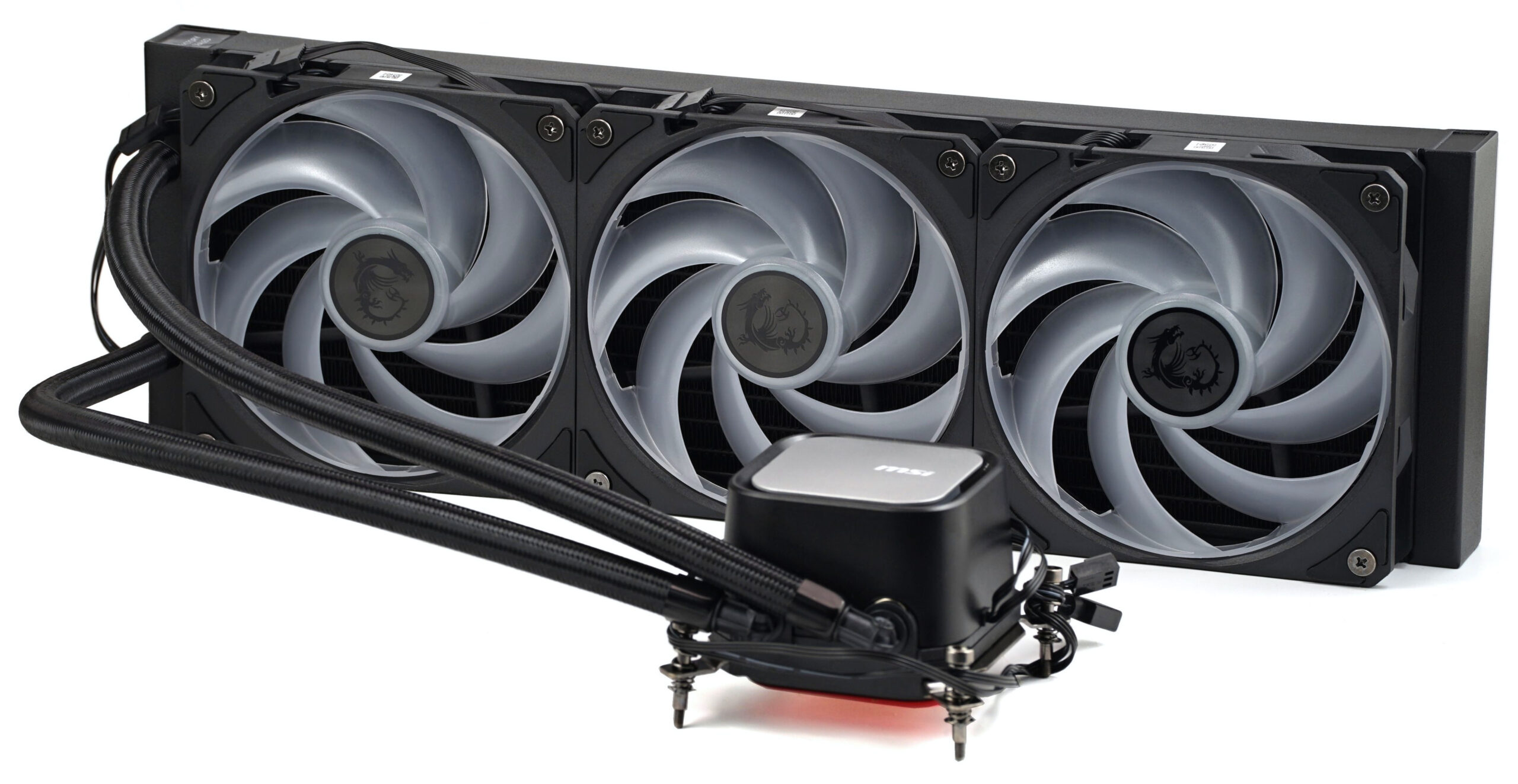
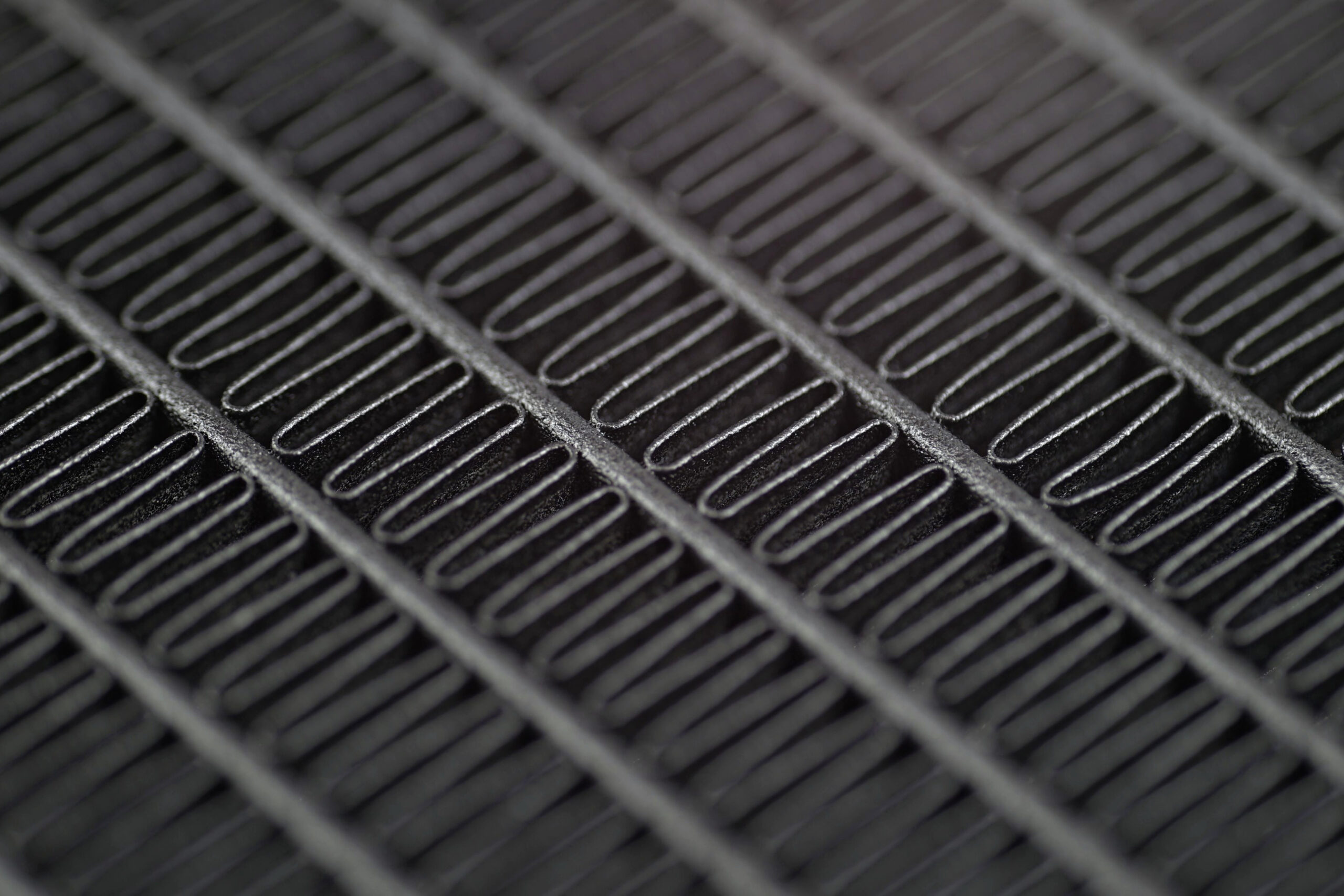
The radiator is 27 mm thick with a fin density of 30 FPI. In this respect, the CoreLiquid A13 360 does not stand out from competing designs.
Where it does differ is in the fans. These often determine how effective the cooling will be when radiators of the same size and fin density are used, provided fluid flow is not the limiting factor. And the fans here look impressive—a modern aerodynamic design with seven blades reinforced by a unifying ring. That ring plays an important role in reducing unwanted tip vibrations.
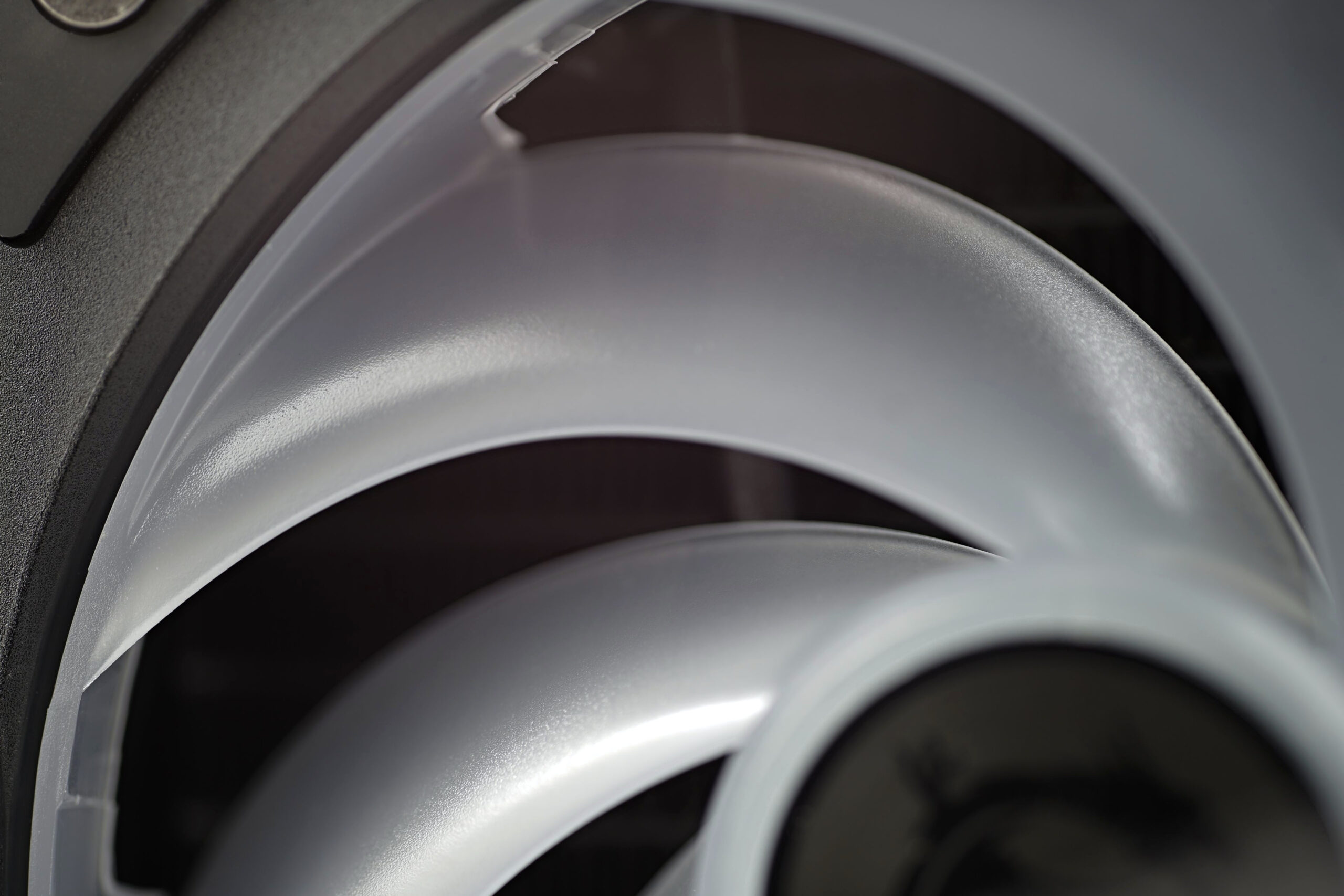
Vibrations are often a concern with impellers made of translucent materials. The ring helps to suppress them, naturally lowering noise and preventing unwanted secondary noise caused by their transfer into the case structure.
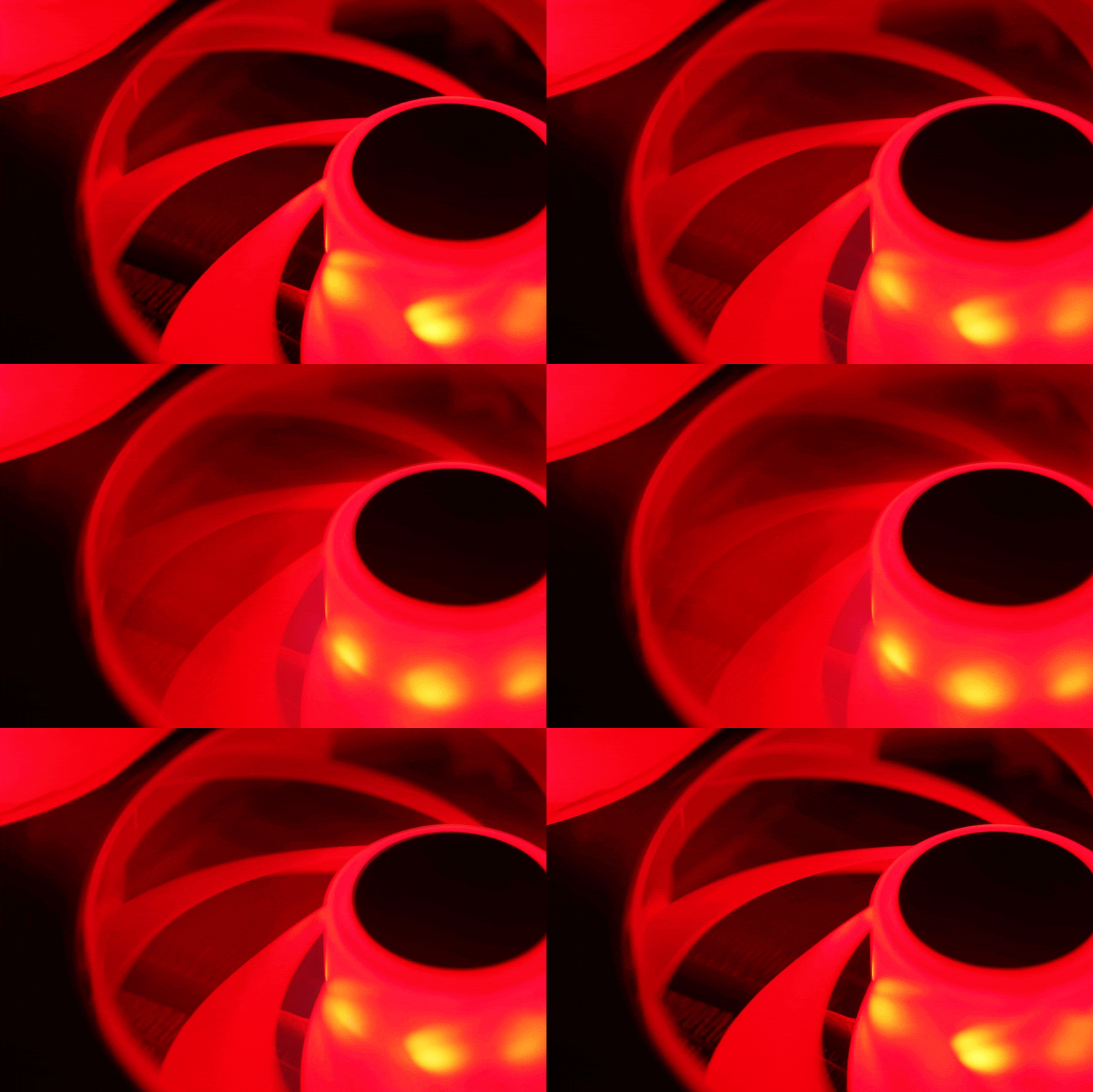
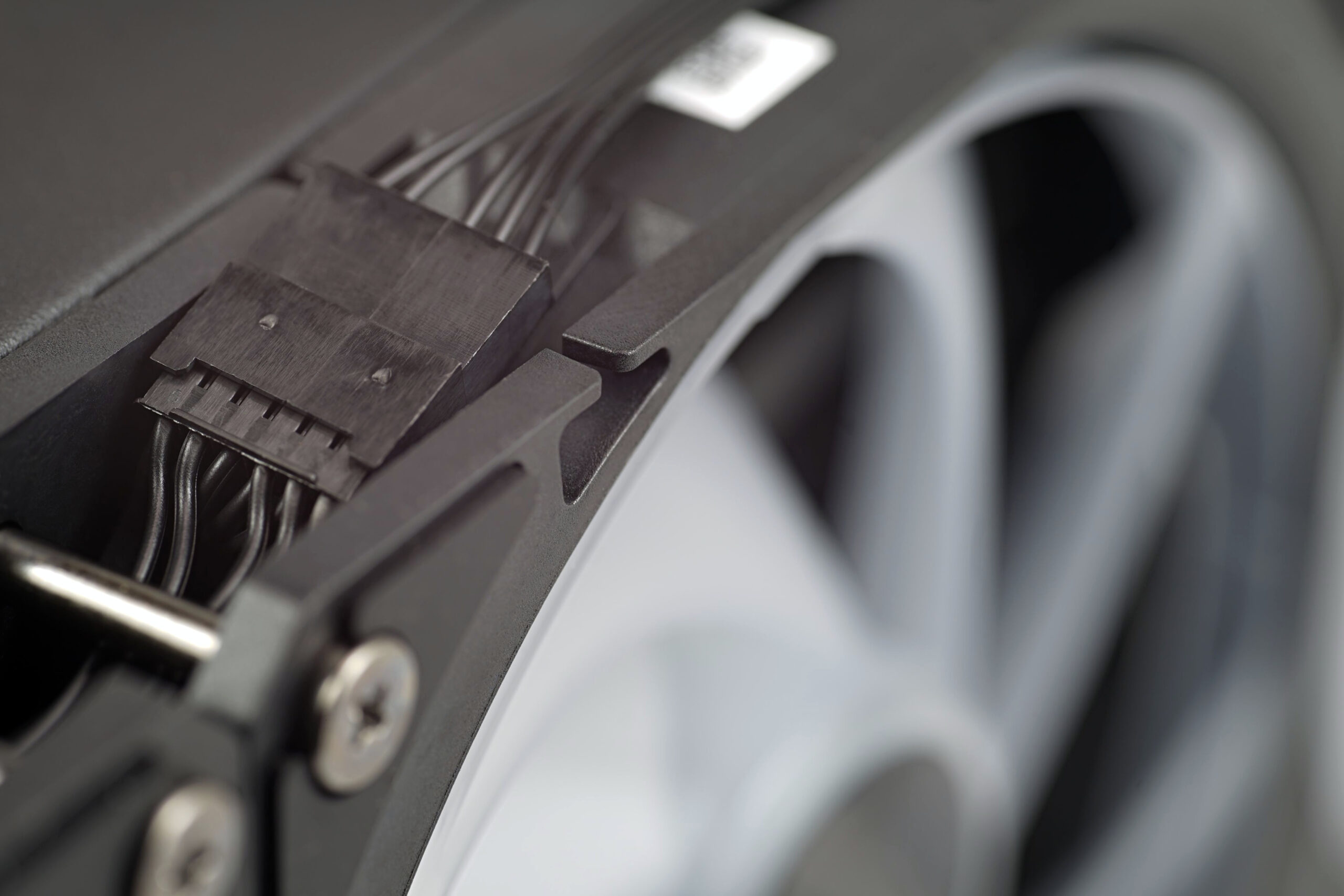
The fans are daisy-chained and connect to the motherboard (or a hub) via a single connector. It’s a 4-pin connector, which of course allows for PWM control—standard practice for coolers.
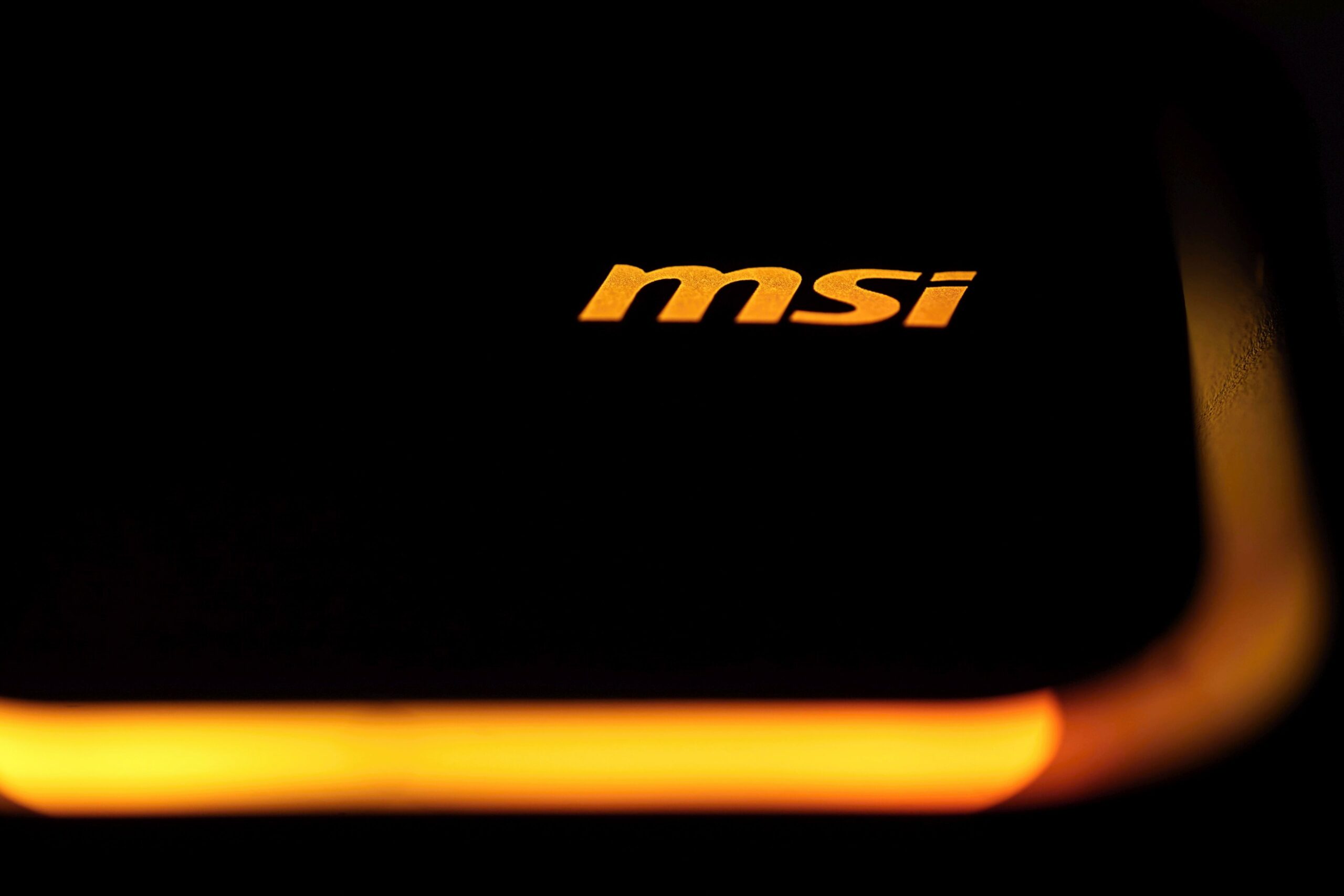
The pump is integrated into the block, which also features illuminated ARGB LED elements on the top—both the MSI logo and the perimeter edge are lit via light guides. As a result, the CoreLiquid A13 360 lights up quite a lot across different spots. If that’s what you want, you just need to hook up the block lighting. For synchronization with the fans, you can simply daisy-chain the ARGB LED connectors. The pump lighting can be linked to the fan lighting, running together from a single 3-pin ARGB header on the motherboard.
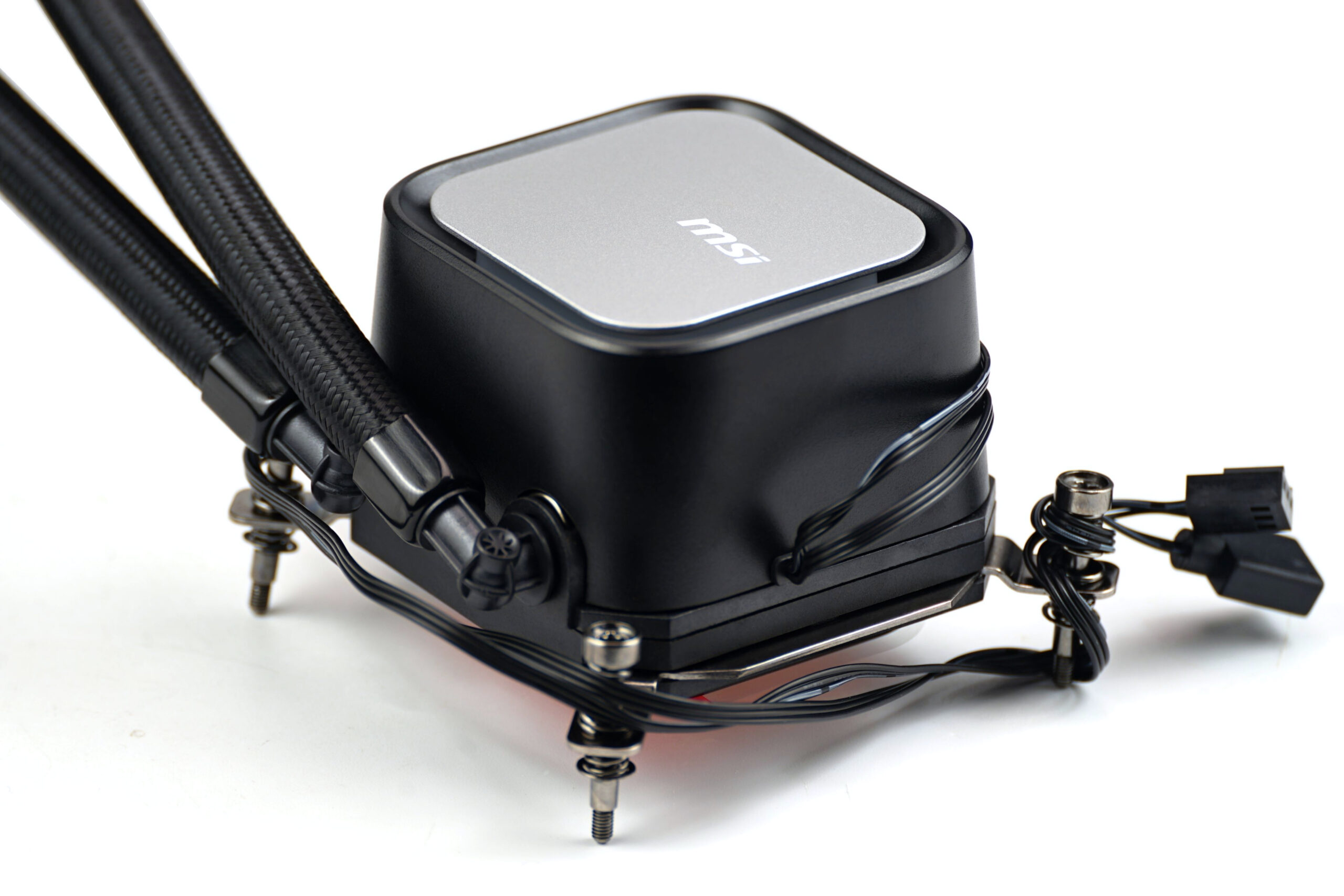
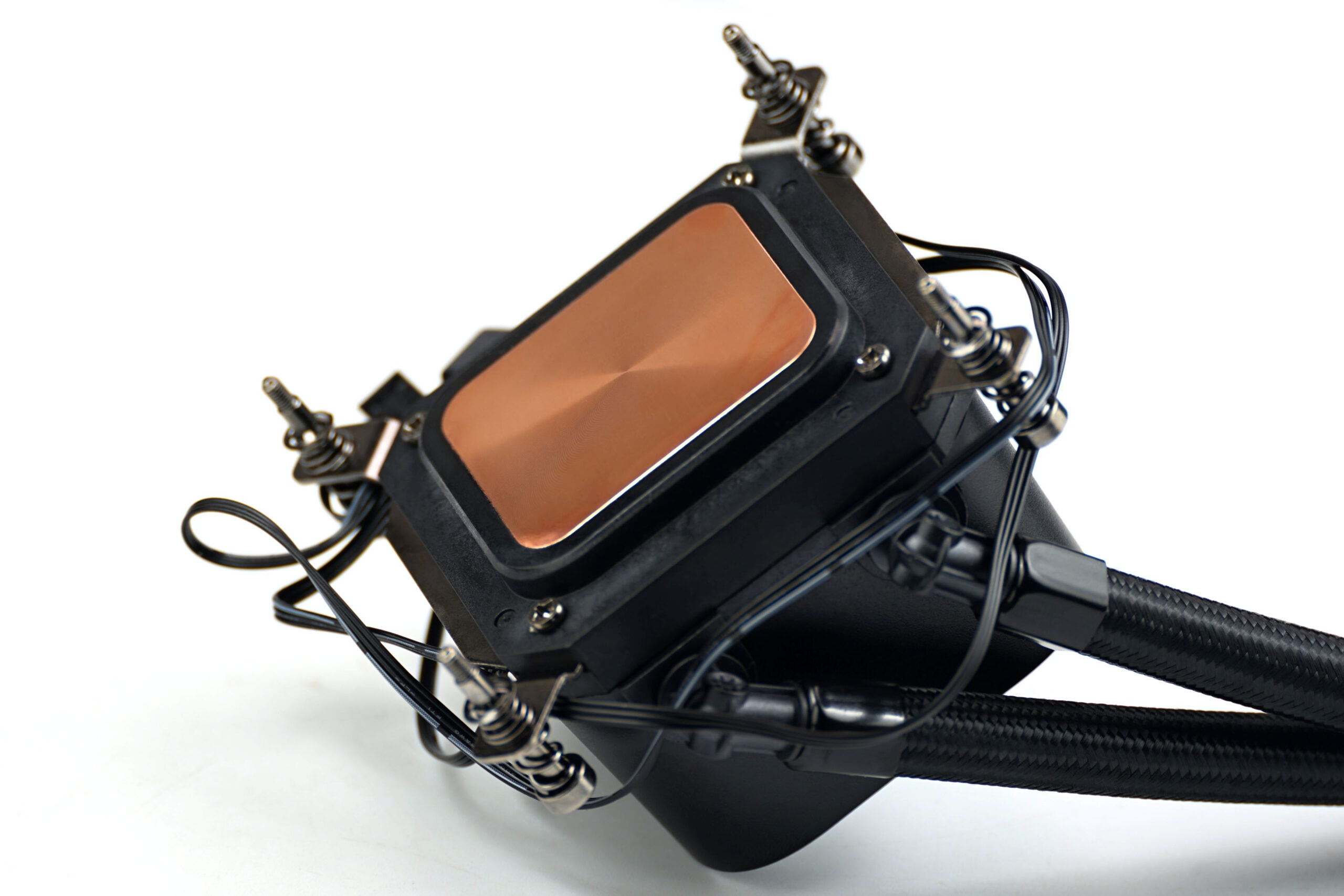
The contact plate with the CPU’s IHS is large enough to cover even Intel LGA 1851 and LGA 1700 processors completely. AMD platforms (AM4 and AM5) are also supported. For these, installation relies on the backplate already included with motherboards.
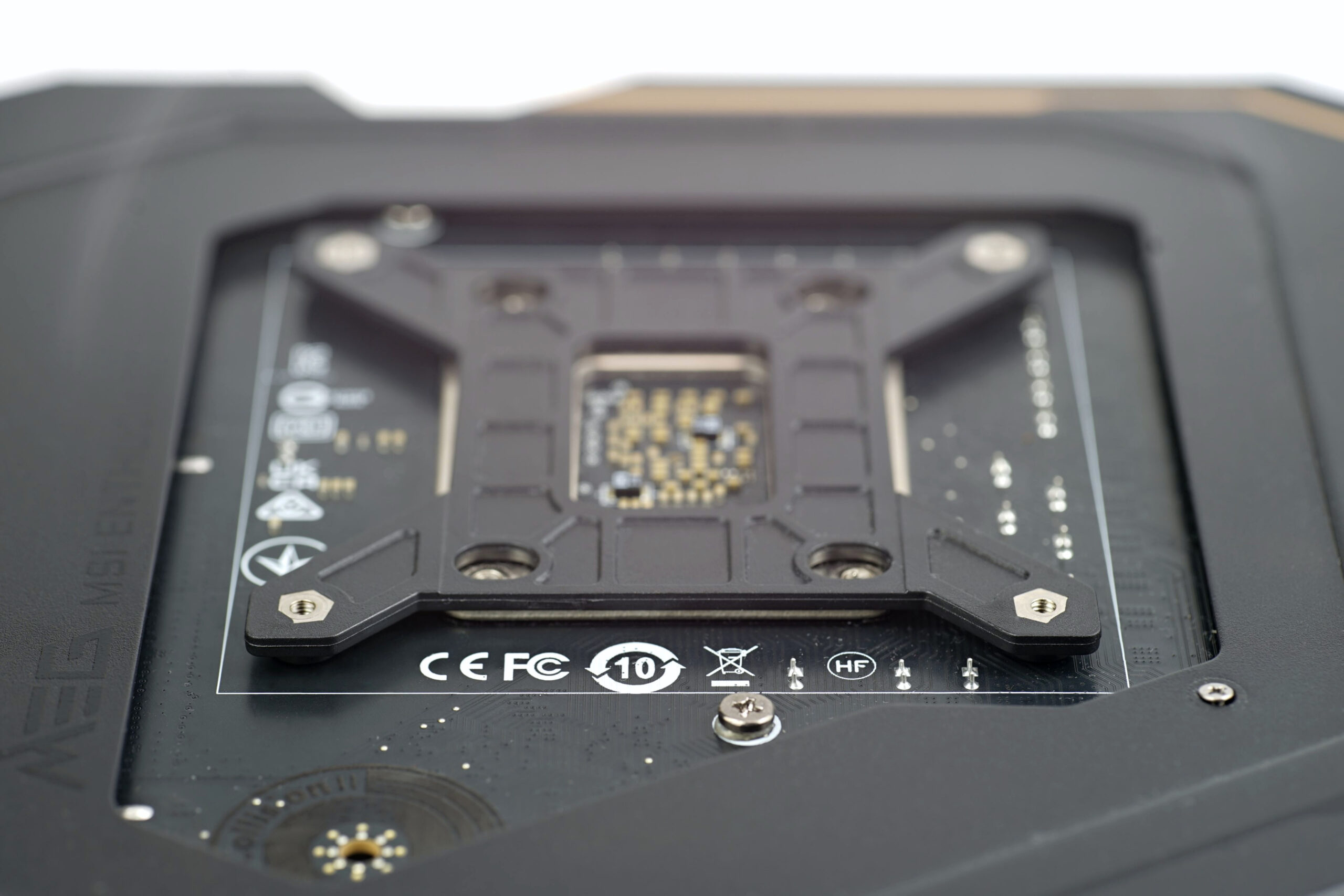
For Intel CPUs, the cooler comes with its own backplate. The only downside is that it’s made of plastic. This choice can be defended by cost savings and a lower retail price, but it must be said that the backplate may also impact cooling performance. Plastic is more flexible, leading to potentially weaker mounting pressure. We’ve already shown how this can affect results in our comparison of a plastic versus a metal backplate. The situation may be similar here.
Please note: The article continues in the following chapters.





Pretty good, right? And now the question is whether, at comparable noise levels, something like the NH-D15 G2 will match (or even surpass?) it. Hopefully, by the end of the year we’ll manage to expand the database with some more high-end tower coolers. 🙂
As usual, here is a direct comparison of frequency characteristics with a strong competitor at a similar price level, the Endorfy Navis.
Thank you! 🙂
When are the Coolermaster 3D heatpipe designs in the schedule? They’re the biggest tech shakeup in air cooling for a while and really need a look.
Do you mean the MasterAir MA824, which is in a comparison here (on LGA 1700) or in more extensive tests here?
I do have that (Cooler Master) cooler here and it’s in the plans to test it at some point and add results on the latest platforms as well. But I can’t promise when exactly we’ll get to it.
I think Commodore Jeep-Eep was referring to this cooler: 😉
https://www.coolermaster.com/en-global/products/hyper-612-apex/
Although, the one you mention is also a great piece. 😛
Sure, thanks for the reference to the Hyper 612 Apex. This cooler looks good, of course, but I can’t promise anything right now. We’re in touch with CM, and if we have enough time to spare for tests, we can request a sample. We’ll see. 🙂
The Coolermaster V series, with the new 3d heat pipe tech.
https://www.tweaktown.com/reviews/11171/cooler-master-v4-alpha-3dhp-black-cpu-cooler/index.html
Yes, thanks for adding that. I’ll need to study this further. I know there were some changes to the heatpipes already with the MA824 cooler, but with the Hyper 212 Apex it seems to be something a bit different again (those “3D” heatpipes). 🙂
They’re due next month and at the very least are an extremely promising proof of concept for later iterations of the tech and a sign that Coolermaster’s getting its groove back.
Thanks for the info. It’s possible that in the foreseeable future, we’ll message Cooler Master and…well, we’ll see. 🙂
I own Pccoolers.com and looking to build a site on the domain or sell it, and looking at your site for ideas, love the work you have put into your site
I hope you’ll manage to build an expert, genuinely informative space around Pccoolers.com. I’ll be rooting for you—something like this is badly needed nowadays. It’s a difficult path, but… that’s what it’s all about. 🙂