


We couldn’t deprive you of the results for this model. Just ahead of the release of the second version of the DeepCool FD12, we’re publishing the results of the first so you have a comparison available—not only with the technically more modern variant, but also with competing fans. As for the FD12’s characteristics, even within its price class they are already attractive. In the end, judge for yourself based on hundreds of measurements.
The blades of the DeepCool FD12 fan are based on a geometry that, according to our own testing of similar fans, can be described as “efficient.” Not only in terms of airflow, but also static pressure—that is, the parameter describing how well a fan can overcome the obstacles it works against.
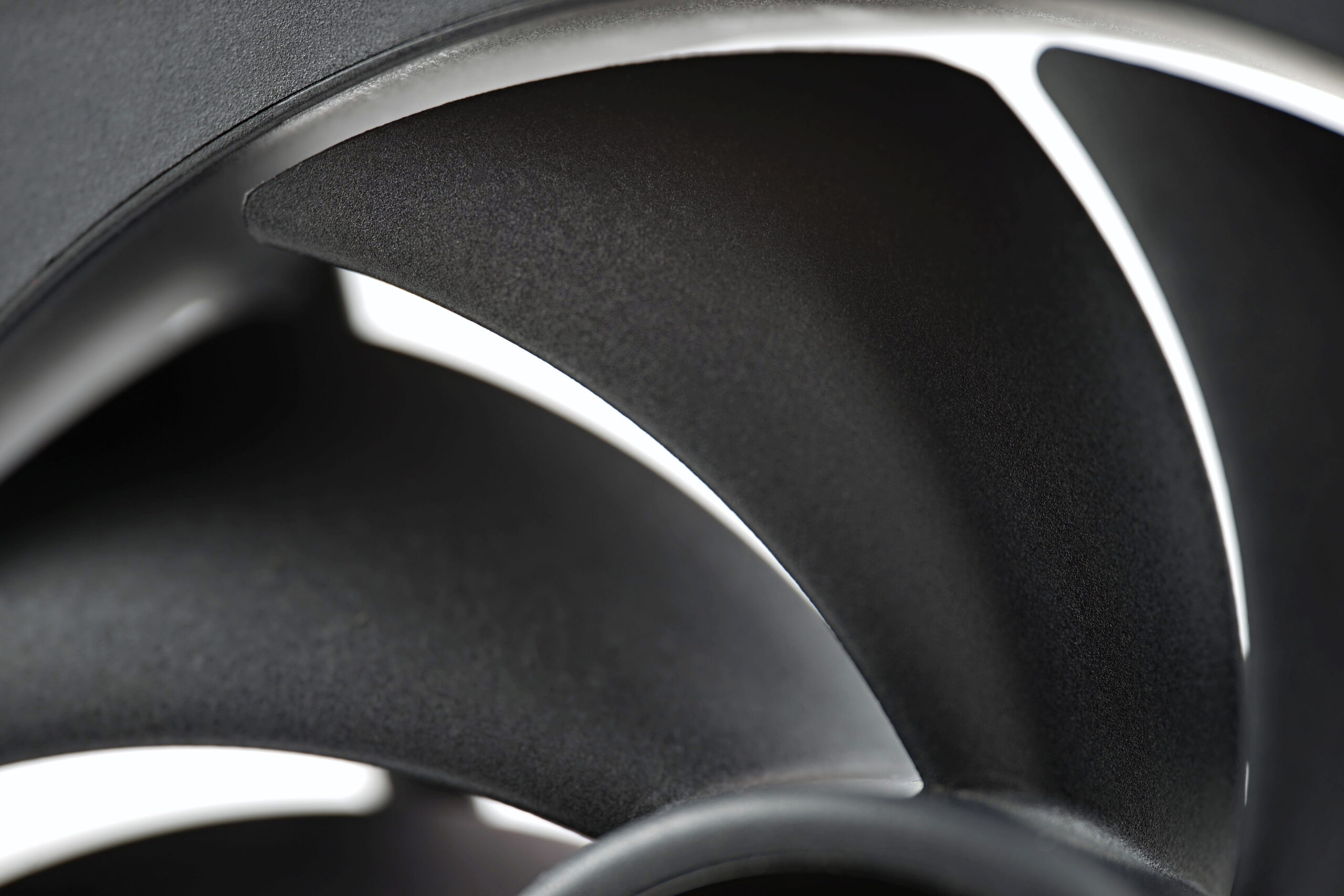
A relatively high static pressure (up to 2.49 mm H2O according to the DeepCool website) is also indicated by the official specifications. This comes alongside lower noise levels, as the fan tops out at around 2050 rpm. On the one hand, this isn’t a silent fan, but we’ve seen faster (and louder) fans before. Static pressure should also be higher in modes normalized for comparable noise levels. This is suggested by the smaller gaps between the blades. In other words, the impeller’s “dead” cross-section is smaller than with many other fans. This is also clearly visible in the frontal photos below. What remains to be seen is the resulting airflow, which depends on the overall aerodynamic design led by blade shape and surface area. All of this will only be shown in the tests—for now, we’re predicting what the results might be, without them.
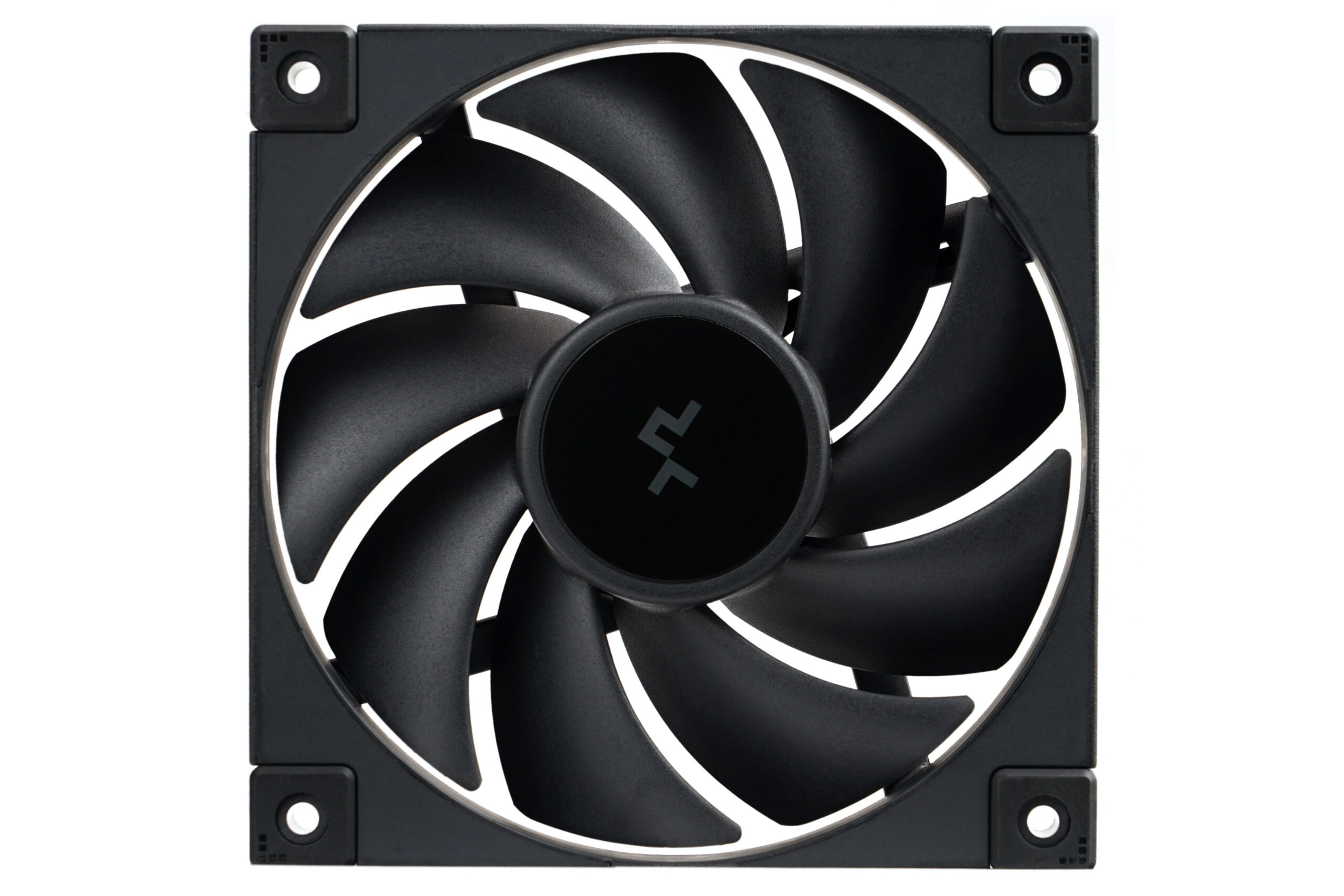
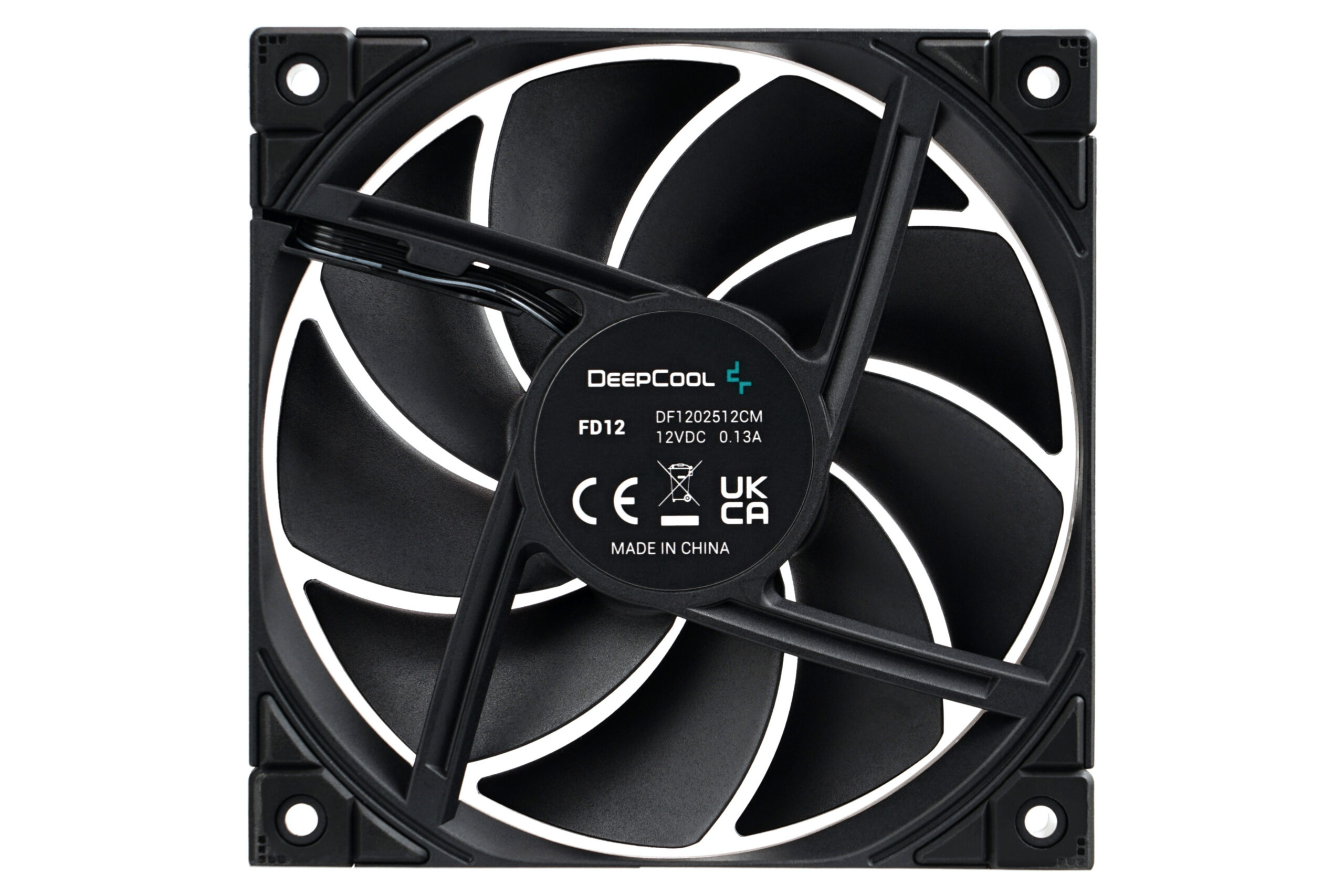
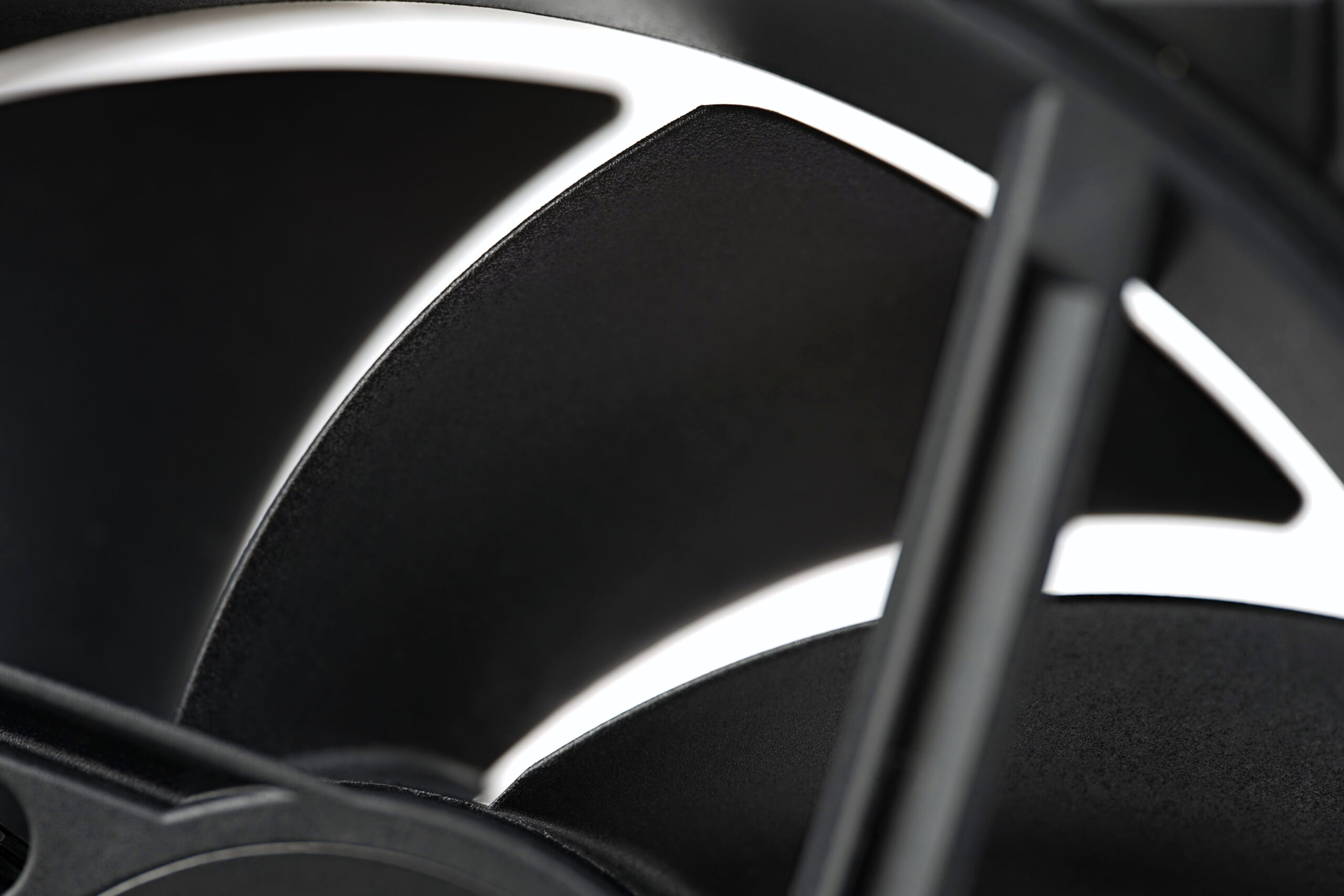
The FD12’s blades have smooth edges, both leading and trailing. This means DeepCool didn’t rely on any special edge optimizations here.
The maximum current draw of a single fan is said to be 0.13 A—how much that is for three (in the case of a triple pack) is easy to calculate. You’re therefore well below the limits typical motherboard headers work with. According to DeepCool’s claims, there’s ample headroom, making it possible to connect multiple fans to a single header. We discussed how some headers can be undersized for certain fans in a separate article.

Noteworthy with the DeepCool FD12 fans is the way the cable is connected. The fans use a modular cable—at least in the case of the triple pack we had available. The goal is to interconnect the fans with each other as elegantly as possible and connect multiple units to a single motherboard header or fan hub. The result is reduced cabling and less clutter, which primarily leads to easier handling—not only during installation, but also, for example, when later replacing the fans with different ones.

Please note: The article continues in the following chapters.

