


When Asus, Noctua, and Nvidia team up, it’s clear the result won’t be a compromise. For those who find the RTX 5090 already too expensive, the GeForce RTX 5080 Noctua OC Edition offers a unique combination of a massive heatsink and three top-tier Noctua NF-A12x25 G2 120 mm fans. An air cooler capable of keeping a powerful 360 W card at low temperatures with the fans spinning at just under 700 RPM is something you rarely encounter.
Test build
Reviewers usually test the performance, thermals, and noise of graphics cards on open-air test benches. In such a setup, the system has virtually unlimited access to cool ambient air from the surroundings, and the warm air from the graphics card is quickly expelled into the open air. Inside a case, however, the air volume is much smaller. Once components are installed, it becomes necessary to find a balance, tuning the cooling system so that system fans aren’t too noisy, while still ensuring sufficient airflow through the case. Powerful CPUs and GPUs produce a lot of heat, raising the temperature inside the case, and component temperatures are usually higher than under ideal open-bench conditions. This is why results for clocks, temperatures, and noise in such test setups tend to look better than what you’ll see with the same components inside a PC case.
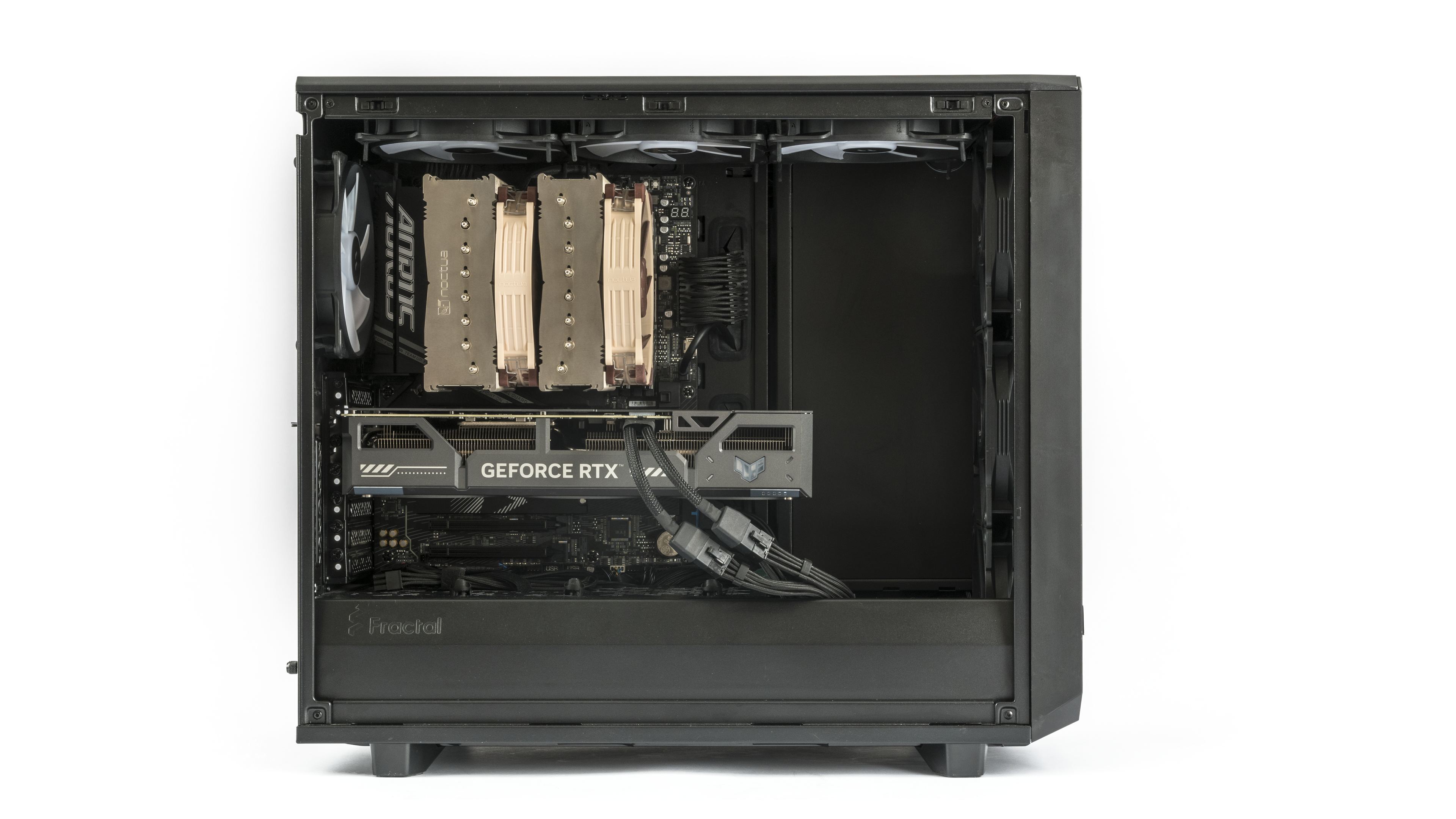
That’s why graphics cards are tested inside a PC case. For this purpose I chose the Fractal Design Meshify 2, featuring one of the most common case layouts and cooling designs. Unlike expensive, oversized cases, its size and price make it suitable for lower- and mid-range GPUs, while still being able to fit and cool even large power-hungry high-end graphics cards. In this setup, using a case with all fan mounts populated lets us compare cards under identical conditions.
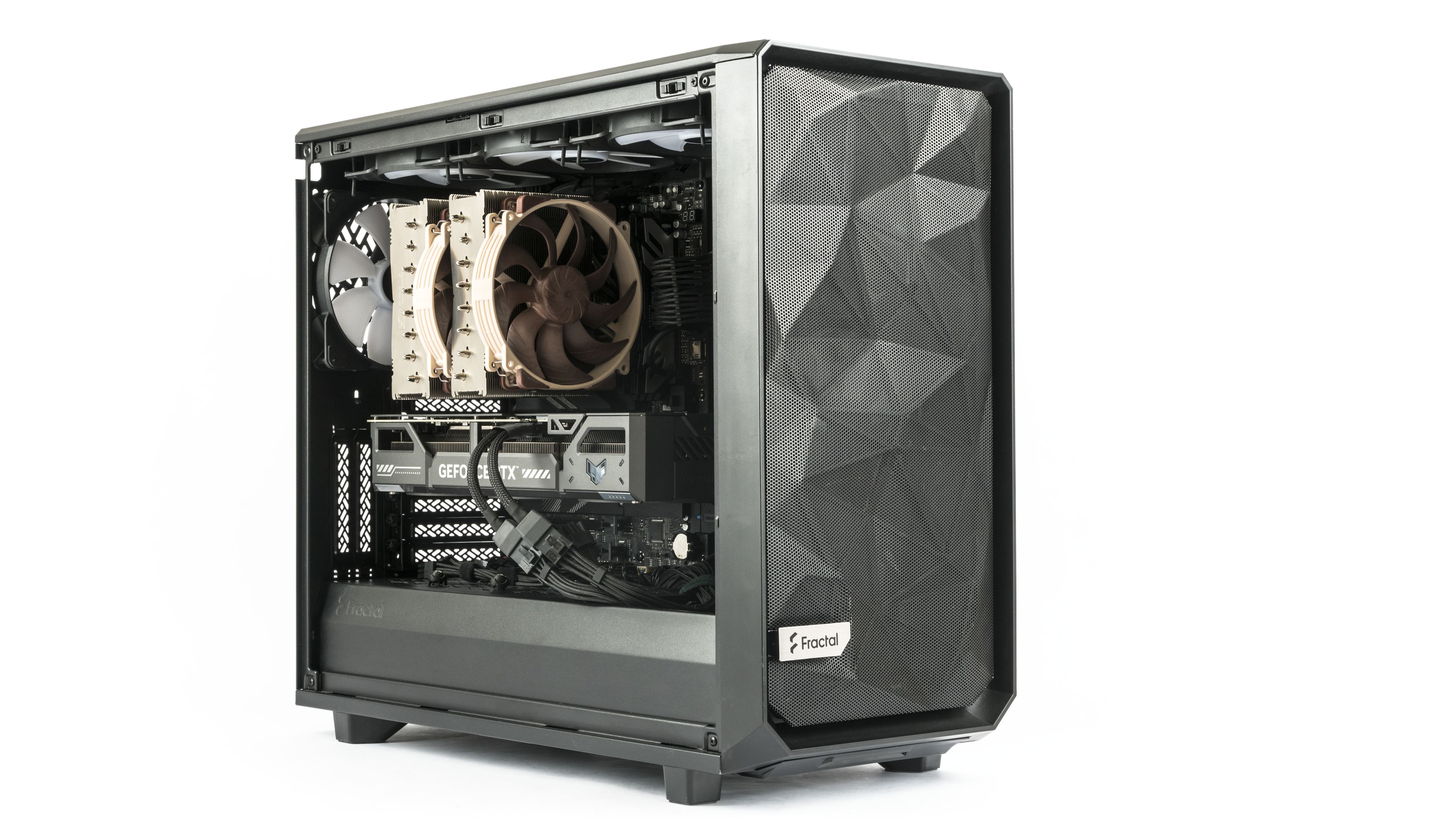
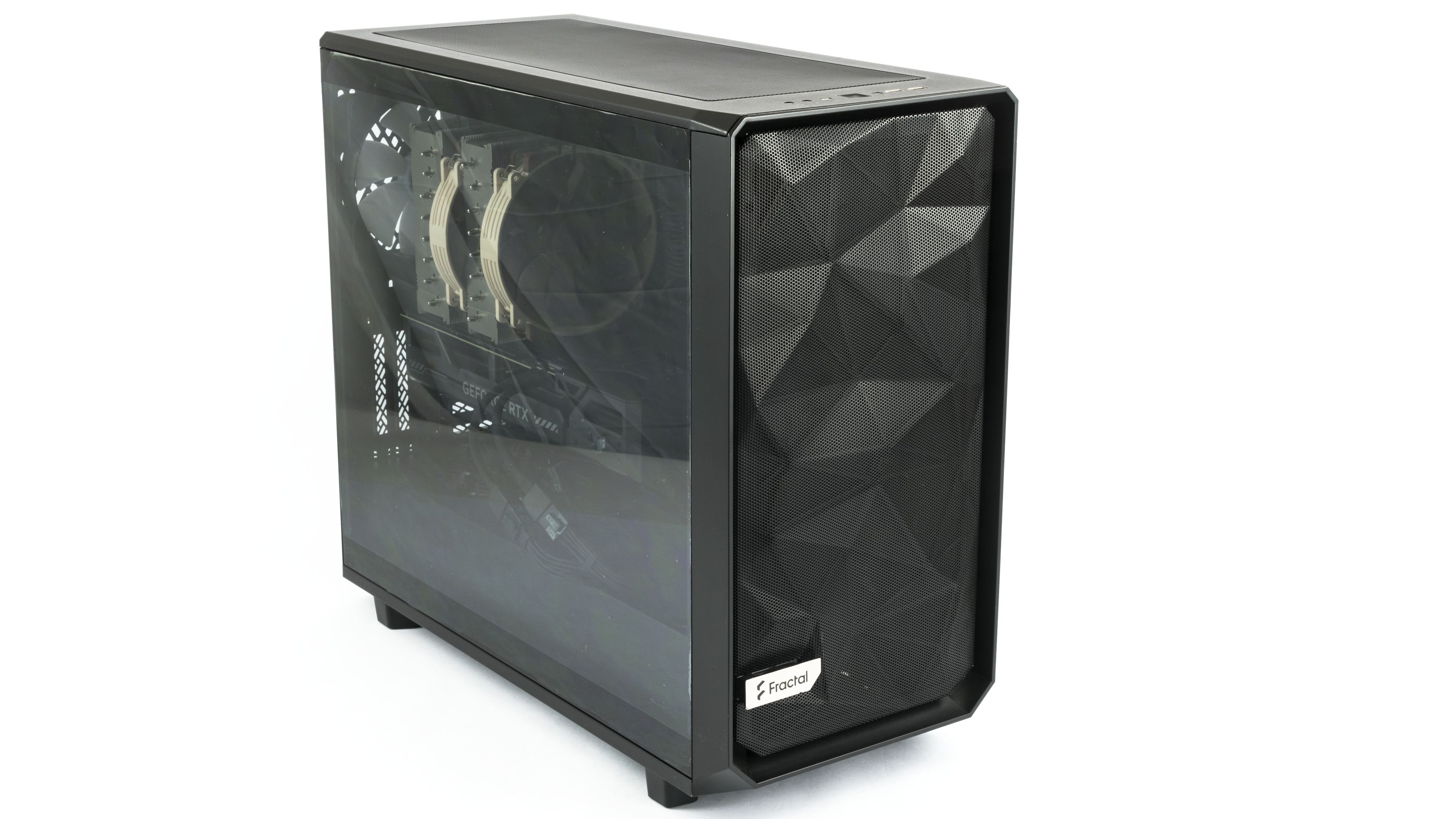
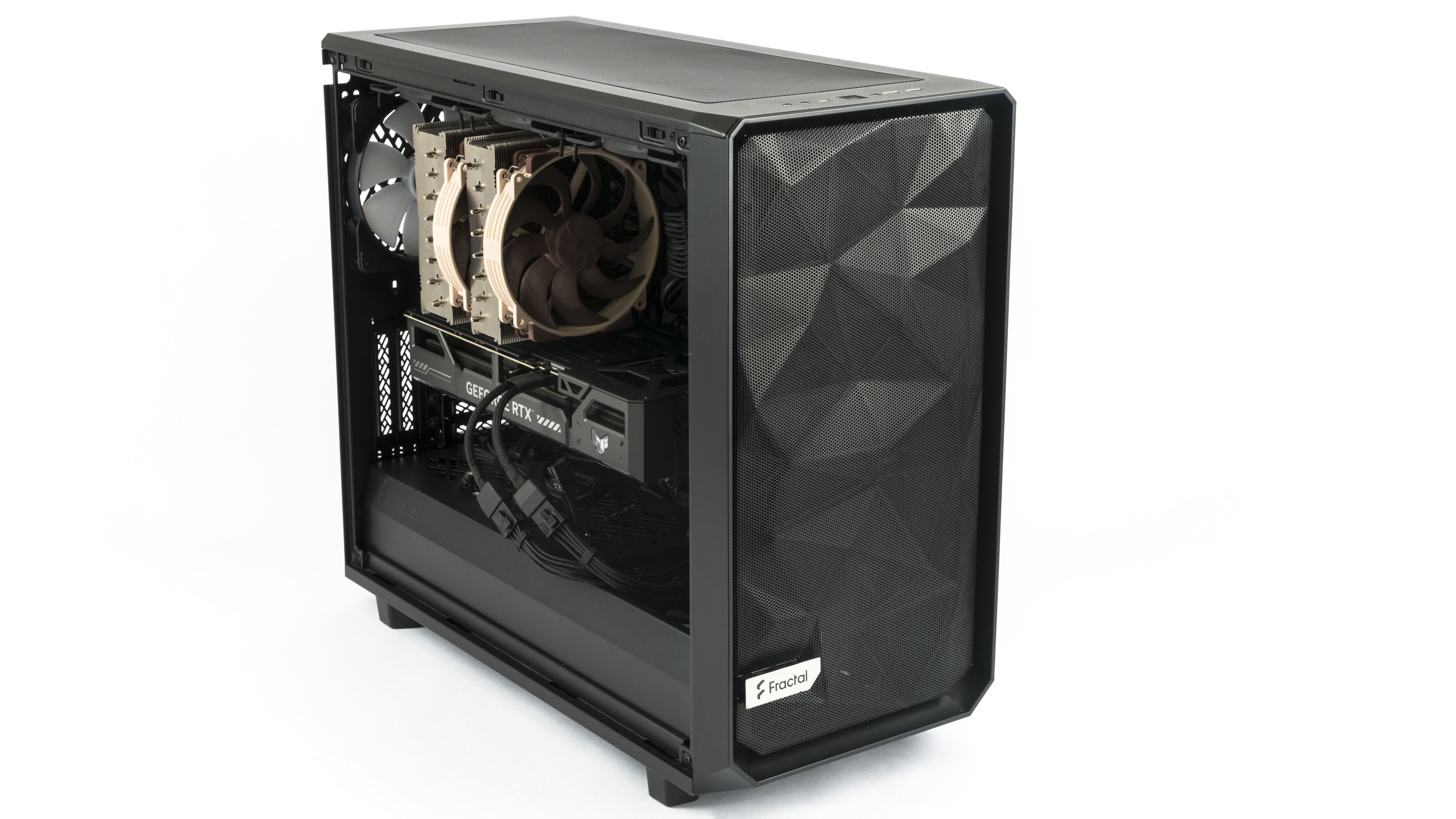
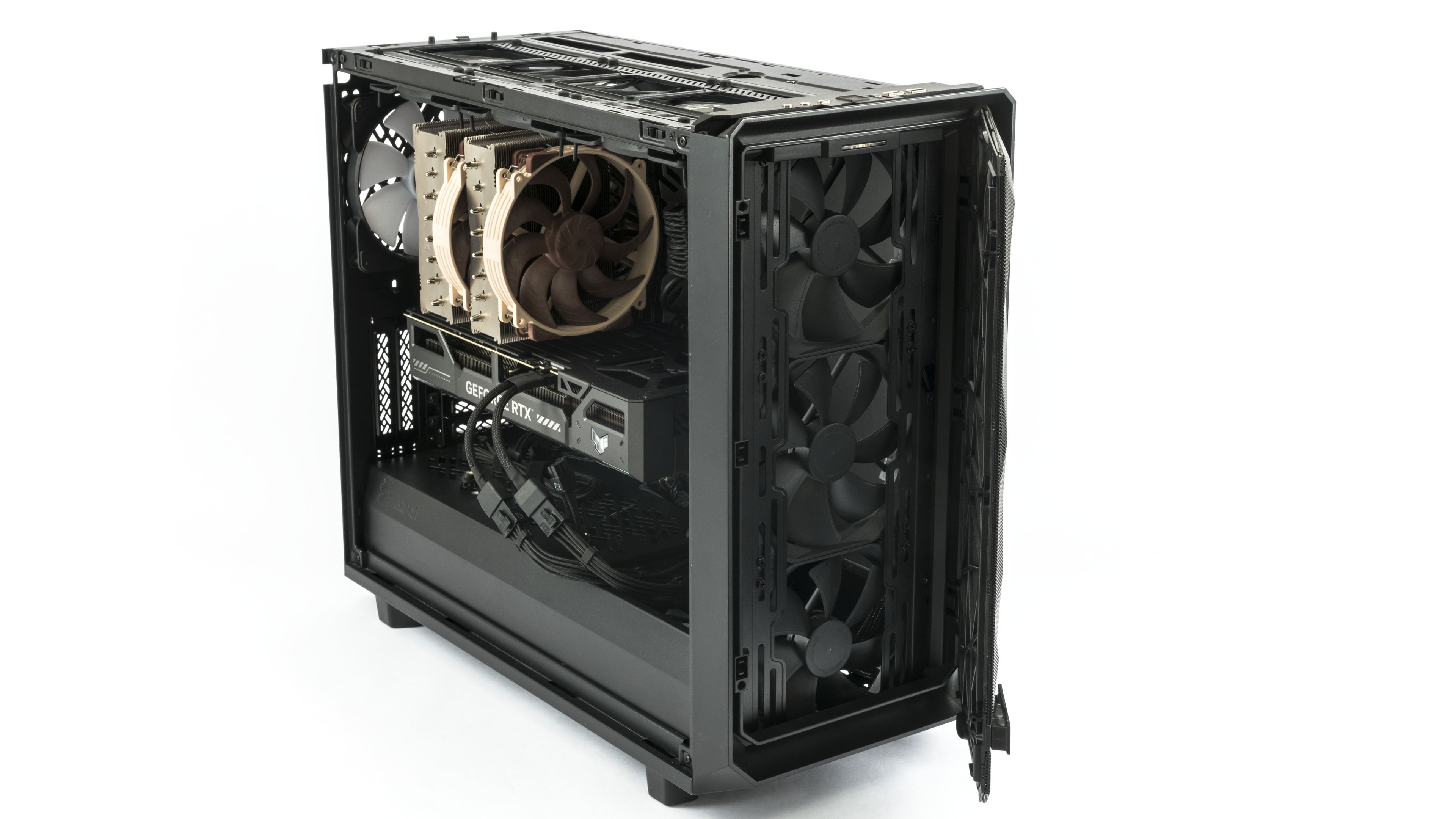
All system fans are set to around 780 RPM. Although this setup is not whisper-quiet, it can keep even high-power GPUs sufficiently cool. The front panel houses three 140 mm intake fans, and an additional fan at the bottom draws air into the case and directs it to the rear section of the graphics card.

Hot air is exhausted by three Fractal Design Aspect 14 RGB PWM fans in the top panel, plus a matching rear fan.

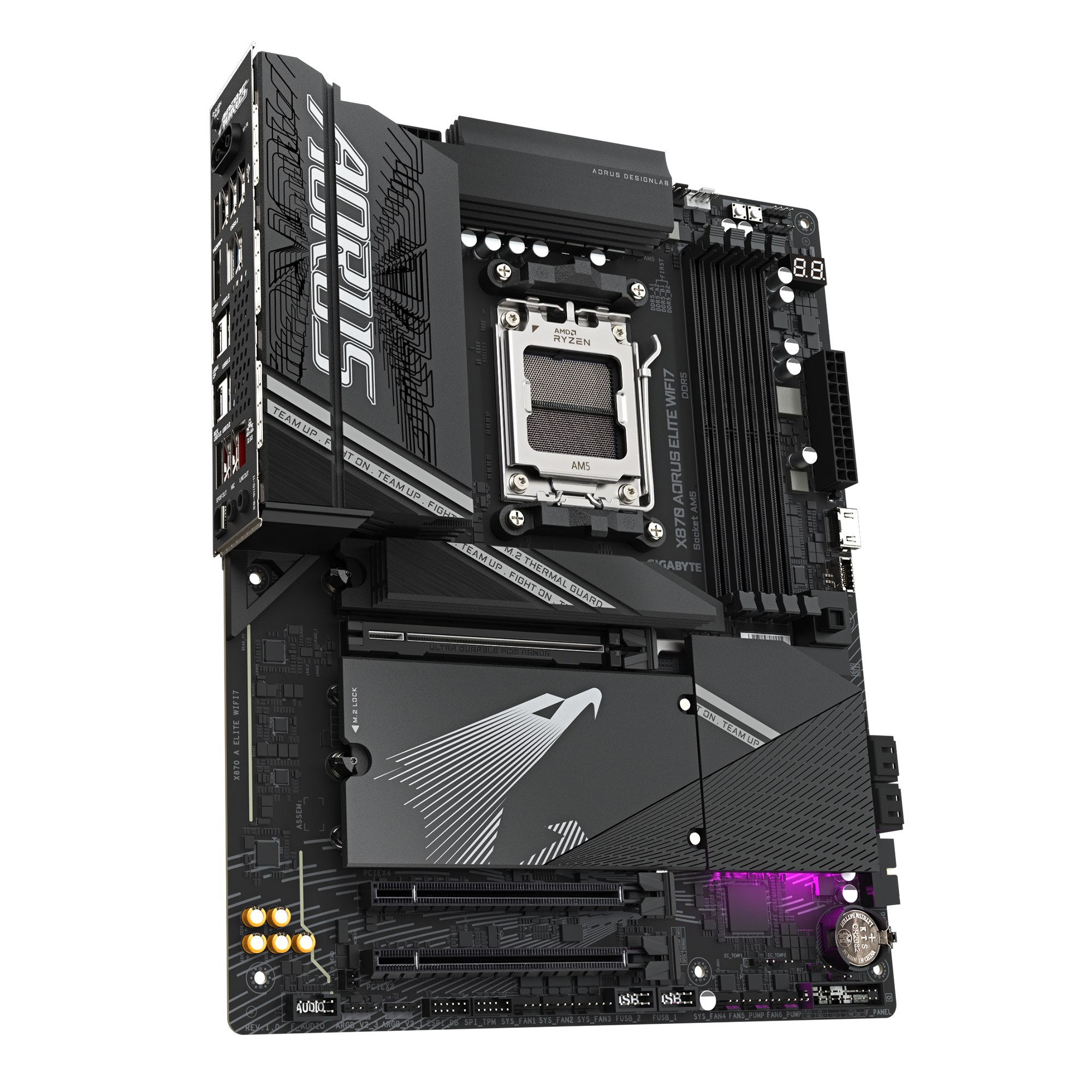
Motherboard: Aorus X870 Elite WiFi7
The motherboard used for testing is the Aorus X870 Elite WiFi7. Engineered for the latest AMD Ryzen processors, the Gigabyte X870 AORUS ELITE WIFI7 provides a robust 16+2+2 power design. It offers four M.2 slots, including three PCIe 5.0, and features next-generation connectivity with Wi-Fi 7 and 2.5GbE LAN. Its builder-friendly design, with features like EZ-Latch, simplifies the installation process.
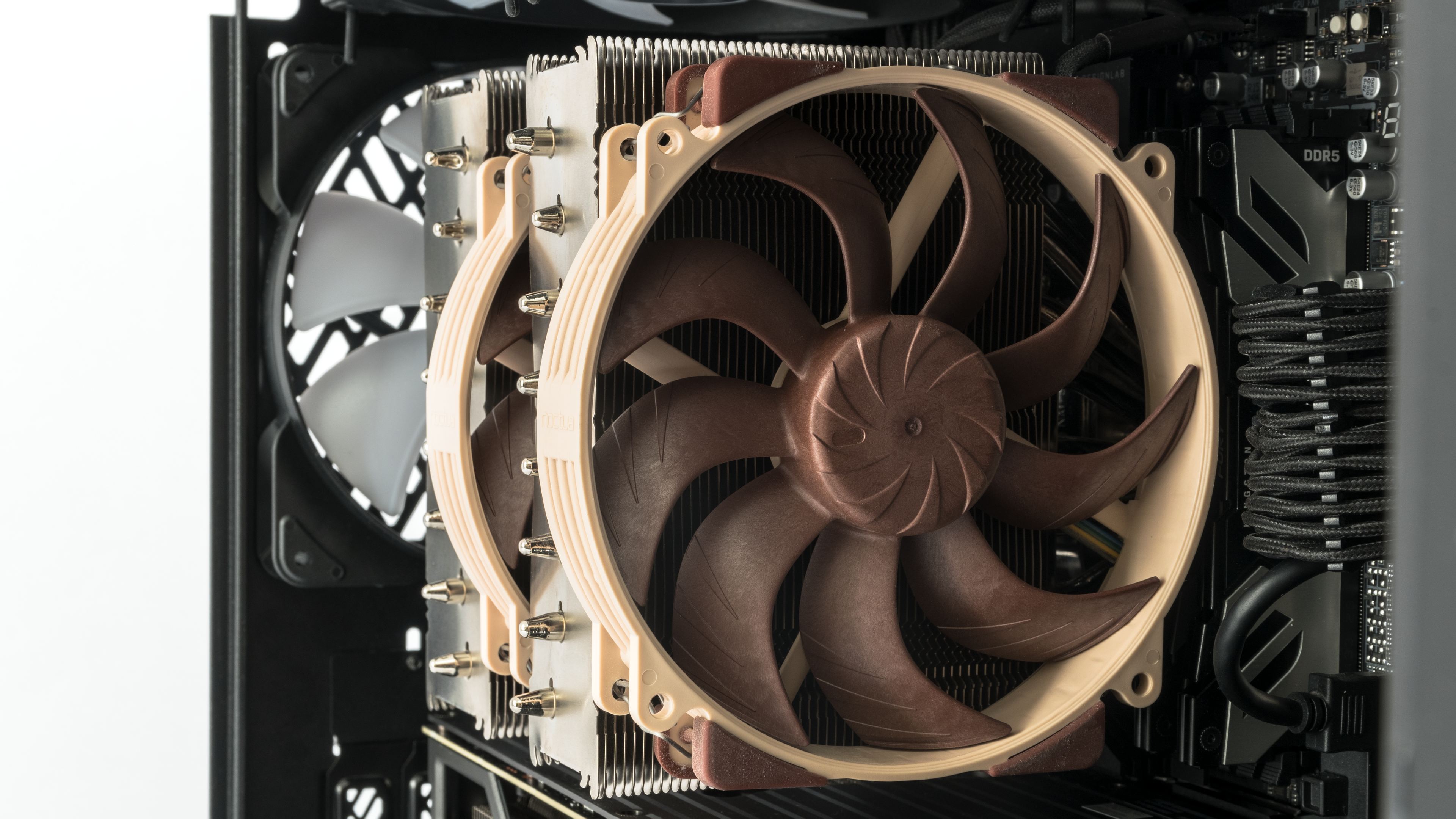
CPU Cooler: Noctua NH-D15 G2 LBC
These days, powerful gaming rigs often rely on all-in-one liquid coolers. I opted instead for a top-of-the-line air cooler, the Noctua NH-D15 G2 LBC in an offset mounting configuration, for two main reasons. First, it offers greater reliability and more predictable long-term cooling performance compared to liquid coolers. Second, it has a smaller impact on case airflow than an AIO.
When CPU load increases, speeding up the radiator fans on an AIO cooler can significantly change the airflow inside the case. With an air cooler, higher CPU fan speeds have much less impact on case airflow. The system fans are set to a fixed speed to maintain constant airflow, making it more suitable for comparing graphics cards under similar conditions.

Processor: AMD Ryzen 7 9800X3D
Our graphics card tests run on an AMD Ryzen 7 9800X3D processor. It provides sufficient cores for virtually all current titles, maintains high clock speeds, and delivers strong single-core performance. While it may not lead the charts in every benchmark, it consistently ranks among the best overall. It has a single CCD fitted with 3D V-Cache, which all cores can access directly. Unlike higher-end models, it does not suffer from latency when switching between chiplets. In games, it can make more efficient use of its thermal envelope (TDP). Thanks to this combination of factors, it can deliver the highest performance in most games.

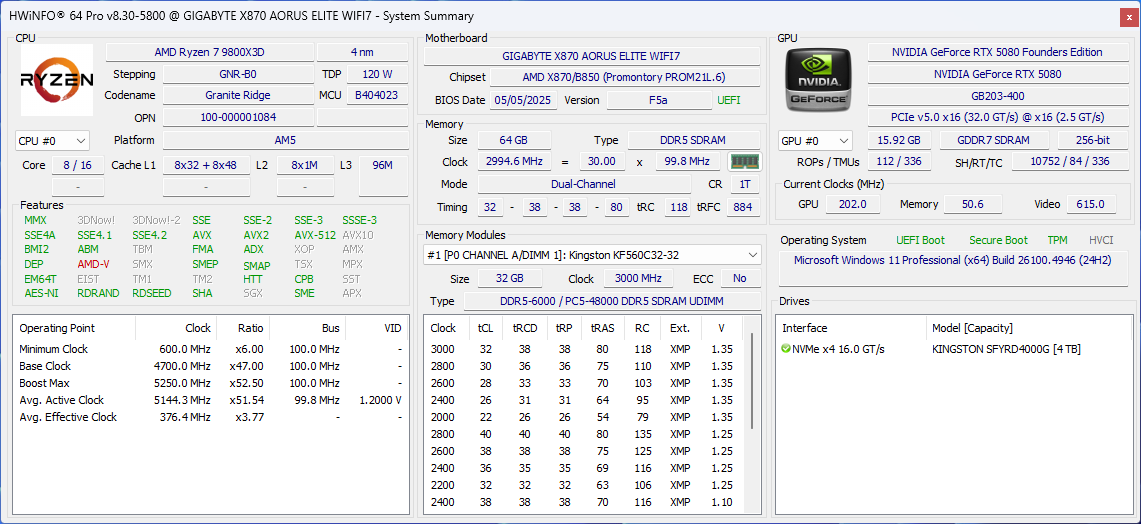
The AMD Ryzen 7 9800X3D processor runs at the motherboard’s default settings. Below is a snapshot of the hardware configuration and current setup. The current system setup may vary slightly due to BIOS, driver, and software updates.
The SVM Enable option in the advanced processor settings is disabled to improve gaming performance, which also turns off the “Core Isolation” feature in Windows Security.
The processor’s integrated Radeon graphics adapter and the onboard SATA controller are also manually disabled.
Memory: Kingston Fury DDR5-6000
The processor is paired with 64 GB of DDR5-6000 memory via two 32GB modules from Kingston. The memory is Kingston Fury DDR5-6000, product number KF560C32RSK2-64.
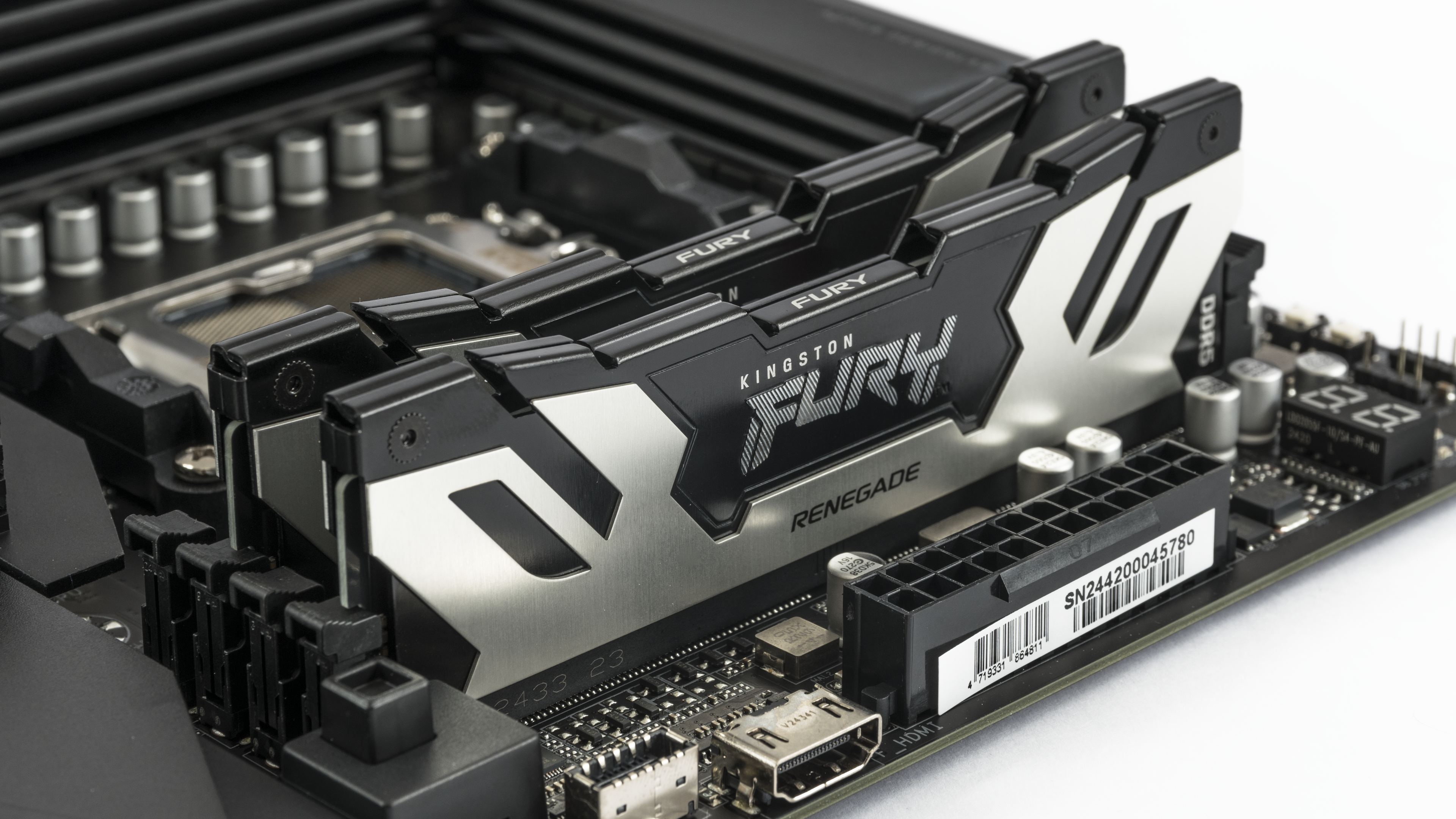

They support the following profiles:
- Default (JEDEC): DDR5-4800 CL40-39-39 @1.1V
- XMP Profile #1: DDR5-6000 CL32-38-38 @1.35V
- XMP Profile #2: DDR5-5600 CL40-40-40 @1.25V
- XMP Profile #3: DDR5-4800 CL38-38-38 @1.1V
In our build, it’s running on the highest EXPO profile with parameters DDR5-6000 32-38-38-38 at 1.350V. In the BIOS, XMP/EXPO High Bandwidth Support is enabled, Infinity Fabric Frequency and Dividers is manually set to 2000 MHz, and the UCLK DIV1 MODE divider is set to UCLK=MEMCLK.
Storage: SSD Kingston Fury Renegade PCIe 4.0 NVMe M.2
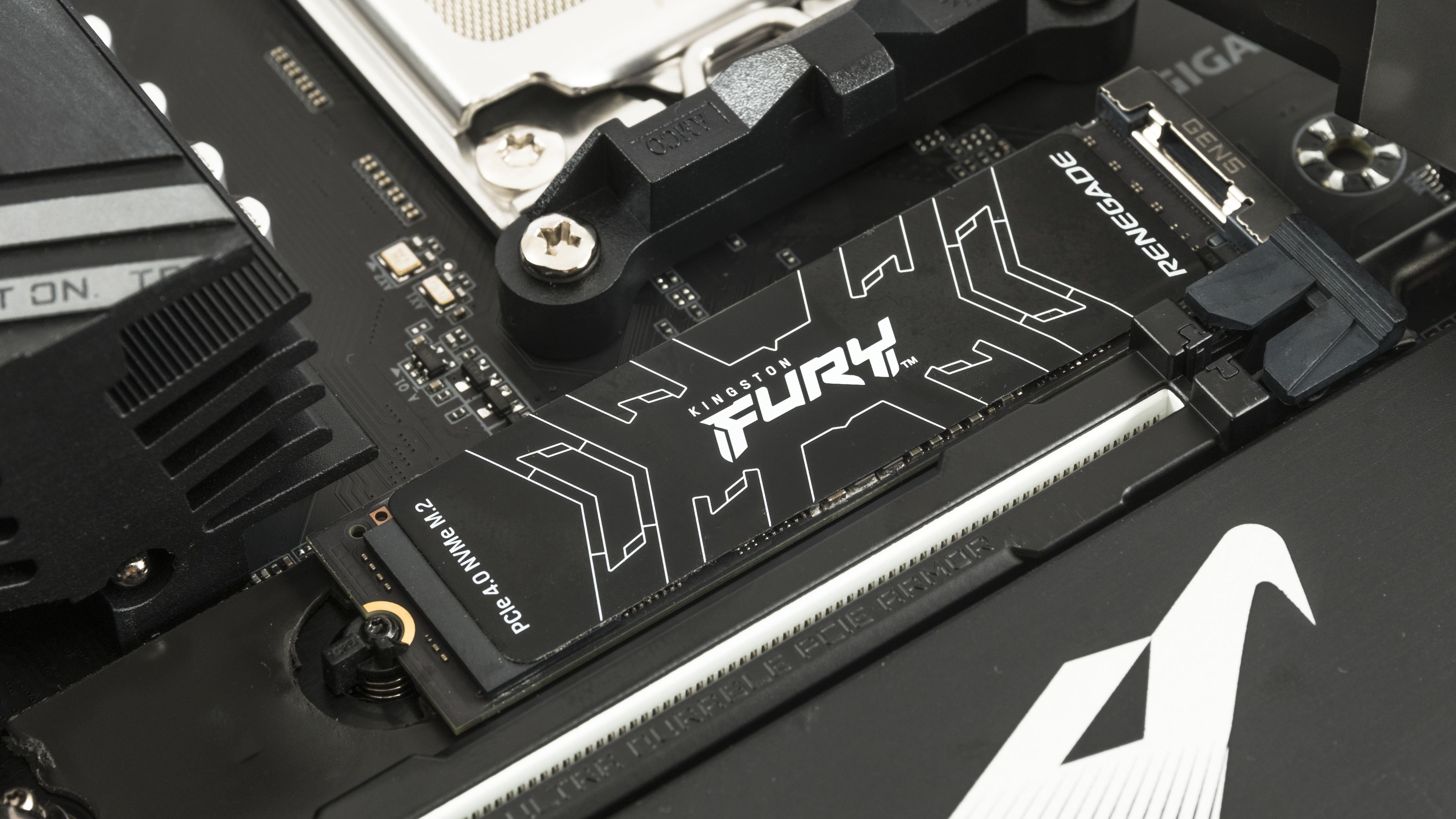
System and game data are stored on a fast Kingston Fury Renegade PCIe 4.0 NVMe M.2 SSD with 4TB capacity. It offers sequential read speeds of up to 7,300 MB/s and write speeds of up to 7,000 MB/s. The drive comes in two versions: one with a heatsink and one with a thin heat spreader. We’re using the thin-spreader version, cooled by the large M.2 heatsink included with the motherboard.
PSU: be quiet! Dark Power Pro 13.
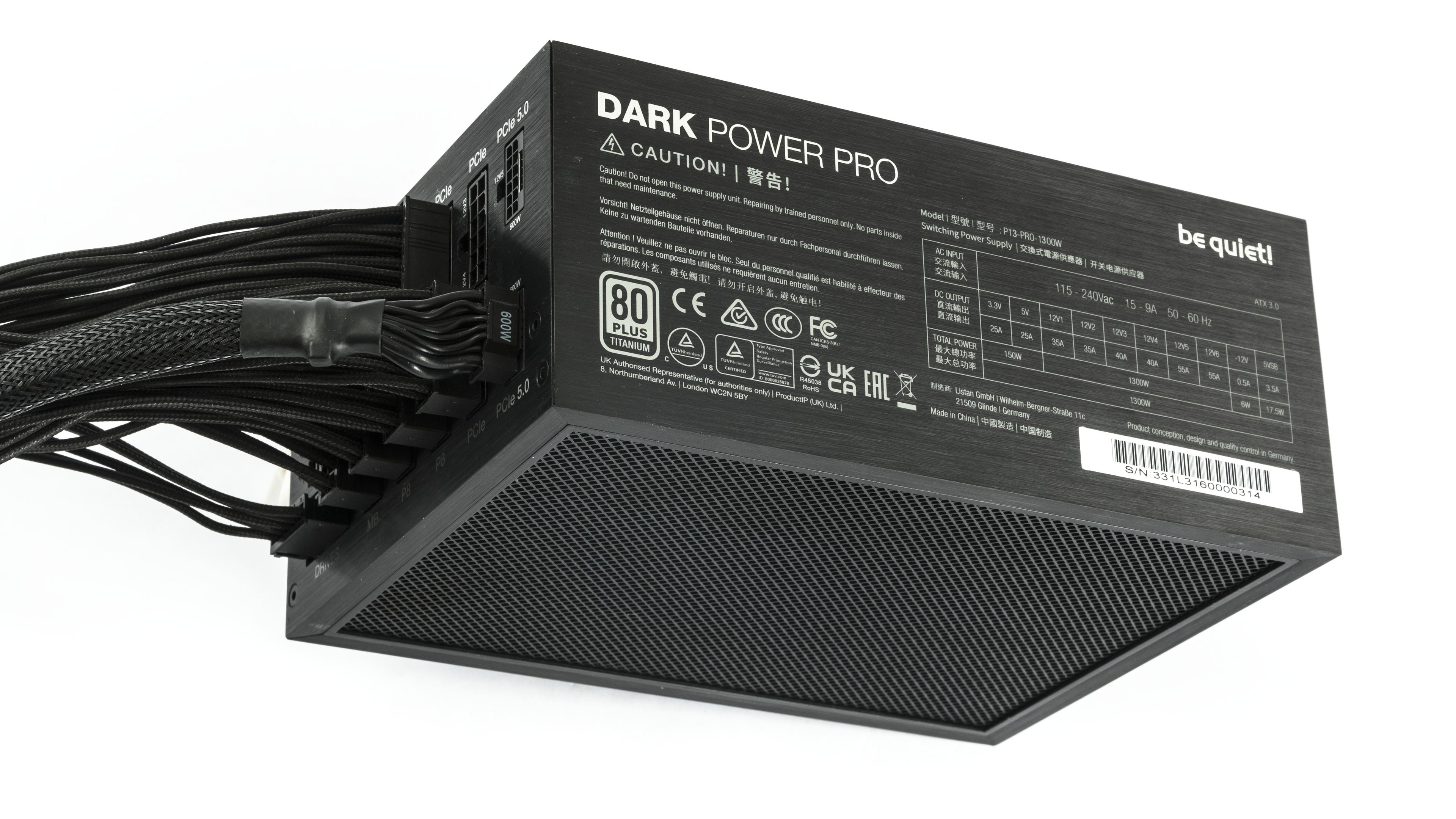
The entire system is powered by a top-tier 1300W PSU—the be quiet! Dark Power Pro 13. Be quiet! Dark Power Pro 13 1300 W is a fully modular ATX 3.0 power supply with 80 PLUS Titanium certification and up to 94.4 % efficiency. It supports PCIe 5.1 (2× 12VHPWR, 6× PCIe 6+2 pin) and features six 12V rails with an option to switch to single-rail mode. Cooling is provided by a 135 mm Silent Wings fan, and the manufacturer offers a 10-year warranty.
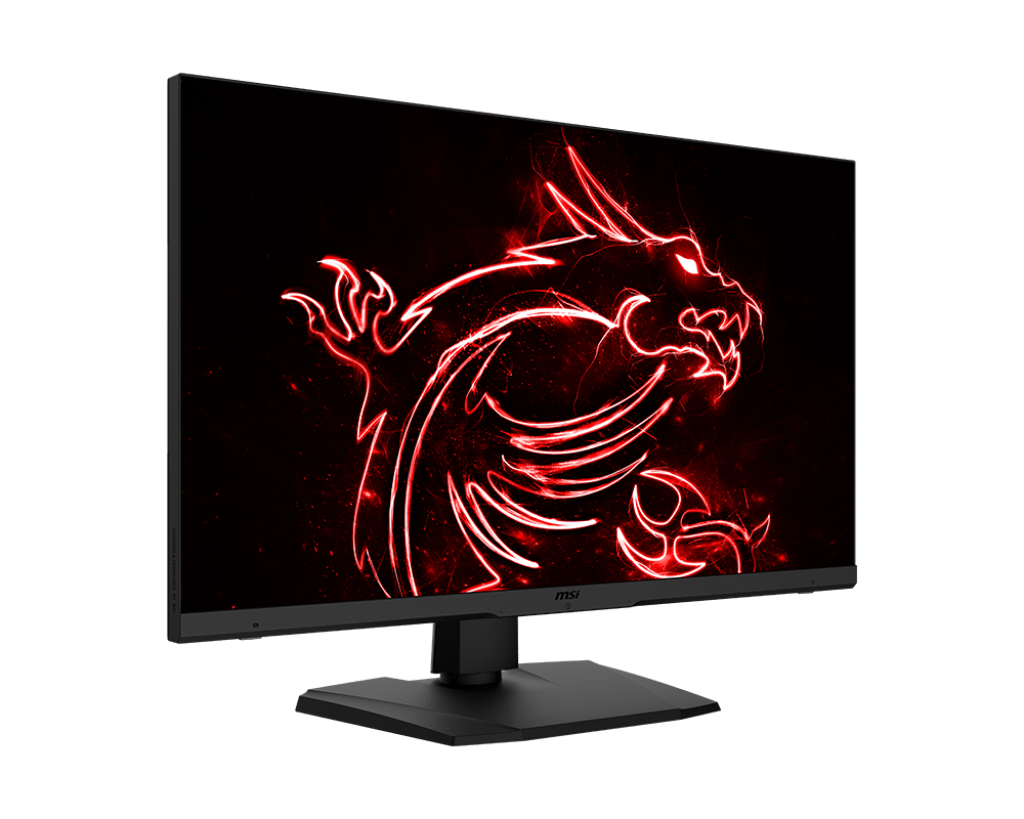
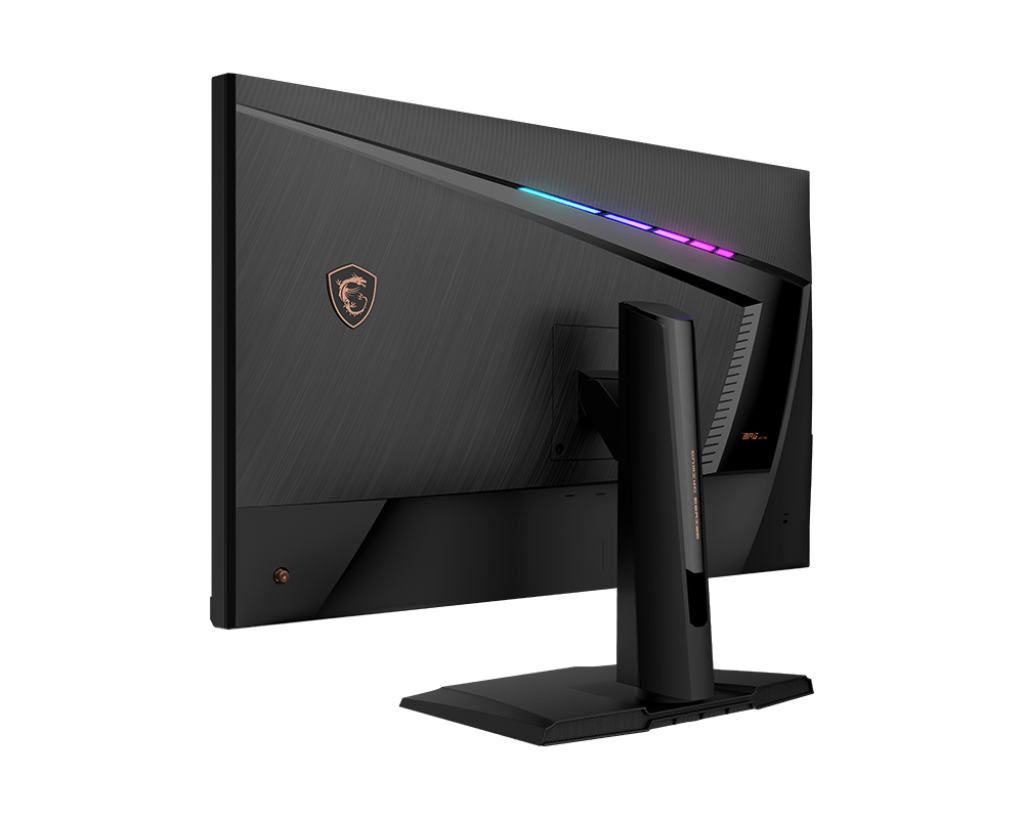
Monitor: MSI Optix MPG321UR-QD
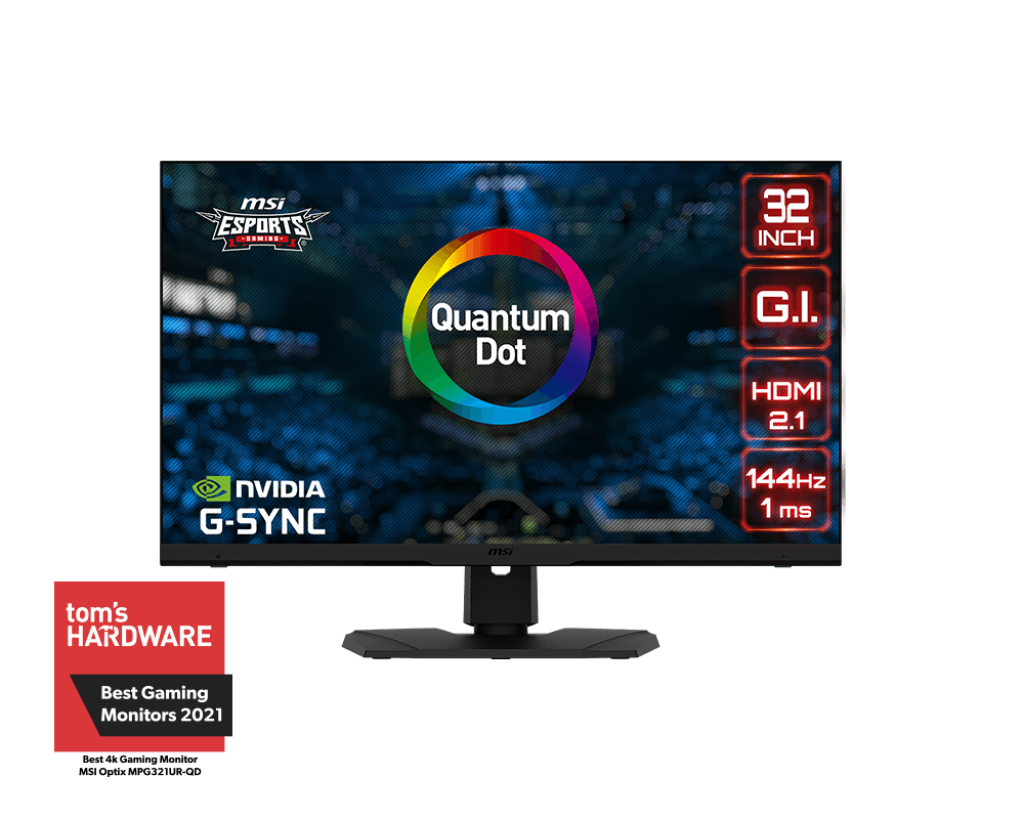
Our gaming performance tests are carried out using the MSI Optix MPG321UR-QD — a 32-inch 4K UHD gaming monitor with an IPS panel, 144 Hz refresh rate, and 1 ms response time. It uses Quantum Dot technology to deliver a wide color gamut (97 % DCI-P3, 99 % Adobe RGB). The monitor supports HDR600, offers HDMI 2.1 and DisplayPort 1.4 with DSC, includes USB-C connectivity, and comes with an integrated KVM switch for convenient control of multiple devices.
Monitor: Gigabyte AORUS FO27Q3
For specialized input lag tests we are using a top-tier gaming monitor, the AORUS FO27Q3 from Gigabyte. It features a Samsung Display QD-OLED panel at 2560 × 1440 with a 360 Hz refresh rate and 0.03 ms GtG response and is certified with VESA ClearMR 13000 and VESA DisplayHDR True Black 400. For gamers, the major advantage over LCD monitors is that OLED can redraw pixels with significantly faster response times.
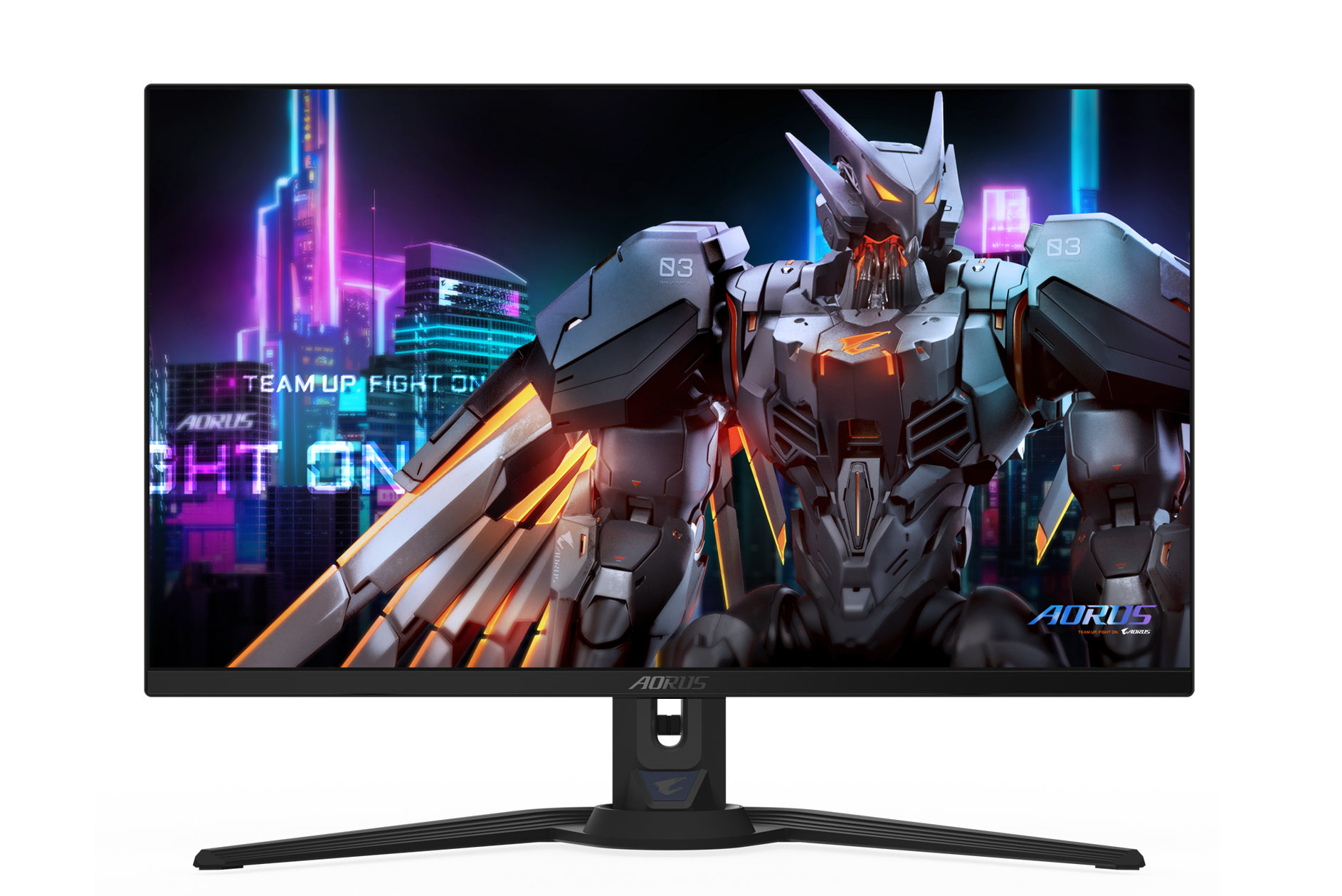
The basic monitor specifications are summarized below. For a detailed description and demonstrations of supported technologies, visit the monitor’s product page.
- Panel: 27″ QD-OLED, resolution 2560×1440 @ 360 Hz, 10-bit
- Adaptive v-sync: FreeSync Premium Pro, VRR
- Image parameters: viewing angles 178°, brightness 250 cd/m² (Typ, SDR APL 100%); 1000 nits (Typ, HDR APL 3%), 99% DCI-P3 coverage, GTG response 0.03 ms, factory calibration with △E< 2
- Certifications: VESA DisplayHDR True Black 400, motion clarity ClearMR 13000
- Connectors: 2× HDMI 2.1, 1× DisplayPort 1.4, 1× USB Type-C (DP Alt Mode; Upstream port; Power Delivery up to 18 W), 2× USB 3.2 (downstream), 1× USB 3.2 (upstream), 3.5 mm headphone out; 3.5 mm mic in
- Audio: 2× 5 W speakers
- Supported technologies: Tactical Switch, OSD Sidekick, Black Equalizer 2.0, Dashboard, Crosshair, Timer, Counter, Night Vision, Eagle Eye, PiP/PbP, Auto-Update, KVM, 6 axis Color Control, Apply Picture Mode, HDMI-CEC, RGB Fusion 2.0, pivot 0–90°, VESA Wall Mount 100×100 mm




it seems even on Q mode it may get outside of the silent zone when pushed hard enough…
I know, I know, all the other cards are worse, but if even 3 of these fans struggle it means a lot about the power output of modern cards, doesn’t it?
What matters most is what a “quiet” graphics card means to each individual — it’s a pretty subjective thing.
At just under 700 RPM, it’s extremely quiet. At night, when everything is silent, you can hear it if you put your ear close to the card. From a typical distance of about a meter, even on an open test bench, I can’t hear it at all. But my hearing isn’t what it was twenty years ago.
However, considering the temperatures the card reaches, there’s still some headroom to lower the fan speed by adjusting the fan curve. Throughout the day, I’ll be running additional tests across the full fan-speed range in Cyberpunk and will add line charts of clock speeds and temperatures to the article.
Without V-Sync, the coil whine is still more noticeable under load than the fans themselves—even in Q-Mode—though it’s quieter than on other cards with the same performance. The tougher part might be keeping the CPU just as quiet and getting the heat out of the case without adding noise.
I haven’t precisely tuned G2 fans yet, but 700RPM would be somewhere in the range of upper limit, for G1 that was around 670, the Q profile seems to be willing to push above that if heated enough instead of limiting the heat to ensure fans won’t spin up, requiring manual tuning
which to be fair is expected of Noctua products as they don’t tune for absolute silence as general audience expects much less, but their high quality allows to achieve it with some extra effort
the coil whine though absolutely shouldn’t be there, that’s something most companies seem to neglect the most, I know it’s hard to control and there’s a ton of variance between specific items, but at this price point it’s unexcusable
I’d say even more: it’s unexcusable at any price point that isn’t explicitly cheapened cutting all costs for the last pennies, unfortunately… getting components and accessories that don’t suffer from that is nearly impossible, like… I’m not gonna try dozens of different units of a monitor to pick the one with least whine, right?
At least when it comes to temperatures shown in the monitoring, they’re fine—even at minimum fan speeds.
https://www.hwcooling.net/en/asus-geforce-rtx-5080-noctua-oc-ed-16gb-review-silent-monster/20/
Does GPU watercooling even make sense anymore? The graphics cards are becoming quieter and cooler with each new generation, even without deshrouding.
Yes, some cards are now quiet enough that the main source of noise is elsewhere. For example, in my test rig I often find the CPU cooler is louder, because I have the fan curve set to ramp up whenever any core goes over 80 °C.
It would be more appropriate to say that it depends on the circumstances. The key difference is that liquid cooling moves the GPU’s heat to a radiator mounted away from the card, making exhausting hot air easier when the radiator is properly positioned in the case. With an air cooler, you still need to figure out exhausting the heat from the case.
It’s a bit different from processors. With a CPU, the priority is cooling a small area—the CPU itself and the surrounding VRM (voltage regulation modules).
A good block on GPU usually reduces hotspots on the die and VRAM, but it can worsen cooling of the other components. But on a graphics card, there are many hot parts spread across the entire PCB. That’s why having fans directly over the hot zones usually works best. Full-cover blocks solve the problem of cooling components, but this is an expensive and complicated solution. If, instead, the manufacturer uses a cheaper AIO cooler on the GPU and a card-mounted fan to cool the other components, it usually isn’t dead silent. The pump can also be noisy unless the manufacturer keeps it under control.
Air cooling, in contrast, is simpler, cheaper, and generally more reliable. When paired with a large heatsink with enough surface area, it can be a very competitive option.
Personally, I prefer air cooling for its ease of use, consistent long-term performance, lower risk of failure and its reliability.
Thank you for the info.
I’m building a PC with Ryzen 9 9950X and RTX 5070 Ti. The CPU is cooled by a custom liquid loop with one 420mm and one 280mm radiator. I just can’t decide whether to include the GPU in the loop. The full cover waterblock by Bykski costs about $100.
Since a water cooled graphics card does not heat up other components, such as SSD, RAM, chipset, etc, I’ll probably go with the waterblock. My radiator space should be enough for that.
There’s actually a true specialist in our country who focuses on fully liquid-cooled builds. I’ll write to Gabo (from TichéPC) — you might get a response full of hands-on experience. 🙂