GeForce RTX 5070 Ti appeals to gamers who don’t need top-tier cards but aren’t on a tight budget and don’t want to worry about running out of memory in games for the next few years. With 16 GB of GDDR7, it’s great not only for gaming but also for running local AI models. Asus once again relies on a solid design in its TUF model, with a massive cooler that keeps it quieter under load in Q mode than most graphics cards on the market.
The card is fitted with a large three-slot cooler and three low-profile fans. The shroud is plastic with a metallic gray finish but reinforced with metal elements to prevent flex. The dual ball-bearing fans blow air onto an aluminum heatsink with transverse finning.

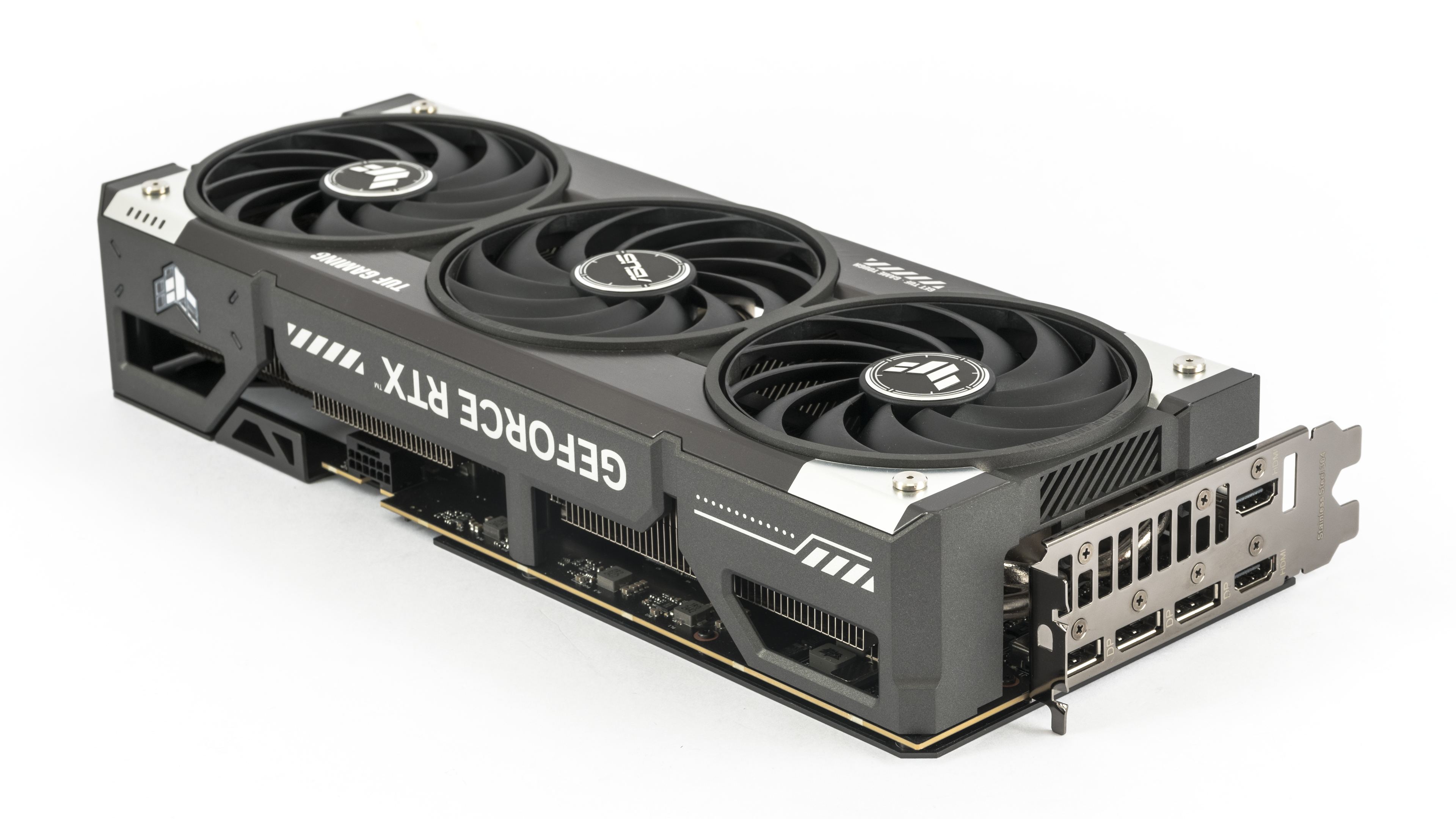

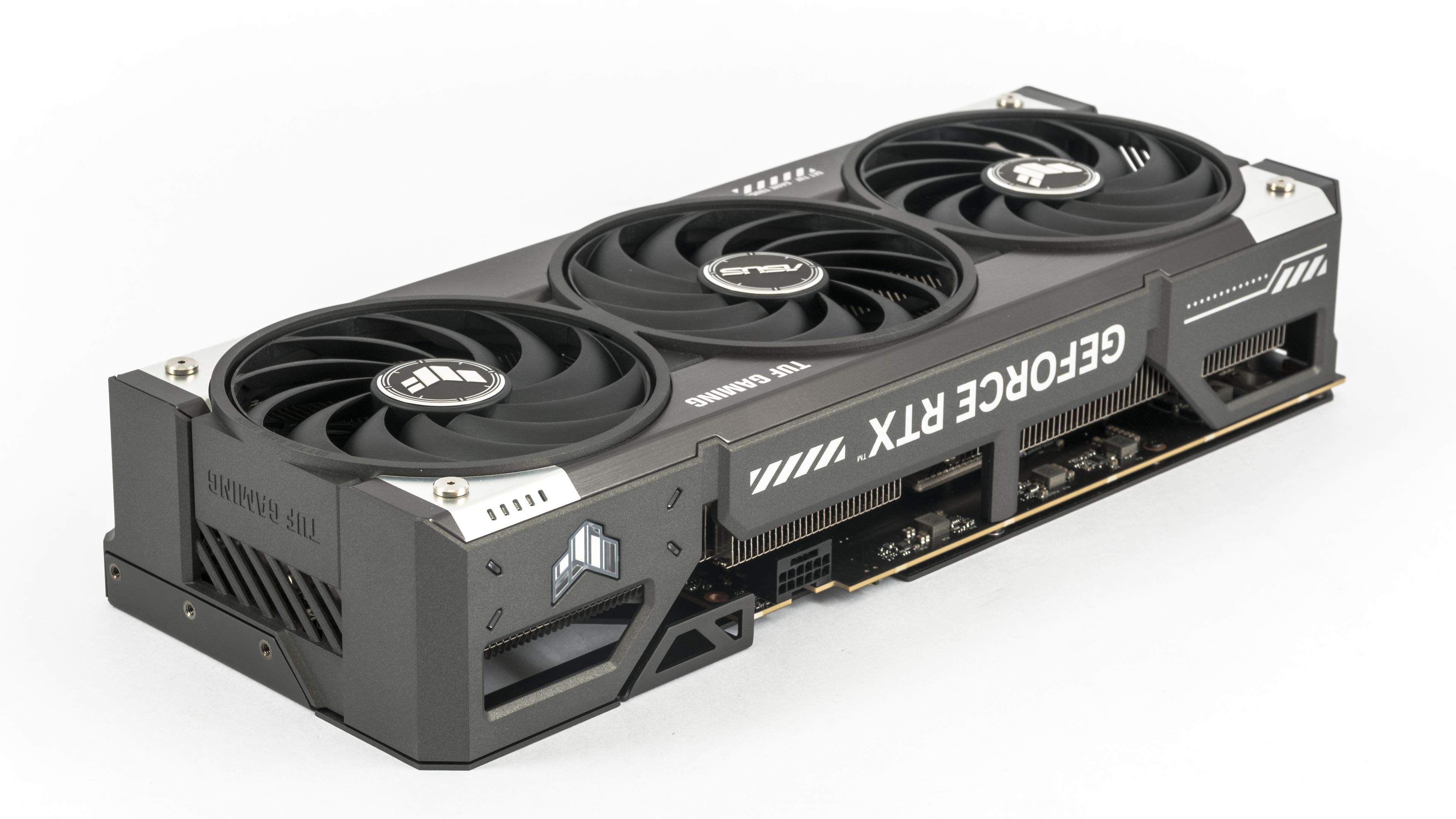
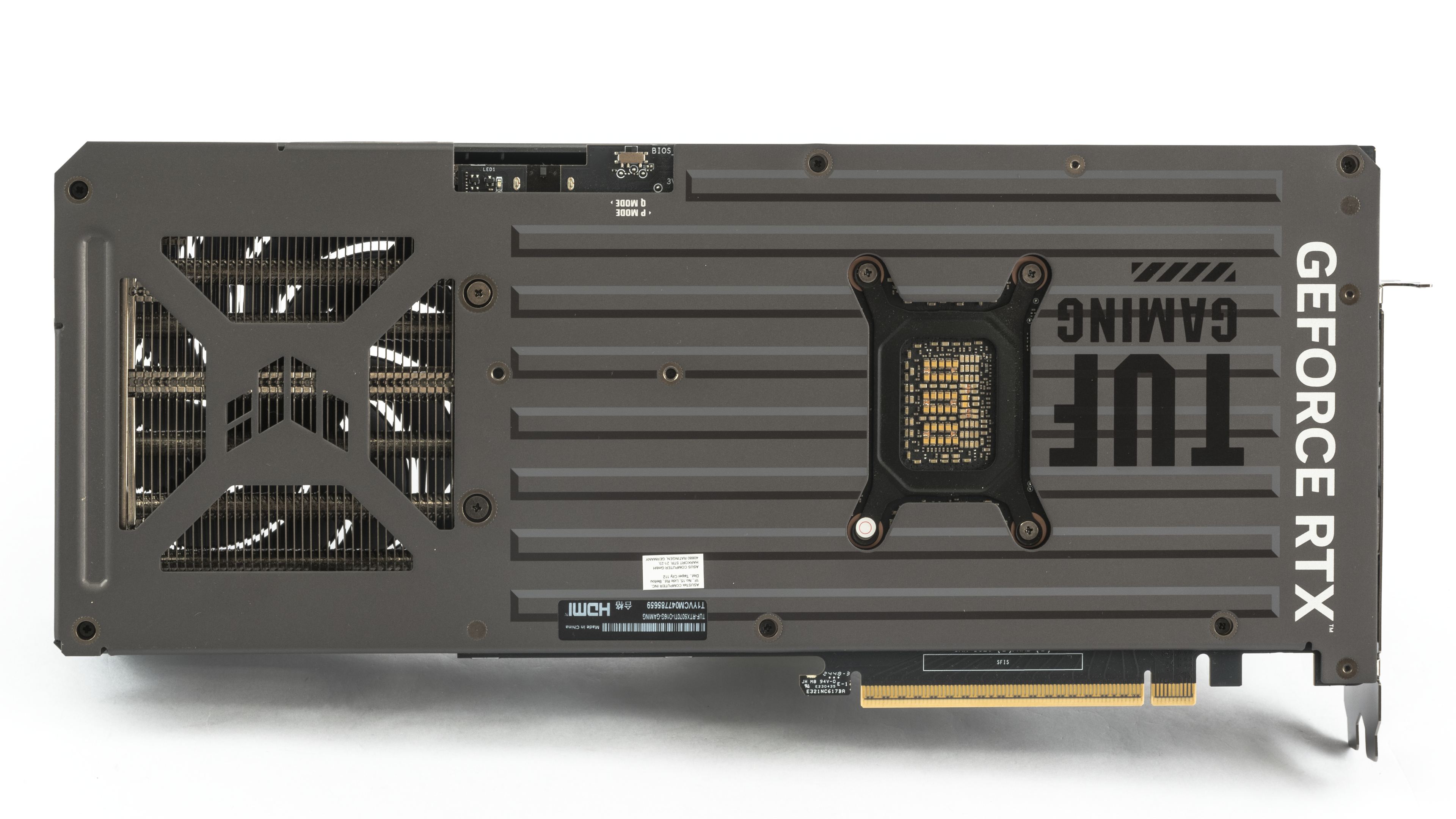
The rear side of the PCB is covered by a metal backplate with embossed pattern printing. There’s a cross-shaped cutout at the rear, with a TUF logo in the center above the fan hub. The translucent logo on the side of the card is lit by addressable RGB LEDs.
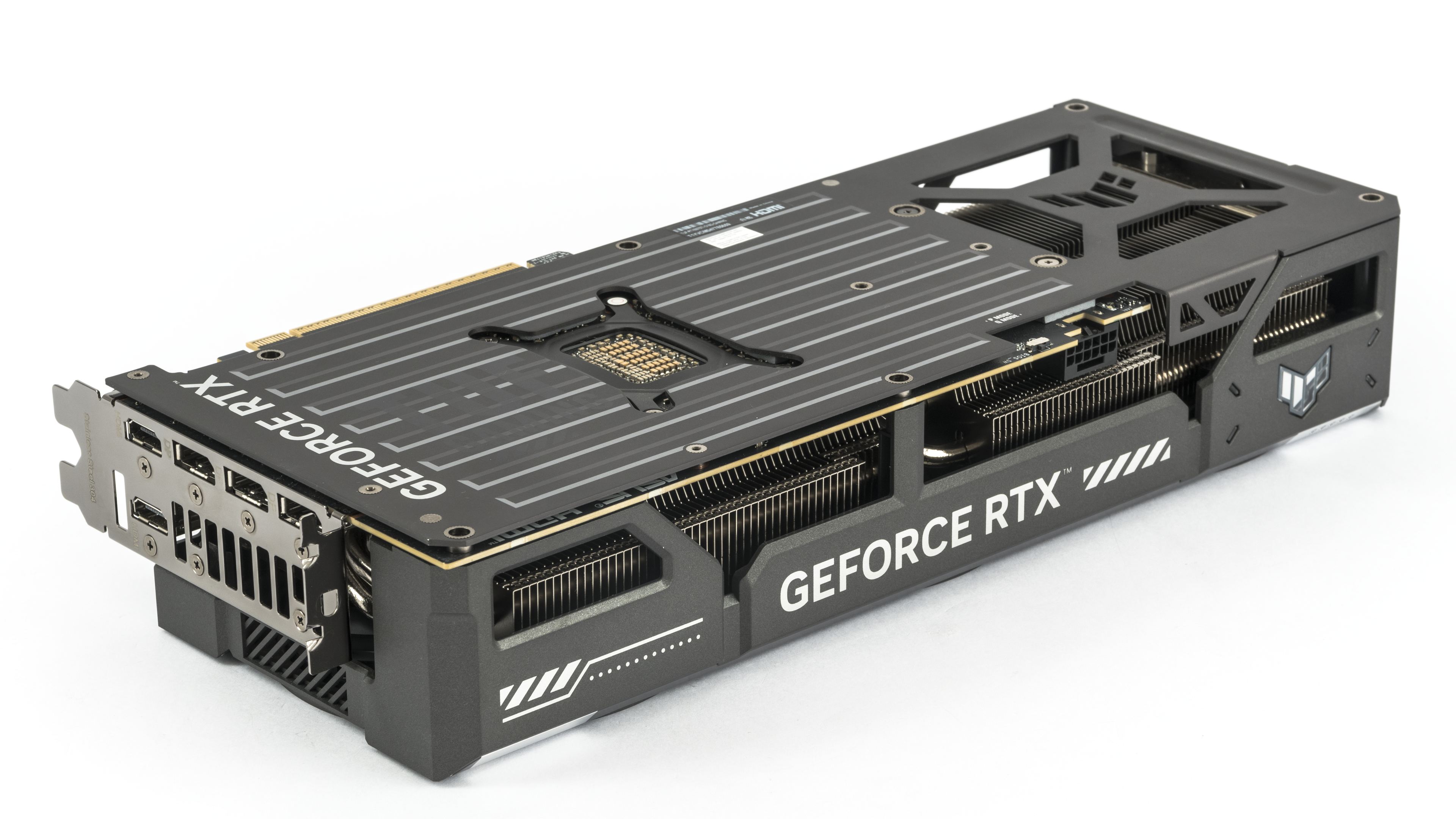
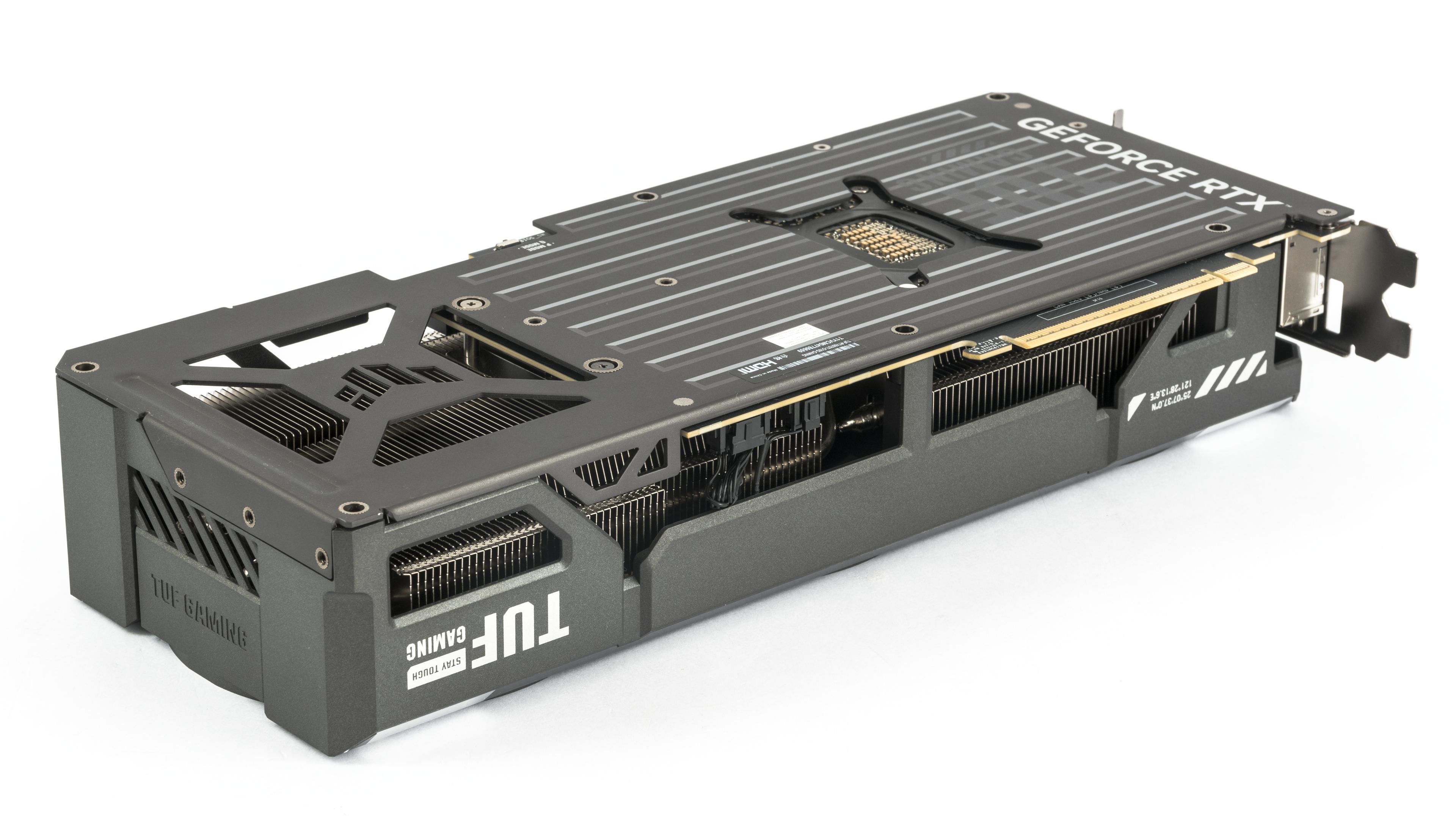
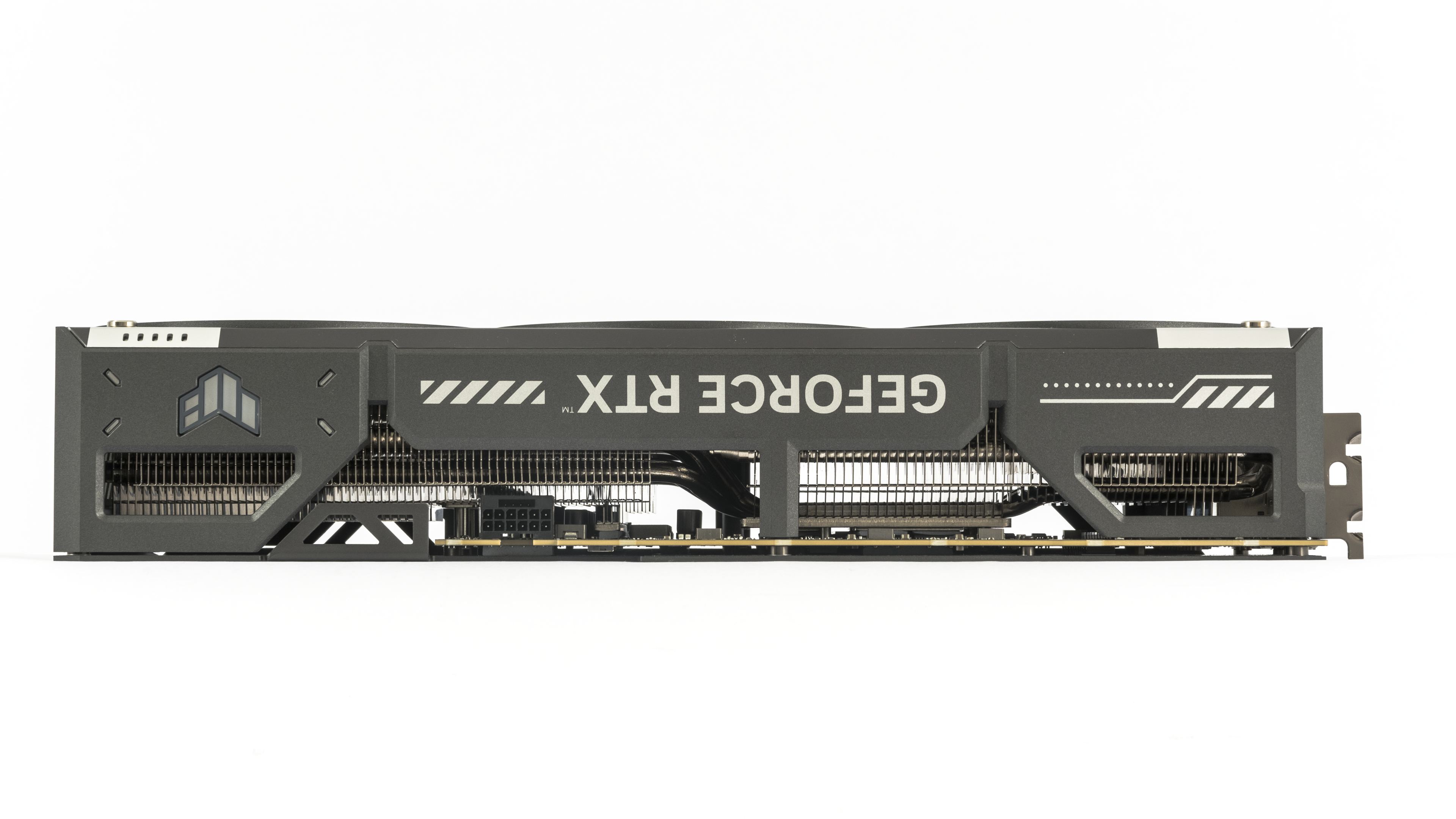
From above, it’s clear that the pass-through area of the heatsink lies beneath the rear fan. The fans spin in opposite directions, with the center fan rotating counter to the outer ones. This causes the airflow at the point where fan blades meet to move in the same direction, reducing turbulence, minimizing RPM fluctuations, and making the cooler’s noise output more consistent.
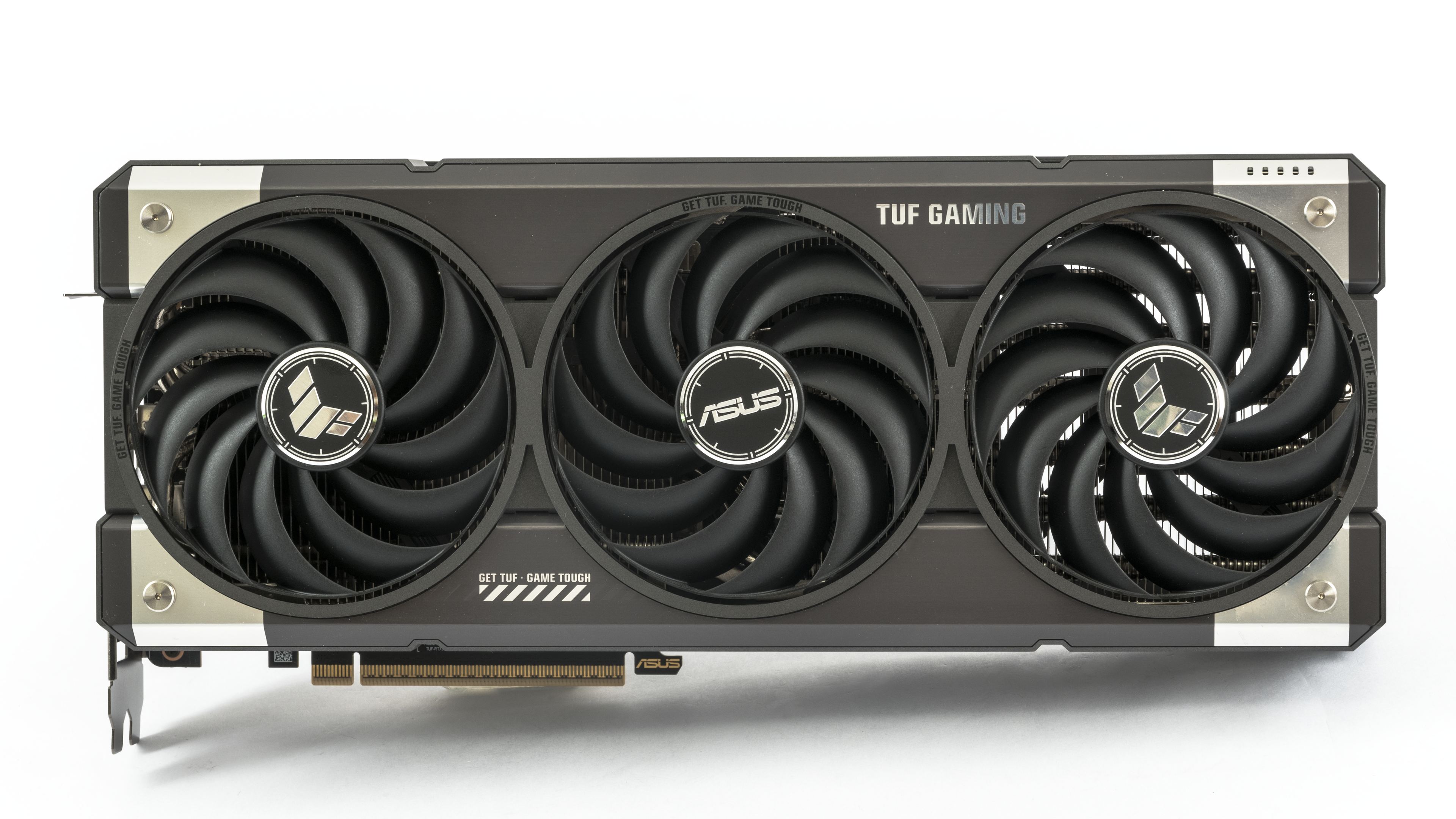
Asus could have made better use of the space under the shroud with more efficient finning, possibly making the card more compact while retaining similar thermals. Functionally, however, this isn’t a problem—the cooler’s performance is not lacking.
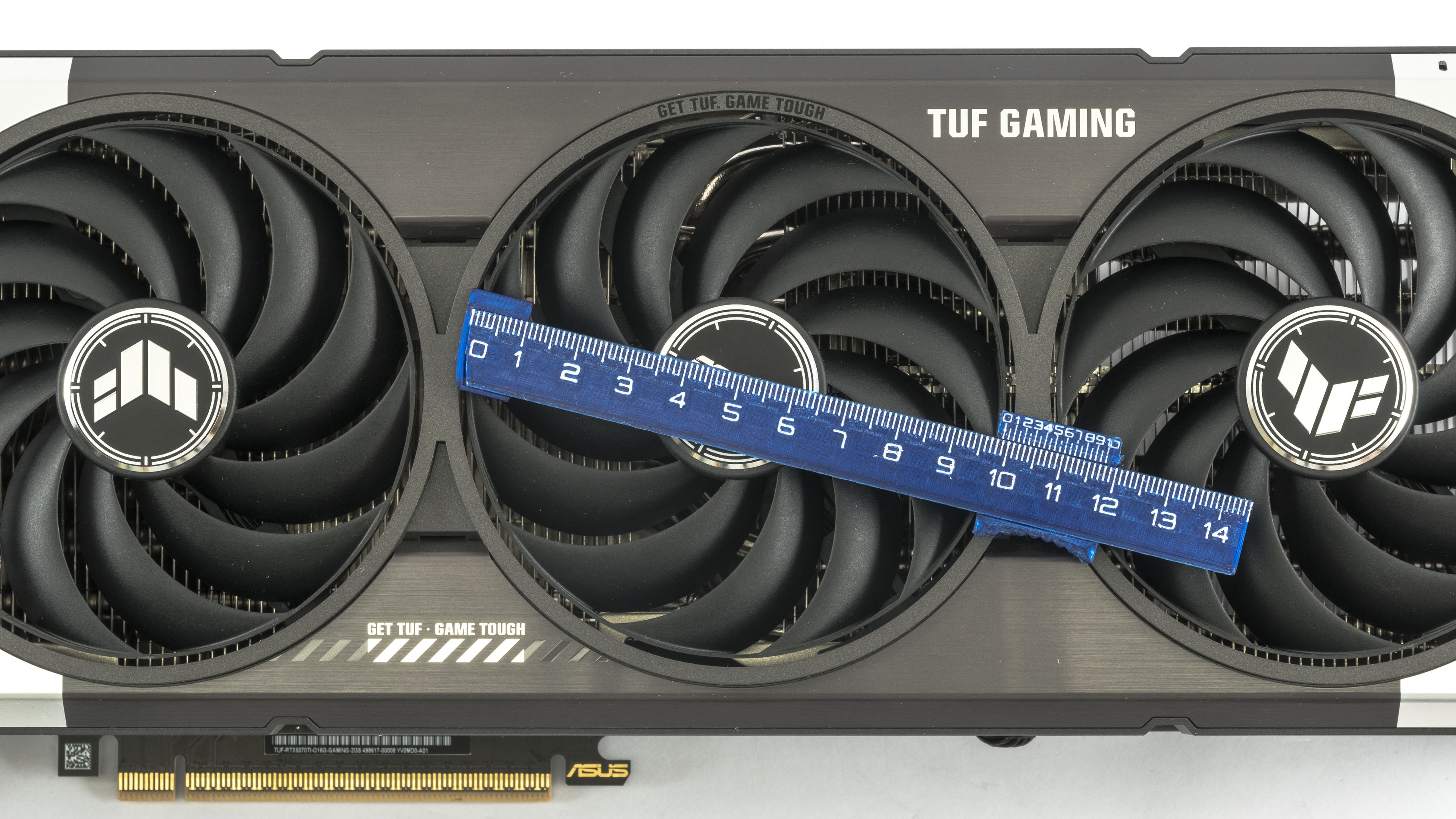
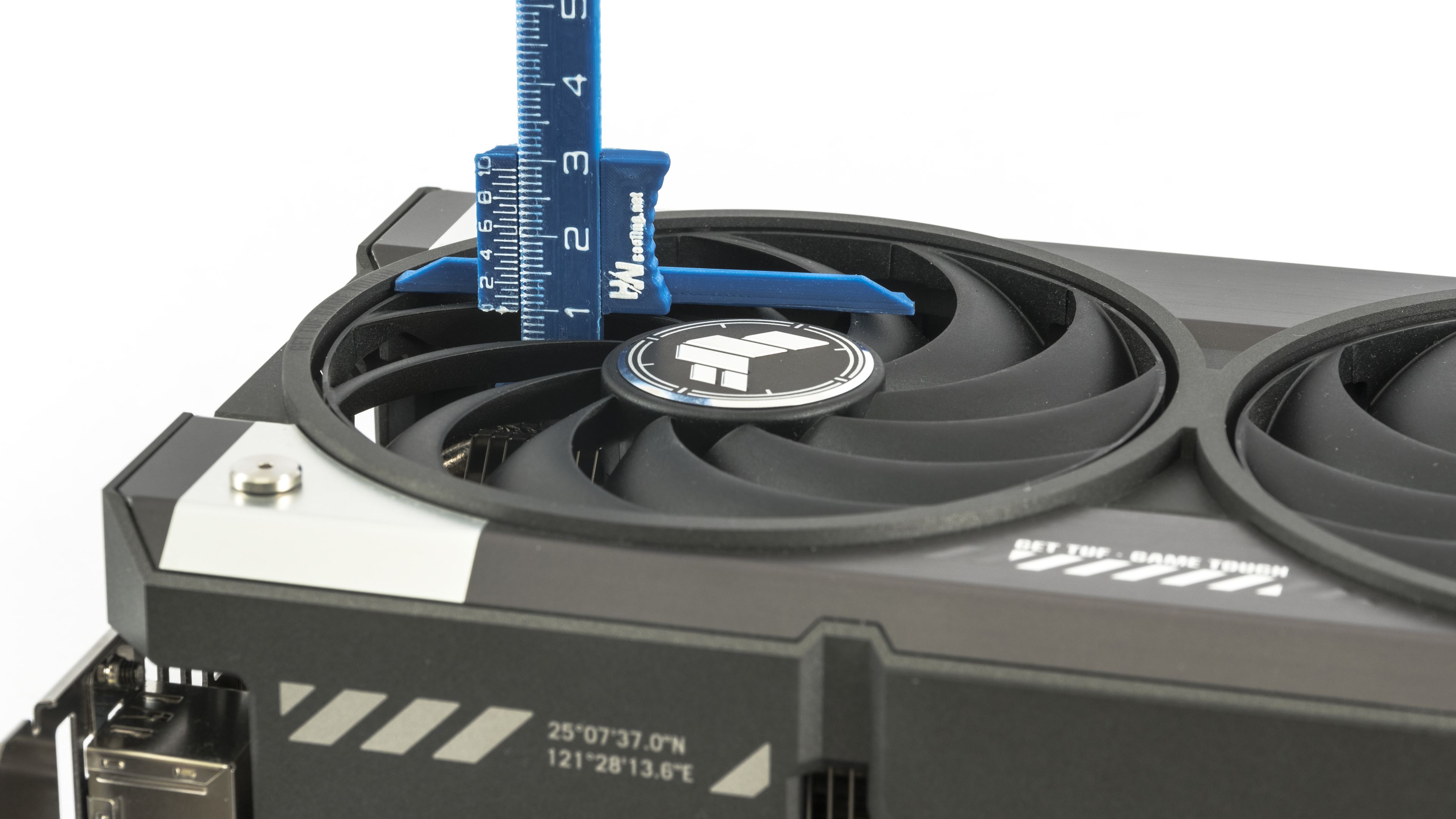
The fan impellers have a diameter of 10 cm, a height of about 11 mm, and slender blades. This means they’ll run at higher speeds, but it doesn’t necessarily translate to more noise.
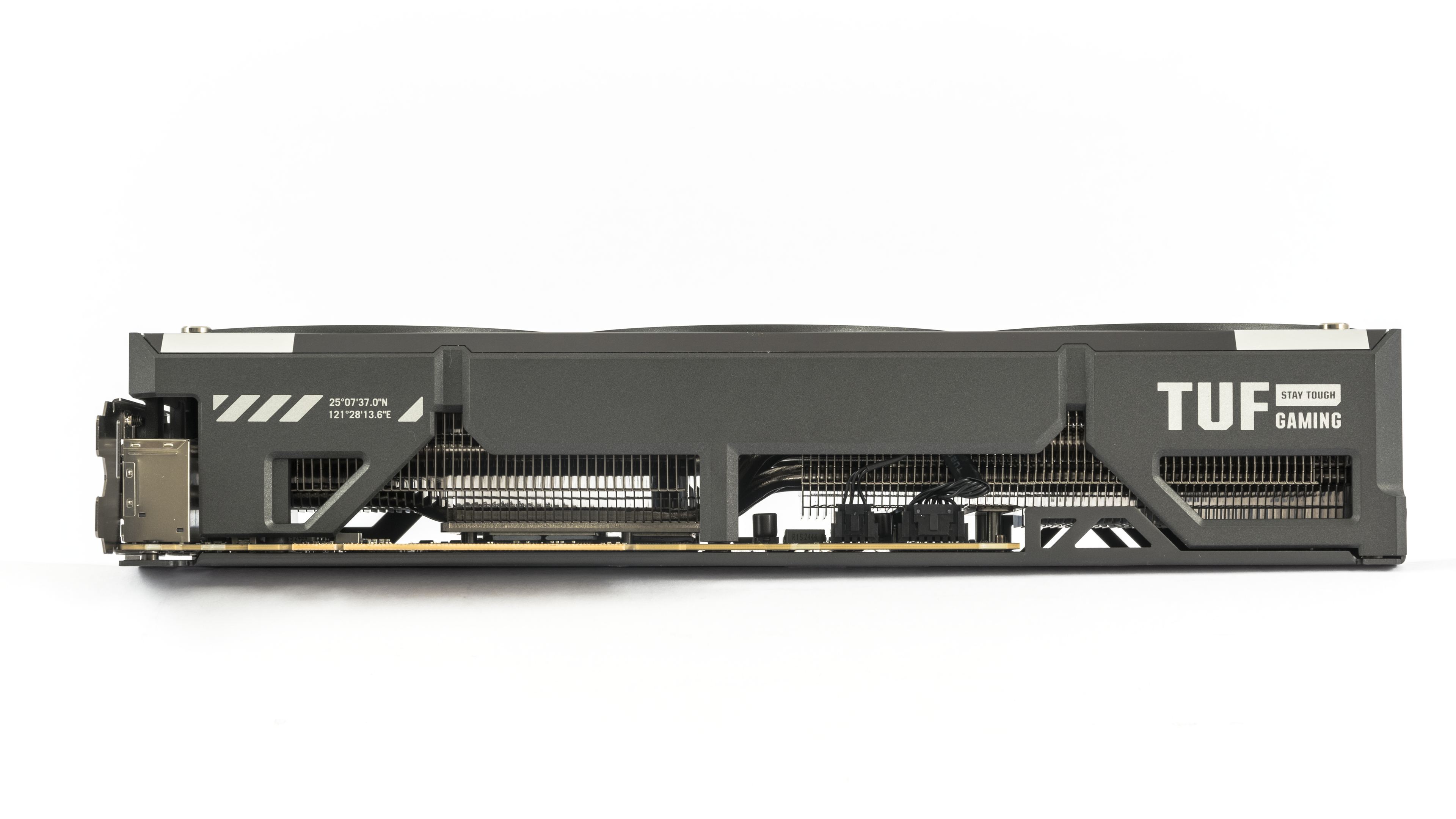
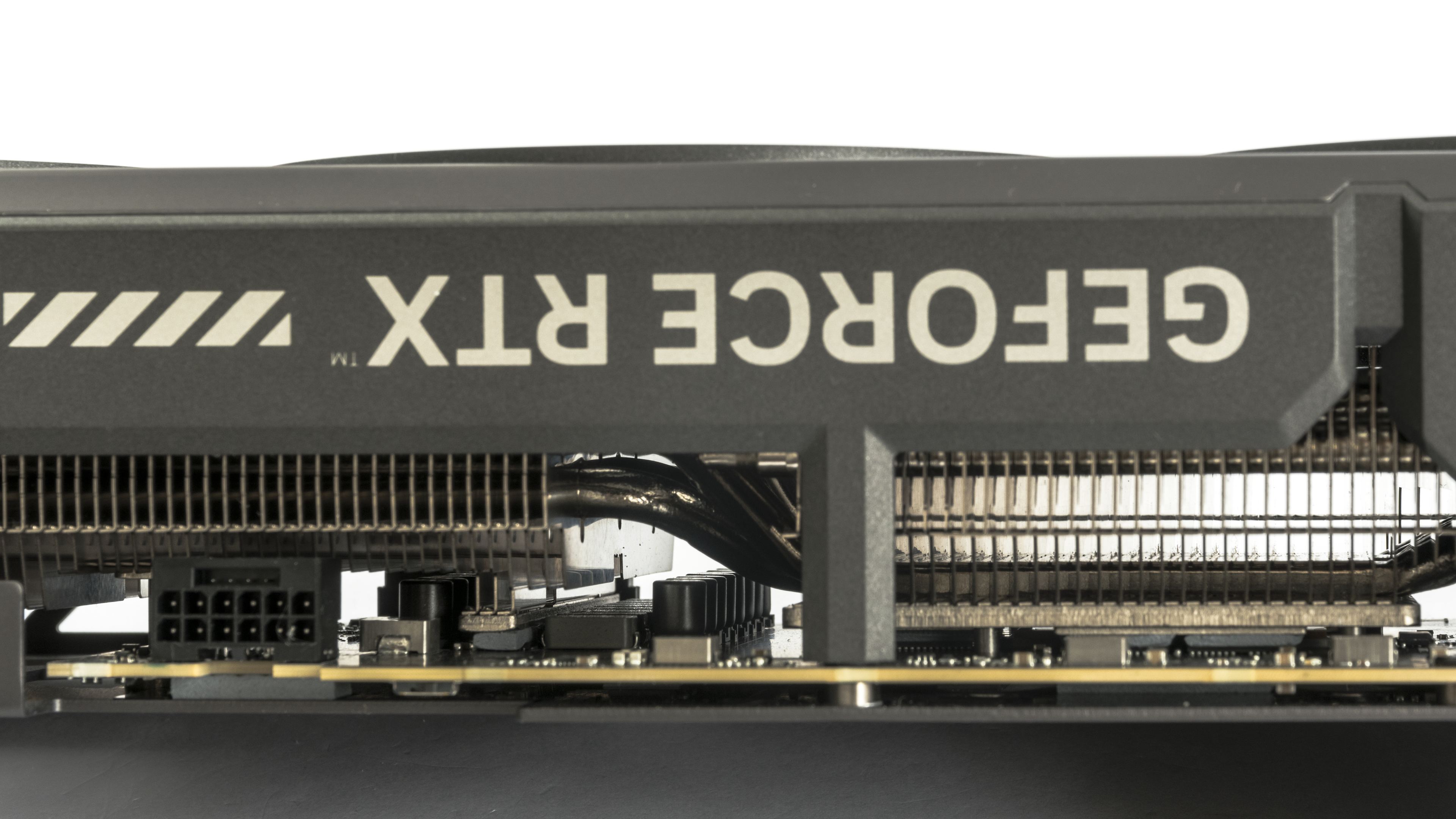
The detail shot shows the cooling of the MOSFETs and coils in the power delivery.
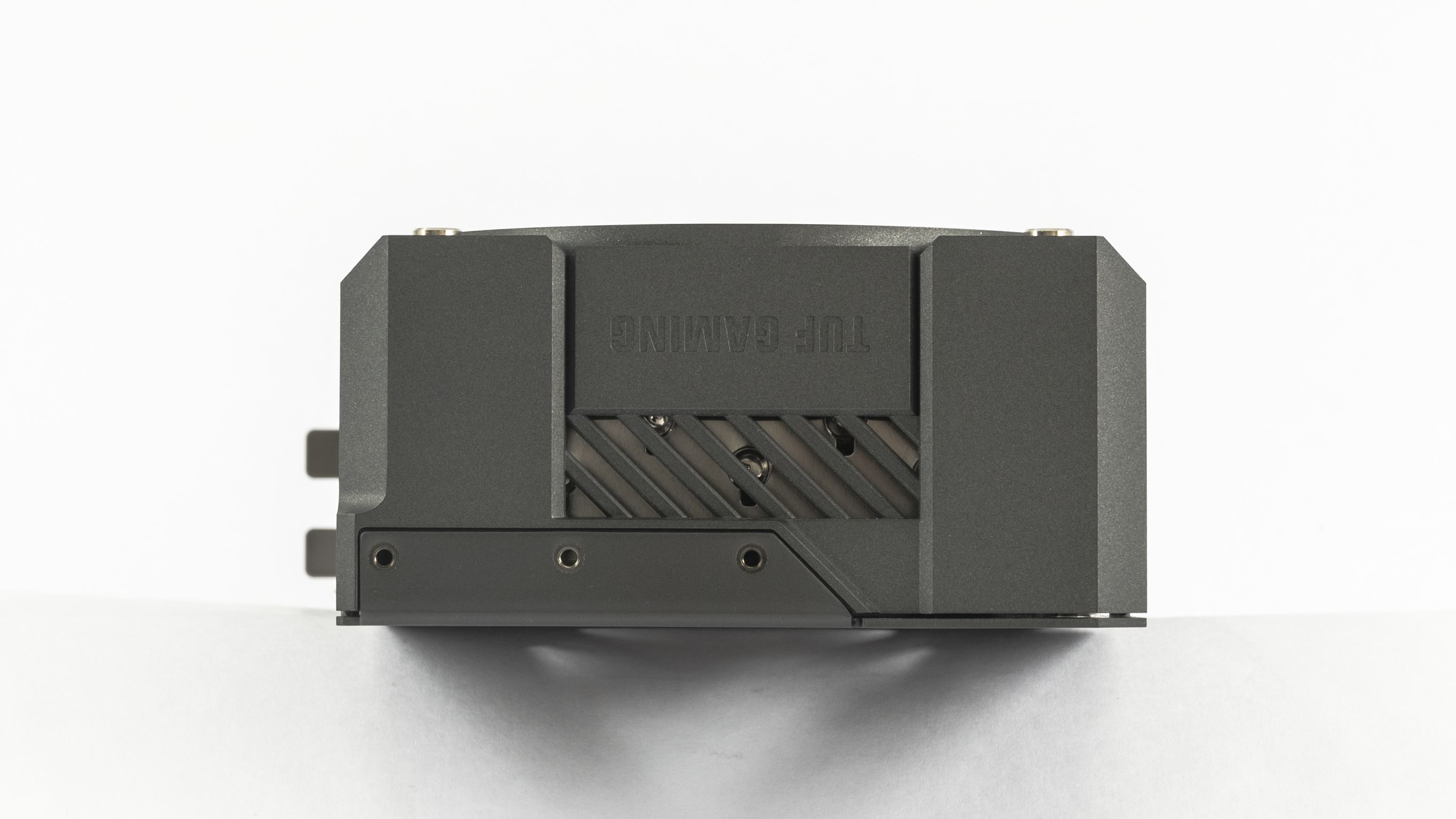
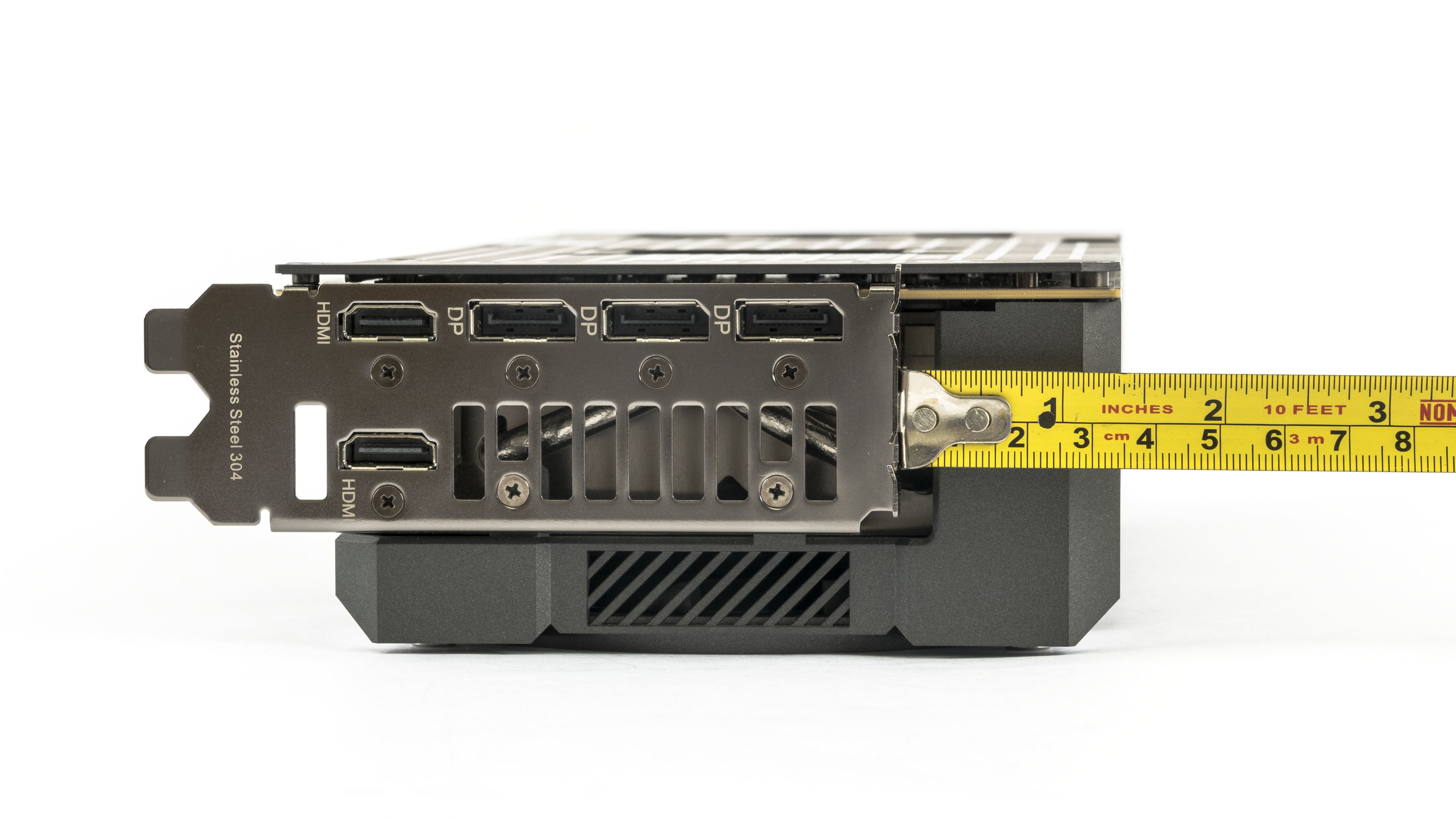
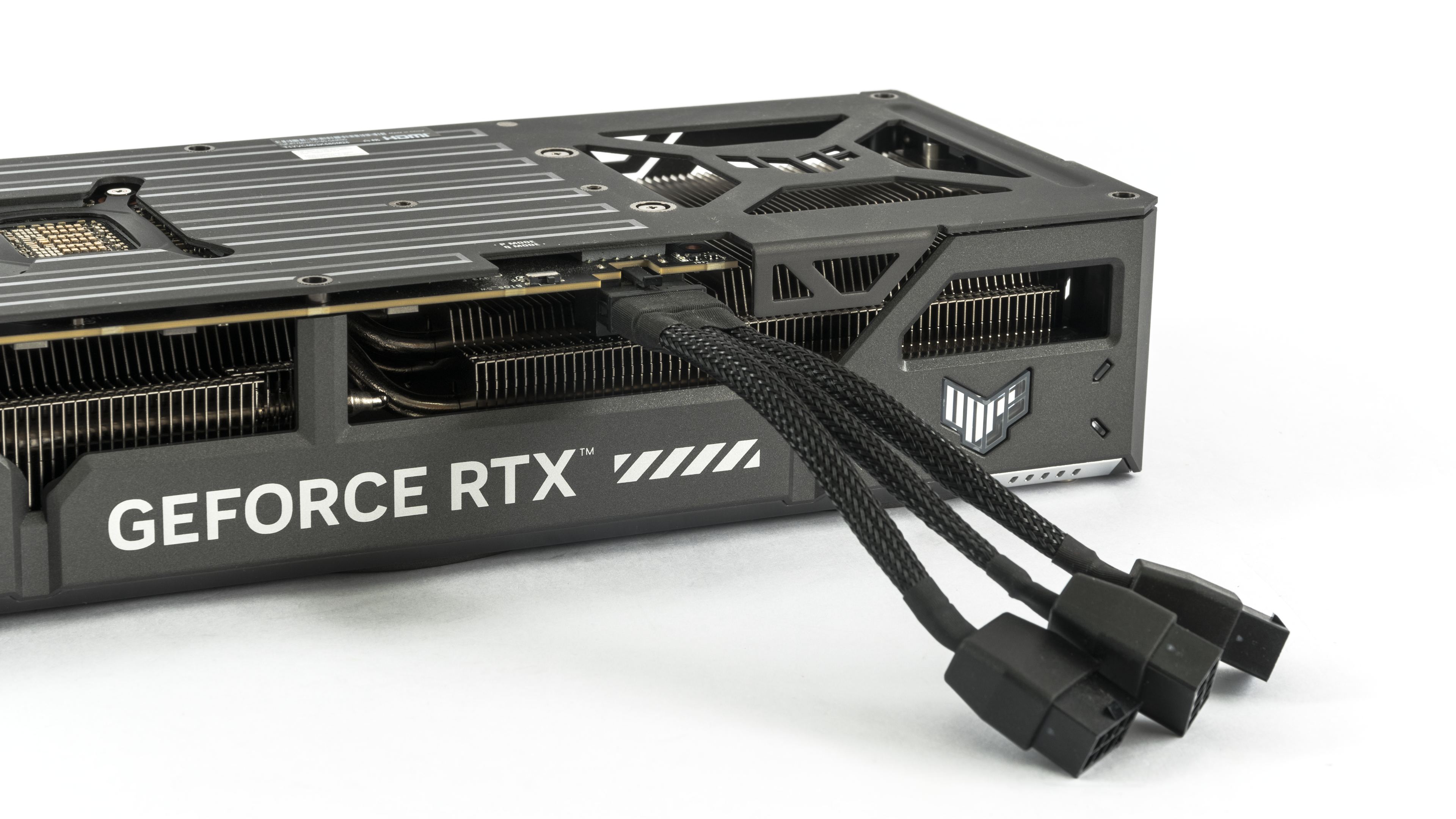
The card’s length from the bracket is approximately 33 cm. The cooler protrudes 3.5 cm beyond the bracket width-wise. The power connector is located along the cooler’s side edge, so additional clearance behind the side panel is needed to prevent sharp cable bending.
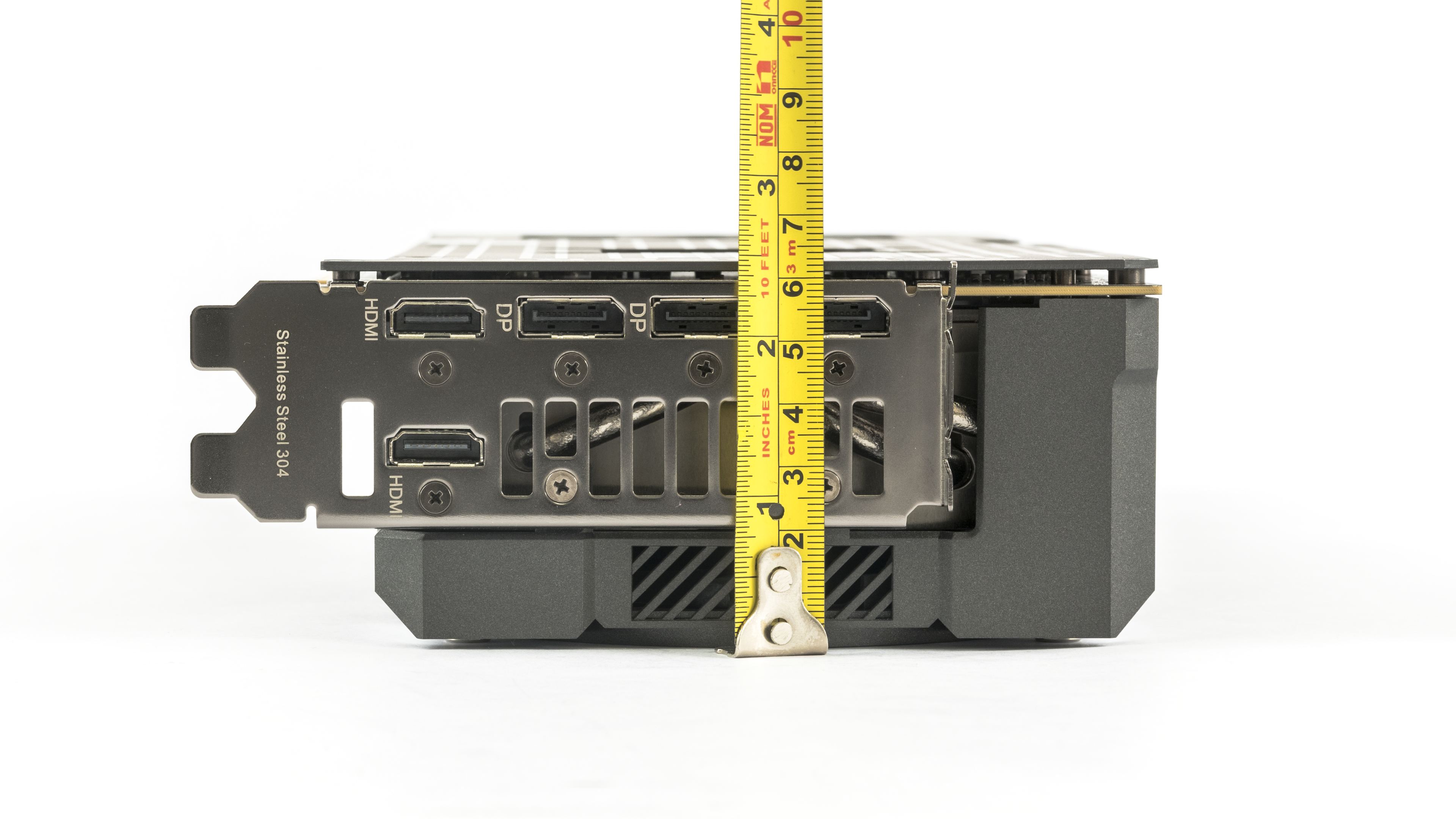
In terms of height, the cooler measures about 6 cm and occupies the space of three slots. You’ll likely want to leave a fourth slot free to ensure better airflow to the fans.
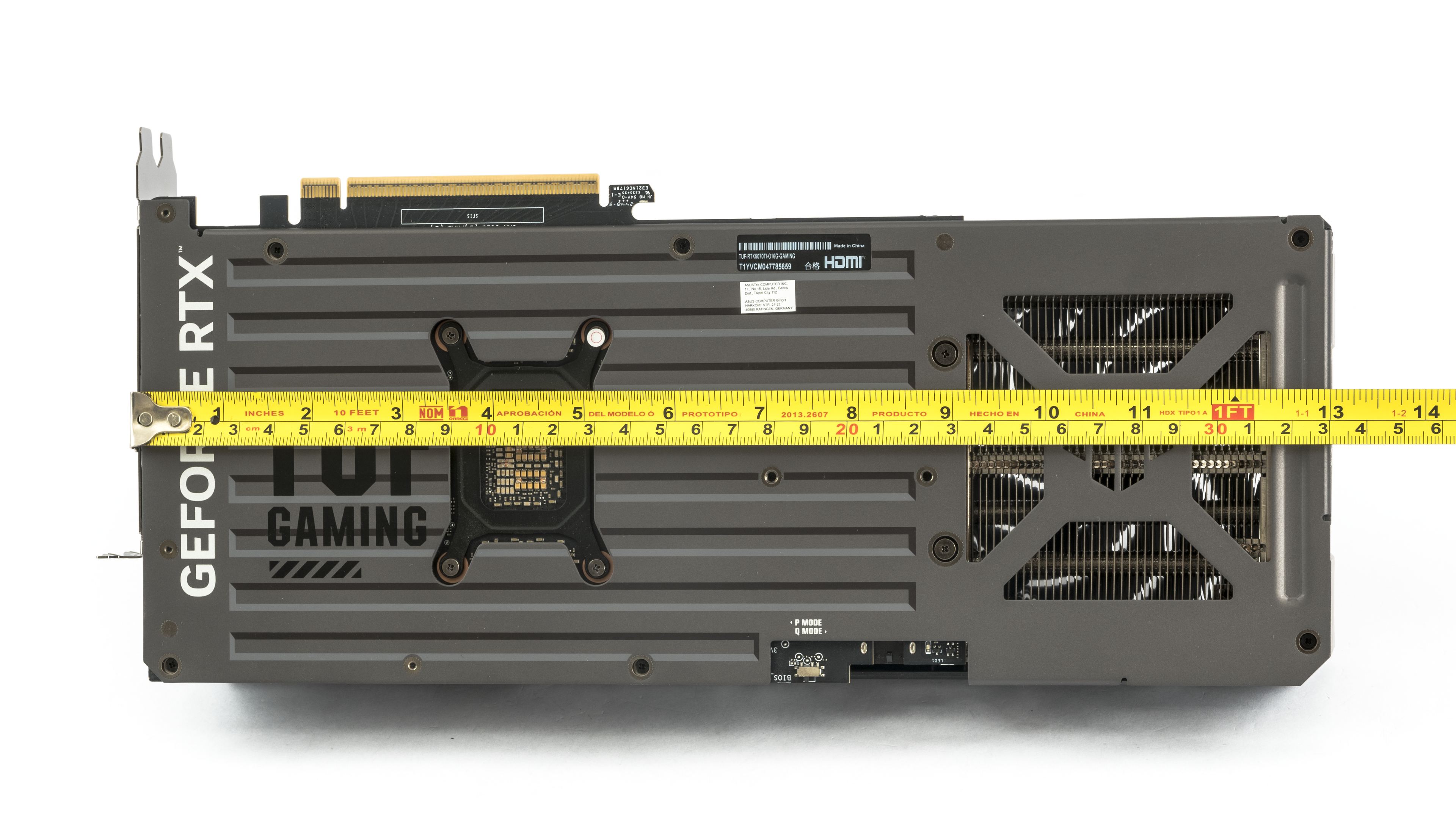
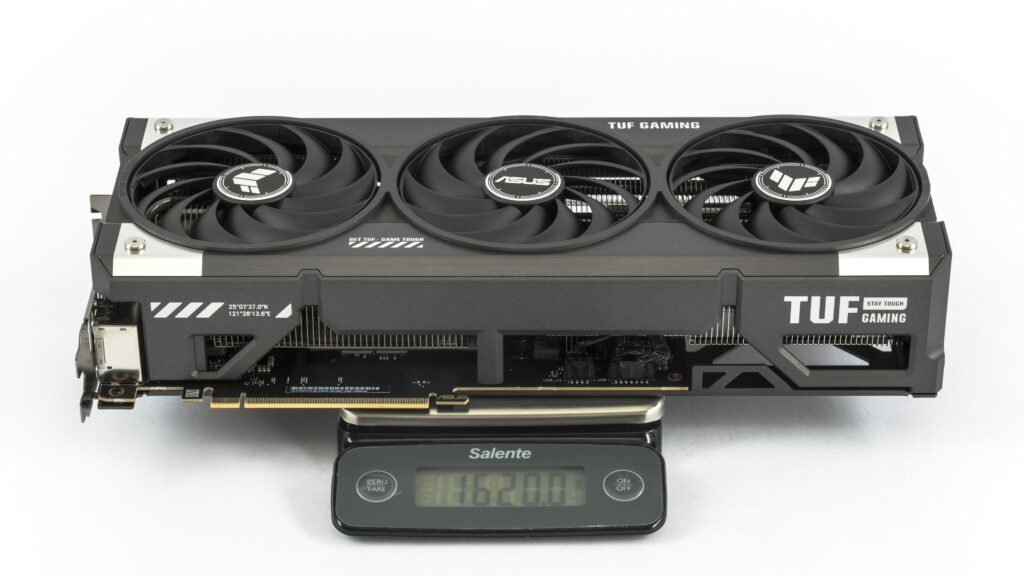
The card weighs 1620 grams, slightly more than the 1.5 kg of the TUF RTX 5070. The triple 8-pin adapter adds another 46 g.
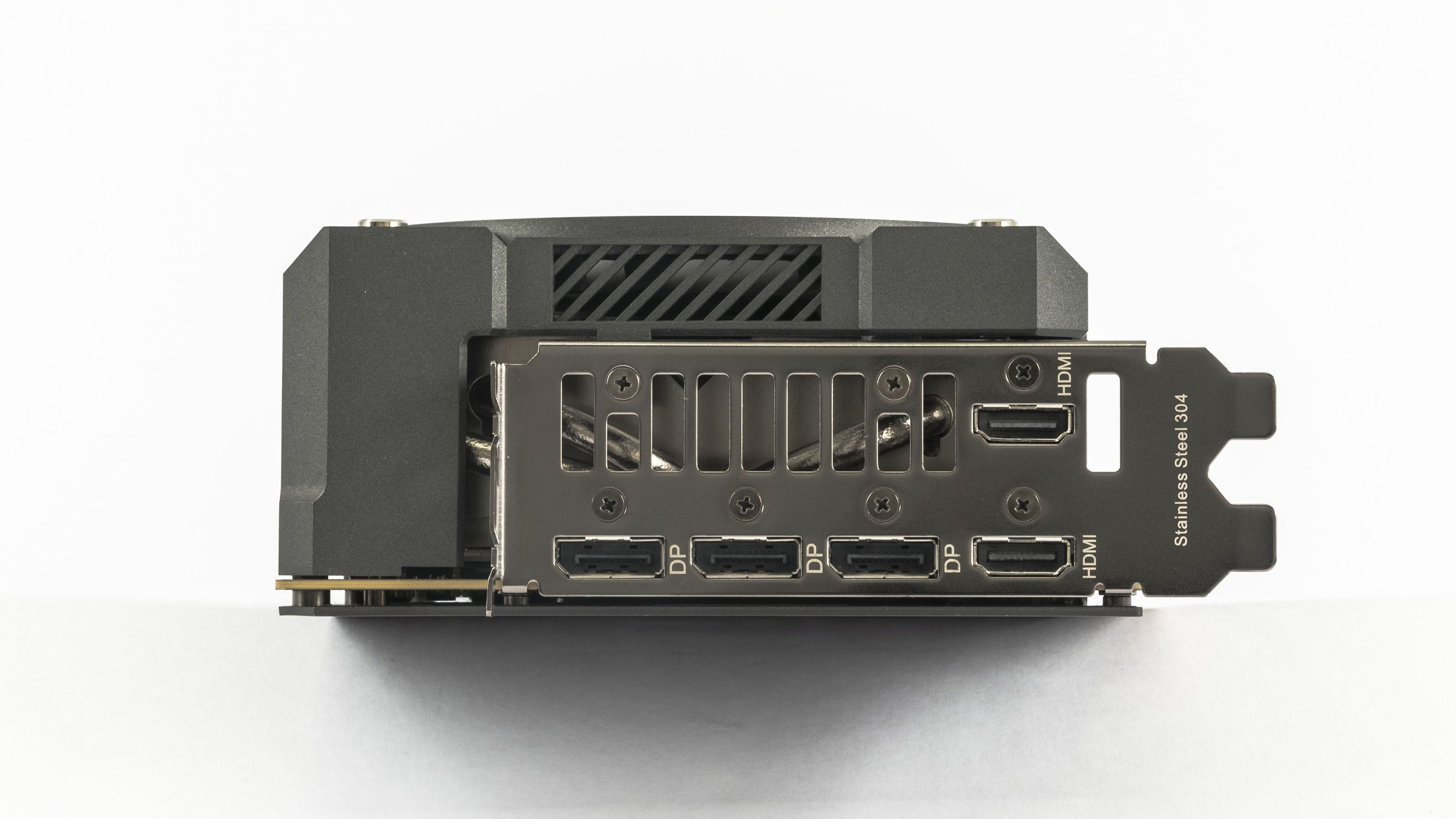
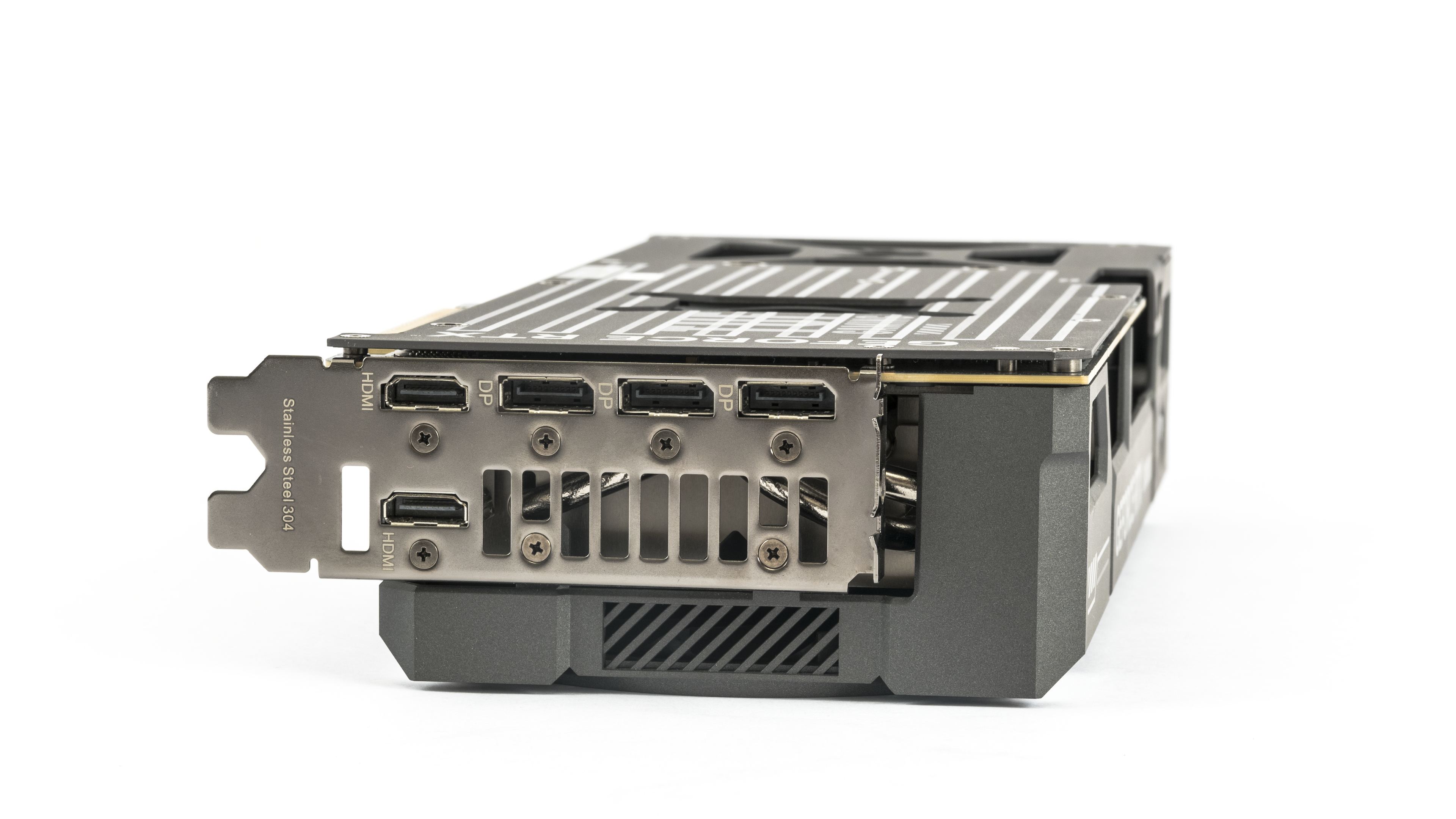
GeForce cards typically come with three DisplayPort 2.1b connectors supporting UHBR20 and one HDMI 2.1b. Asus deserves credit for adding a second HDMI connector. While only four monitors can be active at once, using two HDMI displays simultaneously no longer requires an adapter.
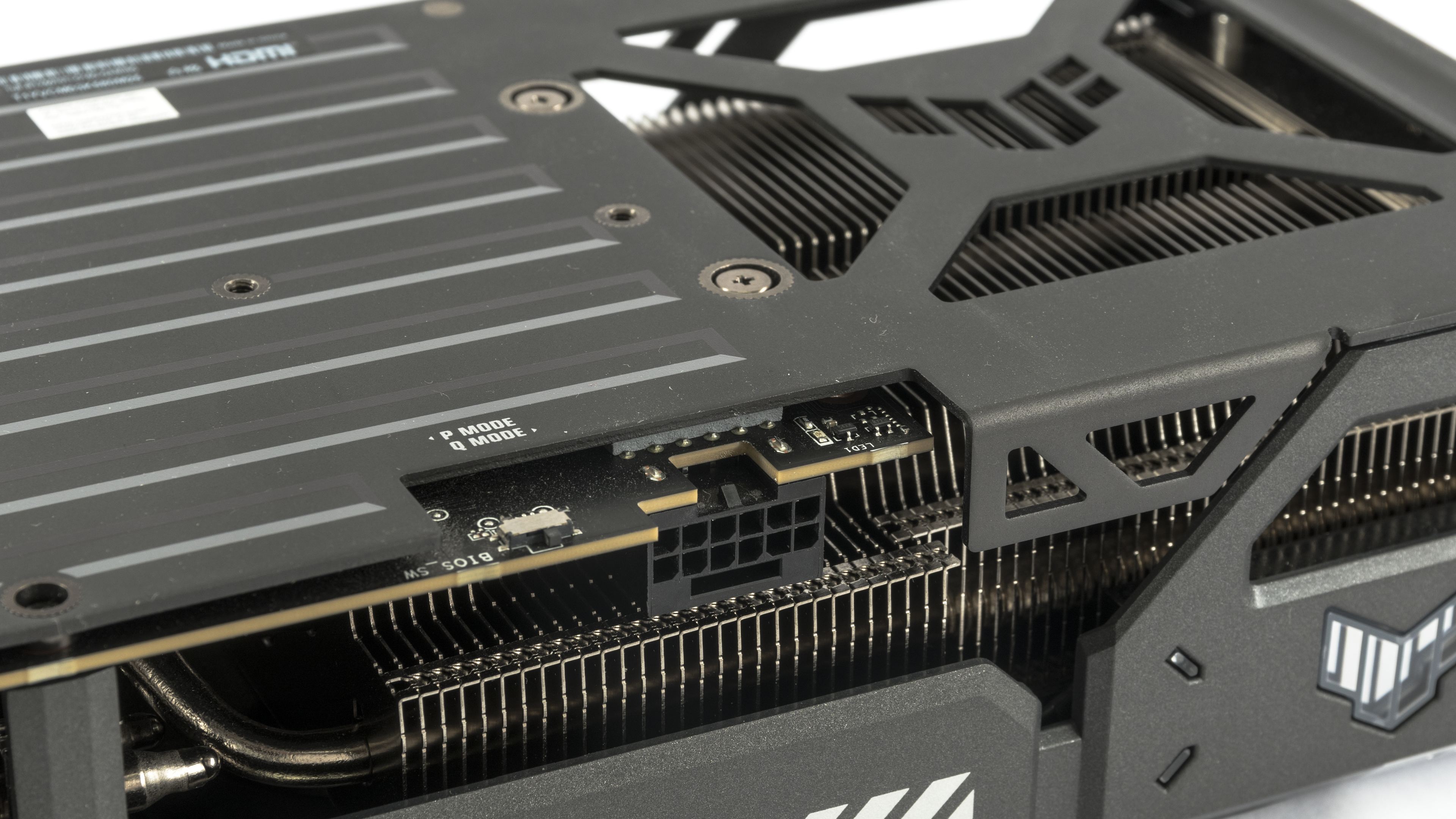
Power is delivered via the newer 12V-2×6 16-pin connector, which is oriented with the latch facing upward. A helpful touch is the red diagnostic LED that lights up in case of power issues (such as an improperly seated connector). Slightly confusing is that it lights up when the PC is “off” (in standby mode), but if you’re familiar with Asus cards, you’ve probably seen this before.
We’ve covered the design, now let’s take a look at the test build and test results.
⠀