


Tranquillo coolers from Gelid Solutions have been very popular in the past for their solid cooling efficiency at an affordable price. Recently, the fifth revision of this cooler was launched, offering a change in overall design and featuring a matte black finish. Price-wise, however, the Gelid Tranquillo rev. 5 is a direct competitor to some very solid coolers of late and so I am very curious to see how it fares against them in today’s review.
Testing methodology
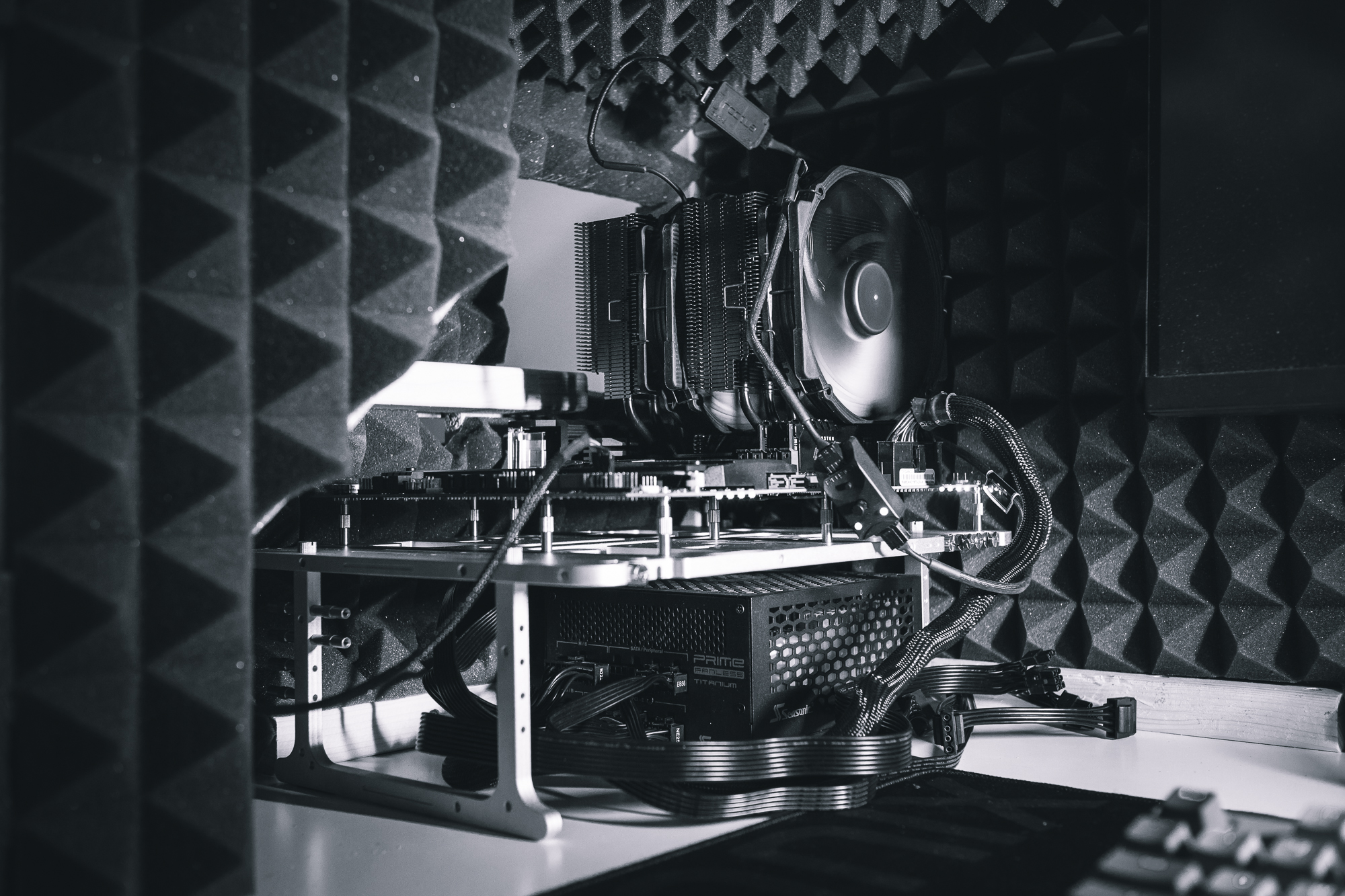
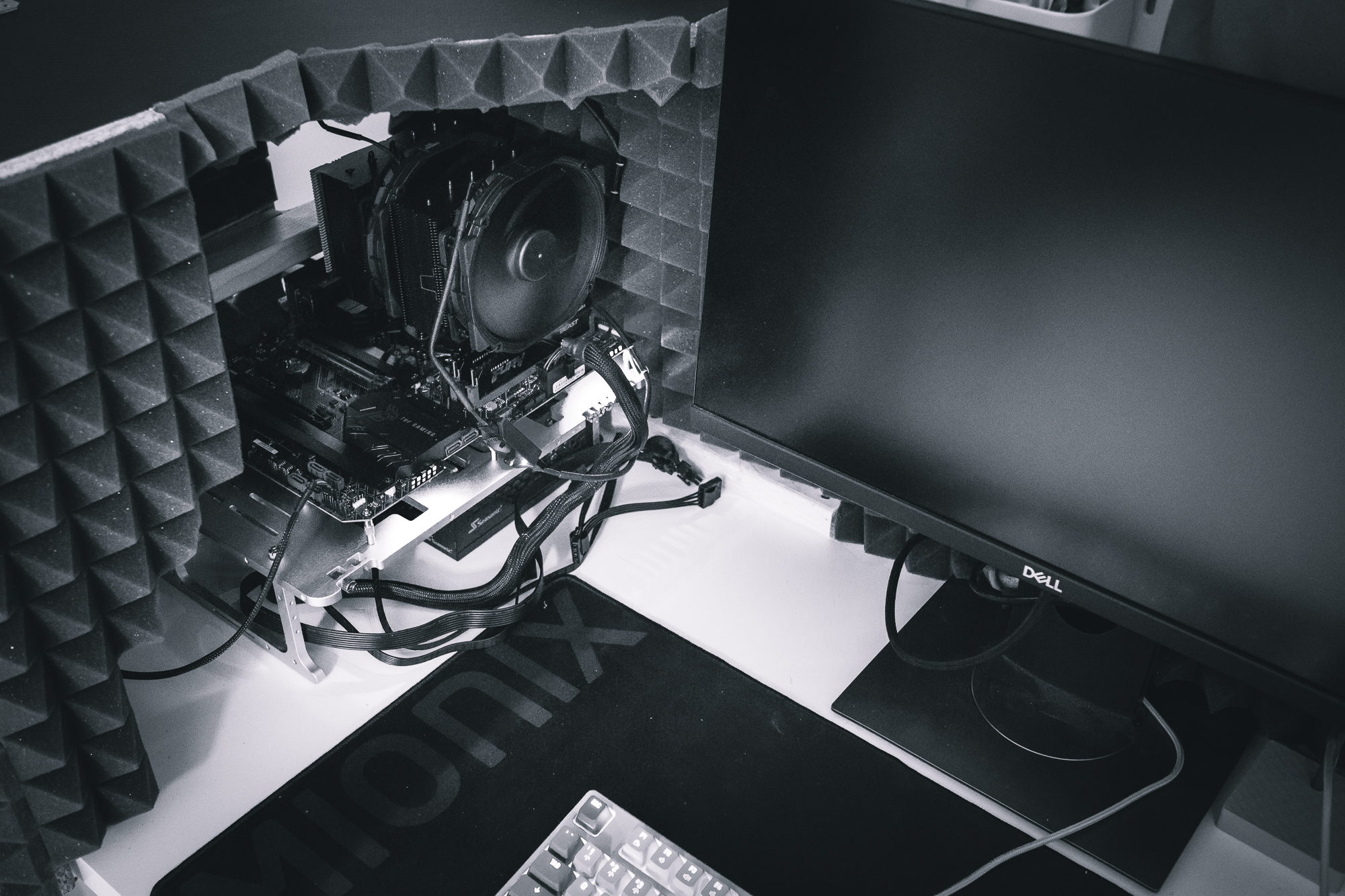
As a test processor and heat generator, I am now using an Intel Core i7-11700K on the Asus TUF Gaming Z590-Plus WiFi motherboard. The entire build is mounted on a Streacom BC1 frame with no fans to provide airflow. Acoustic shielding (acoustic foam on OSB boards) is installed around the test setup to eliminate ambient noise.
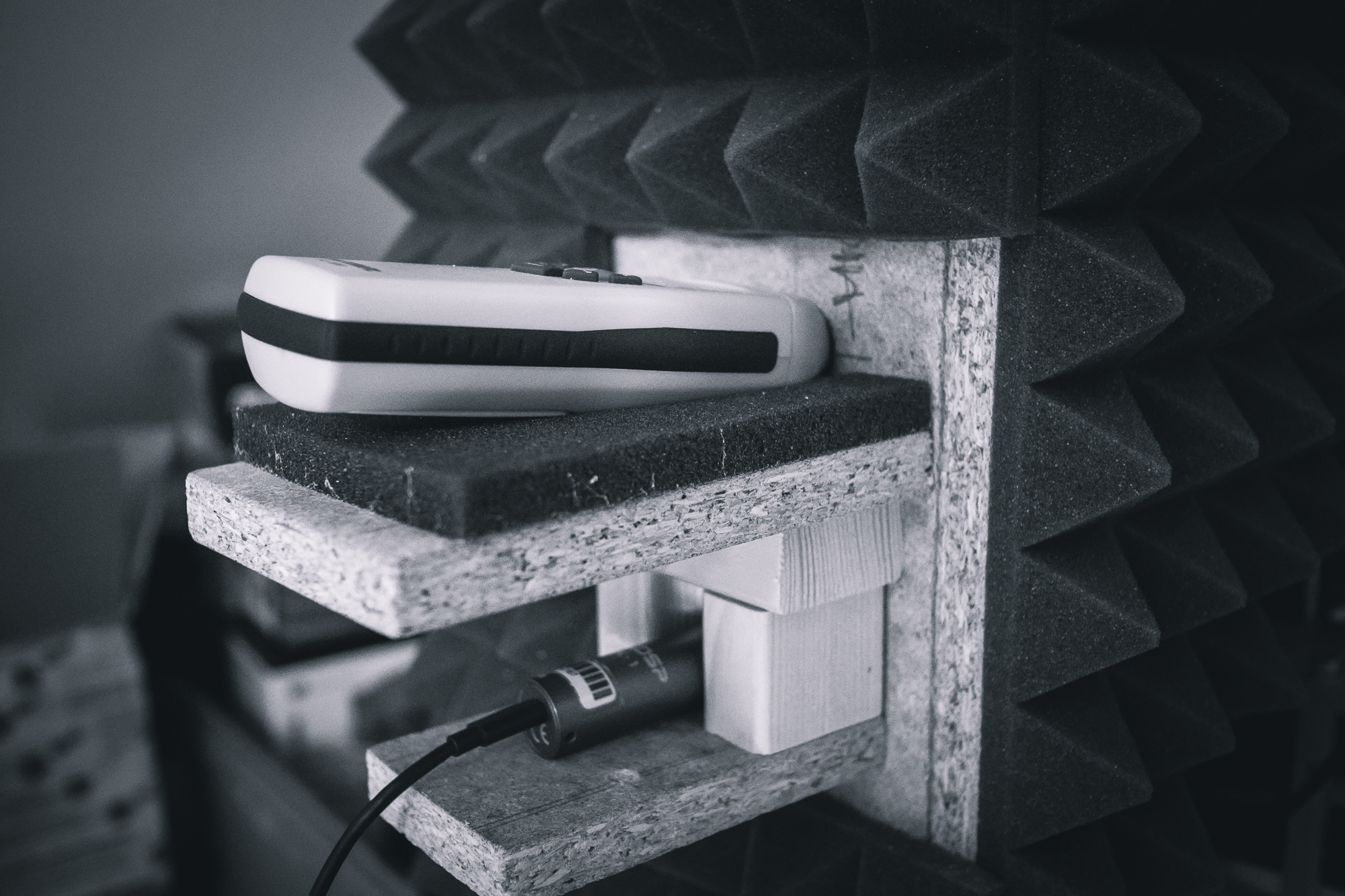
The Voltcraft SL-100 calibrated noise meter is placed perpendicular to the cooler in a fixed position relative to the motherboard at a distance of approximately 35 cm from the processor socket. Stress tests are performed using Prime95 with a duration of 30-35 minutes. The coolers are tested at three standardized noise levels (36, 39 and 42 dBA) and finally at maximum speed. The tests are run in two sets according to the heat output of the processor.
The first set of tests is at 125 W, the PL1 processor’s enforced limit. The second set of power draw is then about 205–210 W (4500 MHz at 1.285 V). However, this second level represents a very high concentration of heat per mm² due to the small size of the chip itself. Thus, not all coolers can be expected to pass this set of tests at all noise levels. At the end of the test, the highest temperature achieved is always recorded.

All data regarding CPU temperatures and heat output are obtained from the HWiNFO64 application. The measured values are then corrected against the room temperature as the resulting Delta T value. Any higher value means a processor temperature over 95-100 °C and a risk of thermal throttling. Therefore, if the cooler does not pass the load with a Delta T value below 75 °C, such a test is marked as a failure.





Silent cooling power brings steady trust to every build.