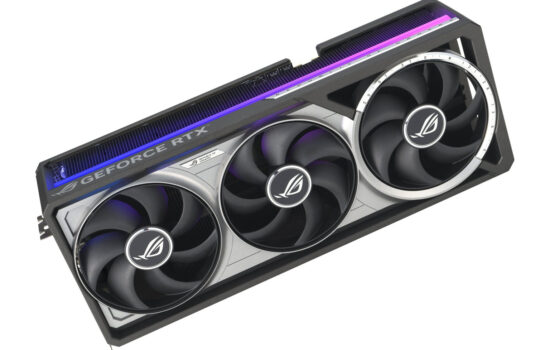
When the RTX 5060 Ti launched, we tested one of Gigabyte’s cheaper Eagle models. Today we’re looking at the better-equipped RTX 5060 Ti Gaming OC from the same manufacturer. It uses a larger cooler and is quieter at the same temperatures. The price uplift over the base models is modest, and prices across brands are nearly identical. Even so, it faces stiff competition from Radeons, which are highly attractive alternatives.
Final thoughts
The second Gigabyte model I tested is noticeably better in Silent mode noise than the previously tested Gigabyte GeForce RTX 5060 Ti Eagle OC 16GB. At the measured noise level of 34.5 dBA, the card can be called quiet, and it’s safe to say that in this price category most owners will be satisfied with the cooler’s noise. Even more demanding users will be happy if they fine-tune the fan curve manually. In most systems noise won’t be an issue—in builds with a classic air cooler you will most likely hear the CPU cooler more under load than the GPU cooler.
Compared to Gigabyte’s cheapest models, the surcharge is small, less than 40 EUR. I’d probably recommend paying that extra 20 EUR over the cheaper Eagle model, but compared to the cheapest competing models, the card doesn’t fare as well. The cheapest 16GB RTX 5060 Ti currently starts at 448 EUR.
This certainly isn’t the quietest RTX 5060 Ti you can get. I’d guess you’ll find similarly quiet or quieter cards in the competition’s lineup for a better price. With so many models and small price gaps, a shift of a few euros can change which card stands out.

Right now, competing Radeon RX 9060 XTs are hard to overlook—you can get a similarly designed Radeon RX 9060 XT Gaming OC from the same manufacturer for about €80 less. It isn’t always faster, but with a €400 starting price the value clearly leans in its favor, and temperatures and noise are much the same.
There are also other Radeon models that come in even cheaper. Paying extra for the GeForce at the moment probably only makes sense if you have a reason to make use of Nvidia’s ecosystem advantages.
| Gigabyte GeForce RTX 5060 Ti Gaming OC 16G (GV-N506TGAMING OC-16GD) |
|
+ 16 GB of memory − Worse price/performance ratio than basic models |
| Estimated retail price (incl. VAT): 508 EUR |
English translation and edit by Jozef Dudáš