When the RTX 5060 Ti launched, we tested one of Gigabyte’s cheaper Eagle models. Today we’re looking at the better-equipped RTX 5060 Ti Gaming OC from the same manufacturer. It uses a larger cooler and is quieter at the same temperatures. The price uplift over the base models is modest, and prices across brands are nearly identical. Even so, it faces stiff competition from Radeons, which are highly attractive alternatives.
Noise level, operating characteristics—F1 24, 2560 × 1440 (Performance)
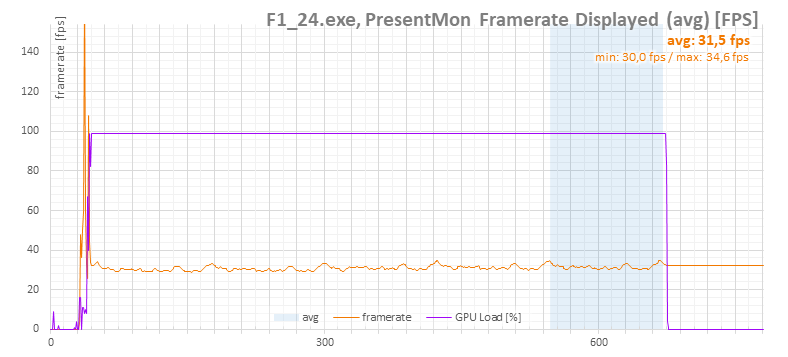
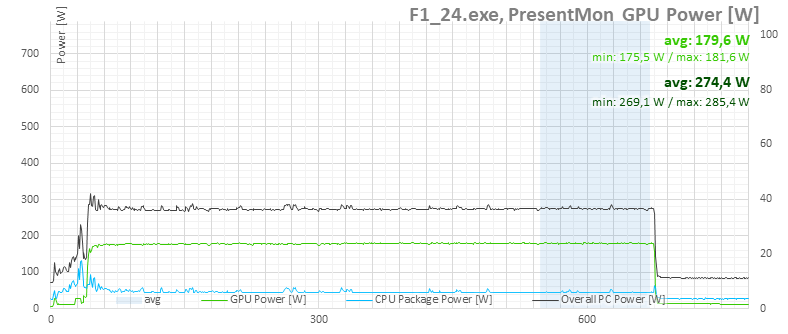
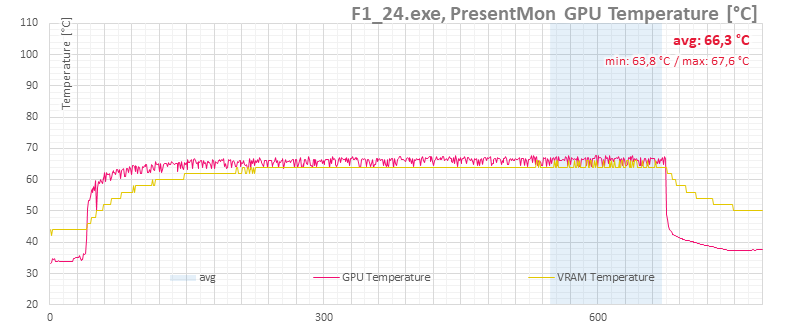
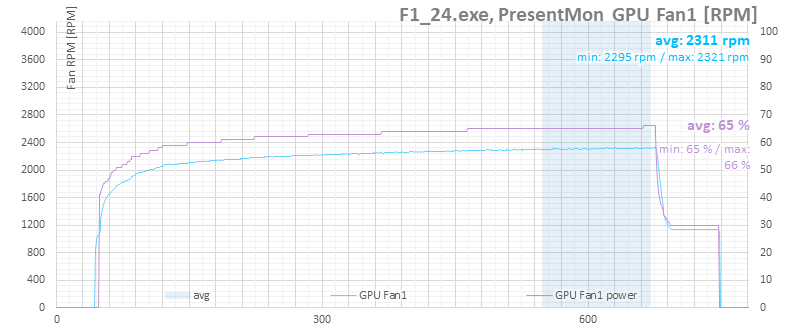
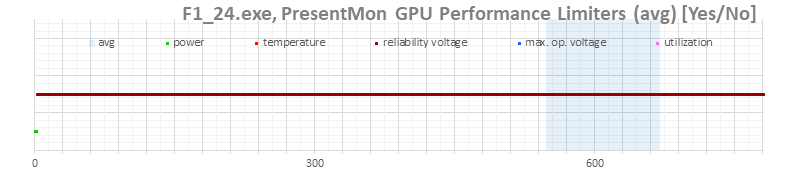
In the following charts are monitoring data from the card during the F1 24 benchmark at 2560 × 1440 resolution with Ultra settings. It is the Singapore track in wet conditions. Unlike other benchmarks, this is not multiple benchmark loops with the card cooling down slightly between runs while loading, but a continuous game load in a five-lap race that lasts over ten minutes. The measured values shown in the charts are taken from the final lap, when the card is already warmed up.
The average framerate does not differ compared to Silent mode.
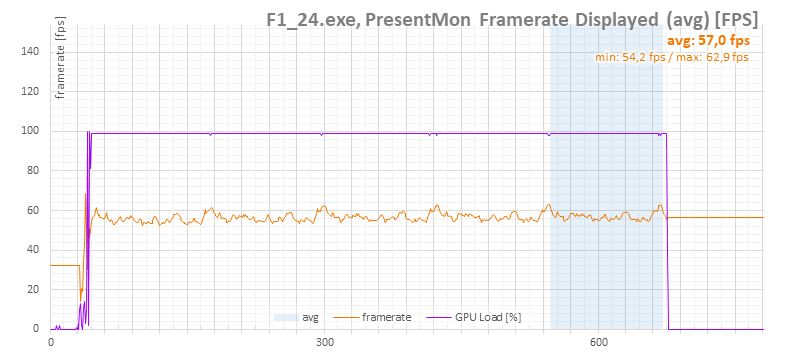
The average GPU clock is slightly lower than in Cyberpunk, with a minimum of 2760 MHz, maximum of 2797 MHz, and an average of 2783 MHz.

The card’s power draw according to monitoring is a little lower still, while in 4K it is only tenths of a watt below 180 W.

The average temperature of the warmed-up chip is at a maximum of 66.9 °C according to monitoring, with memory reaching 64 °C.
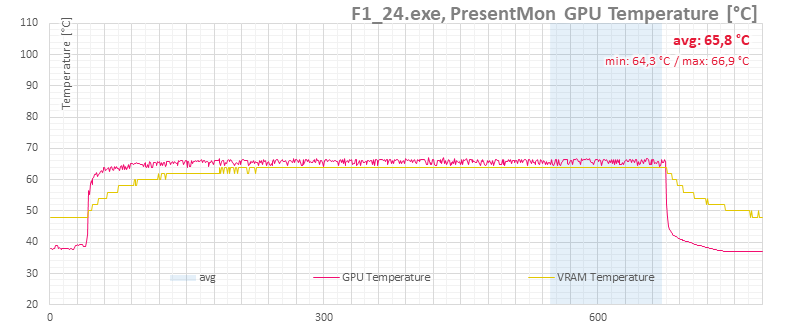
Fan speed at maximum was somewhat higher than in Cyberpunk, around 2300 RPM.

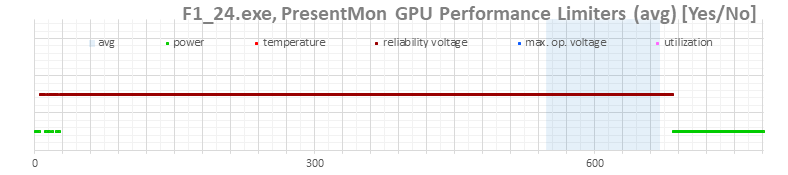
According to monitoring, GPU Boost hits the GPU’s reliability voltage limit throughout the load.

⠀