Axagon. Where did it come from, and why?

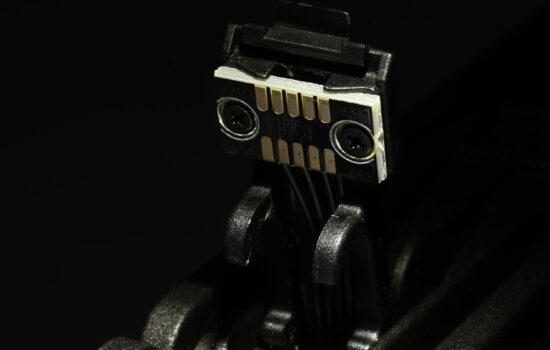
When people hear “PC hardware,” most imagine processors, graphics cards, or motherboards. Axagon operates in a less conspicuous but highly practical space between the computer and everything we need to connect to it, expand it, power it, or cool it. Covering current trends around USB‑C, docking stations, data backup, external SSD enclosures, and laptop accessories… Read more “Axagon. Where did it come from, and why?” »

ID-Cooling AM-120-K: Bet on an Elegant Geometry

It has exactly the elements that make an inexpensive fan aerodynamically efficient and acoustically unobtrusive. Or rather, not too obtrusive—at least at lower, non‑high speeds. At higher speeds, every fan is “noisy,” but making a low‑cost fan that can still be described as pleasant to the ear is already something of a feat. We can, however, state that ID‑Cooling has achieved this with the AM‑120‑K model. Read more “ID-Cooling AM-120-K: Bet on an Elegant Geometry” »

Instinct MI455X and the Helios Rack: Can AMD beat Nvidia in AI?

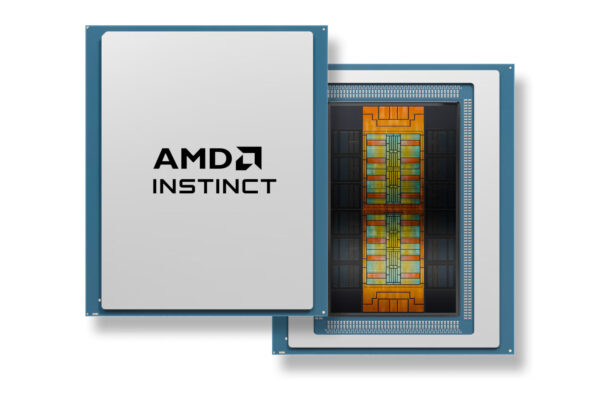
AMD unveiled Zen 6-based server processors at the Advancing AI 2026 event, dubbing them the best generation it has ever released. The company is focusing on complete solutions including its own Helios server racks, though, which incorporate a new generation of GPUs: the Instinct MI455X, the first GPU based on an architecture derived from the RDNA gaming GPU family and a product that is intended to take AMD to a new level in the AI market. Read more “Instinct MI455X and the Helios Rack: Can AMD beat Nvidia in AI?” »

China Getting Their Own Chipmaking Machines—But No EUV Yet

Technology sanctions—like those imposed on China—are often criticised as something that compels affected states to develop self-reliant alternatives, boosting their economy. It is not that simple, but China now appears to be making progress in its efforts to make its technology industry self-sufficient and capable of manufacturing everything domestically: not only locally fabbed chips, but also machines for making them. Read more “China Getting Their Own Chipmaking Machines—But No EUV Yet” »

Selection of Older but Still Relevant Tests (Part 4)

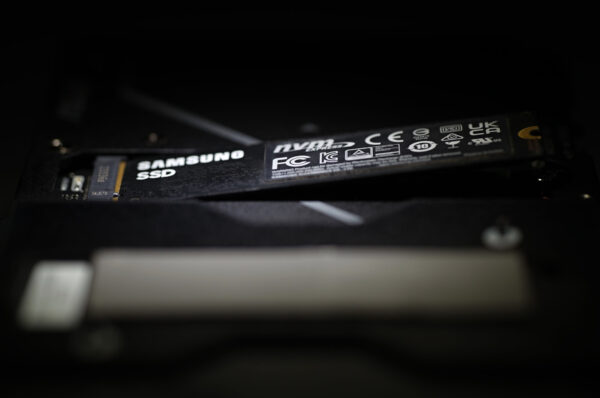
HWC has published several analyses that deserve to be revisited. Although they are not from today—or even yesterday—we still consider them useful in practice. Whether it concerns comparative tests of different case designs (from relatively conventional mid-towers to fully passive solutions), a large overview of SSD coolers, or an examination of how an inexpensive CPU cooler copes with changing thermal loads. Read more “Selection of Older but Still Relevant Tests (Part 4)” »

How Does a Processor Work? Intended for Secondary Schools

The processor, also referred to as the central processing unit (CPU), is the most fundamental and the most important part of a computer. It is the part that executes all tasks (instructions) that are fed to the computer through program code. At the same time, peripheral devices, RAM and storage (hard drives, SSDs, oreven tape in the past) are connected to it in various ways. It is therefore truly the central element of a computer. Read more “How Does a Processor Work? Intended for Secondary Schools” »

Need new PC fans? Win a three-pack of Arctic P14 Pro A-RGB fans

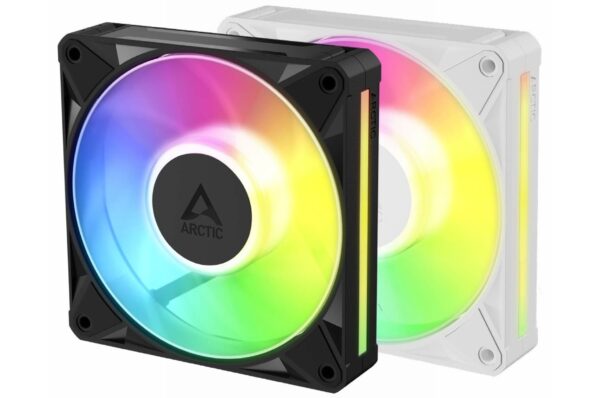
A fan giveaway is finally here—and there are three of them up for grabs (a three-pack), with exceptionally attractive key characteristics. These are also illuminated variants, which may appeal to some users. Those who are less fond of RGB LED lighting can simply leave it disconnected and keep the fans in the dark. Well, relatively speaking, given that you are competing for the bright (white) version of the Arctic P14 Pro A-RGB fans. Read more “Need new PC fans? Win a three-pack of Arctic P14 Pro A-RGB fans” »

Nvidia unveils its most powerful GPU yet: 3nm Rubin for AI

Presenting at SIGGRAPH 2026, Nvidia has revealed more details about its latest upcoming GPU generation—Rubin. We are talking about the Rubin GPU for data centers and artificial intelligence though, not gaming graphics cards. The Rubin AI accelerator will be more important to Nvidia, though, as it promises the company hundreds of billions of dollars more in revenue from various firms hoping to establish themselves in the AI sector. Read more “Nvidia unveils its most powerful GPU yet: 3nm Rubin for AI” »

Selection of Older but Still Relevant Tests (Part 3)

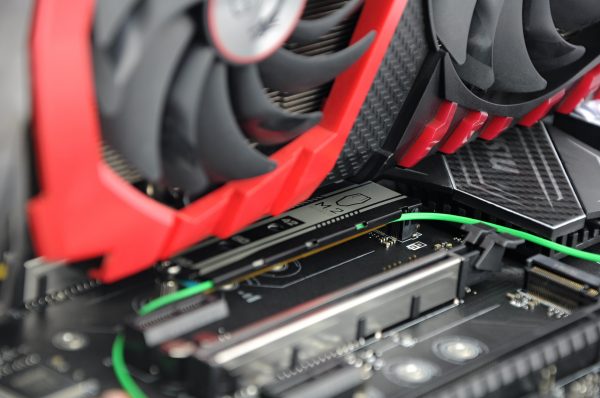
HWC has published several analyses that deserve to be revisited. Although they are not from today—or even yesterday—we still consider them useful in practice. SSD below the graphics card or above it? How much can mounting pressure affect cooling performance, and does a thicker thermal pad really mean higher temperatures for the critical component?That’s what we covered in the tests featured in this article. Read more “Selection of Older but Still Relevant Tests (Part 3)” »

Dark Power 14 (ATX 3.1) PSU up for grabs in summer giveaway

We’d like to give one HWCooling reader a BeQuiet! Dark Power 14 power supply. We’ll do it through a very simple competition, so let’s get right to it. There aren’t that many highly efficient power supplies (with an 80 Plus Titanium certification) featuring a quiet fan. In this giveaway, however, you can win one if you correctly answer the question in this article. So let’s get started! 🙂 Read more “Dark Power 14 (ATX 3.1) PSU up for grabs in summer giveaway” »

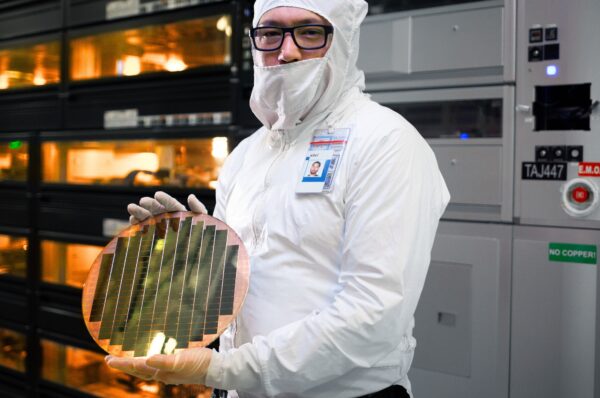
Intel resumes investing in EU. Ireland will get a 3nm node Fab

Under Patrick Gelsinger, Intel planned to build its first semiconductor fab in continental Europe, in Magdeburg, Germany to expand the company’s manufacturing capacity and turn Intel into a foundry rivalling TSMC. The project was also intended to help develop semiconductor manufacturing within the EU. Intel’s financial difficulties and cutting costs was the end of the project, but it seems Europe investments are back on the table now. Read more “Intel resumes investing in EU. Ireland will get a 3nm node Fab” »

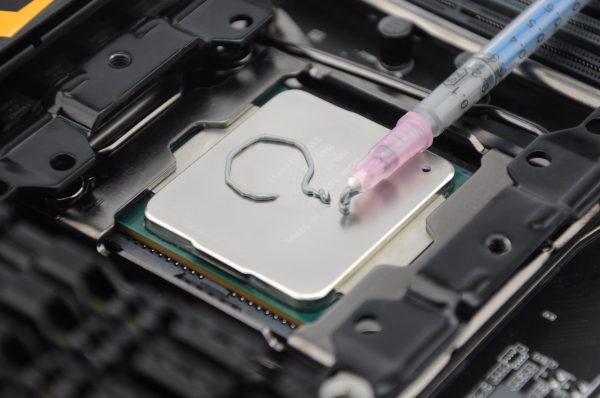
Selection of Older but Still Relevant Tests (Part 2)

HWC has published several analyses that deserve to be revisited. Although they are not from today—or even yesterday—we still consider them useful in practice. What is the best way to apply thermal paste? Which technique should you use, and how much paste? What about SSD coolers—which of the available models is the most attractive? And how can you improve SSD cooling with small heatsinks originally designed for VRAM? Read more “Selection of Older but Still Relevant Tests (Part 2)” »

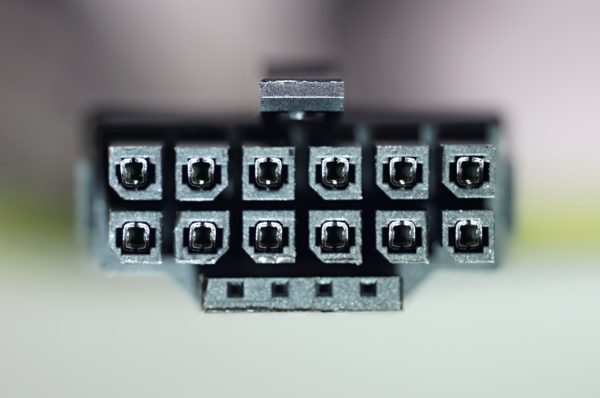
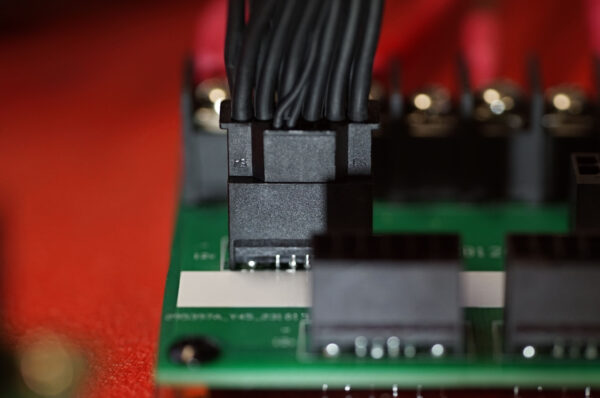
Even a Temperature Sensor Failed to Prevent 12V-2×6 Cable Melting

The new 12VHPWR—later renamed to 12V-2×6— power connector is plagued with persistent reliability issues involving random overheating, melting, and even burning ever since Nvidia graphics cards adopted it. Since then, every conceivable company—that notably not including Nvidia itself—has been trying out various workarounds. However, it seems that the connector’s tendency to fail is so consistent that even thermal protection cannot stop it. Read more “Even a Temperature Sensor Failed to Prevent 12V-2×6 Cable Melting” »

Selection of Older but Still Relevant Tests (Part 1)

HWC has published several analyses that deserve to be revisited. Although they are not from today—or even yesterday—we still consider them useful in practice. Does replacing a PSU reduce coil whine? We did not observe that, at least not to any significant extent. Thermal imaging of 16-pin PCIe connectors? We’ve got that too, along with measurements of different case fan layouts and airflow distributions (including airflow intensity). Read more “Selection of Older but Still Relevant Tests (Part 1)” »

BioniX (P) now with seven blades, smarter daisy-chaining

Arctic’s new BioniX fans, which adopt a seven-blade geometry, just like the “base” P1x A-RGB models, are nearing release. Based on the results of the older BioniX “P” fans, it can be assumed that aerodynamic efficiency will be higher this time. Alongside the fans, Arctic is also preparing a fan hub to which they can be connected. The method of daisy-chaining one fan to the next is innovative as well. Read more “BioniX (P) now with seven blades, smarter daisy-chaining” »