


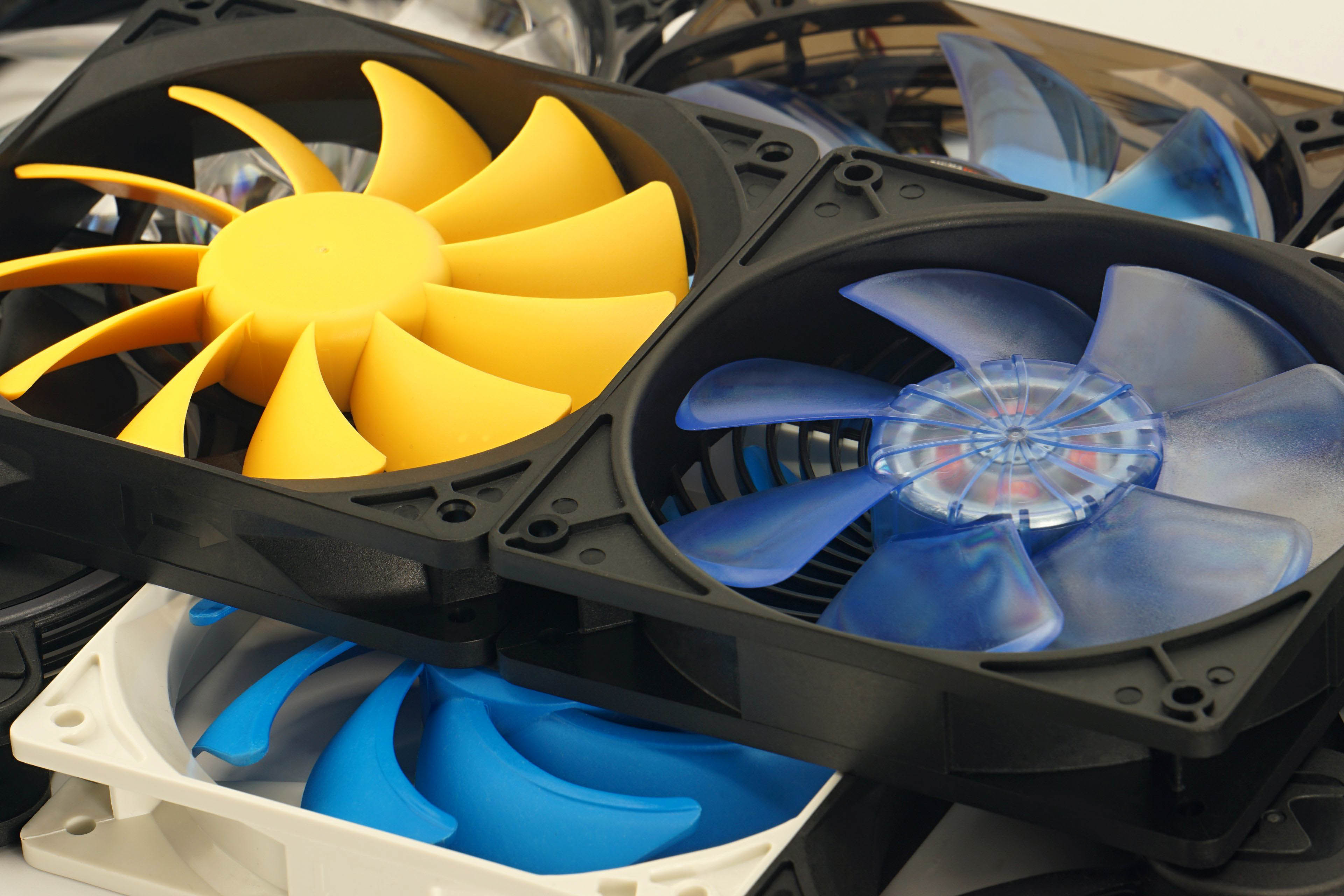
Too inaccessible for “ordinary” readers? That is how our fan testing is sometimes described, and we understand why. That is exactly why the following initiative exists—we will try to ensure everyone can quickly orient themselves around which of the many available fans makes the most sense under specific circumstances. More expensive, cheaper—there is room for everything. And of course, you can also ask questions.
The primary purpose of fan testing on HWCooling is to help users decide which fan model is best suited for which scenario. Whether the priority is the lowest possible price, or price matters less and maximum cooling efficiency is the top concern—or anything else entirely. In the following text, we will try to cover everything as comprehensively as possible based on the thousands of data points gathered from testing. And we will do so in the most “human” language possible, so you know which fans to put into your computer even if you are not an enthusiast deeply invested in the topic.
Concepts such as fans designed for “airflow” versus “static pressure” do not necessarily lead to the desired outcome. Even though these are fundamental fan parameters (and we previously covered them in detail—airflow and static pressure), they fall exactly into the category this article is trying to avoid—overly difficult explanations that make understanding the truly important factors behind choosing the “right” fan more complicated.
Case fans? CPU cooler fans?
Although we cannot predict which specific fan is the most attractive choice in every situation (and believe us, nobody can say that with certainty), measurements involving dust filters, grills, or radiators can provide useful guidance. The first case (filters and grills) better illustrates system cooling scenarios (meaning “case fans” responsible for airflow circulation around PC components), while the second (radiators) reflects use on cooler heatsinks, whether tower coolers with heatpipes or radiators used in AIO liquid cooling systems.
Which to use on a cooler…
Choosing a single model would be extraordinarily unfair. Regardless of price category, there are multiple technically extremely attractive fans. These earned the HWCooling editorial “Top-notch” award, and among 120 mm models, the list certainly includes the Asus ProArt PF120, Noctua NF-A12x25 G2 PWM, and FD Momentum 12 (RGB). You will probably find additional models worthy of inclusion as well.

And those are only 120 mm fans. There is also the Noctua NF-A14x25 G2 PWM, Phanteks T30-140, FD Momentum 14 (RGB), and Thermaltake Toughfan 14 Pro if the goal is saving money. Budget-oriented models are also strongly represented by Arctic’s “P Pro” series, whether the P12 Pro (ARGB) or P14 Pro (ARGB), or alternatively the Endorfy Stratus. A useful guideline (for 120 mm models and for 140 mm models) is also the price-to-airflow ratio.

… and which model to choose for use in a case?
RGB lighting is a deciding factor for many users, and when it comes to uncompromising fans, yes—we once again have to highlight the Fractal Design Momentum 14 RGB, which we even described at the end of 2025 as one of the year’s biggest surprises. Beyond that, virtually all fans recommended for coolers can also be considered suitable. If airflow through a heatsink is high, it is usually similarly effective through dust filters as well. And if you want to spend less money on fans, there is again Arctic or Endorfy.
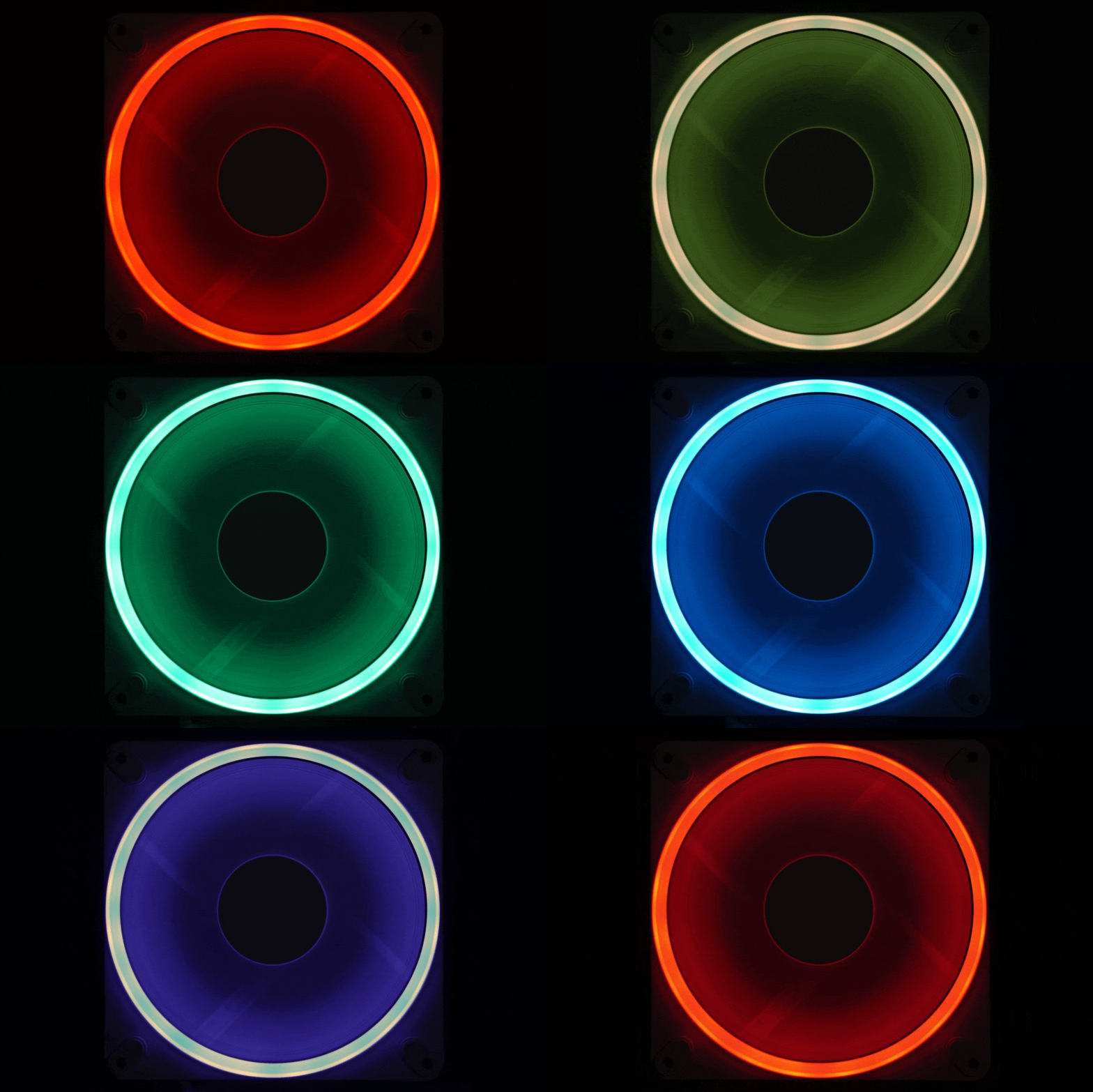
And if you do not need RGB lighting, then options such as the BeQuiet! Silent Wings Pro 4 come into play—or variants without the “Pro” designation. And there are many more possibilities…
…also dangerous in the best possible sense of the word is the DeepCool FD12 V2 fan.
Which fans are better avoided?
To avoid painting everything in overly bright colors, there are also several fans that failed to defend their position in our tests and received the negative editorial award “Stay away.” These include the “S” Noctua NF-S12A fans (and all variants sharing the same aerodynamic design), as well as the NF-S12B-redux. Despite the widespread belief that these fans are excellent for system positions—and despite Noctua itself supporting that view—newer models outperform them in all well-measurable aspects.
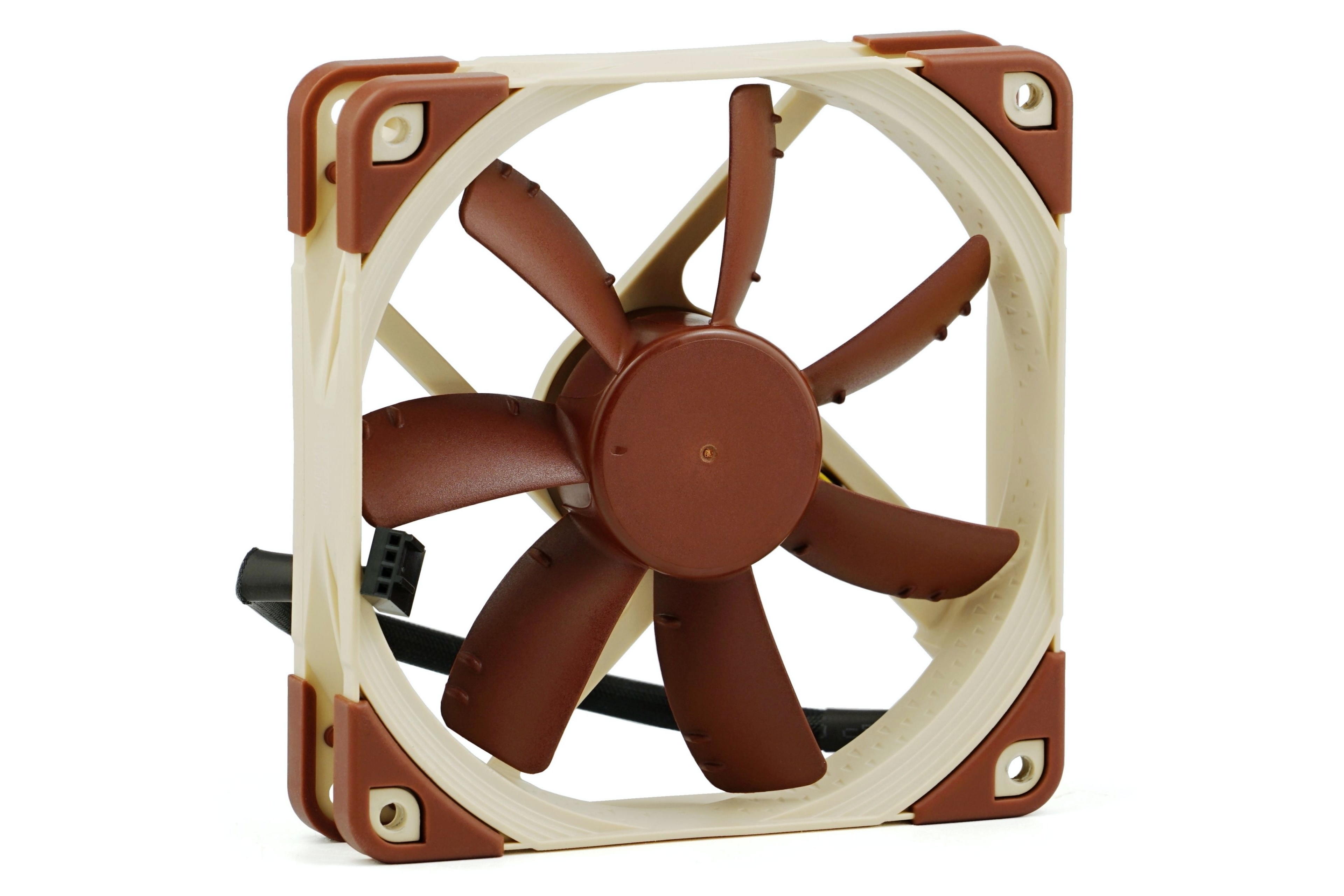
We also did not praise the BioniX F120 very highly (Arctic abandoned this “F” design quite some time ago… including for use on coolers, where these fans are no longer found), nor the SilverStone AP123. Neither of these fans is sold anymore today, so you will probably not “burn yourself” on them.
If you would like advice for a specific situation, feel free to leave a comment below the article and we will gladly help as best we can.
And what experiences do you have? 🙂
English translation and edit by Jozef Dudáš


I’d say it’s either Noctua latest flagship or budget Arctic P series, things in between won’t make much sense, and some will be even more expensive than Noctua while not providing any benefits
There are probably some alternatives out there, but yes, Noctua and Arctic fans will most likely be… more widely recognized. 🙂
high sample size and wide availability certainly speak for Arctics here, it’s very likely there’s something comparable to them at a similar price, but I don’t think I ever heard of such a model
well, maybe SPC/Endorphy something, but they raised prices and are attempting to be more premium than in the past, a decade ago they were taking a solid spot on the budget market, but as a local brand that wasn’t a real option to recommend globally anyway
and on the other end of the spectrum with latest A-series fans maybe T30-140 has place, but T30-120 remains the bruteforce approach only as at the low noise end G2 caught up
Maybe something from Thermalright could achieve better cooling performance at a lower price point than Arctic fans? 🙂
can’t rule that out, but recommendations frequency and availability seems to be on the Arctic side
and at budget availability at your local store/free shipping goes a long way, I may pay extra to get Noctua flagships and accessories (most stuff is only at Amazon) but when the fan costs as little as a mounting kit you don’t wanna pay for the shipping, do you?
Sure, it can vary from region to region, especially once shipping costs are taken into account. To be honest, I don’t really know how the pricing compares even without considering shipping, although I do remember coming across some exceptionally cheap Thermalright fans somewhere… probably in some sort of bulk pack?
Of course, even in this case it’s important to consider things like aerodynamic properties, bearings, and who knows what else—there’s more to it than just price. 🙂 And yes, the availability of Thermalright fans is rather weak, if not poor, here in Slovakia as well. We’re simply operating in different markets, haha.
To even get access to Thermalright products for testing, we have them forwarded to the lab through an acquaintance of a colleague in Germany. It may sound crazy nowadays, but that’s really how it is. 🙂
Of the fans we haven’t tested yet, which models do you think have the potential to really shake things up? 🙂
Probably not the first time I request it, but NF-P14! Mostly to see how fans have moved forward from the early days of 140’s and when something as highend, enthusiast fan was forming. Also there’s high potential for rare Stay Away badge… but I would guess that P14 hold up the best from all still sold Noctua’s ancient fans.
The Noctua NF-P14 fans fall into the category of ‘we’ll definitely test them one day,’ but at the moment, I have to admit they’re not on the immediate agenda. 🙂 I’d also be interested in seeing their results, but even in this case we have to respect our limited testing capacities if we want to keep moving forward.
It’s good to hear that 😉 Bartosz Szwedkowicz tested them in his review of NF-A14x25 G2 and P14s end up not that bad, especially among strong competition he provided. Add usual Noctua’s advantages like reliability, more than averagely pleasant acoustics and long warranty and I can understand people still buying this fan. I wouldn’t buy, because they lack the most imporant here performance when being not that much cheaper than plenty of good fans, but I understand such people and rest of my view you already know.
In terms of relative rankings, the Noctua P14 fans may appear more attractive than the Noctua P12, since there are fewer 140 mm fans overall. The selection is smaller, and therefore there are probably only a handful of truly top-tier options—unlike the relatively large number of different 120 mm fans available. :)”
Xilence Performance X (XPF120X.B.PWM) is cheaper than Arctic, and probably for a reason. But I’d like to know _how_ bad it is.
Corsair RS120/RS140 Max are said to be very good. The models without Max are thinner, have no LCP, and are said to have some noise problems, but I am not able to find any good reviews of them.
Cooler Master Mobius is quite different from the OC version.
Thanks for the suggestions. I wasn’t familiar with the Xilence fan (XPF120X.B.PWM), but we’ve already added it to our notes. I don’t think it will be ‘bad,’ but in terms of aerodynamic characteristics, the Arctic fan has all the prerequisites to outperform the mentioned Xilence model.
That said, the Xilence XPF120X.B.PWM will certainly still function—in the sense that it will move some air around. 🙂 How ‘good’ it actually is, we probably won’t find out anytime soon, since we’re not in contact with Xilence and therefore won’t easily get samples of these fans.
Yes, the slower variant of the Cooler Master Mobius 120 could, for example, have a lower minimum speed than the OC variant, which is also suggested by tests of the MasterAir MA824 Stealth cooler. That cooler includes the Mobius 120 fan, while still allowing it to be regulated down to quiet operation. 🙂
And yes, the Corsair RS120/RS140 Max are also very good candidates for testing. Hopefully we’ll gradually get to those as well. The number of things worth testing simply exceeds our current capacity to cover them all. 🙂
Can I just send you a bunch of fans?
You’re welcome to send the fan samples, but I don’t really see it as the ideal solution. One thing is that for any testing we obviously need to have physical samples available, but there’s also another issue—time capacity.
In other words, even if the fans arrive at the test lab, I’ll only be able to work on them after finishing the current backlog, which is already fairly large. Once that’s done, we can start queueing up additional things for testing, but it won’t happen immediately, and I’d rather not commit to anything prematurely to a reader.
When the time is right, we would, as always, request samples from the manufacturers or buy them ourselves (which would probably be the case with Xilence). Still, my email address, where I can send the shipping address, is samak@hwcooling.net.
That said, what I wrote above still applies—it’s possible (and likely) that we’ll only get to it later. I’d like to believe it could still happen this year, but… 🙂
tl-s12w (and other Thermalright offerings). Absurdly cheap for how absurdly good they seem to perform in some tests.
Also the Phanteks M25G2 series seems to be interesting.
I am also in favor of the TL-S12W, as I already stated on the SK version of the site. 😉
https://www.hwcooling.net/aky-kedy-vybrat-ventilator-od-premioveho-po-lacny/#comment-16102
… it achieved very remarkable results, especially considering the price, here:
https://youtu.be/5lpVUQAobE8?t=337
Those are excellent suggestions for fans to test, thanks for them! We’re in contact with both Thermalright and Phanteks, so I believe that sooner or later we’ll get our hands on those fans as well. 🙂
My take on the subject, the fundamental matter of how much is worth to spend, is premium fans being for ones wanting reliability and ones who used to complain about fans, mostly acoustically-wise. Fans differ in how long they keep working like new, start making noises or die, and even running the same loud – measured in dBA – they largery differ in how irritating their sound is.
And there’s the least obvious lifehack for ones who can’t decide – just buy the lastest Noctua fans 😀 They are performant, no competition over-engineers fans more what means Noctuas are the most likely to satisfy you and they’ve got quality to last you until the launch of successors around ten years later. Adding majority of builds not needing more than three fans, few of these ”painfully expensive” units once a decade isn’t that much to many and will serve you better than anything else.
Interesting idea, but finding a preserved original will be quite difficult,
…the original NF-P14 ended about 10 years ago, 😉
it is now only sold in the Redux version …there will probably be minor differences 😛
edit:…ups, wrong thread
Redux ones are still sold and they’re what I meant 😉 Not sure if they differ from original ones with anything more than color or speed, but blade geometry stays the same and that’s the most important :]
blade geometry is enough for performance testing, but noise may be vastly different
If the fans differ in speed ranges, then they use a different motor… and even just changing the color of the material the rotor is made from can slightly alter the characteristics. Of course, these differences are usually negligible, but… naturally, the foundation of aerodynamic design lies in the geometry itself. 🙂
I’m not sure how it works nowadays, but historically Noctua had some sort of ‘archive of older products.’ Back in the ExtraHardware.cz days, they definitely sent over an NH-D14 sample for comparison with newer models even after it had already reached EOL status. 🙂
Comparing the NF-P14 fan with the NF-P1 redux variant could be interesting not only because of the different materials, but perhaps also due to the use of different motors? To be honest, I’m not sure whether that’s actually the case. 🙂
Knowing Noctua’s standards of anything, they still have this archive and would likely send you unit never used 😀 Or I wouldn’t be surprised if they keep such stuff, fans and heatsinks for users even long after warranty period contacting them and not wanting Redux – a little different fan like color, speed and such.
Haha, it will definitely be a brand-new, unused unit, even if it’s an old and discontinued component. We should ask them sometime how they handle these things. 🙂
This ”archive” sounds great, but realistically it’s pretty common for companies to stock spare components and if there’re no space constraints, they’re likely to store some old ones. Having unpacked units of D14 or some old fans would be just higher level. But about asking, that’s a good question and some time ago you were collecting such to ask Noctua in case of some interview or article. It’s quite interesting topic and I would add asking if they are still able to produce all of their discontinued products in unchanged form if needed and if such needs happen.
Of course, we can include your question (together with the addition you mentioned) in the next interview we do with Noctua. I’m not counting the June Computex-related content, but rather the next interview of that kind afterward. 🙂
Very nice! And also can’t wait for your Computex coverage. Noctua, Thermalright, be quiet!, Fractal, Lian Li, Phanteks and Endorfy, please! (if all of them participate and I guess with at least the first three no requests are needed :])
We’ll definitely stop by the Noctua and BeQuiet! booths—we already have meeting times arranged there. If you have any questions, feel free to let us know… we’ll ask about whatever you consider interesting. 🙂
As for the others you mentioned, I’m not sure yet. We emailed Thermalright and Phanteks, and we’ll see how things work out. Fractal Design is a bit different… they weren’t physically present at the exhibition last year either, and they probably aren’t too interested in sharing the kind of information that would allow us to create a detailed, information-rich article. I don’t know…
We’ll see about Endorfy. It will depend on available time capacities. Besides the companies already mentioned, there are many other things planned during those three days that we also need to manage.
By the way, we’re not in contact with Lian Li at all, which is why results for their fans are missing from our database. We would certainly be interested in getting samples of the P28 models, but… 🙂
In my previous post I just wished for you simply going to their booths or hotel, seeing what they exhibit and making some photos, but arranged meetings with questions is something even better… and I happen to have some to ask :>
To Noctua: How about refreshing their smaller coolers? On one hand I think that buying Noctua cooler is buying the flagship to use it for a decade or two, all this time it serving better than weaker ones and more likely being enough, but there’re people with space constraints or some die hard low-power users for whom D15 would be an overkill to the point of absurd combined with unconvenience of big, dual tower cooler. Both U12S and U14S are perfect coolers for majority of users and no Noctua cooler needs being refreshed more than these two, especially fan-wise.
To be quiet!: Do they plan to come back to their roots and deliver some new silence-focused, sound-dampened cases? Airflow cases or fishtanks are nice, but they not only do nothing with noises, but expose them.
And if you happen to talk with Thermalright: Where is something to finally beat D15 G2? We wait almost two years already…
There will probably be plenty of the type of photos you’re describing from Computex elsewhere besides HWCooling. Since we’re already going there, the plan is to gather valuable information that you won’t easily find elsewhere. 🙂
We’ll ask Noctua about smaller coolers and… we’ll see what their plans are. Just to clarify: by smaller, do you mean models using 92 mm fans? Or those using only a single fan, such as the mentioned NH-U12S and NH-U14S models?
BeQuiet!—sure, we’ll ask. My guess as to why they moved away from sound-dampened cases is that it’s related to declining HDD usage among mainstream consumers. And therefore there’s less demand for sound-insulated cases as well… 🙂
Isn’t the Thermalright Frost Tower 140 supposed to compete with the Noctua NH-D15 G2? 🙂
There will probably be plenty of the type of photos you’re describing from Computex elsewhere besides HWCooling. Since we’re already going there, the plan is to gather valuable information that you won’t easily find elsewhere. 🙂
We’ll ask Noctua about smaller coolers and… we’ll see what their plans are. Just to clarify: by smaller, do you mean models using 92 mm fans? Or those using only a single fan, such as the mentioned NH-U12S and NH-U14S models?
BeQuiet!—sure, we’ll ask. My guess as to why they moved away from sound-dampened cases is that it’s related to declining HDD usage among mainstream consumers. And therefore there’s less demand for sound-insulated cases as well… 🙂
Isn’t the Thermalright Frost Tower 140 supposed to compete with the Noctua NH-D15 G2? 🙂
Not sure why I can’t reply under your post below, so let’s do it here.
You are right with delivering something more than just photos or stuff we will find everywhere, but I just wanted to say that I don’t demand from you that much. I would love to see it, though :>
About Noctua, I mean regular single tower, rather one fan ~160mm coolers like U12S and U14S.
Btw, I always considered U14S as a great concept of a cooler, one best after dual tower one and wonder why they’re not popular anymore. Years ago mainstream cases stopped obeying industry standard of 160 mm clearance for CPU cooler, so even height is less of a problem as it used to be. It’s a big, capable heatsink, but one thin, so making things easier for a fan and this fan being big enough to more than cover it, but also ventilate CPU socket surroundings too. And it all in clearance friendly form.
Probably due to people preferring cheap dual tower coolers and not undestanding that it gets them two, so likely lower quality fans and performance edge they will never see on their mainstream CPU.
About sound-dampened case, we don’t need them to mitigate HDD noises that much as we used to, but that’s far from all they offer – they dampen whatever noise, so make it more pleasant to the ear and quieter or even inaudible. Pcs are still full of noises like coil whine, fans and their bearings or pumps and such cases largery help with them. They also make computer sound less intrusive as a whole.
With Thermalright, I’m not sure Lubo – isn’t this cooler one from their few beating D15 G2 by one degree in one review to lose with it by two in another?
It seems to me that it will be hard to move above D15 G2 performance noticeably – more than one or two degrees – without increasing the sizes of heatsinks and fans, but two years passed and it looks like Thermalright is in the same place as they were with Phantom Spirit three years ago.
I honestly have no idea how the Frost Tower 140 compares to the NH-D15 G2 in terms of cooling efficiency. It just occurred to me that it might perhaps be the competing product in that space—I’m not sure. 🙂
Yeah, it’s probably possible that the FT140 hasn’t really moved forward compared to the Phantom Spirit in this regard. I don’t know, I wouldn’t want to make any claims about it. And just to finish on a side note—the Silver Arrow SB-E was fantastic back in its day, haha. That much I do know and can judge based on my own testing. 🙂
I confused this Frost Tower 140 with Pearless Assassin 140, Phantom Spirit 140 or something like that 😉
Now I tried finding some review and there’s just one by WELSHYTECH. The guy is awesome, but results claiming that FT 140 beats D15 G2 on 7900X by up to seven degrees seem quite unbelievable, even if it would be HBC…
Have fun during Computex (I assume you being there) and know that every year I wait for Computex as I used to wait for Christmas when I was a kid 😀 So I’m that excited to see HWCooling’s coverage!
Assuming the same characteristics of the heat source—meaning the processor—it does indeed seem rather strange. Even if this were under high CPU power draw with aggressive PBO settings. One possibility is that the difference in heating really does exist, but under different power consumption levels pointing to different scenarios. If one cooler has different cooling performance, I can imagine a scenario where lower CPU core temperatures are achieved. Of course, it may also work the other way around. Higher temperatures within a CPU cooler, as bizarre as it may sound, can also indicate higher cooling performance—or rather, that the cooler is capable of dissipating larger amounts of heat. That’s also why, in CPU cooler testing, we measure not only temperatures but also CPU power consumption and frequencies. We consider these parameters extremely important when evaluating a CPU cooler in order to build a complete picture.
Hmm, it’s actually been quite a long time since our last CPU cooler review—we need to get back to it. 🙂
By the way, we won’t only be at Computex—while in Taiwan, we’ll also visit factories and headquarters of some manufacturers and brands. We’re starting with Cooler Master. 🙂
Thanks for your perspective. Yes, I generally agree, although I don’t consider it entirely fair to spread the idea that ‘Noctua fans have the best characteristics’ and that everything else comes only afterward.
Of course, with Noctua’s latest fans it’s hard to go wrong, but there are other alternatives as well. I understand that the average user probably won’t spend time digging through all of them and will simply choose something familiar—and that will most likely be a Noctua fan.
Thanks to their deserved reputation built through technical support, PR, and actual physical performance results, they understandably have probably the best name recognition among users out of all available options.
Buying the latest and greatest Noctua fan is just an expensive shortcut to end up satisfied.
And I think it used to and it is now fair to consider their latest fans – today NF-A12x25 G2 and NF-A14x25 G2 – as overally the best and anything else coming afterward. To be clear, overally is what matters here and overally also means not being unpleasantly suprised by something man didn’t think of.
Because which other fan can be considered as good as latest Noctua flaghips in any aspect you can think of? I don’t even ask about one being better 😉
I probably wouldn’t talk about which fan is more attractive in certain aspects, but rather about equivalent models with comparable characteristics. And we consider those to be the models mentioned in the article.
Compared to the NF-A12x25 G2, those would be the ProArt PF120 or the Momentum 12, and perhaps the Sudokoo would fit into this category as well in terms of impeller aerodynamic efficiency.
In the case of the 140 mm NF-A14x25 G2, the competition is smaller, but something like the Momentum 14 RGB is definitely a strong challenger. 🙂
see
A perfect reference sheet to keep bookmarked for the next system upgrade. The fan market is so oversaturated with flashy marketing and RGB hype that it’s refreshing to see a structured look at actual bearing quality, acoustics, and budget tiers. This saves a ton of trial and error!
The Cooler Master MasterFan A or the Fractal Design Dynamic 3? Which of these fans interests you more ? The goal is to get both into testing, but if you had to set a priority and pick one that we should test first? 🙂
Not long after my initial post here, Dynamic 3 dropped and for like a day I wanted to request them! But I wouldn’t be suprised you’ve had them in the lab already.
If not, Dynamic 3-14 Black, please :>
We don’t yet have samples of the FD Dynamic 3 fans in the test lab, and that situation may not change anytime soon. Of course we want to test them and add them to the database, but the question right now is whether they’ll take priority over the Cooler Master fans with aluminum blades. Those are still currently ‘in the lead,’ so to speak, haha.
Both seem interesting fans, so I wouldn’t feel bad if CM was tested first, but I would guess Fractals being more worthy addition to the market. I would expect them to be basically ”cheaper Momentum”, so similarly chart-topping performance and quality reduced to balanced level, but far from bottom of the barrel. They seem to look exactly like Momentum, but without notches, lacking LCP and using riffle bearing (doesn’t such get louder ever time?). The most interesting here is how big of a difference all of these downgrades do.
Adding costing 12-17 euros and coming in plethora of aesthetic variants seem like the fans to rule mid-range, but we will see…
The FD fans are more affordable while also relying on an attractive aerodynamic design, which we already know from the Momentum series works very well. 🙂
I don’t know to what extent the type of bearing affects noise levels. It’s possible that it works the way you describe. But as I mentioned, I don’t have any actual findings on that. 🙂
With bearings, I just thought that getting louder over time is a nature of riffle, sleeve and ball bearings. Something unavoidable, so what should be considered when shopping for fans.
Getting – I assume – almost the same chart-topping noise efficiency of Momentum fans for half the price doesn’t seem such bargain if it’s sentenced do get worse over time and man can only guess how fast it degrades.
Higher fan noise is, of course, also influenced by the bearings. However, a significant portion of it originates from the aerodynamic characteristics of the impeller.
I wouldn’t dare estimate exactly how much comes from where—it will vary from fan to fan, and with every design the ratio between bearing noise and everything else (including aerodynamic effects) will be somewhat different. 🙂
That with impeller is new to me, so it’s great that you mentioned it, but I initially meant if it’s true that all sleeve, riffle and ball bearings wear out over time, resulting in their noise increasing? Or it depends?
Well, what you wrote is true in the case of sleeve and riffle bearings, but DBB (dual ball bearings) are the durable and temperature-resistant type of bearings. They may not have as long lifespan as some FDBs, but they are more resistant to harsh environments (temperature, high RPM)
That’s why they are used in server fans 😉
…but because of the sound, especially at lower RPMs, they (DBB) can’t access my PC 😀
Yes, the less aerodynamic noise there is, the more noticeable bearing noise becomes… or rather, at very low speeds, when aerodynamic sound no longer significantly characterizes the fan, the acoustic profile may be dominated primarily by things like the friction of ball bearings, for example. 🙂
I think increased noise is related to lubricant degradation and generally increased friction. Under such conditions, the bearings are probably noisier. I don’t want to go into too much detail on this topic because I don’t really feel qualified enough to do so. 🙂
I’m also not an expert here, but what you and Bufo said aligns with what I know, so probably it’s right :] There’s only one difference – I thought that noise of ball bearings also increases with them wearing out, but here it’s not related to lubricant, but mechanical wear.
And I feel you Bufo, fan which makes noises louder than it’s airflow is just a worse kind, also a no-go to me. Fansona non grata 😀
I think it makes sense, physics-wise. If ball bearings work on the principle of balls rubbing against each other, then usage could lead to small changes in geometry over time. And that might be what leads to increased noise—it simply won’t be as precise and perfect as it was at the beginning anymore…
But that’s just a layman’s perspective, and I really wouldn’t dare dig any deeper into the topic. 🙂
A heads-up from one of our readers about Chiphell tests:
https://www.chiphell.com/article-34909-5.html
The MasterFan A120 (the Cooler Master fan with aluminum blades) is included there, but I don’t know anything about the testing methodology. It’s probably described somewhere there and one would have to work through the Chinese as well. In any case, from the graph descriptions it’s clear that the testing was normalized to identical RPMs, and what immediately caught my attention was the leading position of the MaxFlow120. Sure, I have no doubt that it’s a decent fan, but I think it will only outperform Noctua NF-A12x25 G2 in this, sometimes significant way, at higher noise levels. In any case, yes—it would be fantastic and amazing to test it ourselves. 🙂
Hmm, in that case it looks like we’ll verify the MaxFlow fans by testing them ourselves. I don’t know exactly when yet, but it seems their samples will eventually arrive at the testlab.