



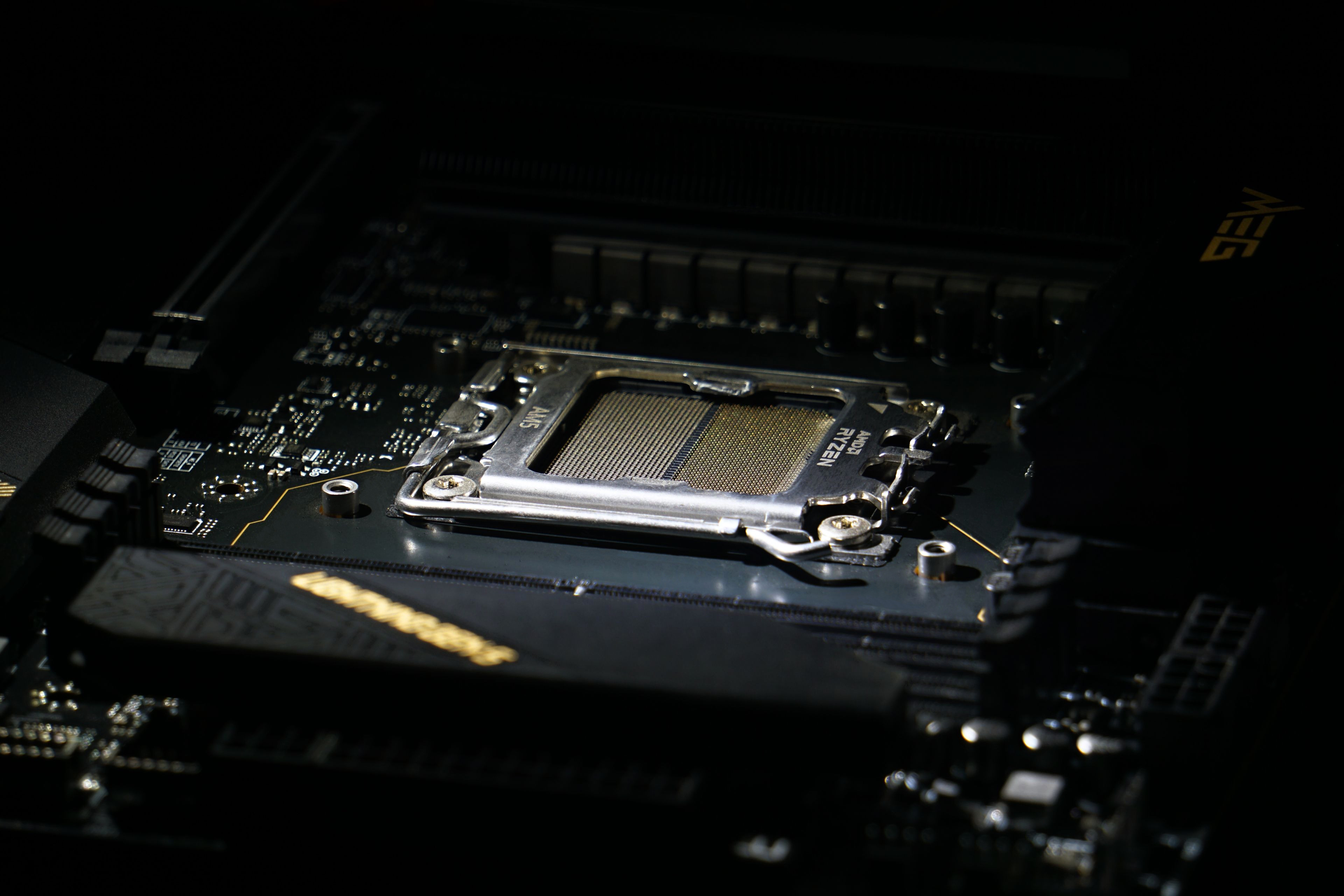
We haven’t tested modern motherboards for AMD platforms so far and all attention has been paid to boards with Intel chipsets. That will change now, at least for a while – more AMD X670(E) and B650(E) boards will be added to the tests, but the bar will be set high. We’re starting with MSI’s top-of-the-line MEG X670E Ace motherboard, which won’t be beaten by any other board “just like that”.
Conclusion
By far the best equipped board we’ve tested this year. At the same time, the MSI MEG X670E Ace is also the most expensive, but only by “pennies” compared to the Asus ROG Maximus Z690 Hero. The price comparison across platforms is rather unfortunate, but we don’t have other motherboards with AMD chipsets to compare yet. What we do have, however, is a bunch of test results based on which we can put the X670E Ace onto a pedestal.
The power delivery is absolutely insane (in the best sense of the word) and significantly oversized, even considering the needs of the most powerful processor you can currently install in this board. With the Ryzen 9 7950X with PPT at 230 W without VRM heatsinks, we measured only 56°C at the hottest point (on the voltage regulator), then 51°C on average. These are results that clearly encourage manual overclocking or with PBO. The MSI MEG X670E Ace won’t be a bottleneck, it’s going to be trickier with the cooling of the CPU itself (you can’t do without a proper custom loop). The power delivery of this board is very efficient and that includes the power management. The measured power draw on EPS cables with R9 7950X is “only” 218 W. You will see that the boards that we will gradually add will usually not perform this well and their price/performance ratio will be weaker.
We did not encounter performance deficiencies in any of the hundreds of tests. Perhaps only the speeds of the M.2 slots are below average compared to the Intel platform (Zx90/B660), and after testing the first board with an AMD chipset, it’s hard to conclude whether or not this is common on this platform. We shall see about this. While those speeds for M.2 slots are relatively lower, these are not major differences. The X670E Ace is dramatically above other boards when it comes to ethernet bandwidth. Thanks to the 10 Gb adapter support, we can report download speeds of around 1.1 GB/s. Upload is a bit slower, 955 MB/s. However, there may also be a bottleneck here in the network card of the second test setup.

The SSD cooler on the M.2 slot with PCI Express 5.0 support is one of the most efficient ones and its particularly quick installation, which requires no tools (just dexterous fingers) is also worth praising. The MSI MEG X670E Ace collects a lot of plus points for its outstanding features. In addition to the things we’ve already mentioned, there are two internal USB-C gen. 2×2 connectors with an additional power supply (to be able to deliver 60 W), eleven fast internal connectors, none of which are below the 10 Gb standard (3.2 gen. 2), and in addition to this, the expansion card positions for two M.2 SSDs with PCIe 5.0 support.
The above-standard fan connection and control options should also be highlighted: Eight connectors and seven temperature sources on which the speed development can be based, and finally, we will reiterate the main thing – the extremely robust power delivery and the overall efficient operation. That is, except outside of a load, where it is relatively high at 30 W. Whether this is due to properties of the board or the processor, we will find out later.
Although the MSI MEG X670E Ace is a perfect motherboard from a technical point of view, it is not a suitable hardware for everyone. For casual use, where you fit the processor, set the memory profile (EXPO) and don’t care about anything else, it is most definitely an unnecessary luxury no matter what processor you use. However, with this board, you won’t stumble with a build tuned for the highest performance currently available.
English translation and edit by Jozef Dudáš
| MSI MEG X670E Ace |
| + Extremely powerful 25-phase power delivery (VRM)... |
| + ... can handle an overclocked Ryzen 9 7950X with headroom |
| + Very efficient power supply management |
| + Low VRM temperature even at high power draw without heatsinks |
| + Effective VRM heatsink with much pronounced fins |
| + Four fast (four-lane) M.2 SSD slots... |
| + ... as much as six of them after counting the additional two on the included expansion card |
| + Up to eleven fast USB 3.2 gen. 2(×2) connectors on the rear I/O panel... |
| + ... and internally, two USB-C 3.2 gen. 2 connectors with additional power supply |
| + Extremely detailed fan management options |
| + High-speed, 10-gigabit network |
| - Very high price |
| - Smaller spacing of the first PCIe ×16 slot from the processor socket |
| Manufacturer's suggested retail price: 701 EUR |
Some of the tested motherboards are also available in the Datacomp e-shop

Special thanks to Blackmagic Design (for licenses for DeNoise AI, Gigapixel AI and Sharpen AI) and Topaz Labs (for licenses for DeNoise AI, Gigapixel AI and Sharpen AI)



I enjoyed reading this from start to finish. The real-world examples regarding Free Image to Video were very helpful.
The article is an in-depth analysis of a motherboard. The application you mentioned does not appear in it at all. 🙂