


Well, the time has finally come this year, as a few weeks ago Noctua introduced the long-awaited NH-D15 G2 cooler, which has seen years of development, optimizations, and delays. Expectations are so extremely high and I myself am curious if we will see a new king among coolers. A really interesting battle awaits us, because in the meantime, several high-end coolers have appeared on the market, which the NH-D15 G2 will have to beat.
Results – 39 dBA
Why is there a missing value in the cooler chart? Either because the cooler could no longer handle the load in the specified mode, or because the fan could not be slowed down to the required level, typically the mode with the lowest noise level. Then there are cases for which we did not test the cooler at 125 W at all (and the graphs only show the results of the higher thermal load, 210 W). This refers to “optional” cooler configurations with a modified fan setup that is different from the factory one (for example, having one fan instead of two, or having completely different fans mounted on the heatsink of the cooler).

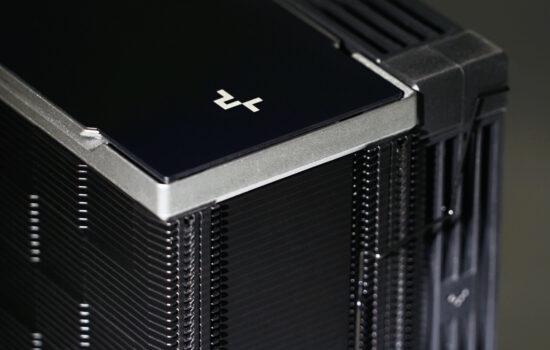



If you notice a rattling sound with your NH-D15 G2 (LBC/HBC) cooler unit, please know that this is not expected behavior. However, it can obviously occur to some degree, especially at higher speeds. Noctua’s official statement on this topic is as follows:
„First of all thank you very much for choosing our NH-D15 G2. We’re sorry to hear that you have encountered an issue with your unit. We’re still in the process of conducting a thorough analysis, but our preliminary suspicion is that you have received a heatsink where the interlocking of the top fin has loosened a bit, probably in shipping. In this case, the airflow of the fans can cause the fin to vibrate, which may result in slight rattling sounds. From our measurement, the acoustic impact of this is very small (<0.5dB(A)).
However, we fully understand that this is frustrating and we’re working hard to provide a solution to customers who are affected by this as soon as possible. As a temporary mitigation, we would recommend either putting a piece of tape to the side of the fins (where they interlock) or inserting a small piece of plastic or foam with ~1.8mm thickness between the top fin and second fin. Both measures should prevent the top fin from moving and thereby eliminate the sounds you hear.
As we’ve said, we fully understand that this is frustrating for you and we sincerely apologise for the inconvenience, so in case you don’t want to use these temporary mitigations until we can provide a customised solution, we can also offer you to return the cooler to us for a full refund. For both options, please contact us at support@noctua.at. Since we cannot rule out that the issue would occur again in transit, we cannot replace the heatsink at this stage.“
Can you elaborate on “resonance at around 1200 RPM”?
Also, I find it strange that at full speed, A12x25 + A14x25r G2 is quieter (48.6 dBA) than a single A14x25r G2 (50.3 dBA).
Hello and sorry for the mix up. We swapped two values when copy/pasting data from one table to another. In conclusion – 120/140 setup is the loudest while offering minimal difference compared to single fan mode due to unforgiving nature of noise normalized testing.
As for that 1200 RPM resonance. It was a low pitch humming, almost droning sound for a brief moment while I was regulating the fans from 48 dBA to 45 dBA levels. No “rattlegate” or anything similar, just low bass humming.
I would love if you could review some Thermalright coolers like the Phantom Spirit 120 EVO, and the upcoming Royal Pretor 130 and Royal Pretor 130 Ultra coolers
Thanks for the tips, I’m taking notes. 🙂
With Thermalright components it’s a bit more complicated. Because they have a weaker distribution on our market, which naturally discourages the PR representation of TR from sending samples. But it seems that things are on the right track and Thermalright realizes that the English version of HWC has a big reach and the tests can reach people all over the world. Last year we managed to get the HR-10 2280 SSD cooler for tests, now we are trying to get some fan samples (there, TR is also missing in the database, if we exclude the outdated X-Silent 120 model), and then it’s the turn of CPU coolers.
Looking forward, we will also change the testing methodology upgraded with new Intel (probably Ultra 9 285K) and AMD (probably Ryzen 9 9900X) processors and I definitely don’t want to miss Thermalright coolers in the comparison database. We just have to get our hands on them.
In my opinion, the methodology of cooler testing needs a complete revamp, not just only by using different processors. With a fresh start it would be wise to rethink what a cooler test should look like. With how modern CPUs work, I think there should be less of a focus on the temperature achieved, but rather on the performance/power.
Instead of finding the answer to “at what temperature does the CPU run at this power and noise level”, I think the more appropriate and relevant question to the user is “at what power/frequency can the CPU run at this noise level”.
Additionally, a very wide range of power should be tested if you’re trying to look at the behaviour of temperature (say, from 25W to 400W). Coolingtechnique’s approach of plotting the temperature while gradually increasing power throughout a single test makes the most sense to me (both in terms of the usefulness of the data and time-efficiency). I believe changing PL1/PL2/PPT on the fly without rebooting is possible and things might be able to be automated via a dedicated script. The same procedure should be done at different normalized noise levels (and max speed), and each step can be prematurely stopped when the CPU thermal throttles.
The temperature should also be monitored, but I also think and agree with you, that frequency and power are necessary for the whole picture.
…
However, cpu consumption above 300 watts (I mean standard desktop) is an abomination and disrespect to nature and there is no need to think about it (for me personally, even 300 is an unthinkable number)… even though, I know that Ľubo will also be interested in these levels.
I personally won’t use a 300W CPU either. However, the extra heatpipes on flagship coolers only start to really matter beyond 250W, so I think it’s important to evaluate that range if you intend to draw the full picture.
I am thinking in a similar way as you suggest. Three levels of power limits could be selected for each platform. Intel (Arrow Lake – Ultra 9 285K) 125 W, 253 W and no power limits (300+ W) and AMD (Ryzen 9 99x0X) then 142 W, 230 W and no power limits (PBO). Across the cooler modes set to comparable noise levels, three variables would be monitored – power/consumption (by current clamps), frequency, but also temperature.
Temperature comparison can be interesting in the lower power modes, where most and maybe even all tested coolers will have the same power consumption and the difference will be only in the temperature. So basically the traditional model that people are used to. In the higher power modes the achieved performance will be different depending on the cooling performance and the difference in consumption will be the guideline here (and the temperature would be only as a secondary indicator, for the sake of interest).
For completeness, there would then be a third figure, the average CPU clock speed. This could probably also be represented by a line graph, which would also track the time dependency. Such a graph could actually be used for the power consumption and the temperature as well. We just can’t overdo it as far as the time requirement is concerned. This must, of course, be tolerable. There is something like the idea of a “perfect” methodology and then there is a “methodology that can actually be done”. 🙂
What do you say to this outline of the test methodology? I’ll be glad if we can discuss it and tweak it so that the result is as useful as possible, taking into account the most comprehensive view for the evaluation of CPU coolers.
Moreover, I think even at the lowest levels (125, 145) the frequency and actual consumption could vary slightly between different coolers
especially in the case of AMD, where the maximum frequencies depend on the current temperature and its distance from the throttling temperature.
Please refer to this graph by coolingtechnique.com: https://www.coolingtechnique.com/img/rece/dissipatori/noctua/nh-l12s_nh-l9a_AM4/comparison_data_hs.png
Ideally, I would like to see a (interactive) graph similar to this for each noise level, also followed by bar charts of temperature values at specific time points, and the power at which thermal throttling occurs. Properties such as thermal mass, capability of heatpipes, and relative performances at different power levels can be qualified from such graphs.
In terms of time needed, their approach is able to convincingly test 7 power levels (25, 50, 90, 125, 150, 200, 300 W) in just 45 minutes, compared to HWcooling’s current approach which take 30-35 minutes for each power level. It saves a lot of time because the cooler is already “pre-heated” before you start measuring the next power level, which allow it to reach thermal equilibrium quickly. The exact range and number of power levels can be fine tuned of course; I believe it should be as wide and as high resolution as practically feasible.
I believe that CPU clock speed should more of a side note; power better represents the actual property of the cooler itself. It may simply be included as a hovering number at specific time points on the temperature-time graph. How clock speed is related to power is highly CPU dependent and should be mainly the job of CPU reviews instead.
The real time consuming part, and something that people rarely ever do, is to test several cooler samples (like what you’re doing with fans). 51972 on Bilibili has a very interesting video (https://www.bilibili.com/video/BV1tu4y1D7Aq/; image: https://i.imgur.com/762Clj3.png) where they test 5 samples for each cooler, and the results can vary as much as 5 °C! They did a lot of things to ensure consistent and accurate results (because they were really puzzled by the differences from two teams of people), and also offered explanation of such variability by cutting open heatpipes and checking for differences in their internal structures, so I believe it’s true variability and not measurement error.
You’ll have to decide what’s practically feasible and which parts you prioritize. The time needed quickly adds up after all. 2 platforms, several power levels several noise levels, several samples… There are tricks to save time though. Coolingtechnique’s approach should save a lot of time by itself. Also, if you buy 2 coolers for each review, the tests for both platforms can be done concurrently (and you can swap the coolers to the other platform after the first round of test), which ultimately do not add much time needed. For noise levels, perhaps 3 + max speed is already enough.
In case the image link doesn’t work, here’s the link to the original article: https://www.coolingtechnique.com/recensioni/air-cooling/dissipatori/1773-recensione-noctua-nh-l12s-e-noctua-nh-l9a-am4.html?start=7
Thank you for the comprehensive comment with tips and advice. I will go through the testing methodology on coolingtechnique and comment here later. It is not a topic that is on the agenda at the moment. We still have relatively enough time to design a new, long-term methodology for testing coolers. We won’t run it before Arrow Lake comes out, although we will test a few coolers on the Core i9-13900K as part of the transition phase. There, the methodology will be similar to what we’re using now. But we will tweak the permanent methodology for CPU cooler tests (on Intel LGA 1851 and AMD AM5 platforms) and we will discuss what and how we will do it here. 🙂
By the way, I have also dealt with the differences in cooling performance between CPU coolers once. Not as deeply as bilibili, but on ExtraHardware.cz we tested several pieces of the same model. Especially after Raijintek Themis achieved inadequately bad results considering its design. It turned out that for the second piece it was not true and there were big differences between them.
We then tested two samples with Scythe Ninja 3 coolers as well, where there were also some differences, but quite small. And thirdly, some Noctua coolers (I can’t remember the exact models now, it’s been more than 10 years, haha…), from which each cooler came out the same as the other. There it scaled practically 100%. I’d like to revisit this topic again and address it in real detail. The only obstacle for now is time. I just can’t get such tests into the test schedule along with other things, no matter how hard I try. Well, hopefully we’ll get to it sometime.
Dilemma: Would there be interest in a detailed technical explanation of “why can the NH-D15 G2 cooler come out differently in noise-normalized tests in a relative comparison (to other coolers) depending on the position of the noise meter/microphone?” Different ratios may be achieved in frontal sensing and from the side.
I don’t know how attractive such a topic is to HWC readers, and whether it’s not enough to communicate these things internally with Noctua and be able to work with their experience in some kind of subliminal way. The interview could probably be conducted in a similar vein to the one on the frame deformations of Noctua’s new 140 mm fans. So let us know if you are interested in such an article or if it would be better to focus on something else. 🙂
Sounds very interesting to me. Sound power measurement setups typically use an array of microphones arranged in a hemisphere for this reason. It’s obvious that there will be differences depending on location; what isn’t obvious is how large a difference it can make.
I highly doubt that Ľubo would have access to such a tool, i.e. he would have to do all the measurements hard one at a time, which would be extremely time-consuming…so
But I don’t think it’s entirely necessary either. When Noctua talks about different results from different noise sensing positions, the distance from which it is measured will certainly be a significant variable here. With respect to the arrangement of the relative ratios of the coolers to each other, no two measurings from the front, side, and top are the same. These are also things I’m interested in Noctua’s reactions/experiences on. Quick generalizations without taking into account all the aspects that contribute to the outcome can lead to inaccuracies here as well.
Ok, so, how big can be the difference between the most and least suitable microphone position with respect to the best/lowest noise results? So that’s the question to ask? Besides that, are you interested in anything specific that I might not have thought of? I am convinced that if a very specific question is asked, Noctua can provide an in-depth answer when it comes to their way of measuring and evaluating the data based on which the fans are tuned. We have come up with a few questions that I think are good to clarify, but two heads are better than one. 🙂
I thought you asked because you already have data/analysis showing the differences, but it seems that you may not? Anyway, I can’t think of many other specific questions. Well, perhaps on where you should put the mic for a fair comparison. Obviously you should avoid putting the mic where there’s significant airflow, but it would be interesting to know if there are other precautions that should be made.
Something like “correct microphone placement for a fair comparison” probably doesn’t exist. For the reason that with each fan, the highest measurable noise level will be from a different angle. And that’s even if you avoid positions where there would be distortion due to unwanted airflow around the noise meter sensor. However, in our experience, by zooming in more, these differences can be eliminated. But then the noise sensing must be from the side. Frontally there would naturally be unwanted distortions.
Guys, could you do comparison of D14, D15 and G2? :> Such just needs to exist and you would deliver great, but also maybe even still have old D14 you used in gigantic test of 80 coolers… Review above already includes plenty of data, just lacks D14 and maybe some more detailed analysis highlighting details differing each generation like e.g. clearance issues or minimum dBA. I think that seeing how they all compare today, how it would be to still keep using predecessors, would let many look at Noctua coolers, but also whole industry in a sensible way.
Quite frankly Michal, there are more pressing matters that Ľubo or Pavel need to do than comparing the old NH-D14.
Old testing (with different platform, methodology and test equipment) shows approximately 4°C at a low noise setting and circa 1.5°C at a higher noise level between NH-D15 and NH-D14.
New testing at a higher load (210W) shows similar behavior between G1 and G2 ranging from 6 to 3 degrees difference.
So, you can add this difference.
I made the charts for you.
https://imgur.com/eDWRt0R
This is a very good idea and we will compare NH-D14 with NH-D15 G1 and all variants of NH-D15 G2 (standard, HBC and LBC). But later, on an upgraded test platform, or rather on Intel LGA 1851 (probably with Ultra 9 285K processor) and AMD AM5 (R9 9900X or R9 9950X) platforms. Deal? 🙂
We also have the NH-D14 and NH-D15 G1 coolers in this large comparison I’ve been working on over the past decade.
Yes, it’s on a Core i7-920, which doesn’t reflect the situation on current processors well enough anymore, but either way, there is some information value here. Testing these coolers on modern platforms that haven’t even come out yet also makes sense to us in terms of that longer relevance of the outputs. Of course, I’m also interested to see how the NH-D14 cooler holds up under current conditions, or more accurately, near-future conditions. Maintaining compatibility of old coolers for new platforms is after all one of Noctua’s advantages, for which many people also pay a premium. So it will certainly be interesting to know if it makes sense (and to what extent) for owners of the NH-D14 cooler to replace this veteran. 🙂
Of course deal and take your time 😉 I know well your linked test of 80 coolers, even mentioned it in my previous post and I have say it was the best cooling related article/test I have ever seen, period. It included rather all models cooling enthusiast would wish to see, but also and most importantly shown exact numbers of progress the market made starting from times we could consider as dawn of modern coolers to ones more recent, with D15 well serving as link to today. I don’t know if anybody other have ever done anything like this and this good. Simply press F to pay respects.
But if we talk about ideas, one more thing coming to my mind is something connecting retrotest with times after 2015… If you still have some of these coolers ofc. Taking just one best from each weight like big dual tower, thick tower or compact, Fera-like and confronting them with nowadays best counterparts, maybe adding some compact dual tower being the thing since Fuma 2 started it. Like three old vs three new confronted to show progress we got since 2015. Mounting kits may be a problem, but Noctua and Thermalright should be achievable and they btw have good contenders.
It was you who reminded me of the older test. I first read your comment, didn’t immediately respond, and then (while writing a response) it came to me, haha.
With hindsight, I’m a bit disappointed that the Scythe Fuma (SCFM-1000) and SilentiumPC Fera 3 (HE1224) coolers were not added to the database. They were available, I think, since the beginning of 2016. That is, shortly after we finished with those tests (then on ExtraHardware.cz).
Of the older coolers in the new tests we will definitely aim for the Thermalright Silver Arrow SB-E. On the Core i7-920, it even outperformed the Noctua NH-D15 at a significantly lower heatsink weight, with an adjustment for comparable noise levels. Only those fans (Thermalright) lagged behind and with other fans (Noctua NF-A14 PWM for example) the cooler could be made even more attractive. So in such a retrospective comparison I consider the Silver Arrow SB-E the number one choice. I suppose on some current CPUs (probably mainly on LGA 1700/1851) it could also lose due to the “worse” contact of the cooler’s coldplate. In this regard, several manufacturers are already trying micro-optimizations with the goal of achieving the fastest possible heat transfer from critical locations on a specific platform. And the Silver Arrow SB-E, while very efficient, does not react perfectly to these things. 🙂
About regrets, coolers seeming lacking presence in retrotest, there will be always some coming to mind, but imo you delivered fantastic squad with rather all of the most important, iconic or just popular go-to ones, at least some of their generations :] My lacks would be the first Noctua coolers, U12 and U9 if I recall, mostly due to being their first, but also still supported with mounting kits. Plus Le Grand Macho RT as probably peak design of trend of making single towers bigger and bigger to increase performance, but also using them alternatively as (semi-)passive solutions. There’re tests showing it beating D15, but they were rather with ~150W CPUs and I would love to see how much it could handle today and how it compares to exactly Silver Arrow SB-E – both supported with latest kits.
I also find SA SB-E a great candidate and from ones the most interesting in terms of handling nowadays CPUs. This thing confronted with Noctua’s D-coolers is just clash of the kings. And ones you can keep using thanks to still being supported. I would love to see how they all handle today serious Wattages like 200+W and how they compare then to some affordable, but powerful and compact dual towers like Phantom Spirit Evo. The hottest trend of recent years vs old kings 😀
Yes, we definitely want to boost the Thermalright cooling stuff in terms of test representation. We’ve been trying to do that for a long time, but the distribution channel we keep hoping to improve seems to be rather inefficient. We may have to figure it out differently. I don’t know exactly how yet, because in our country the availability of Thermalright products is weaker, but we will have to do it somehow. 🙂
I feel ya. Until Amazon came to Poland, availability of TR was bad. Or more like few local shops used to have their products, far from wide range to choose from, but I have to say there were ones man would like to get the most like Silver Arrow IB-E Extreme, Archon, LGM RT or value Machos. But then around 2019 it all just dissapeared to come back literally after two or three years. Probably old stock sold out and when Covid hit TR stopped sending stuff to Europe or at least Poland. And you are not the first reviewer telling me that contact with TR, review samples, is not best 😉 On the other hand their strategy for few years is to flood the market with everlasting waves of half baked coolers beating by degree or two one which came year earlier, so I wouldn’t bother getting more than just their current king, for now Phantom Spirit (EVO) probably. And if we talk exactly about me, I’m more curious of retro models you already have handling latest chips :>
The Phantom Spirit 120 cooler (Evo? Ok. Variant SE Black is less attractive already from a glance?) will definitely be available for tests. We are communicating with their representative and I think he is trying hard, but it’s slower. I think it can also be attributed to the fact that HWCooling is categorically indexed as media from a country where there is little to no distribution. So yes, I understand this side of it, and if there is no other way, it is our job to get hold of anything in “other” ways. 🙂
Iirc, the difference between EVO and standard is only in the fans. I can borrow my 2 unused ones from the standard version if you get EVO.
If you want 😉
I just wanted to make sure if the more expensive Evo variant would really be more attractive for Michał to test. My personal preference for things that are taken into tests goes the other way, towards the cheaper variants (as long as there are more options to choose from). But if he wants to test the Evo variant, that’s what we’ll be aiming for. 🙂
@ Ľubo
Odpoviem Ti po slovensky ak nevadí 🙂
No šak tak som to aj myslel, …že otestuješ EVO (teda ak ti ho pošlú).
A potom môžeš na to capnúť ešte moje fany z origoš štandardnej verzie, aby si zistil, čistý prínos EVO ventilátorov, keďže v chladiči samotnom rozdiel nie je…si myslím, že to je niečo, čo by Teba určite zaujímalo… a čitateľov tiež 😉 … ale ak nechceš, nemusíš 😀
…
Ešte pozn. pán je asi Poliak, tak Michal (ako ja) a nie Michael 😛
Jasné, môžeme asi aj tak. Pôvodne som uvažoval o najlacnejšom variante SE, ktorý má aj iný pasív…
PS: Z Michaela je už Michał (copy and paste je istota :)).
I have to clarify that I have no preferences in terms of Phantom Spirit version to test and didn’t want to suggest anything. But if you ask me, people are into Themalright mostly thanks to low prices and top performance, so regular Phantom Spirit or SE seem more natural, better choice to test than EVO.
I’m not sure, but it’s rather as Bufo says – Evo is just Phantom Spirit (SE) with different fans. Or to be precise the same heatsink with different fans. SE coolers in general may differ from regular ones not only with looks, but also fans or equipment like e.g. coming with plastic backplates instead of metal ones.
And you may be right with connecting distribution and review samples. I see similar tendency in Poland or at least years ago, like ten, TR coolers were more common in stores and so were reviews of them. Now it looks like mostly their old stock came back, I mean really old like LGM or Silver Arrows, with just few additions of some newer stuff like e.g. Frozen Notte AiO, so they are here, but not really. On the other hand maybe they just have focused on Amazon.
If I counted correct, SE has 4 fins less than the standard or EVO.
standard or EVO
SE version
Good find Bufo – TR doesn’t make things easier with standarizing what we can expect from SE versions, so good old checking everything yourself ftw :]
Thank you for the chart, appreciate that and even not looking at hwcooling results, just remembering old D15’s reviews often comparing it to D14, your charts look likely being close to reality. The thing is, I would love to see the exact numbers. One platform and more powerhungry chip than ~150W i7s we used to see old gens compared, plenty of noise-normalized levels, maybe some audio samples – all not likely to be seen ten years ago. Even just retesting D14 with your current and nice methodology would be awesome in regard of seeing how it compares to nowadays best or how market progressed in general. I understand that guys may have more important things to do, but just keep it in mind 😉
I will definitely be testing the NH-D14 cooler on the new platforms. I still remember the joy of similar testing of Thermaltake Sonic Tower, Thermalright IFX-14 or Scythe Mugen Infinity coolers sometime around 2013.
At the time, all of those coolers were out-of-date, but with the status of an erstwhile “benchmark”, the results of which are always good to have for comparison. Based on these, it’s also good to see where newer coolers have progressed in terms of cooling efficiency. No two 6-heatpipe heatsinks with a kilo of fins are the same. 🙂
Lubo, take into account that there are only 24 hours per day on this planet. 😀
However, I am looking forward to it. 😉
( If your plans survive the reality check 😀 )
🙂
I guess the fan tests will have to come slower than you’d like. Those become obsolete slower than cooler tests on current platforms. We’ll see… Fan tests are and will be our main topic and I believe we still have a very long time to build it.
i still have a SilverArrow SB-E
Ha! With the original TY-141 fans? On what platform, what processor does it cool? 🙂