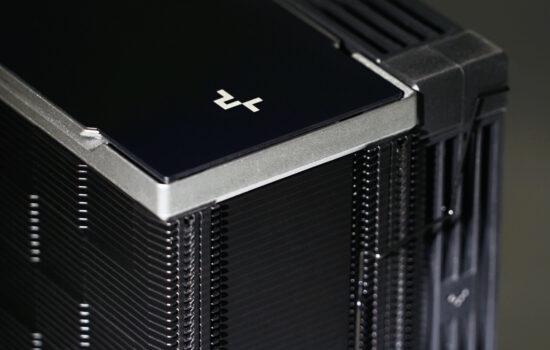
Fera 3 from SilentiumPC is certainly one of the most popular coolers. Recently, however, a new version called Fera 5 was launched, which brings a number of new features. The cooler has been redesigned from the ground up, including the fan, and the assembly system has also undergone major changes. In addition, the whole thing has a 6-year warranty. Let’s see, how Fera 5 performs in the tests and whether it is a worthy successor to the previous version.
Test methodology
The Intel Core i7-5820K in the ASRock X99 Taichi motherboard serves as a heat generator. The whole rig is placed on a Streacom BC1 benchtable without fans that would provide airflow. Stress tests are performed using the Aida64 Extreme application with a duration of 45–60 minutes. The coolers are tested at three speed levels (800, 1,200 and maximum) at a processor clock speed of 4,200 MHz with a voltage of 1.150 V. This is followed by another series of tests at 4,500 MHz with a voltage of 1.350 V. The processor power draw at these clock speeds is approx. 150 W and 200 W, respectively. The second set of tests therefore represents a really high load and it cannot be expected that the tested coolers will be able to cool the processor at all speed levels.
At the end of the test, the highest temperature reached is always recorded. All data regarding temperatures and power draw of the processor are obtained from the HWiNFO64 application. The results are then corrected for ambient temperature as the final Delta T value. The test success limit is set at 80 °C. Any higher value means the processor temperature above 100 °C and a risk of thermal throttling. Therefore, if the cooler does not pass the stress test with a Delta T value below 80 °C, such test is marked as failed. Noise is measured using a calibrated sound level meter Voltcraft SL-100 at a distance of 50 cm from the cooler.