


The fan carrying one of the most popular brands in the field has been tested against the latest competitors. Among them are the new Arctic P14 Pro (A-RGB), Noctua NF-A14x25 G2 PWM and Thermaltake Toughfan 14 Pro. And many others (including the FD Momentum 14/RGB) with which the TL-B14 will cross paths. In any case, the geometry of the Thermalright impeller is efficient, the price is low, and the results are impressive.
Basis of the methodology, the wind tunnel
Before you start reading the methodology with all the details, take a look at the test tunnel as a whole. This is the heart of the whole system, to which other arteries are connected (manometer, vibrometer, powermeter, …). The only solid part of the tunnel from the measuring instruments is the anemometer.
The shape of the wind tunnel is inspired by the Venturi tube, which has long been used to measure the flow of liquids and gasses. The Venturi effect for wind speed measuring is also known from the aerospace industry. However, the design for measuring computer fans has its own specificities, which this proposal of ours reflects.
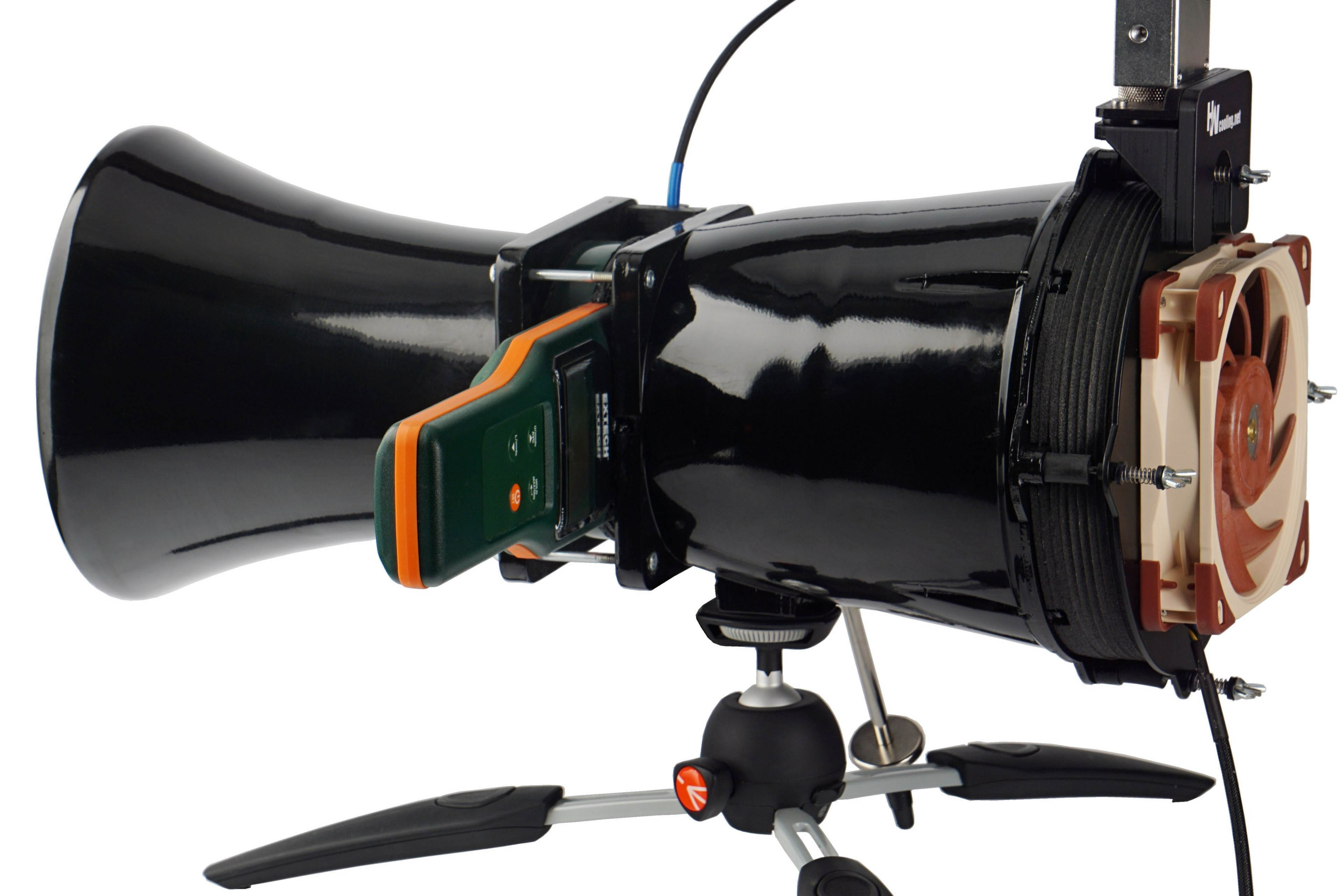
The individual parameters of the HWC wind tunnel for fan tests are the result of physical simulations and practical debugging. All the details (folds, material or finish used) have a rationale behind them and are designed this way for a specific reason. We will discuss the individual design details in turn in the description of the sub-variable measurements.
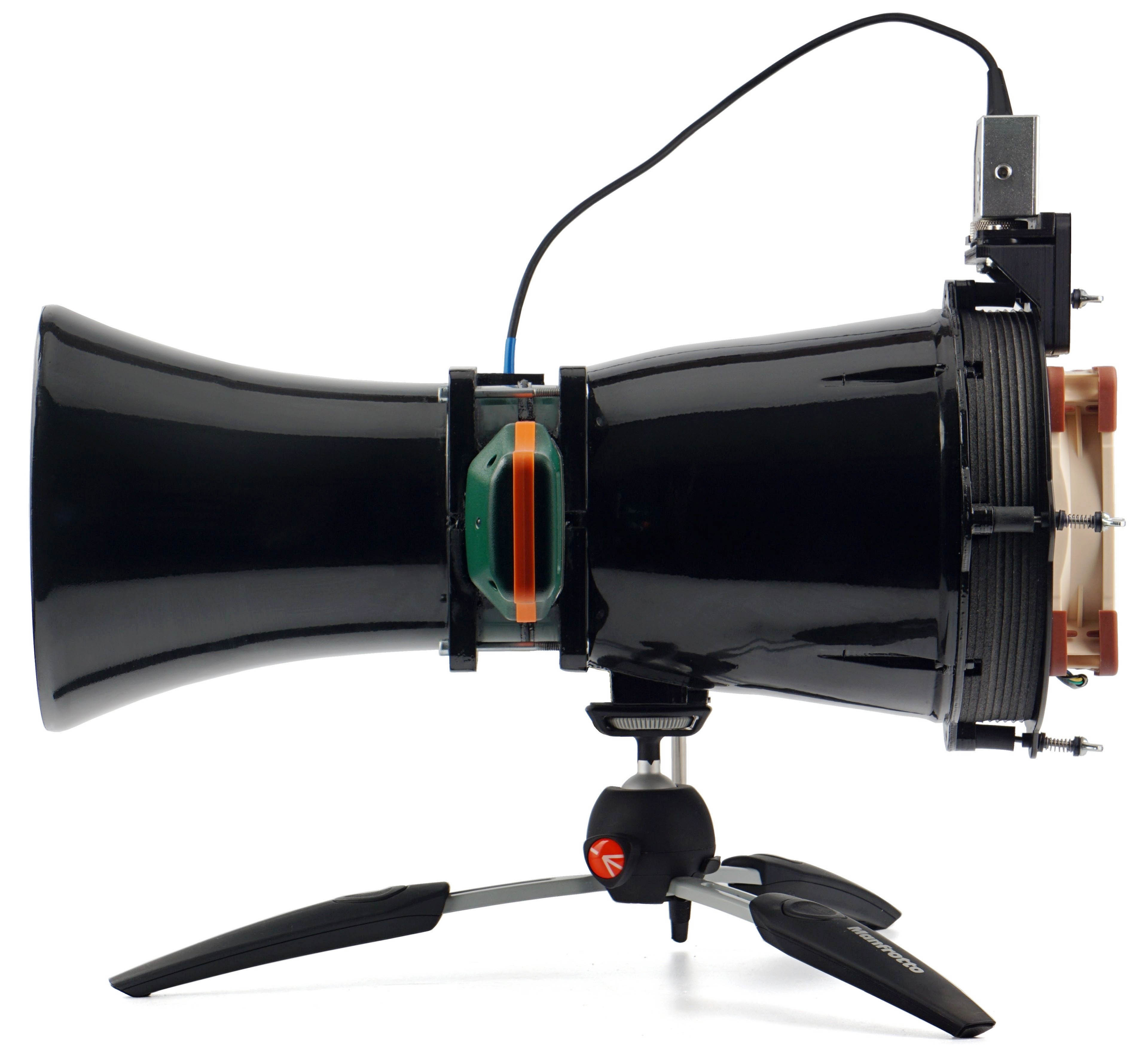
Now we will briefly elaborate on some things that do not fit thematically into the text of the following chapters. Namely, for example, that the skeleton of the wind tunnel is the work of a 3D printer (PLA). The rough print was, of course, then thoroughly machined by grinding, fusing, polishing and varnishing. Especially important is the smooth finish of the interior walls.
When joining the individual parts, the emphasis was on making sure that they fit together flawlessly, that they were sealed flawlessly (we will come back to this when we describe the test procedures for pressure measurement), but also that the joints were not loosened by use. Everything is disassemblable for servicing purposes, but it is ensured that the properties are maintained during use and, for example, even under the stress of vibration. The threads are secured with either lock nuts or thread-locking fluid. It depends on which is more suitable in which place.
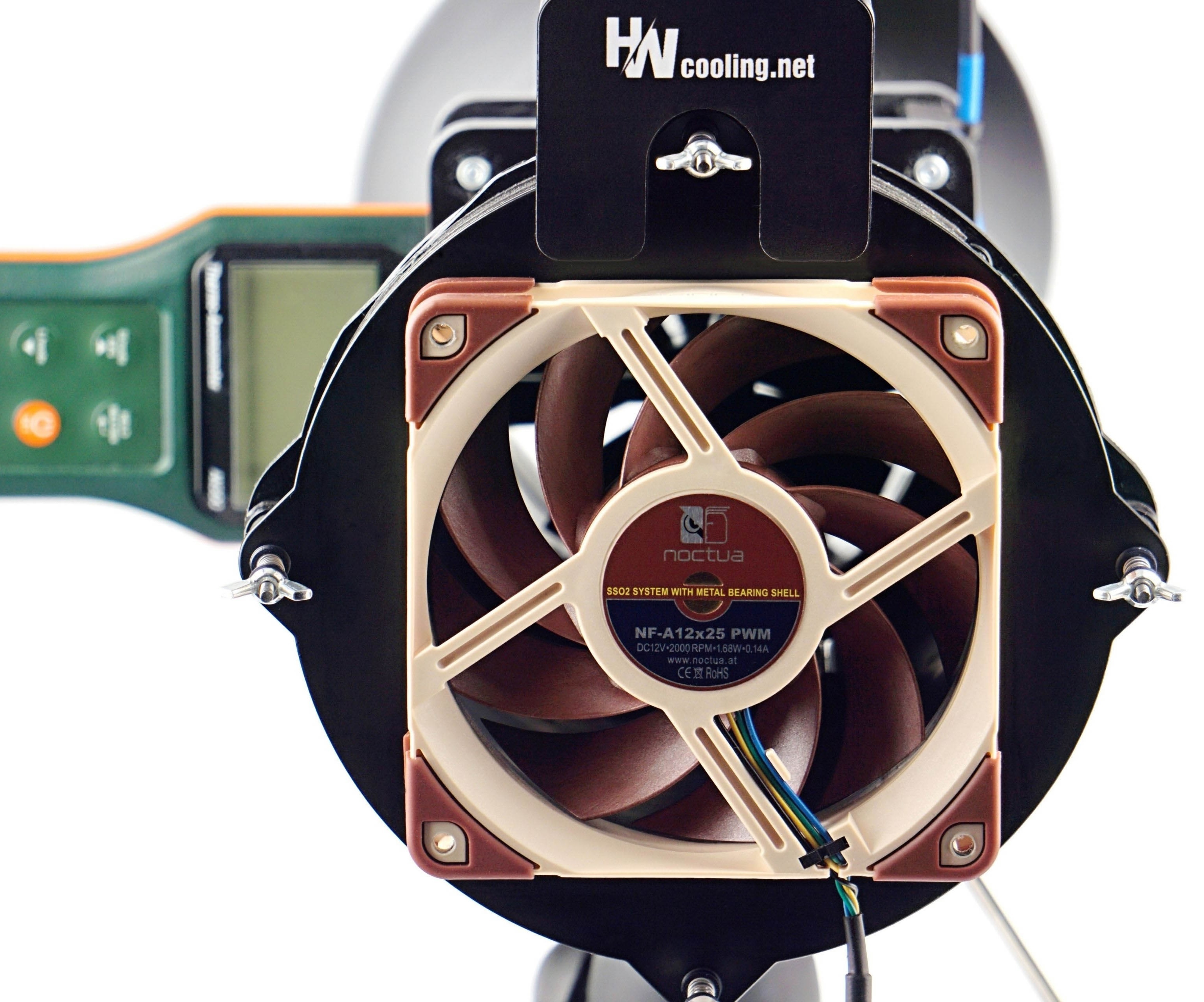
When the wind tunnel is not in use, it is enclosed in a dust-tight chamber. In addition to the technical equipment and its correct storage, it is also important for objective outputs that all measuring instruments are calibrated according to the standard. Without this, it would be impossible to stand behind your results and rely on the manufacturers’ specifications. Calibration protocols are therefore an important part of the methodology. Testing is carried out at an ambient air temperature of 21–21.3 °C, humidity is approximately 45 % (± 2 %).
Fans come to us for testing in at least two pieces of the same model. If the deviations of any of the measured values are greater than 5 %, we also work with a third or fourth sample and the average value is formed by the results of the fans that came out the most similar and the differences between them fit under 5 %.




I have this installed as a back exhaust fan on my Fractal Design Define S. In the front I have three of the Fractal Design’s older dynamic GP14.
This fan has a specific prrrrrrrrrr noise that becomes pronounced above 1100rpm.
I somehow prefer it over the extremely annoying high pitched whine of the Arctic P14 PWM.
My quest for a satisfactory quiet fan over 1000rpm continues.
Are you sure that the noise is not actually being generated by the grille on which the fan is mounted? Maybe it is resonating with the TL-B14 fan and is the source of the unwanted noise. With other fans this doesn’t necessarily have to happen, of course…
Please review the Thermalright TL-C12015B. Maybe the best slim fan after the P12 slim, and important as the range for slim fans is limited.
Wow, Thermalright’s offering is quite impressive in this slim space. 😉
TL-B12015: https://www.thermalright.com/product/tl-b12015/
TL-B12015 Extrem: https://www.thermalright.com/product/tl-b12015-extrem/
TL-H12015B: https://www.thermalright.com/product/tl-h12015b/
TL-C12015B: https://www.thermalright.com/product/tl-c12015b/
TL-H12015B-S: https://www.thermalright.com/product/tl-h12015b-s/
TL-C12015S: https://www.thermalright.com/product/tl-c12015s/
TL-C12015L: https://www.thermalright.com/product/tl-c12015l/
and super-slim (13mm) in 140mm format
TY-14013R: https://www.thermalright.com/product/ty-14013r/
That’s a very nice list of fans. Thanks for sharing! 🙂
Yes, the TL-C12015B looks good. Thanks for the tip! We are adding it to the list and will ask Thermalright for samples when we get the opportunity. No promises, but let’s hope we’ll get to see its tests on here. 🙂
1. For some reason, the positive/negative list in the evaluation section seems empty. Can you check if that’s also the case on your end?
2. On the topic of Thermalright, have there ever been considerations of reviewing some of TR’s CPU air coolers?
I’d love to see some of the detailed analysis you guys do for the likes of the Phantom Spirit 120 Evo, Royal Pretor 130 Ultra or the Peerless Assassin 140, just as examples for their 3 most performant recent models.
Sorry, no idea why this was posted a reply to you (Yamato). It was supposed to be a question to Ľubomír.
Thank you for the heads-up. 🙂
1.) The +/- table really was empty, but everything’s fixed now.
2.) We’re definitely interested in Thermalright coolers, and we already have a sample of the Royal Pretor 130 in the test lab. Their lower representation in our tests is only due to weaker local distribution, but that doesn’t change the fact that we want to cover Thermalright coolers too. The English edition of HWCooling does have global reach.
Is the TL H12-X28 anywhere in the schedule? Looks like a pretty good 120mm ARGB workhorse if the specs are anywhere near accurate
We don’t currently have the TL-H12-X28 fan in our testing plans. I agree its design is extremely attractive, but I’m constrained by limited time. While I believe we’ll eventually get around to testing this fan, I really can’t make any promises right now.
I’m sorry if it has been asked before or if it’s already on the schedule, but could you guys review the Sudokoo Mach140 fan, the Sudokoo Proteus 360 AIO and the Thermalright Stream Vision AIO?
IIRC, Sudokoo Mach is on the schedule, but I don’t know if it’s 120 or 140. 😛
Either will be great. Comparing the 120 with the Phanteks T30 or the 140 with the Arctic 14 Pro will show whether Sudokoo’s product is competitive.
I’m looking forward to it. The aerodynamic design of these fans looks really promising, and based on previous experience, I’d expect the Mach120 to deliver some very attractive results. 🙂
And you can find the TR Stream Vision AIO review here:
https://quasarzone.com/bbs/qc_qsz/views/2023652#p5
😛
Nice! Thank you!
As for Sudokoo fans, we have Mach120 samples in the test lab. Tests of these fans will definitely come out sooner or later. Regarding the Mach140—can’t say yet, we’re not that far ahead, haha. The Proteus and Stream Vision coolers are very good suggestions for future tests as well, but I can’t promise anything for now. We’ll see. 🙂
No problem! I know it’s not possible to review every piece of available gear.
Anyway, thank you for everything you have been doing!