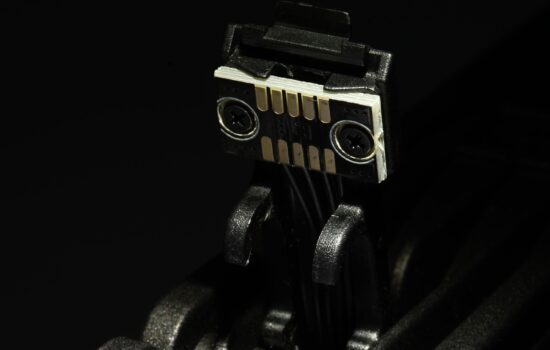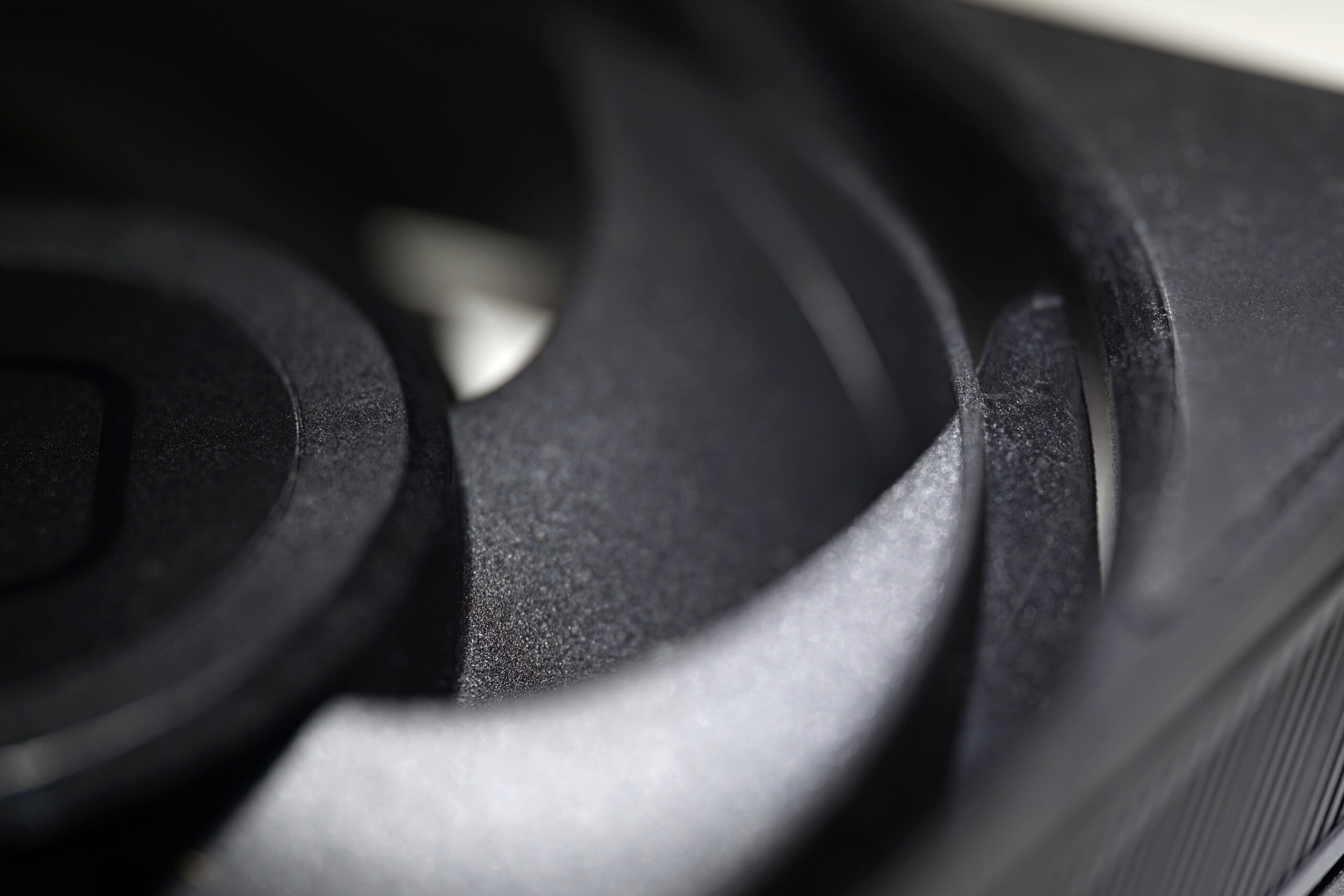

The first ID-Cooling fan in our database, and it immediately features one unconventional element—the blade ring is positioned differently than usual. Its placement bellow the blade tips is typical of high-speed fans, and the AT-120-K model indeed spins at very high speeds. Despite that, it can also be significantly slowed down while maintaining attractive cooling efficiency even at lower noise levels. And all of this comes at an attractive price point.
Evaluation
Regardless of noise levels (which can indeed be quite high…), the AT-120-K fan achieves exceptionally high airflow. At its lower price (MSRP is 9.99 EUR), there are not many alternative solutions with a more attractive price/performance—or airflow—ratio. However, this is at maximum speed, where the ID-Cooling fan truly excels.
In modes normalized to a comparable noise level, however, it is weaker—the results are average to below average. The less aerodynamic noise there is, the more other sound sources become apparent. Yes, at the 1.2 kHz range, something emerges that could be described as a growl or clicking. This type of acoustic signature is often characteristic of fans with ball bearings. The AT-120-K uses those as well.
On one hand, there is the expectation of longer lifespan (even in a lower price segment), but on the other hand, there is the noisier operation. That is the trade-off you have to account for with these fans. Vibration intensity is relatively low, considering the achieved airflow. ID-Cooling clearly knew how to handle such high-speed conditions, and the placement of the reinforcing ring stiffening the otherwise flexible blades was likely chosen accordingly.

So it is certainly possible to state the overall attractiveness of the fan’s design. It is always a trade-off, but in this case one of the advantages is the lower price point. Of course, for example, the Arctic P12 Pro is a very strong competitor, and only time will show how each of these fans holds up and how durable they are. Aerodynamically, in quieter modes, the AT-120-K clearly lags behind, possibly in exchange for longer lifespan.
The speed range is indeed wide (421–3035 RPM), but in the lower spectrum the speeds are relatively unstable, which is also the reason for the absence of “31 dBA” modes. These could not be set satisfactorily. From around 600 RPM (with PWM control), however, operation becomes stable.
The hub is also robust, which the AT-120-K fan also pays for to some extent, at the cost of lower aerodynamic efficiency. As the hub area increases, the blade area (outer cross-section) decreases, which leads to a declining tendency in achieving what is being discussed here.
With smaller blades, performance is simply harder to achieve, but with the ID-Cooling fan you are still getting very good characteristics, and cooling performance will certainly be there—especially at higher speeds and generally if noise is less of a concern. At the recommended price of 9.99 EUR, the AT-120-K can therefore be an exceptionally attractive option. Of course, it depends on what you are looking for—and for what specific use case. It It is also important to point out the exceptionally low vibrations relative to the achieved airflow. This is also supported by the robust construction of the fan, combining the ring and reinforced material (PBT + GF).
English translation and edit by Jozef Dudáš
| ID-Cooling AT-120-K |
| + Suitable for any use |
| + Cooling efficiency (airflow/pressure per unit of noise) at a high level |
| + High airflow and static pressure even through restrictive obstacles |
| + Very wide speed range... |
| + ... and a truly powerful motor (~8.2 W) |
| + Exceptionally low vibrations even at higher speeds |
| + Lower price... |
| + ... and an attractive price-to-(cooling)-performance ratio |
| - Even among inexpensive fans, there are options with higher cooling efficiency |
| - Certain non-aerodynamic sounds in the acoustic profile may be bothersome to some |
| - Possible collision with a nylon dust filter |
| Approximate retail price: 10 EUR |
PC fans are available for purchase in the Datacomp e-store