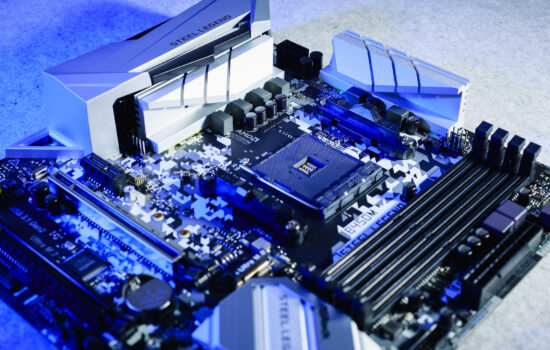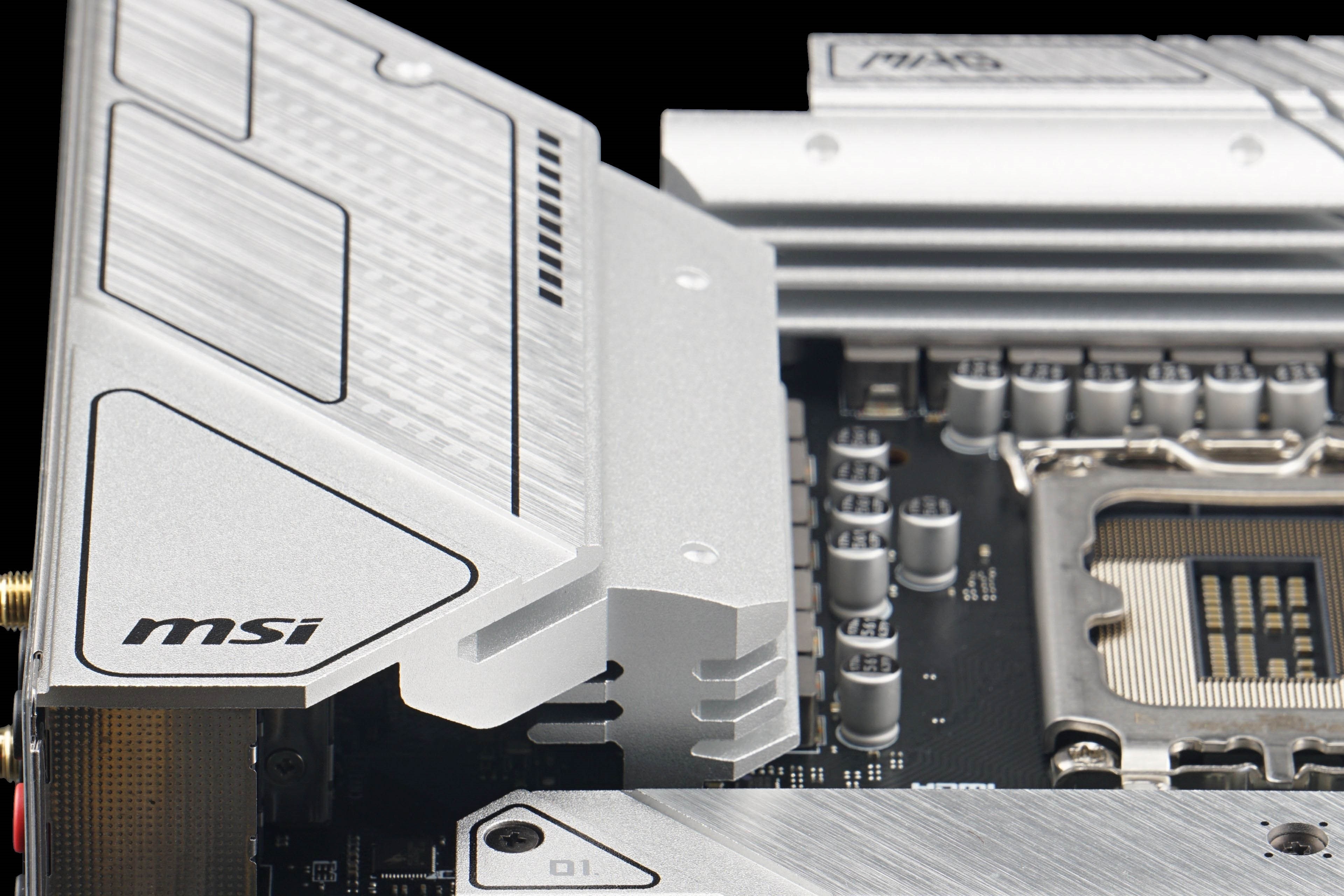
While others have resigned from full-fledged motherboard tests long ago, we’re just kicking it off. Tests with differently powerful processors, without power limits, but also with limits set by Intel. And when we test performance, we also test M.2 slots, USB or Ethernet. Power draw analysis done at the level of individual branches, and thermal imaging with temperature tests (including SSD heatsink efficiency measurements) are a no-brainer.
Speedometer (2.0) and Octane (2.0)
Test environment: To ensure that results are not affected by web browser updates over time, we use a portable version of Google Chrome (91.0.472.101), a 64-bit build. Hardware GPU acceleration is enabled as well, as it is by default for every user.
Note: The values in the graphs represent the average of the scores obtained in the subtasks, which are grouped according to their nature into seven categories (Core language features, Memory and GC, Strings and arrays, Virtual machine and GC, Loading and Parsing, Bit and Math operations, and Compiler and GC latency).