


They never were as brilliant and amazing as marketing materials depicted (and still depict) them. Fans that are supposed to be top-tier for system positions are, at best, average. Well, judge for yourselves. We wouldn’t subscribe to the notion that these are currently aerodynamically attractive fans for PC cases. For the reason that they are not. And we can go straight to the specific reasons and arguments.
Results: Airflow w/o obstacles
Why is a value sometimes missing for a fan? There can be several reasons. Most commonly, it’s because the fan couldn’t be regulated to the target noise level. Some fans have higher minimum RPM (or they spin slowly but have an excessively noisy motor), or they are simply slower models that can’t reach higher decibel thresholds. Results are also omitted from graphs if the impeller scrapes against the mesh of a nylon filter. In such cases, we classify the combination as incompatible. And of course, a zero in the graphs naturally appears in situations where we record an actual 0.00. This often occurs at extremely low speeds when obstacles are present or during vibration measurements.
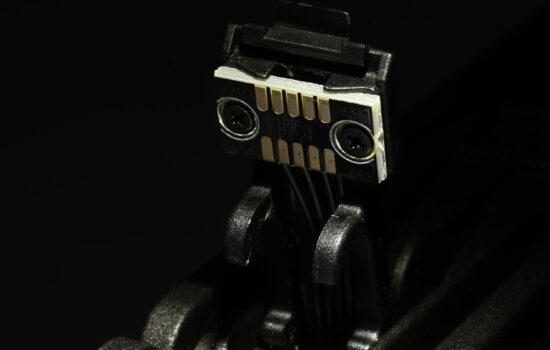



Yes, we do have those fans in the wind tunnel for cooler testing.. But they’re without dust filters. 🙂
when A12x25 came they overtaken both the pressure optimized and airflow optimized predecessors
and the main issue I have with S12A is they become noisy before they start moving any air
sure, if you can accept their full speed noise they are quite decent, but long time has passed since their release and you probably can buy 3 cheaper ones with similar characteristics at that noise level nowadays
or pay some more for A12x25 or A12x25G2 and get superior performance at lower noise lever
personally I’d simply either remove them entirely from the lineup or move them down to the redux line to be much cheaper, but again the motor and bearing in these is bad enough I see no place for them at all on the modern landscape
EDIT: from empirical experience I wouldn’t say S12A use SSO2, and I don’t think they had that in specs when I bought one, my box says SSO only and certainly sounds different than A12x25 (might be a motor only,though the sound is pretty much mechanical), but at the same time on the back of the hub there’s SSO2 marking, interesting
— „… I wouldn’t say S12A use SSO2, and I don’t think they had that in specs when I bought one…“
I would also have guessed—based on intuition—that the NF-S12A (PWM) fans were released later than SSO2. But it’s possible that these bearings were introduced into the fans over time as a “silent” revision? Hard to say… 🙂
yeah, as noted later my box says SSO, but the fan itself has SSO2 sticker, but something about it sounds much different than A12x25 does, if it’s the same bearing it has to be the motor
whichever it is it can barely spin up because the “bearing-like” noise gets annoying at extremely low speeds and the impeller design at these speeds causes basically no air movement at all, A12x25 set to inaudible from the same distance is many leagues ahead
The difference may come from the motor, for example in how it switches between individual poles. But naturally, the sound you’re hearing can be influenced by various elements. 🙂
I wish it had been BlackNoise’s eLoop that had become the memetic high end, high perf, low noise fan line. I’ve heard recordings of them compared to their contemporary Noctuas and they’re far nicer on the ear, pleasant sort of Sci-Fi humming and they outperformed their Noctua opposite number too, IIRC. With ARGB.
eh, for me eLoop is really whiny, seems the motor dislikes low speeds a lot as this noise gets quieter as the speed rises, but before it disappears the aerodynamic noise takes over so at no speed these are usable for me
Several fans tend to “whine” at the very bottom of their speed range. It’s usually because the voltage is already too low for the motor to operate comfortably. With PWM, the situation often improves (even at otherwise comparable speeds), since the fan continues to receive 12 V, just with very long gaps between individual pulses. 🙂
Yeah, it’s a fairly common feature to set a floor in the PWM or whatever silicon so the things won’t trigger outside of their tolerable noise ranges these days, IIRC. Both the Pro arctics and the InWin Neptune series boast this.
Honestly, to be top-end in the current market, they’d just need to find a way to improve the light spreading of the polycarbide and add a trigger floor to the PWM silicon on the eLoop IMO. Once they had that, and maybe try and make a top-end noise and performance AIO and heatsink… maybe even get exclusive OEM rights from the first client 80 Plus Ruby PSU, I think they’d be able to make a comeback as a client fan line, not much amendment to their old design needed at all.
that should be the case generally, unfortunately B12P is already PWM and it still whines a lot
also direct PWM drive works as you described, but latest Noctua fans have some “interpreter” that alters voltage to eliminate heavy “kicks” of torque that may sound clicky, don’t them?
Hmm, in my opinion PWM control works with 12 V pulses that are delivered at lower duty cycles at lower speeds. Noctua fans have a controller that modifies these pulses in some way, but in my view it doesn’t actually reduce the voltage to a lower level. The voltage is then reduced only when using adapters (L)NA. 🙂
well, the graphs they presented suggest signal taking a different shape to a square wave, with the leading edge being smoother
I’m not sure how can that be interpreted, lowering voltage would make more sense imo, otherwise they’d have to do kind of PWM-in-PWM and hope that doesn’t behave clicky? I’d assume full torque applied even for a 1% of an usual PWM cycle would still end up causing a rather sudden application of force
that potentially could also be a current limiter instead of voltage, as in the end it gives the same result of lower power
the most important part being: it’s validated to work this way, and with LNA in place too, so the motor doesn’t complain, while other fans may have never been internally tested with lower voltages
but then again, with B12P I’m pretty sure even when plugged in directly it whines at low PWM, which would be a different topic
maybe an artifact of slow pole changing?
Yes, the PWM waveform presented by Noctua—with a sloped rise instead of a sharp edge—could indeed be quieter. However, I assume the difference will be so small that it will fall below the resolution of human hearing. It seems like one of those details that looks impressive, but from which no major impact should be expected. That said, it’s a beautiful detail that clearly shows how delicately Noctua approaches fan development.
— „… maybe an artifact of slow pole changing?“
I really don’t know, but it’s possible. 🙂
for what it’s worth with A12x25 at slow speeds I can hear slight ticking/clicking when I put my ear close enough while on G2 I haven’t experienced that
not that it matters from regular distance or for most users that run them twice as fast and aero noise would mask it even if it was still present, but that’s a difference I noticed
Do you also hear that clicking noise on multiple NF-A12x25 G1 units? If so, it’s possible that this is handled differently at the design level in the NF-A12x25 G2—but I can’t say for sure. I assume Noctua would have highlighted this if that were the case… 🙂
what the …,
https://www.blacknoise.com/de/nb-eloop/nb-eloop-120mm
it has even number of blades. and what about harmonics?
…
Of course I knew about the fan, but I hadn’t noticed this until now. 😳
Now, Ľubo, it’s necessary for you to test it, …for science’s sake.🙂↕️
best in this version – PWM and 2000 RPM
https://www.blacknoise.com/de/nb-eloop/nb-eloop-120mm?sku=499122511
I’m given to understanding the best performing of that linage is the 140mm designs, where they have a fair claim to being the best general purpose ARGB fans on the market.
In the 140mm format they have an odd number of blades, which is a general standard in the field of axial PC fans, but the 120mm fan has an even number of blades, which is quite unique. 😉
Ha! As soon as it becomes possible, we’ll test the 120 mm NB-eLoop fans. With Noiseblocker, it’s difficult for us to establish communication (we haven’t been able to find a suitable contact channel), and distribution is also weaker. Some NB samples were purchased for us by mino_85 a long time ago. Years have passed since then, and we still haven’t managed to get to those fans. So this factor plays a role too—those unfortunate time constraints that simply have a hard limit. You know I’d love to test everything right away, but unfortunately I don’t know how to use a magic wand yet, haha.
you should ask Elsa or Potter or Saxana… 😀 🪄🎩
I don’t have a magic wand… 🙁
By the way, … didn’t it come with a manual? 😀
An even number of blades is indeed quite rare. It shouldn’t lead to particularly attractive results in terms of acoustic characteristics. 🙂