


Fractal Design claims the Prisma models as its most efficient fans in the 140mm format. According to the parameters, these are supposed to achieve the highest airflow at a lower noise level than the Aspect 14s. However, this is physically impossible due to the constructional features or rather differences of the Prisma and Aspect fans. The title of the article has a bit of a pejorative tone and while the Prisma AL-14 PWM is a decent fan, it already has a superior from its own ranks.
Basis of the methodology, the wind tunnel
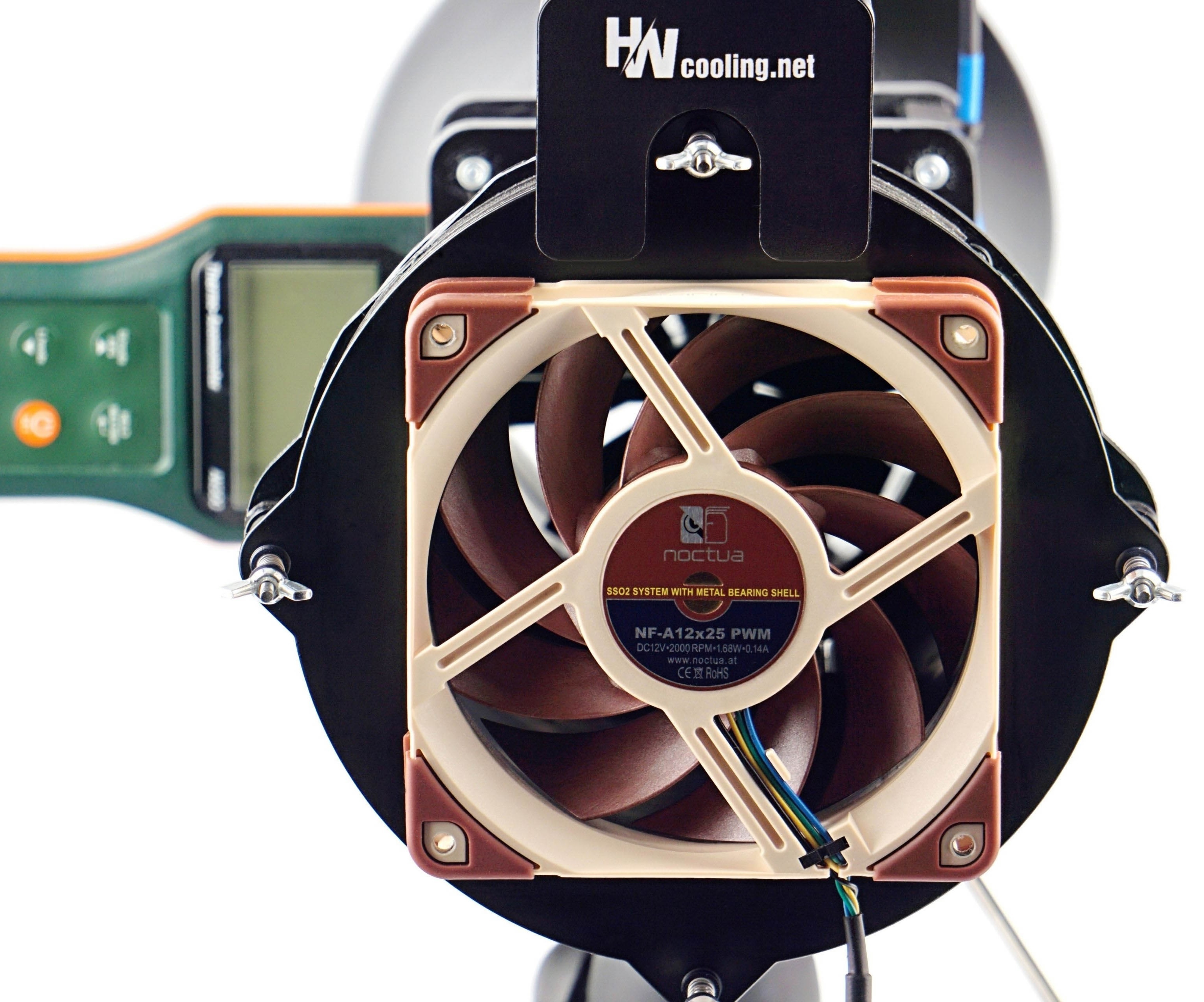
Before you start reading the methodology with all the details, take a look at the test tunnel as a whole. This is the heart of the whole system, to which other arteries are connected (manometer, vibrometer, powermeter, …). The only solid part of the tunnel from the measuring instruments is the anemometer.
The shape of the wind tunnel is inspired by the Venturi tube, which has long been used to measure the flow of liquids and gasses. The Venturi effect for wind speed measuring is also known from the aerospace industry. However, the design for measuring computer fans has its own specificities, which this proposal of ours reflects.
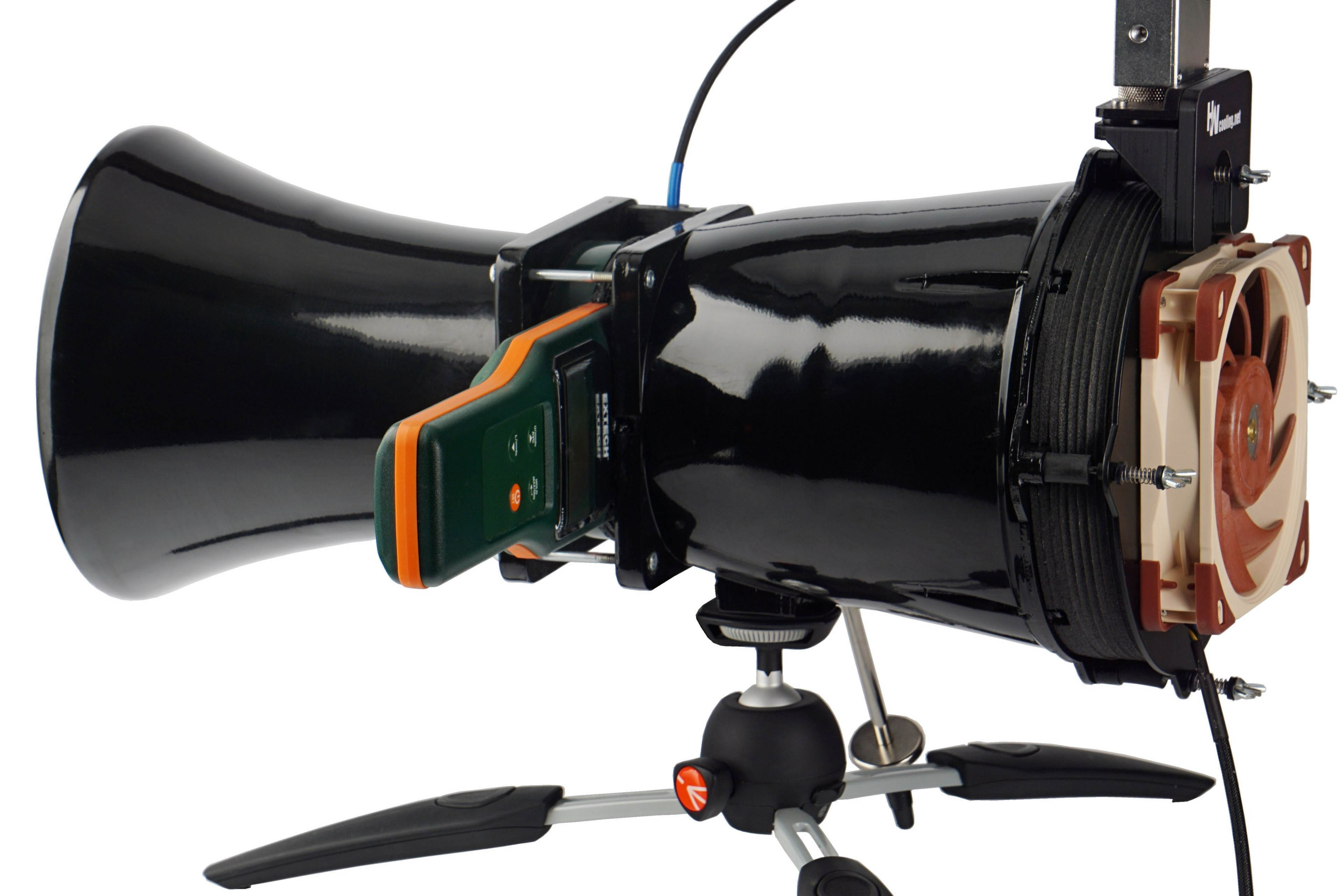
The individual parameters of the HWC wind tunnel for fan tests are the result of physical simulations and practical debugging. All the details (folds, material or finish used) have a rationale behind them and are designed this way for a specific reason. We will discuss the individual design details in turn in the description of the sub-variable measurements.
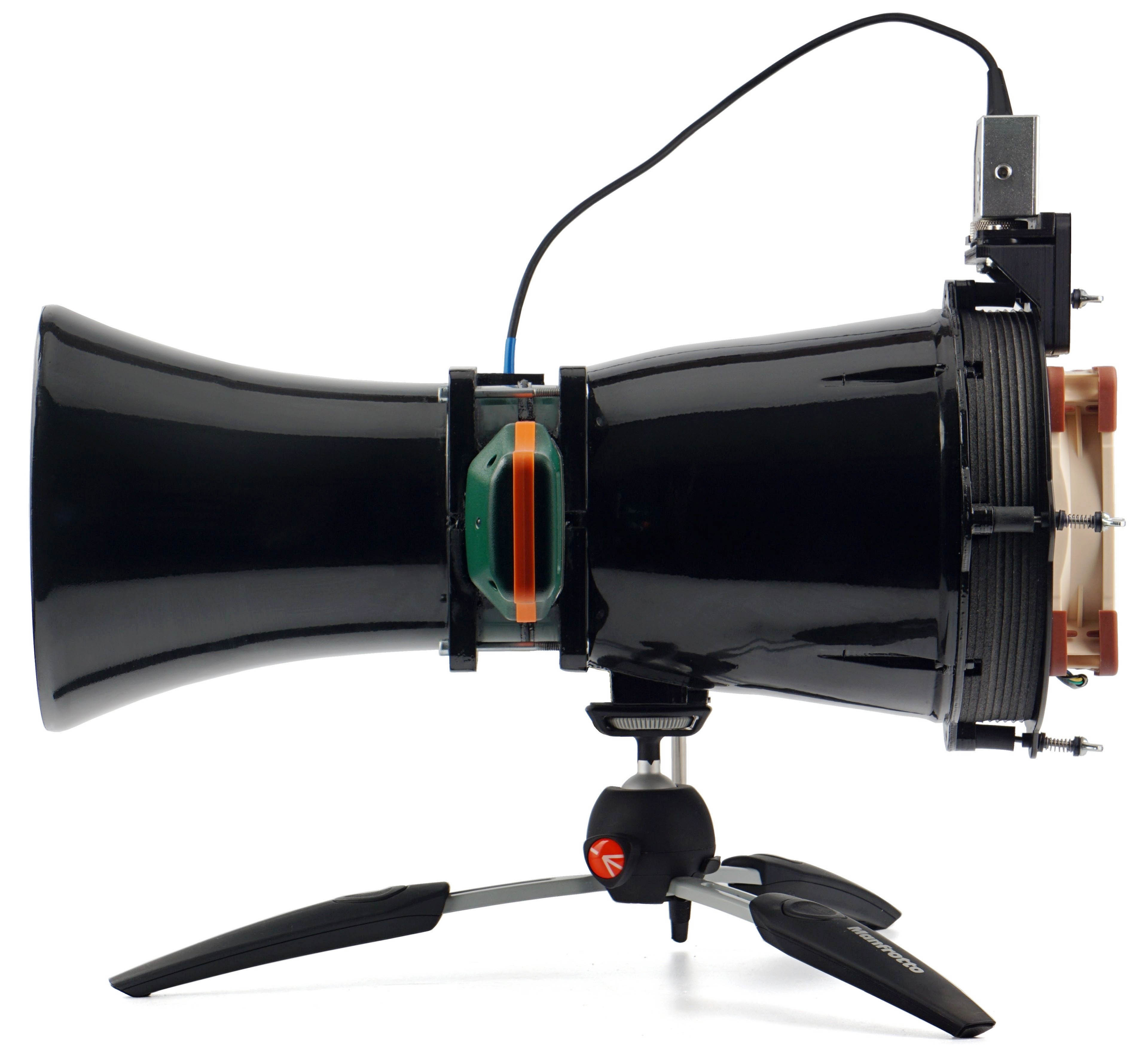
Now we will briefly elaborate on some things that do not fit thematically into the text of the following chapters. Namely, for example, that the skeleton of the wind tunnel is the work of a 3D printer (PLA). The rough print was, of course, then thoroughly machined by grinding, fusing, polishing and varnishing. Especially important is the smooth finish of the interior walls.
When joining the individual parts, the emphasis was on making sure that they fit together flawlessly, that they were sealed flawlessly (we will come back to this when we describe the test procedures for pressure measurement), but also that the joints were not loosened by use. Everything is disassemblable for servicing purposes, but it is ensured that the properties are maintained during use and, for example, even under the stress of vibration. The threads are secured with either lock nuts or thread-locking fluid. It depends on which is more suitable in which place.
When the wind tunnel is not in use, it is enclosed in a dust-tight chamber. In addition to the technical equipment and its correct storage, it is also important for objective outputs that all measuring instruments are calibrated according to the standard. Without this, it would be impossible to stand behind your results and rely on the manufacturers’ specifications. Calibration protocols are therefore an important part of the methodology. Testing is carried out at an ambient air temperature of 21–21.3 °C, humidity is approximately 45 % (± 2 %).
Fans come to us for testing in at least two pieces of the same model. If the deviations of any of the measured values are greater than 5 %, we also work with a third or fourth sample and the average value is formed by the results of the fans that came out the most similar and the differences between them fit under 5 %.




What are the main features of the Prisma AL-14 PWM fan by Fractal Design?
It’s hard to identify a single main feature – personally, I wouldn’t dare to do so because it really depends on your perspective. The Prisma AL-14 PWM is, in any case, a relatively efficient fan with ARGB elements. Of course, in terms of the airflow-to-noise ratio, it’s starting to show the limitations of its outdated rotor design – but it’s all about compromises. Yes, there are currently more attractive alternatives on the market, and even more promising fans are on the way – including from Fractal Design itself. These will also feature ARGB and come in a 140 mm format. Stay tuned. 🙂