


The new AMD Radeon RX 9000 cards with RDNA4 architecture bring higher performance and a suite of technologies to make gaming more enjoyable and improve responsiveness. We’ll focus on the technologies available to gamers and what stands behind names like Anti-Lag 2 or FidelityFX Super Resolution (FSR4). The videos show how Anti-Lag reduces latency and how FSR boosts frame rates with demanding detail settings.
Test build
The components here are installed in a Fractal Design Meshify 2 case. The build includes four 140mm fans in all available positions. All system fans are tuned to approximately 780 RPM. The setup isn’t entirely silent, but it can cool even high-consumption GPUs effectively.

Motherboard: Aorus X870 Elite WiFi7
The motherboard used for testing is the Aorus X870 Elite WiFi7, paired with an AMD Ryzen 7 9800X3D processor. The CPU is cooled by the new Noctua NH-D15 G2 in an offset mounting configuration.
Processor: AMD Ryzen 7 9800X3D
The AMD Ryzen 7 9800X3D processor runs at the motherboard’s default settings. Below is a snapshot of the configuration and current hardware setup. The system build may vary slightly due to updates.

Memory: Kingston Fury DDR5-6000
The processor is paired with 64 GB of DDR5-6000 memory via two 32GB modules from Kingston. The memory is Kingston Fury DDR5-6000, product number KF560C32RSK2-64.


They support the following profiles:
- Default (JEDEC): DDR5-4800 CL40-39-39 @1.1V
- XMP Profile #1: DDR5-6000 CL32-38-38 @1.35V
- XMP Profile #2: DDR5-5600 CL40-40-40 @1.25V
- XMP Profile #3: DDR5-4800 CL38-38-38 @1.1V
In our build, it’s running on the highest EXPO profile with parameters DDR5-6000 32-38-38-38 at 1.350V. In the BIOS, XMP/EXPO High Bandwidth Support is enabled, Infinity Fabric Frequency and Dividers is manually set to 2000 MHz, and the UCLK DIV1 MODE divider is set to UCLK=MEMCLK.
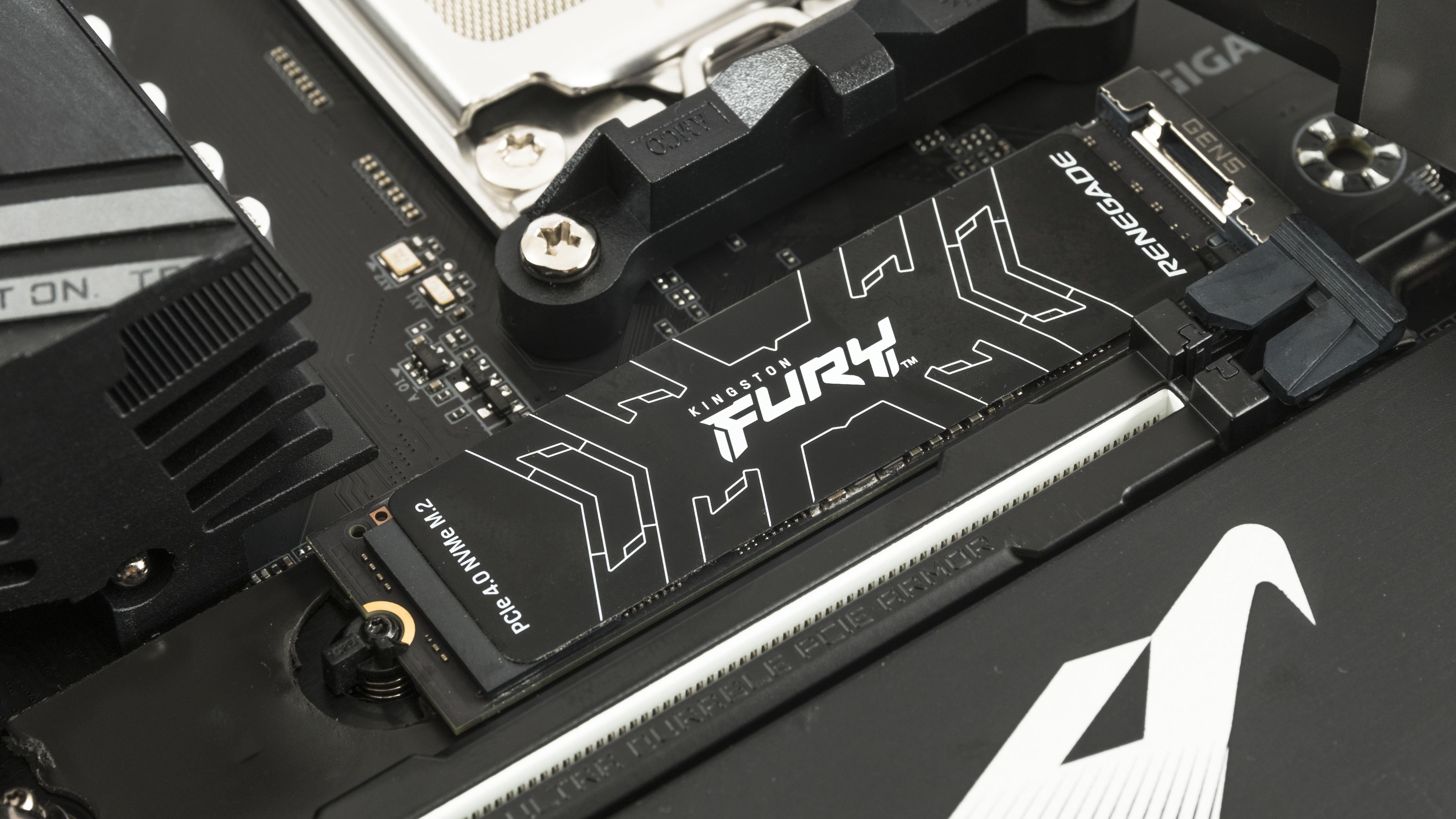
Storage: SSD Kingston Fury Renegade PCIe 4.0 NVMe M.2
System and game data are stored on a fast Kingston Fury Renegade PCIe 4.0 NVMe M.2 SSD with 4TB capacity. It offers sequential read speeds of up to 7,300 MB/s and write speeds of up to 7,000 MB/s. The drive is available in two versions – one with a cooler and one with a thin heat spreader. We’re using the version with the thin spreader, cooled by the large cooler provided with the motherboard.
PSU: be quiet! Dark Power Pro 13.
The entire system is powered by a top-tier 1300W PSU – the be quiet! Dark Power Pro 13.
The SVM Enable setting is deactivated in the advanced processor settings for higher performance and the “Core Isolation” setting in Windows Security is also deactivated.
Furthermore, the Radeon graphics adapter integrated in the processor and the integrated SATA controller are manually deactivated.
⠀




Some issues with your photos, the second photo from the first comparison doesn’t open at 1440p for me, the one with the arches seem to open the same fsr 3 photo for both of them. I stopped there.
Sorry about that — the thumbnails opened the correct images, but some text hyperlinks pointed to the wrong links. This should be fixed now. Thank you for letting me know.
FSR4 is a big improvement indeed, but, I own a 6800XT and whilst I will see an increase in framerates with the new cards I am afraid that comparing the price of the cards with a 20-30fps increase doesn’t add up for me especially when their new unified architecture is set to hit next year.