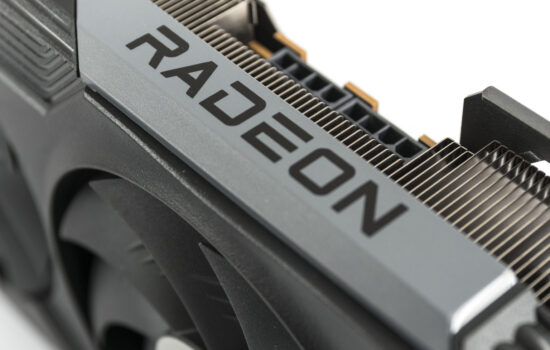
If black PC builds bore you, you’ll be pleased that the selection of white components is growing. Gigabyte has newly added Radeon RX 9060 XT and RX 9070 XT Gaming OC models in an Ice variant. Their core specs and features match the classic Gaming OC models; the less traditional look combines a white shroud with grey and silver accents. And since they rank among the most affordable models, they’re among the best-value white cards.
Radeon RX 9060 XT cards are designed for gaming at 1440p and 1080p resolutions. They will be available in two variants with 8 GB and 16 GB of memory. The 8 GB version is suitable for titles and settings that aren’t demanding on video memory and for lower 1080p resolution. It’s ideal for players focused on achieving high frame rates at lower graphic settings—typically how esports games are played. The more expensive 16 GB version is better suited for 1080p and 1440p gaming with high-quality graphics, including ray tracing.
The key innovations and changes that the new generation of Radeons, including the RX 9060 XT, bring compared to the RX 7000 series include:
- Improved ray tracing: The third generation of RT accelerators offers double the performance compared to the previous generation.
- Enhanced AI acceleration: Second-generation AI accelerators with significantly higher performance per unit and support for new data types such as FP8.
- FidelityFX Super Resolution 4 (FSR 4): Advanced supersampling and frame generation using AI.
These new technologies and improvements introduced with the latest Radeons are discussed in more detail in our article dedicated to the RDNA4 architecture, which we published alongside the release of the Radeon RX 9070 XT and RX 9070.
We also already covered the basic specs of the Navi 44 and the RX 9060 XT at the cards’ unveiling. You’ll find the specifications in the table below, so here’s a quick summary—the new Navi 44 chip in the Radeon RX 9060 XT features 2048 stream processors, 128 texture units, and 64 raster units. The memory bus is 128 bits wide and connects the chip to either 8 or 16 GB of GDDR6 memory running at 20 Gb/s.
There likely won’t be many stock-clocked models available; that’s why the table includes specs for factory-overclocked models. Keep in mind that with higher clocks, the power limit also goes up—in the middle column is an example from XFX, whose listed power draw increases from 160 to 180 W. The specs of the 8GB variant are similar to the base 16GB version, but the listed power draw is 10 W lower.

Following the launch of the Radeon RX 9060 XT, I tested the best-equipped model, the Gigabyte RX 9060 XT Gaming OC 16G in black. Today, we’ll look at the equally equipped, freshly launched RX 9060 XT Gaming OC Ice variant in white.
Testing the Gigabyte AMD Radeon RX 9060 XT Gaming OC Ice 16G
(GV-R906XGAMINGOCICE-16GD)
Gigabyte had four Radeon RX 9060 XT models in its lineup. All are from the Gaming series, use a similar construction, and differ only in memory capacity and clock speeds. In the cheaper 8GB version, there’s the Gaming variant and the higher-clocked Gaming OC, and the same applies to the other two 16GB models. The top model now also gets a white variant, the Gaming OC Ice.

Unlike the more powerful Radeon RX 9070 XT Gaming OC Ice we looked at last week, the cheaper RX 9060 XT is somewhat less equipped. It has a smaller cooler and lacks a dual BIOS. At first glance, you’ll also notice that the RX 9060 XT has one fewer display output.
The card is factory-overclocked. The game clock is increased from the reference 2530 MHz to 2780 MHz, and the boost clock is raised from up to 3130 MHz to 3320 MHz. In practice, operating clock speeds are usually higher. Details can be found in the chapters with operational property tests, which also include graphs showing clock speed progression. The stated power draw according to specifications is also increased, from the reference 160 W to 182 W.

Basic parameters and sensors can be monitored. All fans are connected via splitters to a single header, so the RPM of only one of them can be monitored. The power limit can be adjusted in the range of -30 % to +10 %.


The HWiNFO application can extract the most information from the monitoring systems of most cards. You can see the list of sensors available for the tested card in the latest version of the application in the screenshot below. They confirm the increased 182 W power limit.

On the back of the packaging, Gigabyte presents the card’s features and the proprietary technologies it utilizes. It first boasts a stylish design with smooth color lighting and a sliding cover on the side of the card. Significant reinforcement is provided by a metal backplate with a rounded edge, which is also attached to the bracket. Gigabyte highlights its own solutions used on the card: the Windforce cooling system, composed of new fans and a heatsink with a large copper base cooling the GPU and memory. Lastly, it mentions Screen Cooling technology, referring to the open-pass-through section of the fin stack designed to better exhaust heat from the cooler upwards, away from the card.


Auxiliary power is handled by a single traditional 8-pin connector, so no power adapters are required. It’s also not particularly heavy, so it manages without a support bracket. Therefore, the accessories include only a simple leaflet.
In the next chapter, we will take a closer look at the cooler’s design and other features of the card.
⠀