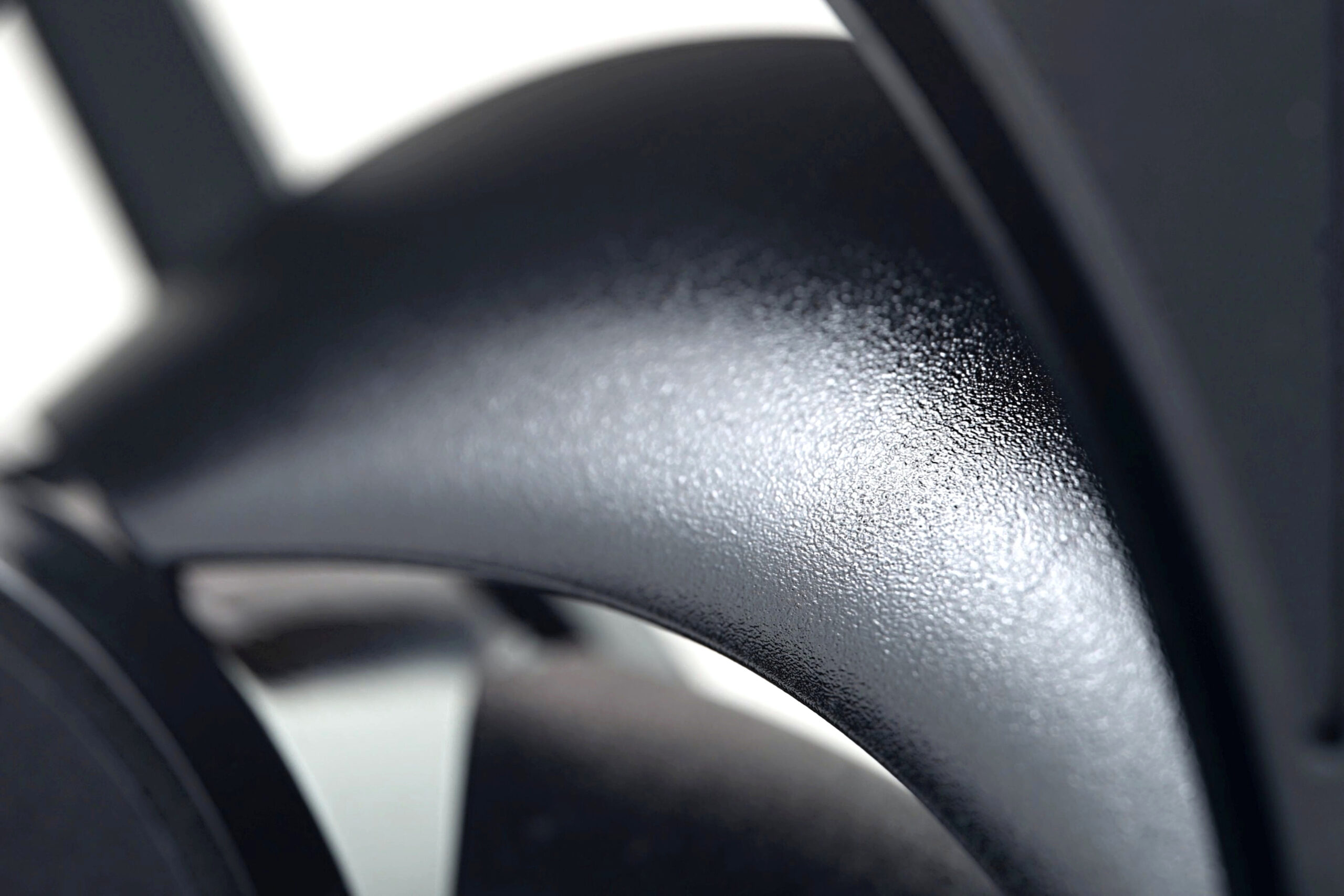
ID-Cooling AM-120-K: Bet on an Elegant Geometry

It has exactly the elements that make an inexpensive fan aerodynamically efficient and acoustically unobtrusive. Or rather, not too obtrusive—at least at lower, non‑high speeds. At higher speeds, every fan is “noisy,” but making a low‑cost fan that can still be described as pleasant to the ear is already something of a feat. We can, however, state that ID‑Cooling has achieved this with the AM‑120‑K model.

Results: Vibration, Y-axis


Why is a value sometimes missing for a fan? There can be several reasons. Most commonly, it’s because the fan couldn’t be regulated to the target noise level. Some fans have higher minimum RPM (or they spin slowly but have an excessively noisy motor), or they are simply slower models that can’t reach higher decibel thresholds. Results are also omitted from graphs if the impeller scrapes against the mesh of a nylon filter. In such cases, we classify the combination as incompatible. And of course, a zero in the graphs naturally appears in situations where we record an actual 0.00. This often occurs at extremely low speeds when obstacles are present or during vibration measurements.

Contents

Fan frame daisy-chaining trend. When is it (not) helpful

Easier installation? Yes, that’s why it’s done. Daisy-chaining fans using contacts in their frames is great, but it often also comes with pitfalls that reduce “cooling efficiency”. Manufacturers deal with this in different ways. One does it technically one way, another differently. In any case, they know that a frame that is too thick means less space for the blades. And that does not improve airflow per unit of noise. Read more “Fan frame daisy-chaining trend. When is it (not) helpful” »

Contents

Arctic BioniX P14 A-RGB: Elegant daisy chaining is just the beginning

High cooling efficiency is the foundation, but with the BioniX P14 A-RGB fans, Arctic has also made efforts on other fronts. In addition to the clever daisy-chaining method (with the aim of reducing cabling to a minimum), this includes, for example, illumination as intense as possible. The light is guided not only through the entire impeller, but also through the surface of the frame, from the side. There are light guides in these areas as well. Read more “Arctic BioniX P14 A-RGB: Elegant daisy chaining is just the beginning” »

Contents

Arctic BioniX P12 A-RGB: Efficient, inexpensive, illuminated and…

And with very clever daisy‑chaining from one fan to the next. This is what can fill in the ellipsis in the headline. The aerodynamic efficiency remains top‑tier, built on a design that Arctic revised some time ago (with the P12 Pro fans), but which can still be considered “new.” The BioniX P12 A‑RGB fans certainly are (new), and in this in‑depth analysis we focus on how they work. Read more “Arctic BioniX P12 A-RGB: Efficient, inexpensive, illuminated and…” »

Contents

Comments (2) Add comment

    1. Yes, the Seasonic MaxFlow fans will appear in our tests. We already have samples in the test lab. The BioniX P1x A-RGB models that Arctic is launching this week will have priority for now. After that, we’ll move on to the MaxFlows or the Noiseblocker fans that have been sitting on the back burner for “a hundred years.” 🙂

Leave a Reply

Your email address will not be published. Required fields are marked *
