


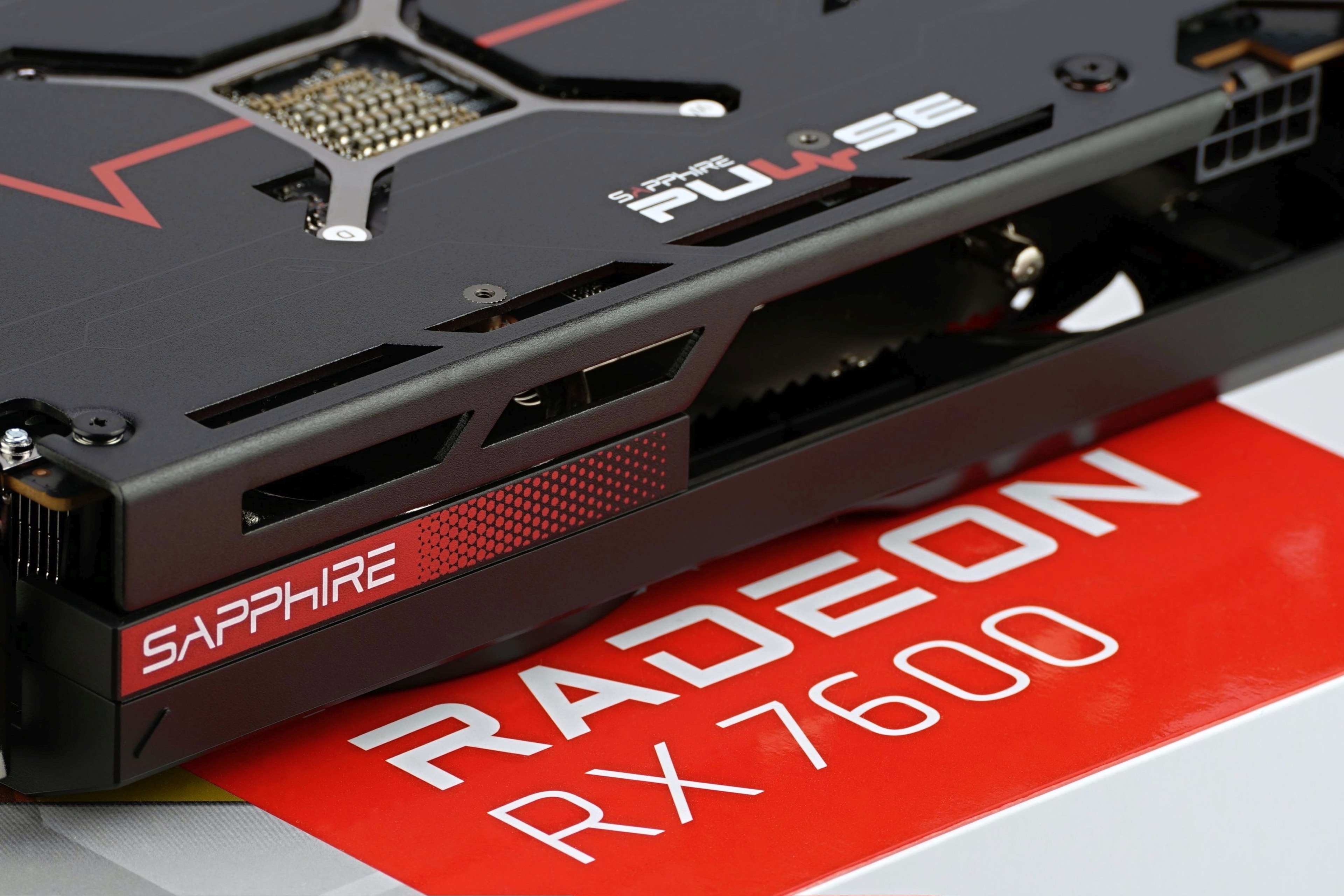
AMD has also upgraded the lower-end Radeons, and the RX 7600 with RDNA 3 architecture represents a really cheap graphics card. All things considered, it’s fair to say that, at least until the arrival of the GeForce RTX 4060, it’s the best value you can get for Full HD gaming. And did you know that the RX 7600 also dominates in simpler workstation environments that benefit from GPU performance?
Conclusion
Despite the Radeons RX 7600 being a graphics card with the attributes to be a bestseller, tabloids have made them a “flop” in terms of sales. The RX 7600’s main misfortune is probably that it’s confronted with the discounted price of the RX 6650 XT, which so far – until it disappears from stores – is about 30 euros lower, and at the resolution this class targets (1080p), the gaming performance of the older graphics with the Navi 23 GPU is comparable. The Sapphire RX 7600 Pulse is only 2% faster than the Sapphire RX 6650 XT Nitro+. The following summary applies to non-ray-tracing Full HD settings, the environment for which the RX 7600 is optimal. Of course, you can play less demanding games in QHD or more demanding ones with FSR enabled, but we won’t overcomplicate things for now so as not to miss the point.
In some games, the speed increase of the RX 7600 (versus the RX 6650 XT) can be 10% or more (Mafia: Definitive Edition, CS:GO, Red Dead Redemption 2 or Assassin’s Creed: Valhalla as much as +29 %). Below 10%, but still more than 5%, the RX 7600 has the upper hand then in Control, FIFA (21), Cyberpunk 2077 or Metro Exodus. Minimal increase (0–5%) in game performance was observedin Battlefield V, in Borderlands 3 and in the racing game Forza Horizon 4. In Shadow of the Tomb Raider, outside of settings with s ray-tracing (with which the RX 7600 has roughly a 6-percent lead), there’s a slight drop in fps. The RX 7600 is also slower in DOOM Eternal, in F1 2020, in Total War Saga: Troy or in Age of Empires II: Definitive Edition. In the latter game there are even significant drops in framerate.
Whatever the speed confrontation, the RX 7600 Pulse always draws significantly less power and is a more efficient graphics card than the RX 6650 XT. The Radeon RX 7600 (Sapphire Pulse design) is 24% more efficient even compared to the Gigabyte RTX 3060 Eagle OC 12G. The GeForce does draw some 20W less than the RX 7600, but at a 18% lower average gaming performance.
The RTX 3060’s price/performance ratio is also weaker, even considering the RTX 3060’s discount price of around three hundred euros. Sure, GeForce still has DLSS support to its credit (but only 2.x, Frame Generation DLSS3 only relates to the RTX 4000 series). In terms of introductory and long-term sustainable pricing (although the RX 7600 will thus be prospectively cheaper by about 20 euros) the RX 7600 has a significantly better price/performance ratio compared to the RX 6650 XT. It’s just now at the moment it looks like there’s a kind of cannibalisation across generations going on. That’s mostly where those negative RX 7600 reviews are coming from, which will be outdated and particularly misleading once the RX 6650 XT is discontinued.
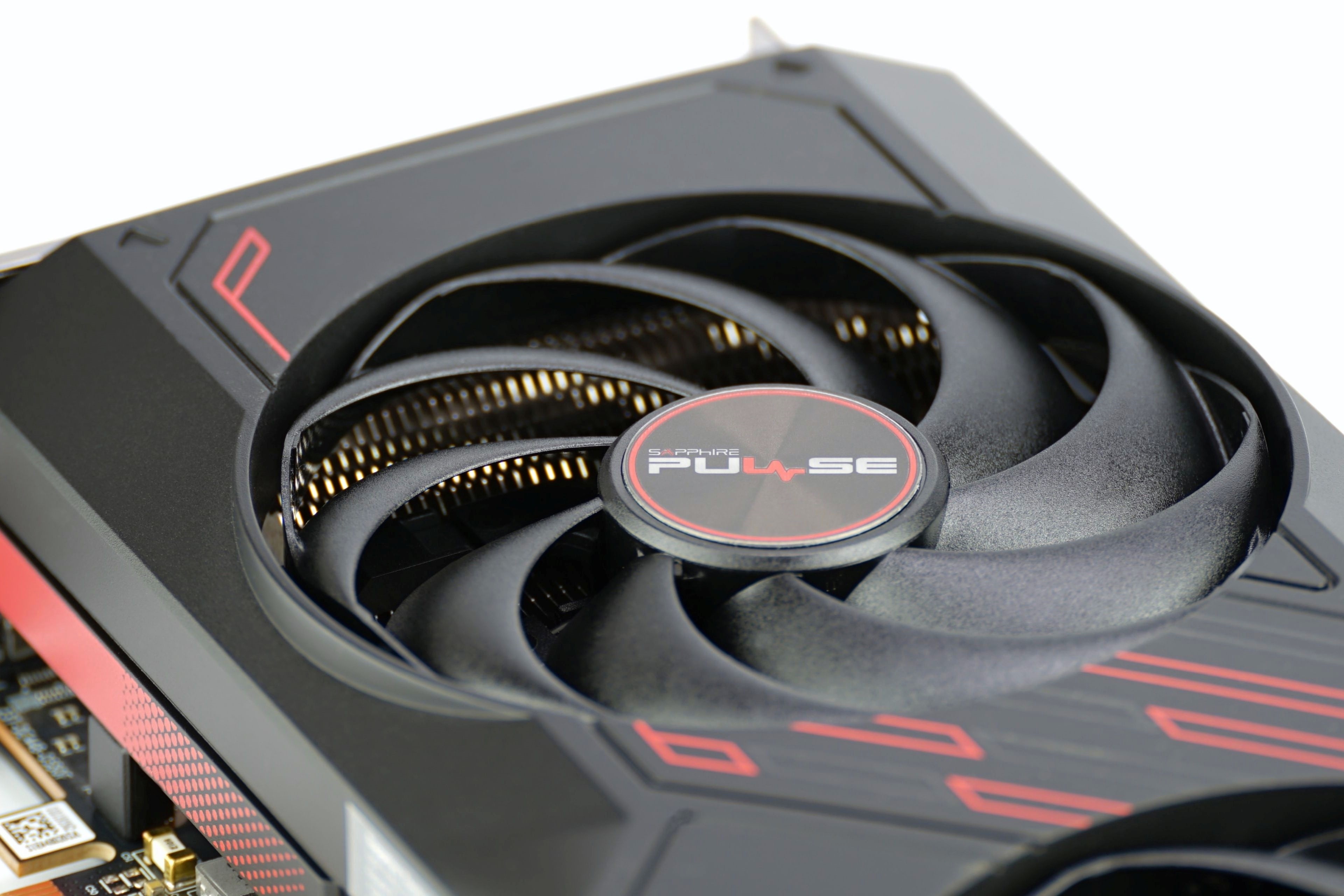
It should also be pointed out here that the RX 7600 is the successor to the RX 6600, followed by the RX 6600 XT (compared to which the relative speed increase of the RX 7600 in games is 13%), and only then there’s the RX 6650 XT. A fairly dramatic improvement of the RX 7600 over this card is also in low-load power draw.During video decoding (HEVC, VP9), the RX 7600’s power draw is less than half. RX 6650 XT and generally Radeons with RDNA 2 (RX 6×50) with faster memories have relatively high power draw. In a web browsing interface, the RX 6650 XT still has the highest power draw of any graphics card we’ve tested. This is due to the fact that in this type of workload, the drivers already enforce maximum VRAM clock speeds, which seems to require a more aggressive power supply due to its superior bandwidth. And this is reflected in higher power draw.
We recently wrote about how second monitors no longer dramatically increase Radeon power draw, which is true, but only applies to the more powerful RX 7900 XT models(X), With the RX 7600, power draw increases with the addition of a second monitor (in our model situation, it’s 4K@60 Hz). Less than we once measured with RX 6600 XT, but there is still a difference. Probably caused by the fact that weaker graphics cards can’t cope with these increased demands at lower frequencies. Idle power draw is otherwise pleasantly low on the Sapphire RX 7600 Pulse, at just over 5W (i.e. half the power draw of the cheaper GeForce cards RTX 3060 and RTX 3050).
In a separate article, we have already discussed how big the benefit (and what is behind it…) of the RDNA 3 architecture can be compared to RDNA 2 in terms of computational performance. In exceptional cases, the increase in speed due to “dual-issue” (the ALU processes two operations per cycle instead of one) is really extremely high. For example, in CATIA, the RX 7600 is twice as fast compared to the RX 6650 XT, which is already close to the theoretical maximum. There is a very significant increase in speed in Blender, but also in animation rendering, for example. Here the RX 7600 Pulse under OpenGL beats even the RTX 4060 Ti, so it will definitely have the upper hand against the equivalent RTX 4060.
The difference in application performance in practice can often be lower, sometimes “only” some 20% (or below this level) over the RX 6650 XT, but it will still be significantly higher than gaming performance between generations. But the increase in computing speed also means that the RX 7600 already surpasses the RX 6650 XT in power draw. The situation is reversed in gaming (where the Radeon RX 7600 draws less power), but power efficiency is comparable at worst. This means that the percentage increase in power draw is not greater than the gain in speed.
Whichever way you look at things, at a price of around 300 EUR, denying a graphics card like the RX 7600 a “Smart buy” award would be very unfair. The price/performance ratio here is excellent not only from a gaming perspective, but also from a computing perspective. Beware of contradictory conclusions, they don’t look at things from enough angles. They are, in short, textbook cherry-picking.
English translation and edit by Jozef Dudáš
| Sapphire RX 7600 Pulse |
| + High performance, optimal for 1080p gaming |
| + Top-notch price/performance ratio... |
| + ... and especially with respect to computing tasks |
| + Support for AV1 encoding |
| + Smaller dimensions, better compatibility with everything around |
| + Effective cooler. Quiet by the standards of the lower range (Sapphire Pulse) |
| + Low idle power draw |
| - Weaker efficiency even compared to the GeForce RTX 4060 Ti (RTX 4060 will be significantly more efficient) |
| - DisplayPort only in version 1.4a |
| Odporúčaná koncová cena: 299 EUR |
For cooperation in providing the tested hardware, we would like to give special thanks to the Datacomp e-shop






Typical loud coil whine from Sapphire. I have a different view on the 7600 though. For me, this GPU underdelivers at 300 euros. The efficiency improvement over Navi 3 is not great. It may look OK vs insanely overclocked 6650XT, but vs 6600XT the picture will be different. It’s a mere 6nm, unlike the much more efficient 5+6nm 7900XT and XTX. When the 4060 non-Ti with identical performance (or maybe -2%) is out at 330 euros, it will be a much better buy with its 100-105W power draw in games, no crazy hotspot temps, and drivers that can be trusted. Both of them are quite bad for new titles with 8GB of VRAM and their performance is disappointing vs the last gen at the MSRP, but the 4060 can at least brag about a huge efficiency jump over the last gen. The 7600 is basically an uninspiring 6650 XT refresh in 6nm.
When it comes to gaming performance, yes the RX 7600’s efficiency is indeed equal to that of the RX 6600 XT.
To the price: It is also in my interest to have everything as cheap and high quality as possible, but I admit that I don’t understand what the problem is with RX 7600. Apart from the slightly cheaper Radeon RX 6650 XT (with many disadvantages compared to the RX 7600), the RX 7600 still has a comparable price/performance ratio. The moment the RX 6000 series ceases to exist on the market, only the RTX 4060 will be in a similar price class, which at a similar speed and at the same time significantly lower power draw will be, of course, technically more attractive, but also a more expensive option. For the casual gamer, who is more concerned with price/performance ratio than lower power draw and lower noise, there is nothing better than the RX 7600 in the end.
I don’t want to get into an opinion dispute with anyone, everyone takes different things into account when evaluating a graphics card, so we always try to test as many as possible… but the media image about how the Radeon RX 7600 is not worth it at all and how it’s garbage is far-fetched and seems really unfair to me.