


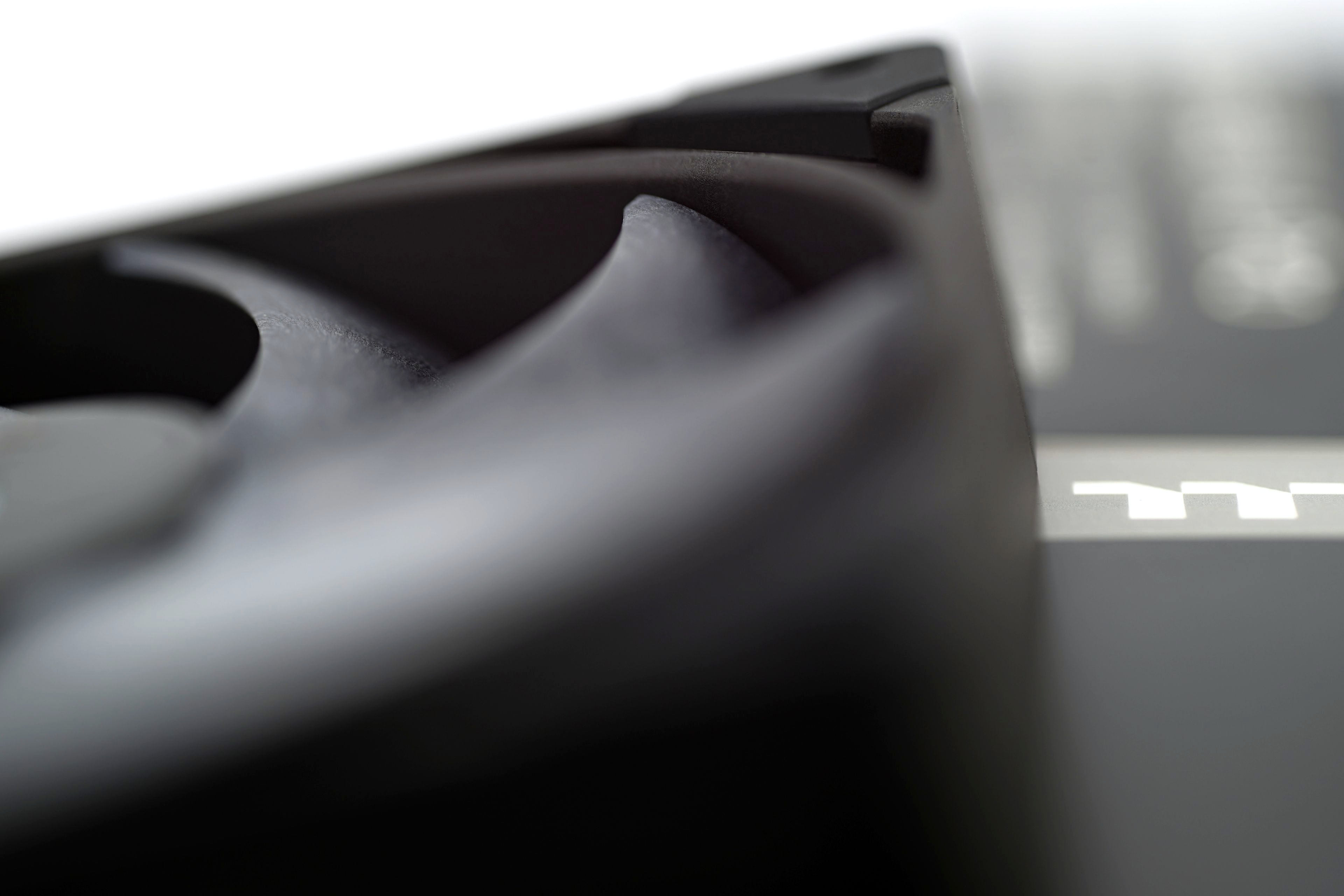
While the selection of high-end 140mm fans is quite narrow, there is one model that may be of interest to you. Especially if you want the “most effective” for your radiator, at low noise levels. Certain features of the high-end admittedly don’t appear on the Toughfan 14 Pro, but when it comes to cooling radiators, Thermaltake’s fan doesn’t have much competition in this discipline. It will defend its place in silent builds. Although…
Results: Speed
Note: The stated speeds are measured in a non-restrictive, obstacle-free environment. With obstacles present, the fans will be slowed down. The degree will vary fan to fan but the achieved speeds will simply be slightly different. They are lower mostly in modes normalized by different noise levels.
Why is there a missing value sometimes? There may be more reasons. Usually it is because the fan could not be adjusted to the target noise level. Some have a higher minimum speed (or the speed is low, but the motor is too noisy) or it is a slower fan that will not reach the higher decibels. But the results in the graphs are also missing if the impeller is brushing against the nylon filter mesh. In that case, we evaluate this combination as incompatible. And zero in the graphs is naturally also in situations where we measure 0.00. This is a common occurrence at extremely low speeds with obstructions or within vibration measurements.




It’s a bit weird that the MTBF is 40000 hours, which translates to 4.6 years of non-stop use, but they offer a 5-year warranty. Are they expecting that a large number of fans will fail before the warranty period ends?
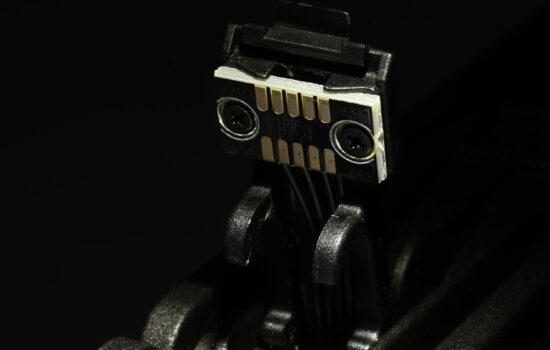
If the clacking is indeed due to poor fitment of the magnet, is it something that can easily be fixed by the user?
With that kind of price and such good performance, I wish they’d increase the price a bit and use better bearings. Spending money on LCP rotor with tight tolerances but skimping on the bearing is a bit weird.
They are rapidly iterating on the design though. Just recently, they have released the EX Pro models which have magnetic connections and user-replacable rotors. Perhaps allowing you to service the bearing yourself is their answer to longevity concerns.
I believe that most users do not have their computer turned on 24 hours a day, 365 days a year and on this basis I assume that Thermaltake has a similar approach to the topic. Therefore i suppose, the MTBF is shorter than the warranty itself.
There are too many question marks around the MTBF/MTTF values and personally they are abstract, ungraspable. Does the numerical value pertain to the maximum speed? Minimum? Or to some normalized speed? The lifetime of a fan is also dependent on its operating speed… only the operating temperature is always given at this value, but what about other characteristics of the surroundings? I guess it is calculated without dust? Or, on the contrary, strong pollution? These things will also have a big influence on the lifetime and probably the cheaper the fans, the bigger. Some bearings are better, others are worse insulated against dust and this leads to hardening of the lubricants typically due to the unclean environment (by mixing with dust particles), which with use reacts more to the increase in friction/power consumption of the fan, until it eventually grinds to a halt sooner or later, depending on the power of the motor.
Even if we were clear on all the variables, I would be more interested in the variance than the mean time between failures. And if these values (MTBF/MTTF) are only the result of estimates under some operating conditions, I consider their informative value to be borderline close to zero. I have tried to shed more light on this also in communication with mechanical engineers, who are closer to these things thematically, but what I write is actually from them.
It’s hard to say about the magnets, but it makes sense given the nature of the clacking sound depending on the position of the fan. And anyway, that clacking sound is not a typical motor sound, nor is it the sound of a bearing. So yes, it is hard to say with 100% certainty, but it is likely that the more or less pleasant sound of the fans is influenced by the workmanship of the magnets. This makes sense to me and that is why we have pulled this statement out of the discussion and into the text of the article as a possible cause. But maybe there is another explanation for the sound… it would be great if someone contributed here (to the discussion) with a more detailed analysis with proper data.
PS: Well, the real number one for radiators is probably the EX14 Pro, if we take into account the mounting, or rather the practical magnetic installation with one cable to the motherboard/hub. Although I am a bit worried that the connector could be overloaded with a current higher than 1 A. Especially after some time of use, after which the power consumption of the fans will naturally increase a bit. It seems to me to be quite on the edge (the sustained peak load of the three new fans at max. speed is ~0.98 A). Perhaps it would be advisable for Thermaltake to recommend connecting a trio of Toughfan EX14 Pro to a 3-amp header (are there any with PWM support? As far as I vaguely remember, I’ve only seen overdimensioned 3-pin DC headers on boards, but I’m not very familiar with this… some PWM headers for pumps could perhaps handle loads up to 2.5 A)? It’s hard to say what the VRM margins are of regular, 1-amp fan headers. I can imagine that in some cases, three such fans will have, during spikes, at least over 1 A, for example when trying to reach higher speeds. The power of the TF (EX)14 Pro’s motor is really high.
I am very happy that the article mentioned my previous comments. I often browse the reviews on your website, especially those about fans.
I am in China, and because this fan is manufactured in China, I could buy it from the channel around May last year.
After trying them out for a long time, I found that TOUGHFAN 12PO and TOUGHFAN 14PRO both have this problem. The impact of magnets causes occasional abnormal noises. Not only that, LIANLI P28 also has similar problems. These three fans are all my favorite among the new products released last year, but the magnet problem is regrettable.
I have also released some fan noise audition videos in China and mentioned these issues, such as https://www.bilibili.com/video/BV1Yu4y1H71G at 10:19
Of course I am not a professional reviewer, just a player who likes to play with fans.
Don’t underestimate yourself. 😉
There are enough people who pretend to understand fans (and computer components in general)… but there are only a handful of people who really have something to say (and bring useful information with their work). And to this group you undoubtedly belong. Fingers crossed for your future work!
Thanks for the comment! And I am glad that this knowledge comes from your own observations. Now I’m very sorry that I don’t speak a word of Chinese, because your acoustic analysis of fans is perfect. A lot of the information is clear from the excellent presentation in the graphs, but I would still very much appreciate understanding the verbal commentary. I’m sure more HWCooling readers would be interested. Are your tests also available in text form (easier to translate), or are there “only” videos available?
Anyway, it is necessary to focus on these things and not to confuse them with the sound of the bearings, which is probably what some people will tend to do, even though bearings cannot technically produce such a sound at such a frequency.
One interesting thing: Note that we measured a higher static pressure with the radiator than without it (without an obstacle). At first glance this may seem like a measurement error, but we can assure you that it is not. In the framework of repeatability of measurements we have focused on this unusual phenomenon and although it is difficult to make any big analysis from these results, one thing is certain. Namely, if one only works with P/Q curves where the airflow is measured at zero static pressure and the static pressure at zero airflow, one will not come to the conclusion about how dominant Toughfan 14 Pro really is on radiators.
Here too, the seemingly meaningless measurements of “static pressure through obstacles” show remarkable correlations. Naturally, the radiators decrease the airflow of the Thermaltake fan, but the static pressure increases in this interaction. This can be attributed to the effective reduction of the “reactive” cross section in the inter-blade space. This is similar physics to what works with smaller fans. Their airflow decreases with the cross-sectional area, but the static pressure remains high. For this 40 mm model at 10,000 rpm, Alphacool quotes up to 11.92 mm H2O. And that, even if in reality it will be half, is still a lot. 🙂
Please do P14 max test!
Don’t worry, he will do it…and not just the Max variant 😉
Arctic P14 Max fan tests will be coming, they’re up next. We’ll approach this in the form of a sort of “trilogy” that will start with the P12 PWM PST, continue with the P12 CO PWM PST, and end with the P14 Max. For a full evaluation of this latest Arctic fan (P14 Max), we consider the results of the P12 (CO) PWM PST to be important.