


The culmination of our trilogy of tests of Arctic’s 140mm fans is here. With the P14 Max, the designers have worked on improvements that change both the acoustic properties and performance of the fan. The main new feature, the hoop, allows for, among other things, a significant speed increase, due to which this fan can have a really high airflow. On the other hand, fans of extra low speeds will not be too pleased.
Measurement of static pressure…
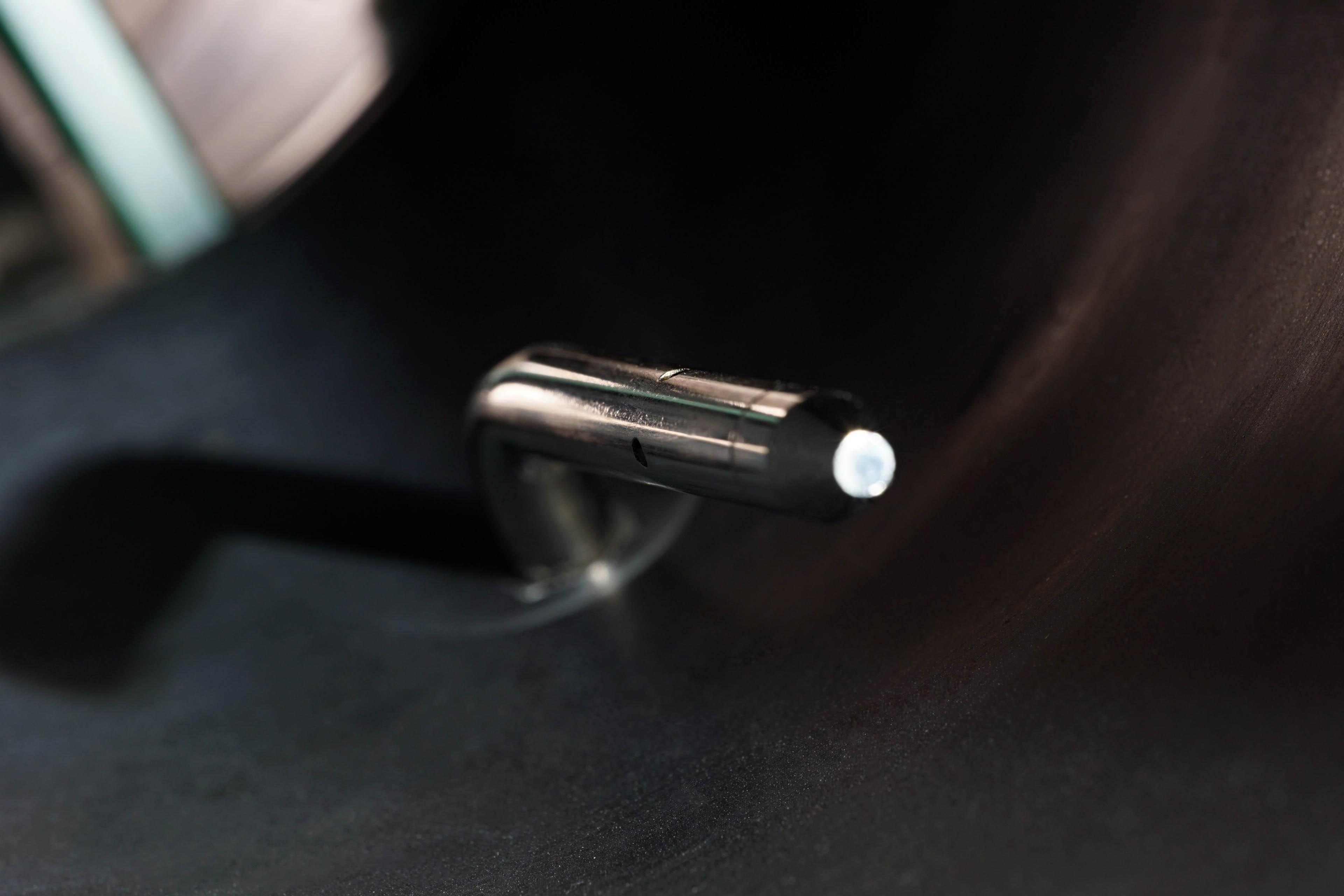
Finally, it is time to move further down the tunnel a bit. Just behind the fan is a static pressure sensing probe. Its position has been chosen with maximum measurement efficiency in mind. In other words, the sensors are placed at the points of highest pressure (although this is virtually the same everywhere in the unconstrained part of the tunnel).
The Fieldpiece ASP2, which is connected to the Fieldpiece SDMN5 manometer, is used to measure the static pressure in the tunnel. The latter also allows measurements in millimetres of water column, but we measure in millibars. This is a more finely resolved base unit for this meter. And only from there we convert the measured values into mm H2O to allow easy comparison with what the manufacturers state.
While we wrote when measuring noise levels that our results could not be compared with the parameters, that is no longer the case here. As long as the fan manufacturers do not embellish the parameters, they should quote approximately the same pressure values as our tests show. The most significant deviations can only arise at the level of varying accuracy of the measuring instruments, but these are negligible percentages.
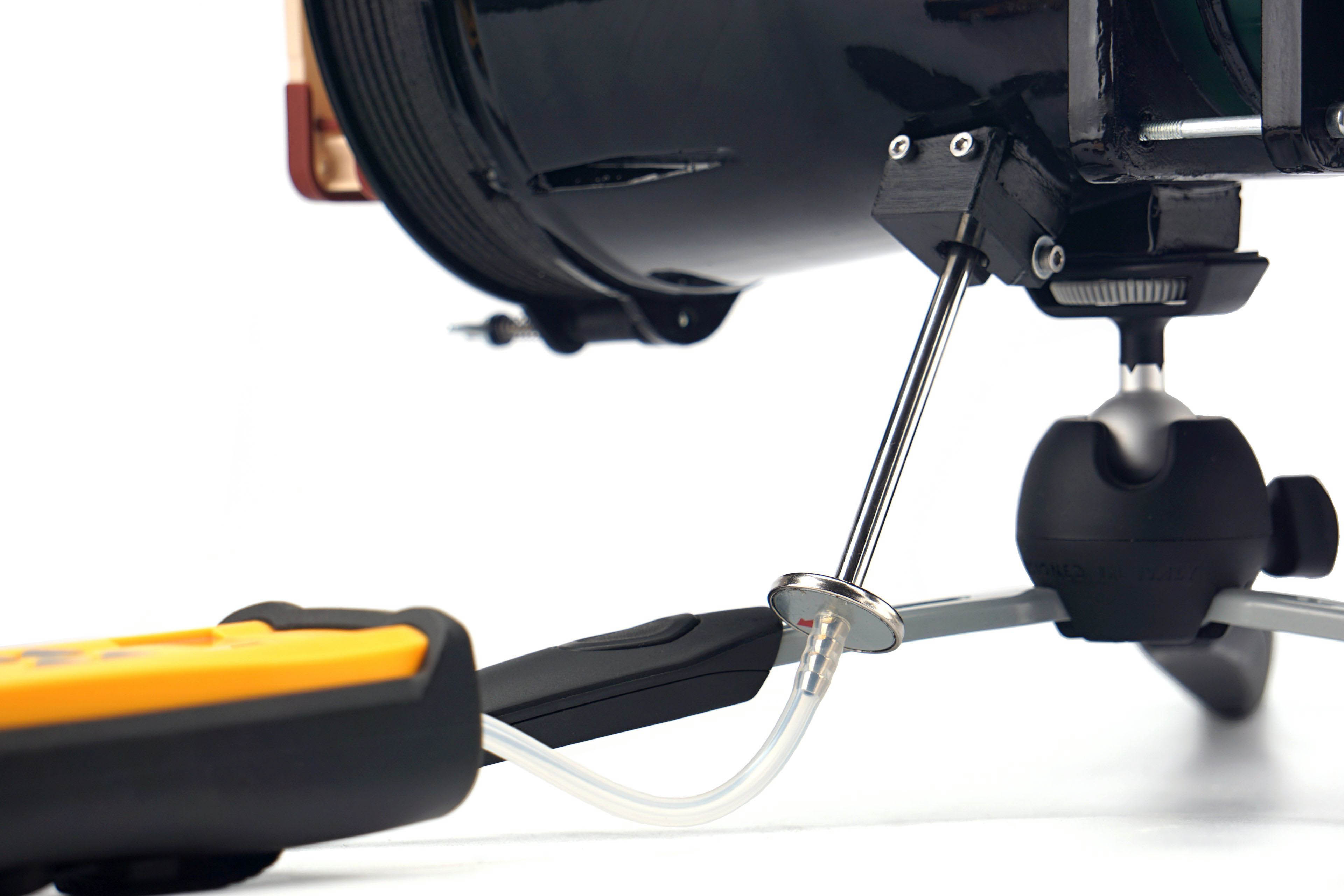
The greater the difference between the manufacturer’s claimed values and ours, the less the specifications correspond to reality. If the claimed values are significantly higher, it is certainly an intention to artificially give an advantage to the fans on the market. However, if the manufacturer quotes a lower pressure value than we do, it points to something else. Namely, a weaker tightness of the measuring environment. The less tight the tunnel is, the lower the pressure you naturally measure. This is one of the things we tuned for an extremely long time, but in the end we ironed out all the weak spots. Whether it’s the passage for the probe itself, the flanges around the anemometer, even the anemometer frame itself, which is made up of two parts, needed to be sealed in the middle. Finally, the flap at the tunnel outlet must also be perfectly tight. That’s because static pressure has to be measured in zero airflow.
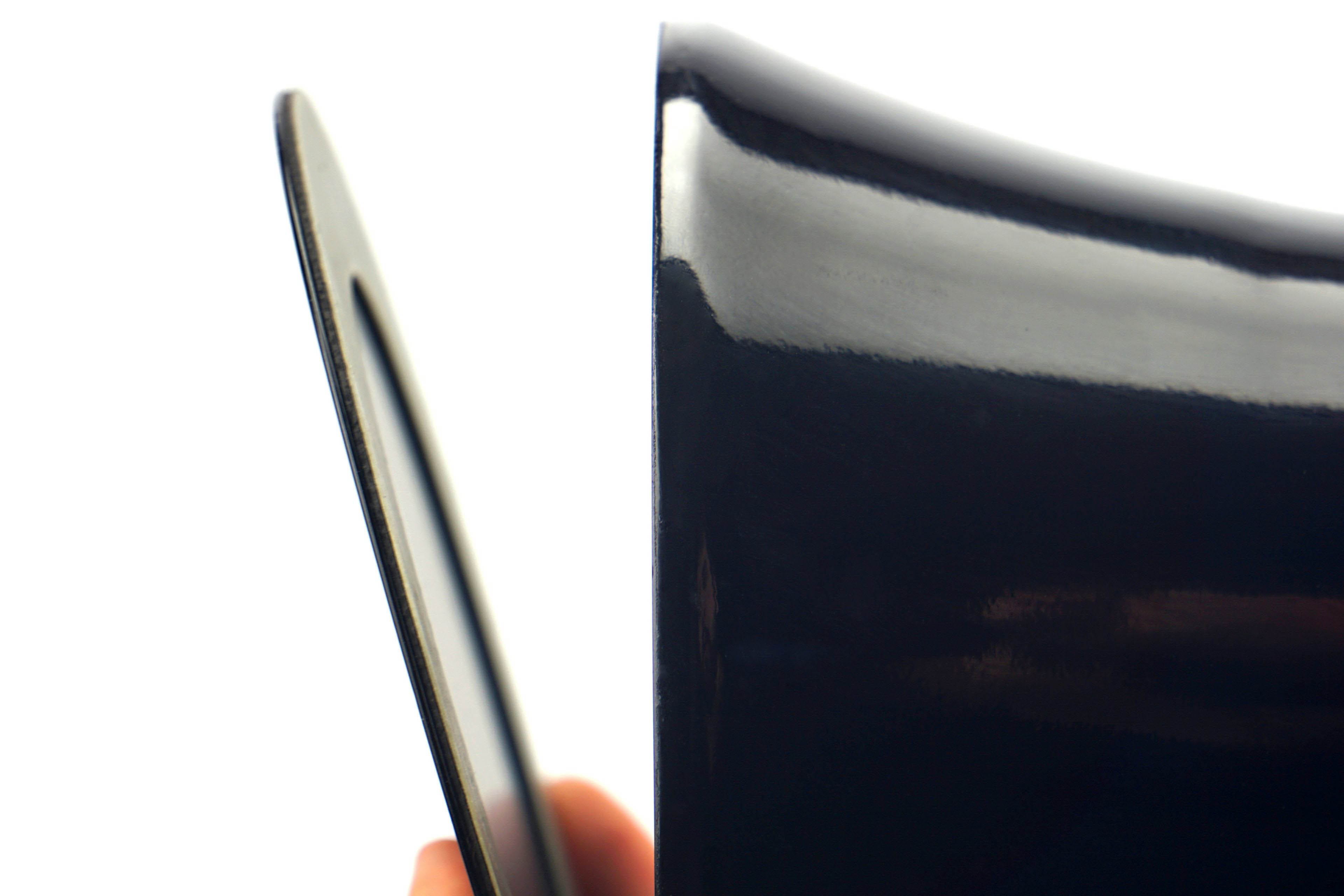
But there is one thing that often lowers the pressure of the fans a bit. And that’s protruding anti-vibration pads in the corners or otherwise protruding corners. In other words, when the fan doesn’t fit perfectly to the mounting frame at the inlet, and there are small gaps around the perimeter, that also affects what you measure. But we have not gone into this because it is already a quality feature of the fan. In the same way, it will “stand out” and perform a bit weaker than it has the potential to do with better workmanship, even after application by the end user.




Really, really interesting results.
I have heard that the P14 max suffers from motor noises, but it’s clear now that it’s only at <900 RPM where it's unstable.
The outer ring having almost no impact on noise profile is very surprising. Well, at least in the no obstacles environment. The huge impact of the ring on noise profile on radiators, despite having no effect otherwise, is even more surprising. Perhaps the back pressure cause deformation of the blades or something like that?
P.S. The links to radiator frequency plots are broken in the English version.
Thanks, fixed! 🙂
From the measurements on the fan frame, we know that the P14 Max is not a source of significant vibrations even at medium speeds, and yet the tonal peaks at low sound frequencies are quite high. We can assume that the vibrations on the blades will also be very weak and in a situation on a radiator, due to its resistance, the character of the vibrations may change. And they may move out of the unpleasant resonant frequencies. I guess it could be like this, that is, unless someone comes up with a more realistic theory. 🙂
Anyway, the fact is that the color of the sound on radiators is quite pleasant. That is, on our testing ones. Of course, you can’t generalise this.
The unpleasant tones that occur at certain RPMs are primarily from blade and frame spar resonance, and the source of their excitation is essentially unrelated to aerodynamic factors, and is primarily from the torque ripple of the motor. You can test the frequency of the anomalous tone at a particular RPM, and the RPM at which it occurs and the frequency of the sound wave will form some sort of mathematical relationship to the number of poles/coils in the motor (i.e., the frequency of the motor’s torque ripple) and the RPM at which the anomalous tone occurs won’t change, regardless of whether you increase the impedance or create a pressure pulsation that interferes with the blade’s aero-dynamics work.
Distinguishing a resonant noise from a blade or frame can be accomplished by observing a significant increase in frame vibration at the onset of the anomalous tone, and by observing a diminution of the anomalous tone when the frame tabs are pressed down.
However, note that in high speed (e.g., 4000+ rpm for 120mm fans) plastic impeller fans, the frequency of blade resonance rises slightly at high rpm due to pre-stress from blade deformation. The intrinsic frequency depends mainly on mass distribution and rigidity, and it is not easy to balance mechanical reliability and aerodynamic performance.
https://noctua.at/en/custom-designed-pwm-ic-with-scd
It would seem like this technology is a (partial) solution to this problem. Are there other ways of mitigation?
That wind tunnel looks great!
Did you have a chance to check whether the p12 max has the same instability issues at low rpm?
I have heard from users that it’s also a problem for P12 Max. ThermalLeft’s tests collaborates with this, where the P12 Max has relatively strangely low airflow at the lowest and second lowest noise settings (corresponds to roughly <=1150 RPM).
That’s exactly what I was looking for. Thanks a lot.
Not yet. But I believe that sooner or later we will get to it. But it will be as M writes, referring to the ThermalLeft’s results database. Fans with an extremely wide speed range usually have higher minimum speeds, unfortunately. Especially when it comes to cheaper models, which include the Arctic P12 Max.
In several places, there are considerations about the P14 Max in the context of quiet operation… it’s worth being careful with those higher stable speeds in the lower RPM range. It isn’t necessarily completely silent. 🙂
In several places, there are considerations about the P14 Max in the context of quiet operation… it’s worth being careful with those higher stable speeds in the lower RPM range. It isn’t necessarily completely silent. 🙂