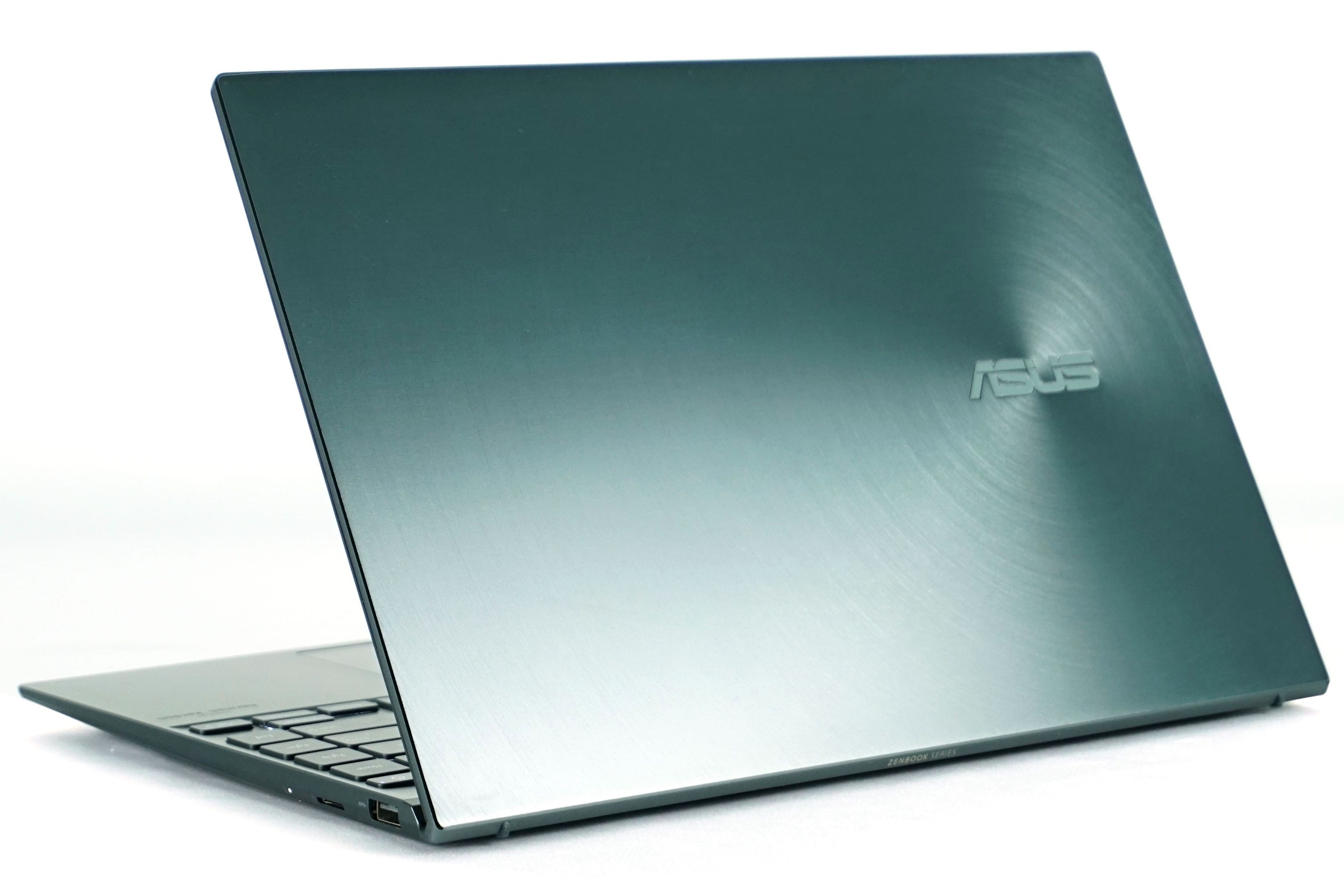
Intel brought the 11th generation of processors relatively quickly, which naturally means that most laptop manufacturers have updated their models. These include Asus, which in addition to the new Flip S also introduced a revamped ZenBook 13 and 14. We reviewed the last generation’s 14, now we will test the smaller 13-inch model. Expectations are high, as I considered the ZenBook 14 to be one of the best ultrabooks of the year.
Rendering, Geekbench
The 10th generation of Intel processors appeared in several devices, but as we were able to observe, the differences in the performance of the Core i7-1065G7 across the devices were quite large. We will see if the situation will be repeated with the new i7-1165G7, which we’re having here for the second time. We will therefore compare it with its direct predecessor, but we will not forget a representative from the Ryzen model portfolio.
Let’s start traditionally with Cinebench R15 for a first look at the raw performance of the processor. Single-core confirms the high performance we’ve seen with the Flip S, but the ZenBook 13 is even better. It beat the Flip S by 12% and the previous ZenBook 14 by 21%. The Acer Swift 3 with Ryzen and the XPS with the Ci7 lag behind by a few more percent. However, we have seen greater differences in multi-core tests in the past, which has been confirmed now. The ZenBook 14 with the 10th gen Intel lost by 22% to the XPS, while having the same processor. The new Flip S with the 11th generation was not enough for the XPS, by 8%. However, the new ZenBook 13 already beats the XPS by 6%. Nevertheless, the multi-core table is clearly dominated by the Swift 3 with an 8-core Ryzen with a lead of another 23%.
The Cinebench R20 shows basically identical results, i.e. a high score of the ZenBook 13 in single-core and a better result in multi-core than all other Intel models, but a loss in multi-core to the Swift 3.
We do not yet have enough data in the new R23 to draw any conclusions.
The Blender and POV-Ray hands-on tests were a daunting test for both the ZenBook 14 and the Flip S, as performance dropped dramatically in such long tests. The new ZenBook 13 is a bit better and it finished POV-Ray by 23 and 32% faster than the Flip S and the 14. However, it’s still slower than the XPS, and the Swift 3 shows high multi-core performance here as well. The situation is very similar in Blender.
Single-core results in Geekbench 3–5 also show the lead of ZenBook 13 over the Flip S (19/1/3%), the old 14 (14/16/21%) and the Swift 3 (18/35/33%). In multi-core we also see differences, although this time in a slightly different ratio – Flip S (30/8/16%), old 14 (17/17/23%) and Swift 3 (-24/9/7%). It is interesting that in the oldest Geekbench, the Swift with Ryzen is the fastest, but with newer versions, it already loses to ZenBook 13.
The Compute graphics test shows that the Flip S is 10/16% faster, while the last-generation ZenBook 14 lags behind by -40/-44 and the Swift 3 with Ryzen by -16/-21%. We will see if these results will be confirmed in other graphics tests.