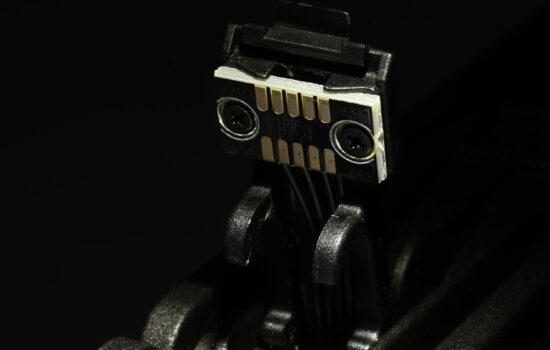
Easier installation? Yes, that’s why it’s done. Daisy-chaining fans using contacts in their frames is great, but it often also comes with pitfalls that reduce “cooling efficiency”. Manufacturers deal with this in different ways. One does it technically one way, another differently. In any case, they know that a frame that is too thick means less space for the blades. And that does not improve airflow per unit of noise. Read more “Fan frame daisy-chaining trend. When is it (not) helpful”
Unified Core: Breakthrough Change Is Coming To Intel CPUs
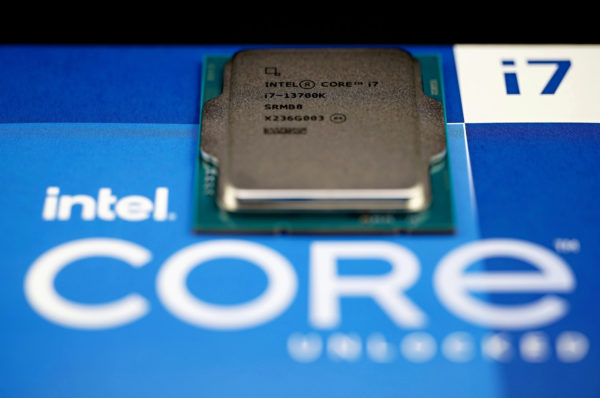
Since 2021 Intel has been using a hybrid CPU architecture with big and little cores (starting with 12th-gen Core CPUs, though it had already been tried a year and a half earlier in the Lakefield SoC). However, the little “E-Cores” derived from former Atom SoC are quite unpopular among some. Now, a radical change is emerging on the horizon—instead of maintaining two completely different core architectures, Intel is moving to a single one. Read more “Unified Core: Breakthrough Change Is Coming To Intel CPUs”
Phanteks T30-140: Exceptionally efficient XXL fan
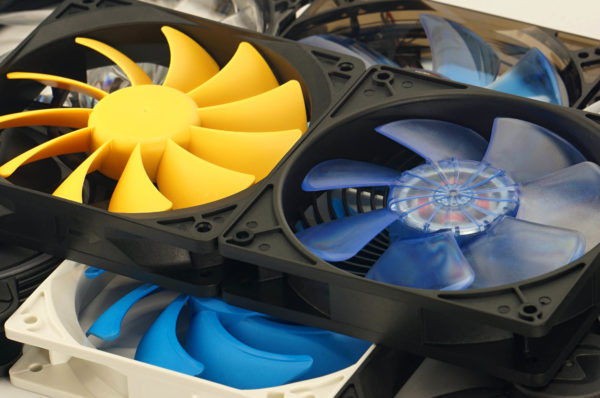
It arrived quietly, but we had been looking forward to it for a very long time. In its form factor, the Phanteks T30-140 fan works wonders and often defeats everything that stands in its way. Yes, even the Noctua NF-A14x25 G2 PWM is often the “next in line”, albeit at the cost of a thicker profile. Airflow is exceptionally high (and consequently cooling performance) through obstacles. Larger fans now have a new dominant model. Read more “Phanteks T30-140: Exceptionally efficient XXL fan”
Bartlett Lake, Intel’s P-Core Only CPUs: Models and Specs
We’ve previously covered Bartlett Lake, a remarkable CPU generation from Intel that resembles something of a parallel Plan B product. While Arrow Lake is being sold for the desktop LGA 1954 socket, Bartlett Lake continues to use LGA 1700, is manufactured on a 7nm process, and supports DDR4 memory. Most notably, it drops E-Cores entirely and consists solely of “big” cores. We’ve now learned the complete specs of these chips. Read more “Bartlett Lake, Intel’s P-Core Only CPUs: Models and Specs”
Zen 6: How Many Cores Will AMD’s New Desktop Processors Have?
Recently, we’ve covered upcoming Intel products a lot, but here’s something for the fans of AMD looking forward to its next-generation Zen 6 architecture processors to be excited about. In addition to new cores and a newly designed I/O chiplet—expected to deliver better memory performance and lower power consumption—Zen 6 is primarily set to increase core counts.And the actual core counts for various individual models has now surfaced online. Read more “Zen 6: How Many Cores Will AMD’s New Desktop Processors Have?”
Small, affordable: Endorfy launches Signum M30 (μATX) cases
More compact PC cases supporting motherboards up to the Micro ATX format are relatively rare—especially at lower prices, as is the case with Endorfy’s new models, the Signum M30 Air and Signum M30 ARGB. Both models come equipped with three efficient fans, but the more expensive—though still fairly affordable—variant also features colorful lighting. And there is more that makes these cases worthy of your attention. Read more “Small, affordable: Endorfy launches Signum M30 (μATX) cases”
DeepCool FD12 V2: Maximum airflow, minimal price
Lower price, higher cooling efficiency. That is what distinguishes the FD12 V2 fans (compared to their predecessors). DeepCool has improved the aerodynamic performance of the newer FD12 (V2) in several ways, making them more attractive despite the lower price. Much of this is due to the impeller ring, a feature not previously used. Arctic (with the P12 Pro fans) should take notice. Read more “DeepCool FD12 V2: Maximum airflow, minimal price”
New stars in the cooling hardware universe, part 4—TRYX
Established and well-known producers in the field are certainly familiar to our readers. In recent years, several new companies have appeared on the scene that may not yet be widely recognized. This series focuses precisely on such relatively new players. Although these brands have been on the market for a short time, their ambitions, fresh ideas, and technical solutions should not be underestimated. The fourth one is not afraid to experiment. Read more “New stars in the cooling hardware universe, part 4—TRYX”
HAVN H12: Teeth, protrusions… segmentation everywhere you look
Blades, hub—everywhere there are features disrupting an otherwise smooth design. This kind of detailing defines the HAVN H12 at first glance—and the second impression is just as striking. With the kind of geometry the H12 brings to the table, reaching the absolute top tier is possible. In practice, however, it’s essential to find the right scenarios and fine-tune the right settings to end up truly satisfied. Read more “HAVN H12: Teeth, protrusions… segmentation everywhere you look”
Intel chipsets for Nova Lake boards: Specs and features
We covered leaked reports regarding Nova Lake processors recently, which Intel is preparing as the new Core Ultra 400 desktop generation, that should be launching before the end of this year. The leaker known as Jaykihn—currently perhaps the most reliable source on Intel’s roadmap—also shared details about the chipset lineup that will accompany Nova Lake (the CPUs will introduce a new LGA 1954 socket platform). Read more “Intel chipsets for Nova Lake boards: Specs and features”
Interview with Asetek: Pumps are better than fans
We held a focused discussion not only on pumps, but on AIO liquid coolers from Asetek as a whole—and it revealed more than expected. The pumps, in particular, are more robust—and quieter—than they may seem, making deliberate avoidance hard to justify. And yes, we’re continuing. This information-rich interview answers many questions—and if we missed something, feel free to join in and ask. Read more “Interview with Asetek: Pumps are better than fans”
Intel Nova Lake: P-Cores clustered, 52-core draws up to 700 W?
While we wait for the refresh of Arrow Lake desktop CPUs—except the cancelled the top-tier SKU—new details have surfaced shedding light on the upcoming Core Ultra 400 “Nova Lake” generation, expected to deliver a major next-gen leap. The leaks cover power consumption and cooling, as well as the architecture of the high-performance cores in these processors. Intel is preparing a previously unseen change to CPU cache and interconnect design. Read more “Intel Nova Lake: P-Cores clustered, 52-core draws up to 700 W?”
Memory prices to double in Q1 2026 compared to year-end
Once again, we return to a topic that is probably as popular in the PC world as artificial intelligence (and is close buddies with it): memory prices. TrendForce has released their outlook of how DRAM prices—that is, system memory and graphics memory—are expected to develop in Q1 2026. Unfortunately, it appears that the explosive price surge is not staying, but the three months we are now entering could be the worst yet. Read more “Memory prices to double in Q1 2026 compared to year-end”
DeepCool Riddle (2/2026). Can you guess what’s in the photo?
In cooperation with DeepCool, we have prepared a cyclical activity for this year, which may be of interest to HWCooling readers. We’ll post a detail of some piece of hardware and you can guess what it is. You can compete (and eventually win something) on a regular basis, with a new challenge every month. But for now, you need to get “to the next round” through the next one, in February. Read more “DeepCool Riddle (2/2026). Can you guess what’s in the photo?”
New stars in the cooling hardware universe, part 3—Sudokoo
Established and well-known producers in the field are certainly familiar to our readers. In recent years, several new companies have appeared on the scene that may not yet be widely recognized. This series focuses precisely on such relatively new players. Although these brands have been on the market for a short time, their ambitions, fresh ideas, and technical solutions should not be underestimated. The third one has already proven its quality. Read more “New stars in the cooling hardware universe, part 3—Sudokoo”
The end, or just the beginning? 100 fans in HWCooling tests
Our database now includes one hundred fans—75 in the 120 mm format and 25 models with a physical size of 140 mm. In this article, we have compiled all data into unified charts. What was once separated for clarity is now brought together again, and the commentary will also include a… look ahead regarding fan testing. But we can already reveal that there is still a lot more to come. Read more “The end, or just the beginning? 100 fans in HWCooling tests”


Latest comments