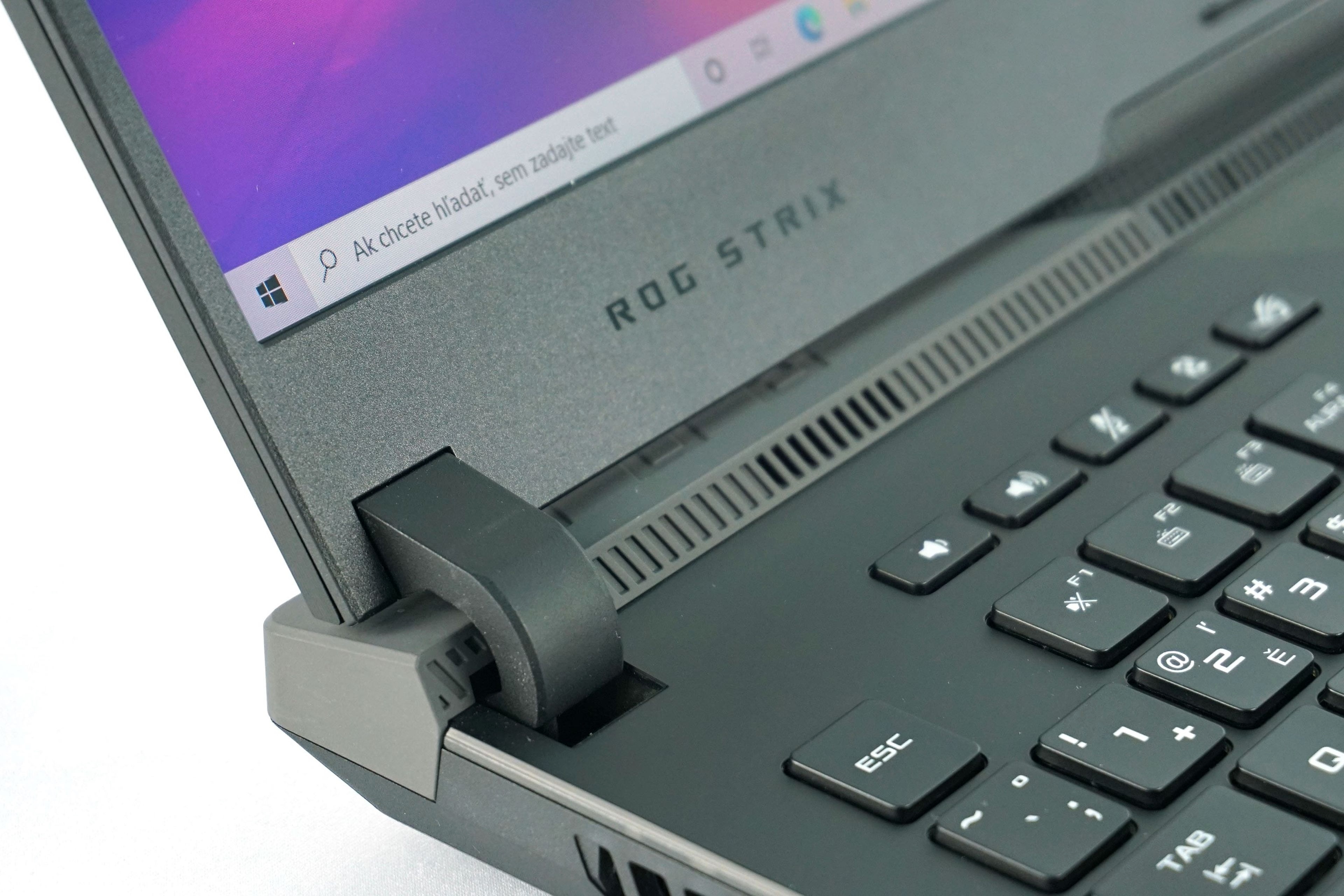
Asus has taken a very bold and quite surprising step this year with its gaming laptop portfolio. It switched extensively to Ryzen 5000 processors and combined them with the new GeForce RTX 3000 mobile graphics cards. The new ROG Strix SCAR 17 is thus the first look at a new stage of mobile gaming, in the highest configuration with 8-core processor and a 16-gigabyte RTX 3080.
Performance modes
The notebook offers the choice of Turbo, Performance and Silent modes in Armoury Crate.
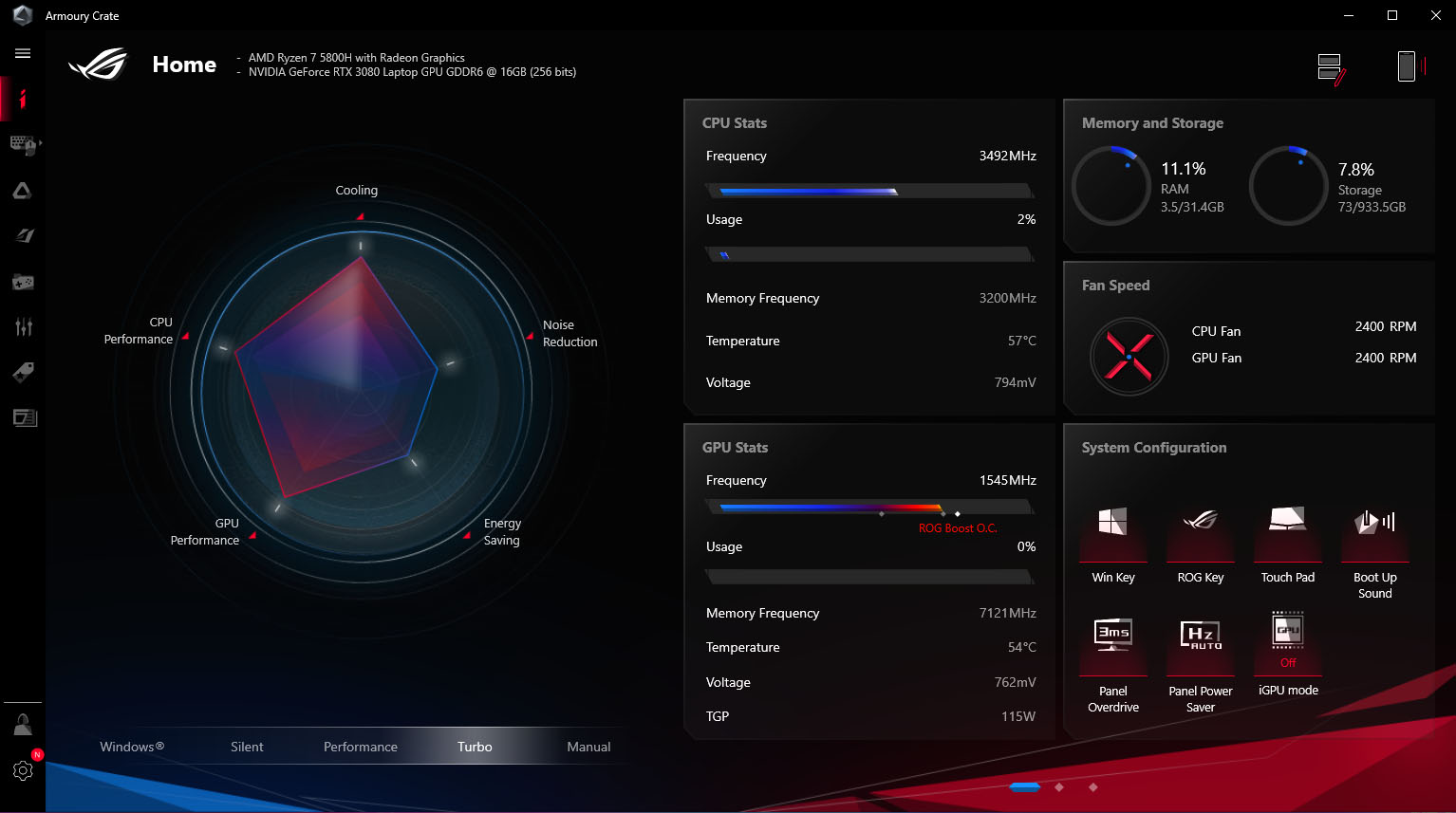
All tests were made in Turbo mode, but it’s worth a look at the differences between the modes. Therefore, we compare the performance curves in the combined load using 3DMark in the Fire Strike benchmark.
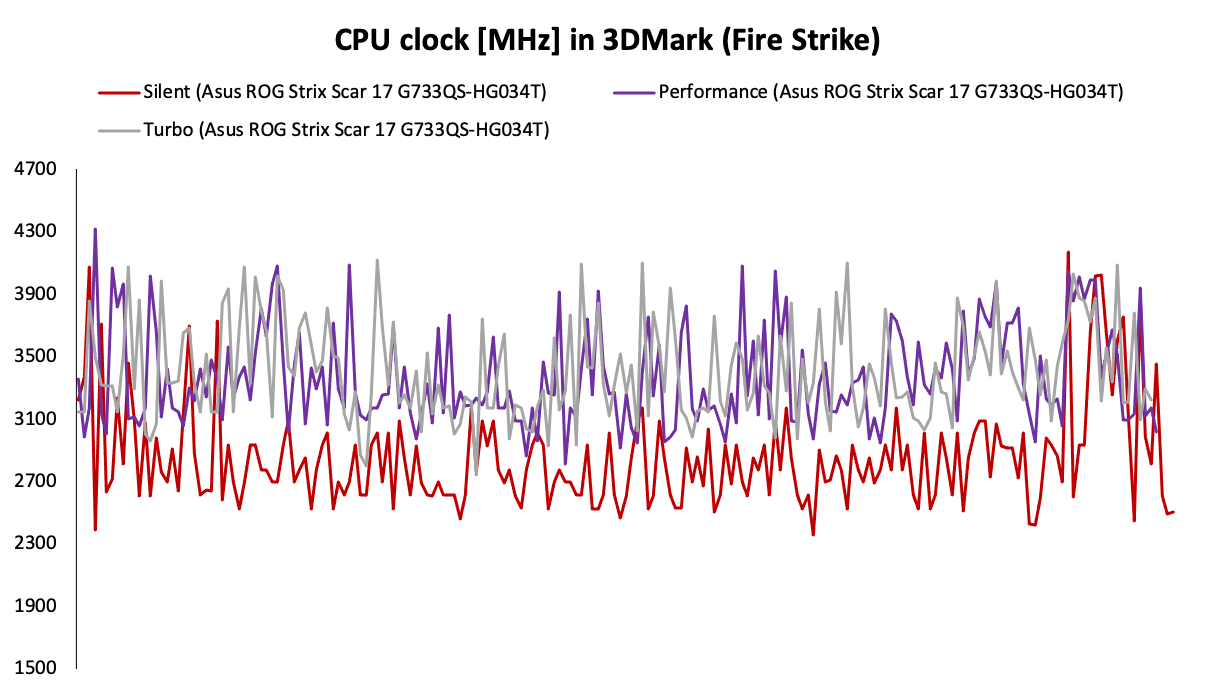
The CPU clock during the test show that Turbo and Performance do not differ significantly, on the contrary Silent is always a few hundred MHz lower.
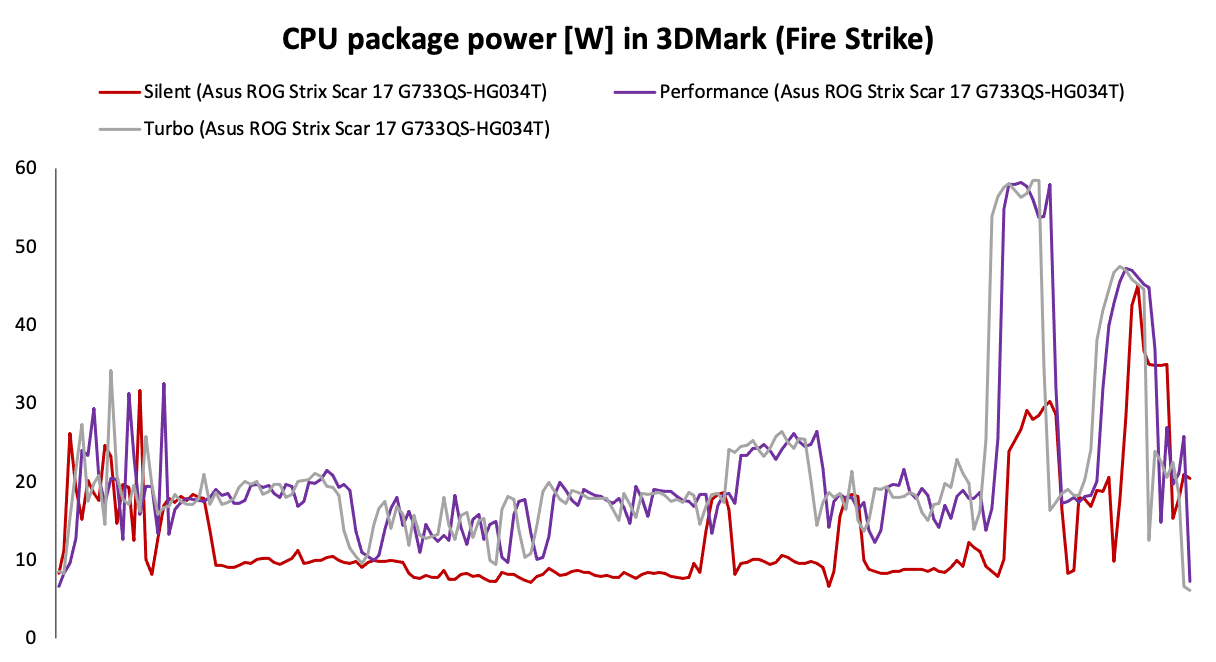
A similar trend is shown by the consumption curve, i.e. Performance and Turbo are almost identical, while Silent has a constantly lower consumption.
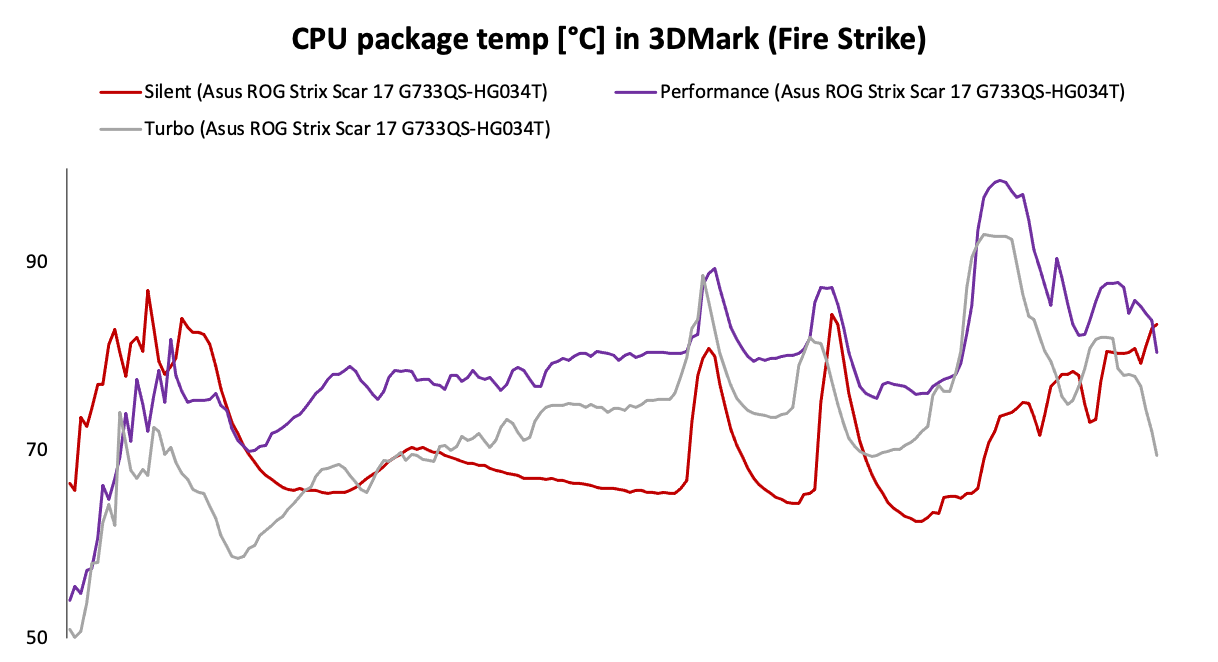
The temperature curve is interesting, where Silent reaches lower temperatures due to lower clock and consumption, which is reasonable. What is more interesting, however, is the difference between Turbo and Performance, where Turbo has better numbers, which is likely caused by a more aggressive fan curve.
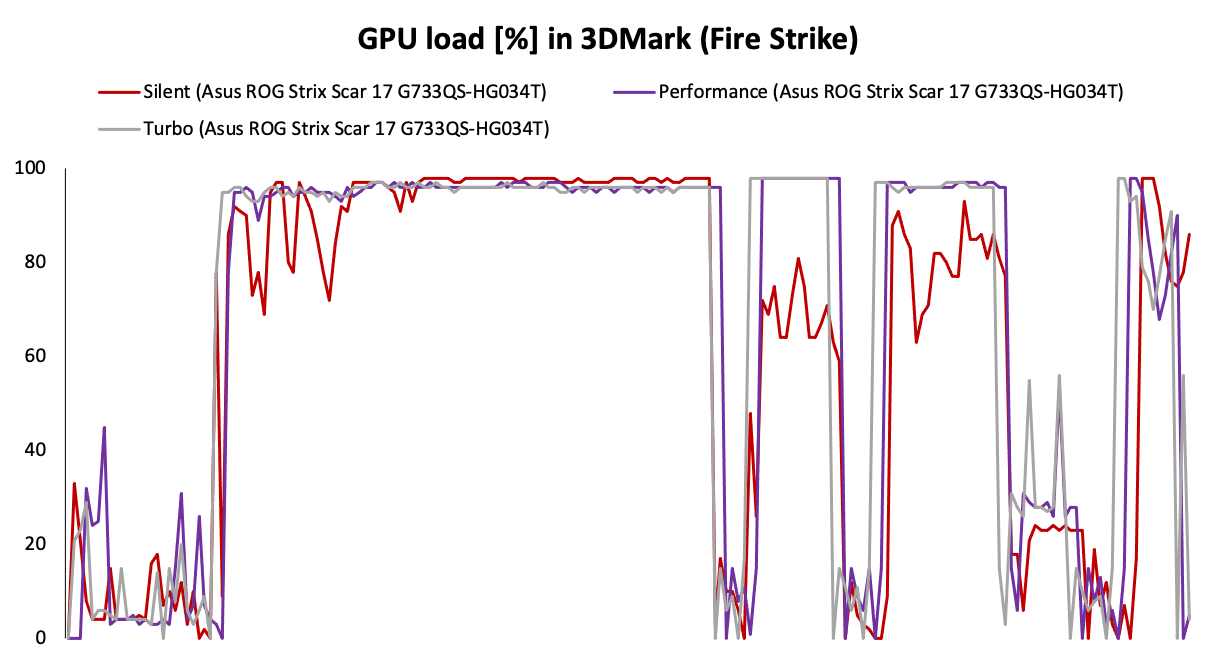
What about the GPU? No differences in load as seen with Blender, so the GPU always runs at full speed, except for two deviations in Silent mode, where in the second half of the test it does not reach the maximum load as the other two modes.
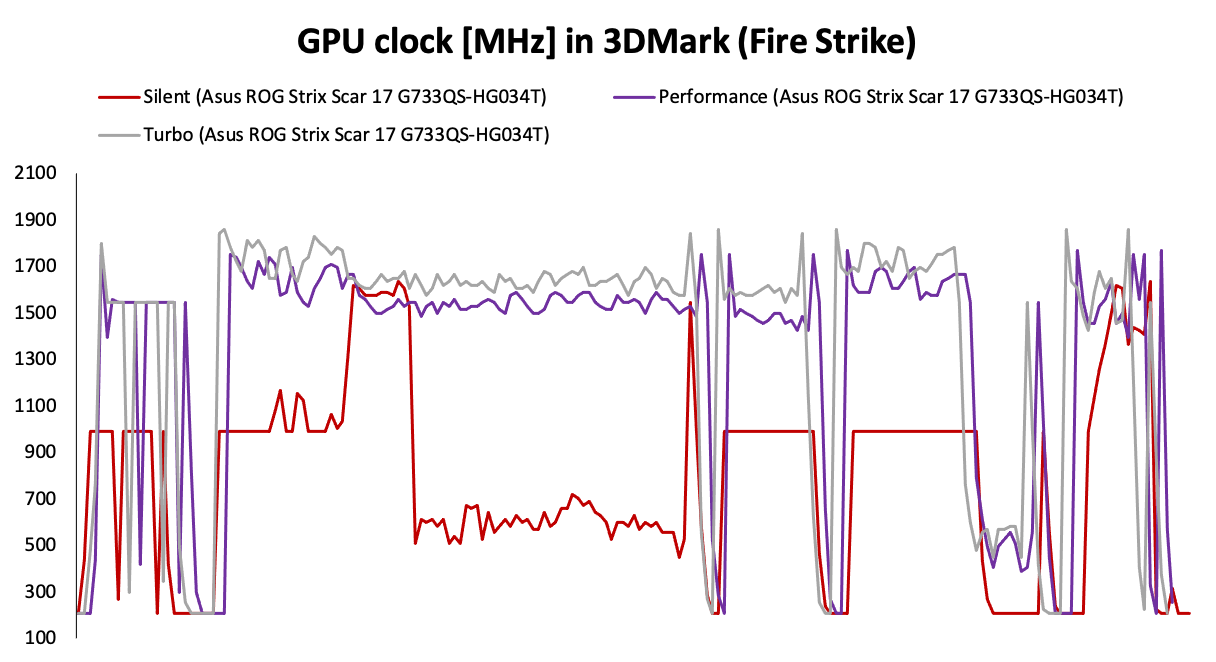
The GPU clock again shows interesting differences between the individual modes. Silent has significantly lower, up to half the clock speed compared to the other two modes. Another interesting finding is that the Turbo still has slightly higher clock than the Performance.
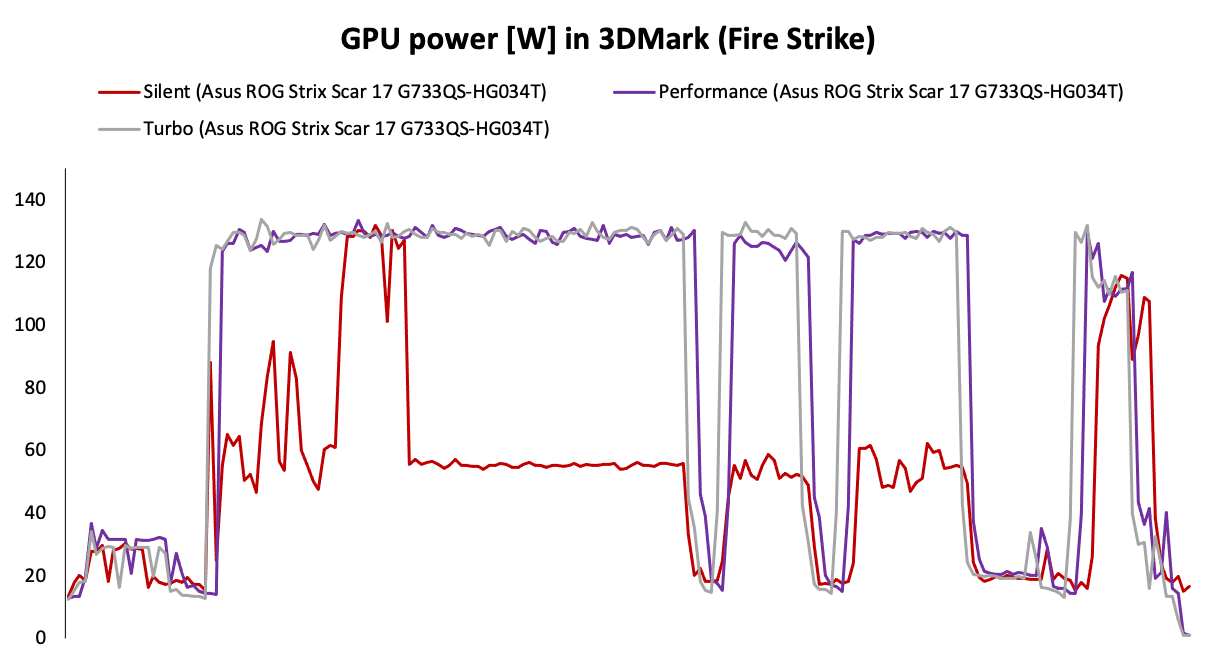
The same situation is with the GPU power consumption, again about half the consumption in Silent mode and slightly higher in Turbo compared to Performance.
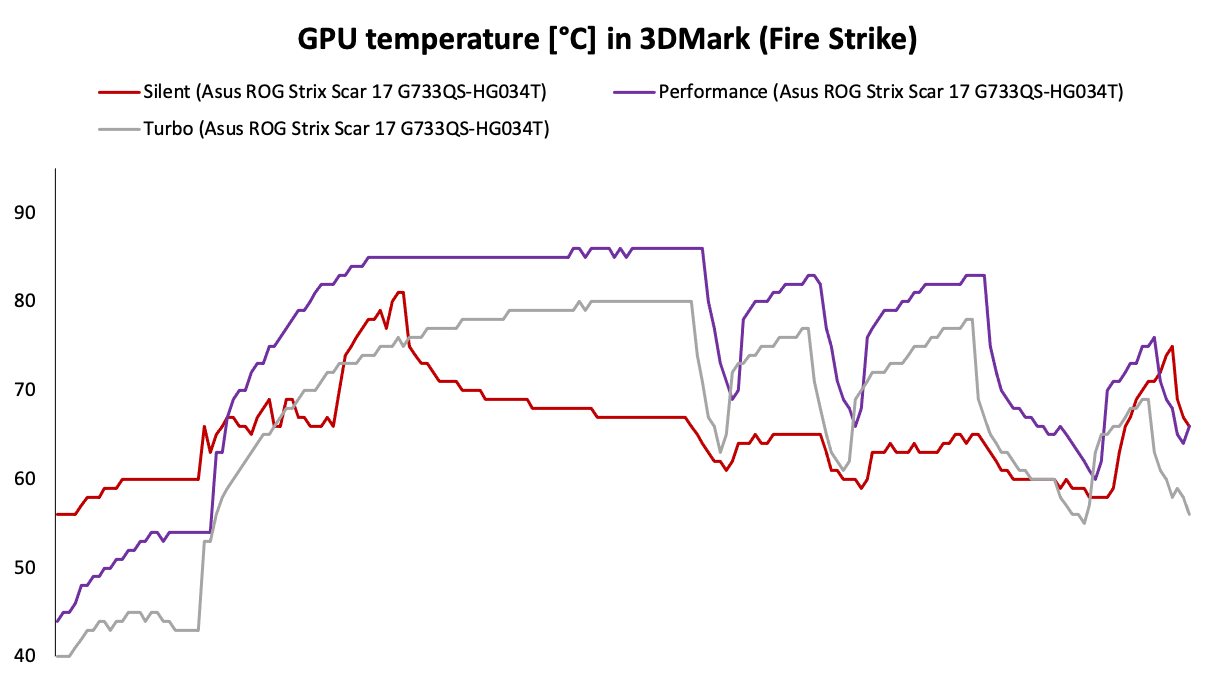
With the GPU temperatures, we see a similar scenario as with the processor temperatures. Due to lower clock and consumption in Silent mode, temperatures are also lower. Turbo again offers better results than Performance, for which the fan profile is likely responsible again.
The expectations according to the graph curves are as follows: the difference between Turbo and Performance will be minimal, while Silent will lag behind by about half. This was more or less confirmed in the final score. Only a 3% difference between Turbo and Performance is negligible, although higher noise is the reward for lower temperatures. Silent lags even more than I expected, by 70–75%.