




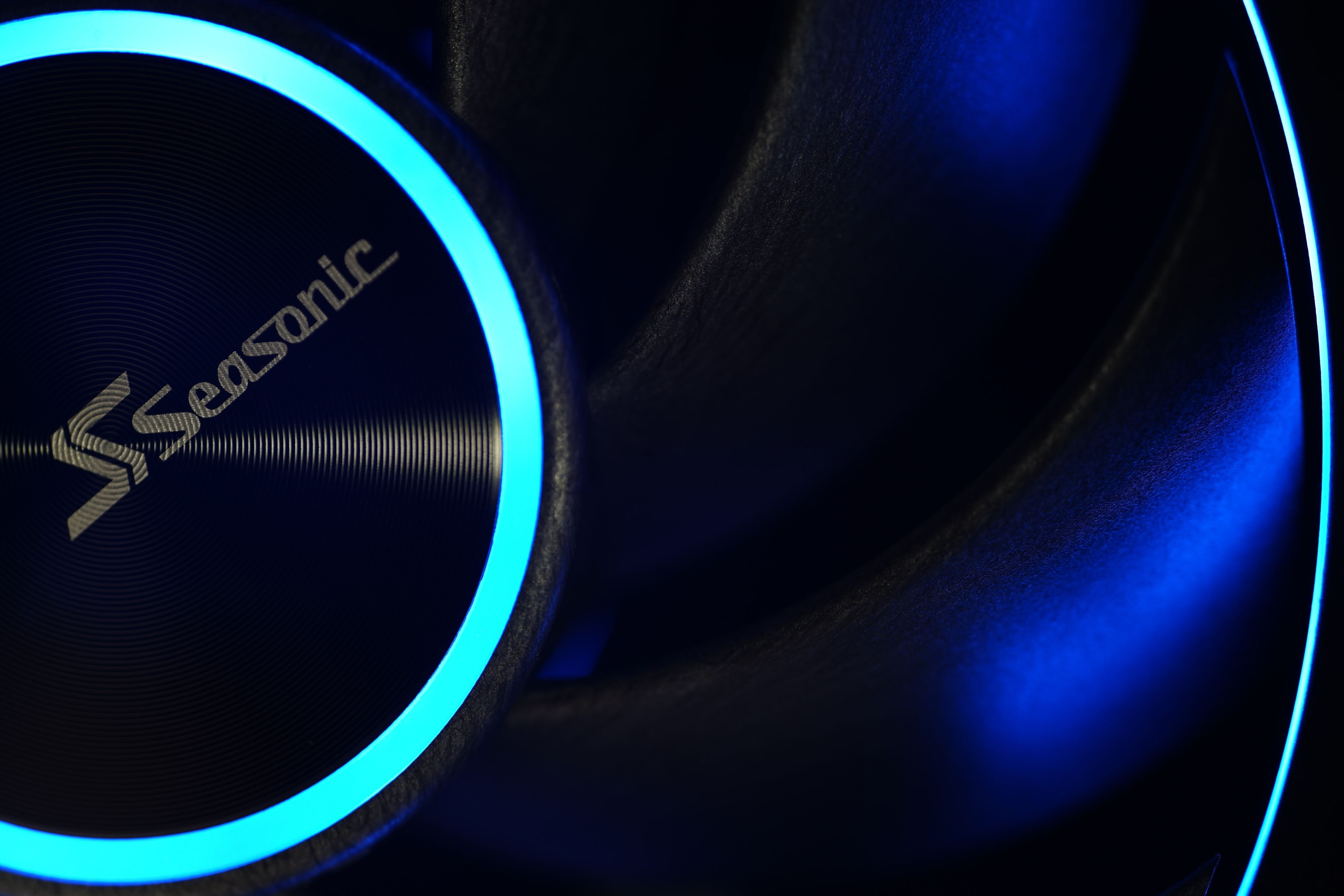
A concept in which an LCP impeller and ARGB LEDs meet is particularly rare. But it has enormous potential for achieving top-notch results. That is, as long as everything fits together optimally and there are no weak spots somewhere that increase the noise level. There are still a few things to tweak with the MagFlow ARGB fan, but already now, in its current form, it is a premium fan, and not only among lighted models.
How we measure power draw…
Is it worth addressing the power draw of fans? If you have seven of them in your computer (three on the radiator of the cooler and four for system cooling in the case) and they are also backlit, the power draw starts at tens of watts. This makes it worth dealing with.
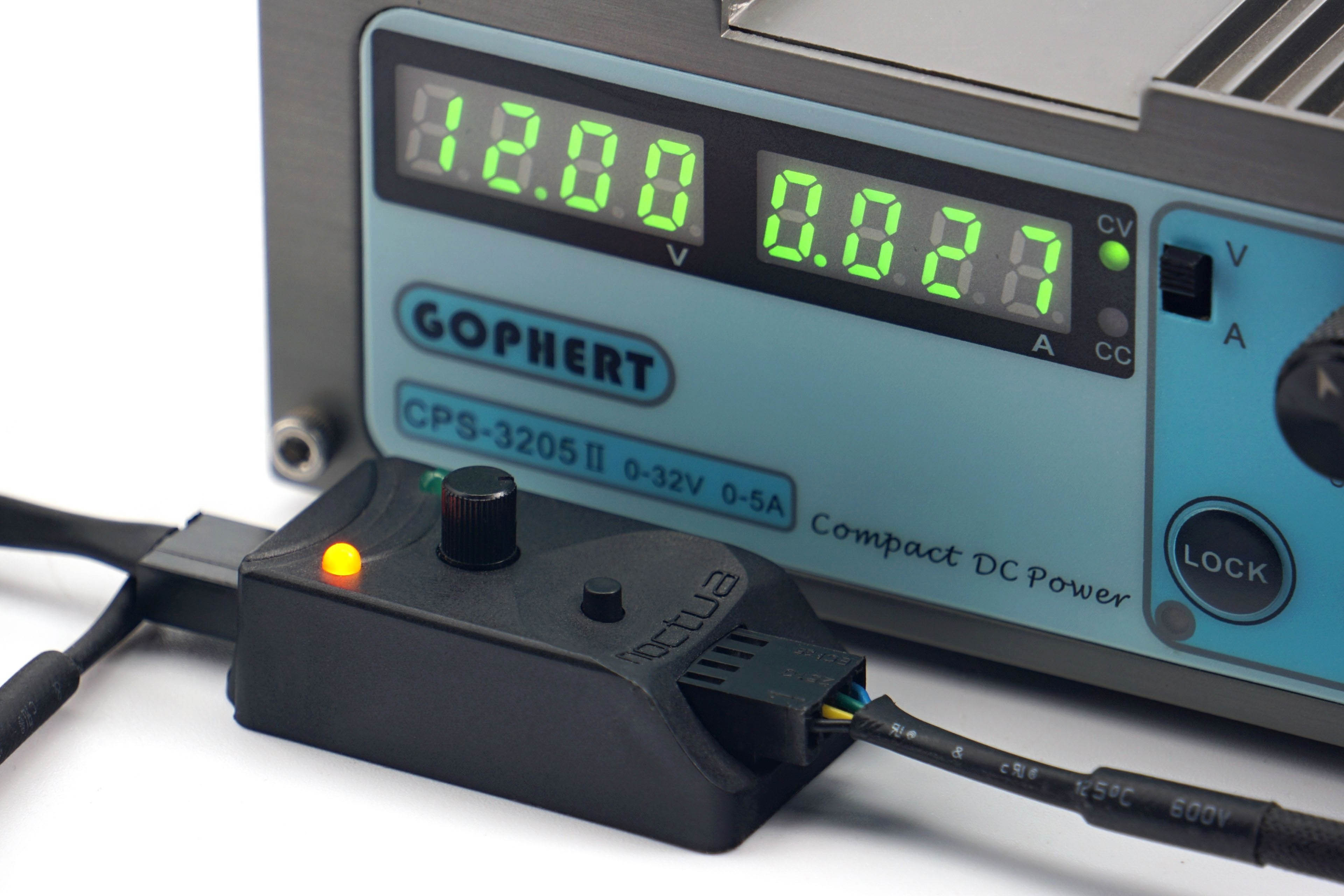
All fans are powered by Gophert CPS-3205 II laboratory power supply. It is passive and virtually noiseless, so it does not distort our noise level measurements. However, for the PWM fans, a Noctua NA-FC1 controller is connected through which the fans are regulated. We also have a shunt between the power supply and the Noctua controller. On it, we read the voltage drop, from which we then calculate the current. However, the voltage on the power supply is set so that 12 V goes to the Noctua NA-FC1. We then also set the exact 12 V to measure the maximum power of the 3-pin linear power supply fans.
In the power draw tests, we will be interested in the power draw in fixed noise level modes in addition to the maximum power consumption at 12 V or 100% PWM. That is, at those settings at which we also measure other parameters. Finally, in the graphs you will also find the power consumption corresponding to the start-up and minimum speeds. The difference between these two settings is that at start-up speed you need to overcome the frictional forces, so the power draw is always higher than at minimum speed. At these, the fan is already running and just reduces power to just before a level where it stops.

These start-up and minimum power draw data are a substitute for the start-up and minimum voltage information. You often encounter this when reading about fans, but with PWM fans there is no point in dealing with it. And although it is possible to power a PWM fan linearly, it will always perform better with PWM control – lower starting and minimum speeds. Therefore, it would be unfair to compare these parameters for all fans using linear control. That way, fans with PWM would be disadvantaged and the results distorted.
…and motor power
In addition to power draw, it is important to consider one more parameter that is related to the power supply – the power of the motor. This is usually listed on the back on a label and is often mistaken for power draw. However, the voltage and current indication here is usually not about power draw, but about the power of the motor. The latter must always be well above the operating power draw. The higher it is, the longer the life expectancy of the fan.
Over time and with wear, fan friction increases (through loss or hardening of the lubricant, dust contamination or abrasion of the bearings, etc.). However, a more powerful motor will overcome the deteriorating conditions of the fan to some extent, albeit at a higher power draw, but somehow it will cope. However, if the difference between the motor power and the operating power draw of a new fan is small, it may no longer be able to exert sufficient force to turn the impeller under increased friction due to adverse circumstances.

To test the power of the motor, we set the fan to full power (12 V/100 % PWM) and increase the mechanical resistance by braking the impeller in the middle. This is a higher load for the motor, with which the power draw naturally increases. But this is only up to a point, until the impeller stops. The power of the motor in our tests corresponds to the highest achieved power draw that we observed when the fan was being braked.
We use the Keysight U1231A high sample rate precision multimeters to analyse motor power (as well as normal operating power draw). In addition, the individual samples are recorded in a spreadsheet, from which we then graph the maximum. The final value is the average of three measurements (three maximums).




Hmm, that’s worse than I thought for an LCP fan with Gentle Typhoon-like rotor, only trading blows with the much cheaper Arctic P12 ARGB. Perhaps the impeller footprint is the main culprit here, alongside the motor and bearing.
Comparison with the Grand Tornado would be interesting, as they represent two extremes of impeller footprint while having similar blade geometry.
Yes. Thank you for the heads-up, we have added one more negative to the +/- table, namely that the vibrations at some speeds are higher than they could be for the standards of LCP fans. There is probably some imperfection at the level of the bearings, for which this happens in combination with this impeller.
I have no doubt that the impeller itself will be well aligned and the fault will be elsewhere. At the same time, it won’t be some random thing, as these fans behave identically across different samples. It’s hard to say where exactly the weak point is, but maybe it could be suppressed or compensated for in some way. For example with balancing inserts, like the Phanteks T30. And maybe they wouldn’t help at all, there’s probably no point in speculating here and you just have to accept the fact that the vibrations can sometimes be higher for an LCP fan than one would expect.
Still, this is only Seasonic’s second fan and I have no doubt that with each new one more and more flaws will be removed and eventually the result will be very positive. We gave them a tip for an “Arctic P12 with an LCP impeller”. Personally, I would be very interested to see how such a design, with a very precise build, would stand up to, for example, the NF-A2x25 or the T30. I guess it might not be a bad thing, since even the P12, with its noisier low frequencies, which could be significantly suppressed after blade stiffening, ends up at the top of the performance charts. The question is whether with a significantly heavier impeller the small hub could be retained, as it could probably cause some instability.