


Before Arctic transitions to its new, 7-blade fan design, let’s take a closer look at the one that has characterized the company for many years. And even though the 5-blade fans of the “P” series had certain shortcomings, they demonstrated just how efficient even low-cost designs can be. In the case of high-speed models, such as the tested P12 Max, they also show how far cooling performance can be pushed.
Measuring the intensity (and power consumption) of lighting
Modern fans often include lighting. This is no longer a “cooling” parameter, but for some users the presence of (A)RGB LEDs is important. Therefore, we also measure how intense this lighting is in our tests. These tests are the only ones that take place externally, outside the wind tunnel.
We record the luminosity of the fans in a chamber with reflective walls. This internal arrangement is important to increase the resolution for us to measure anything at all with lower luminosity fans. But also so that the readings do not blend together and it is obvious which fan is emitting more light and which one less.
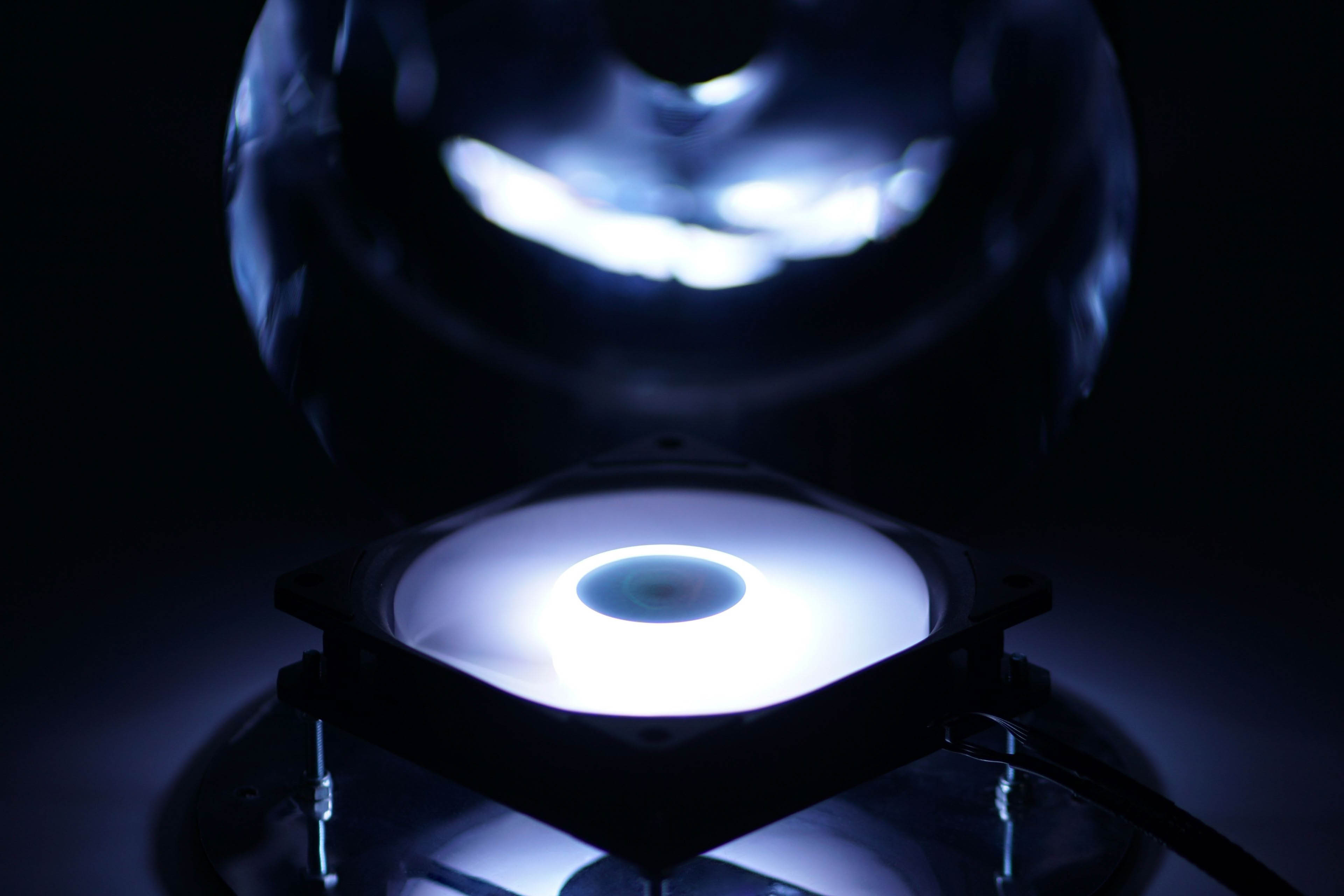
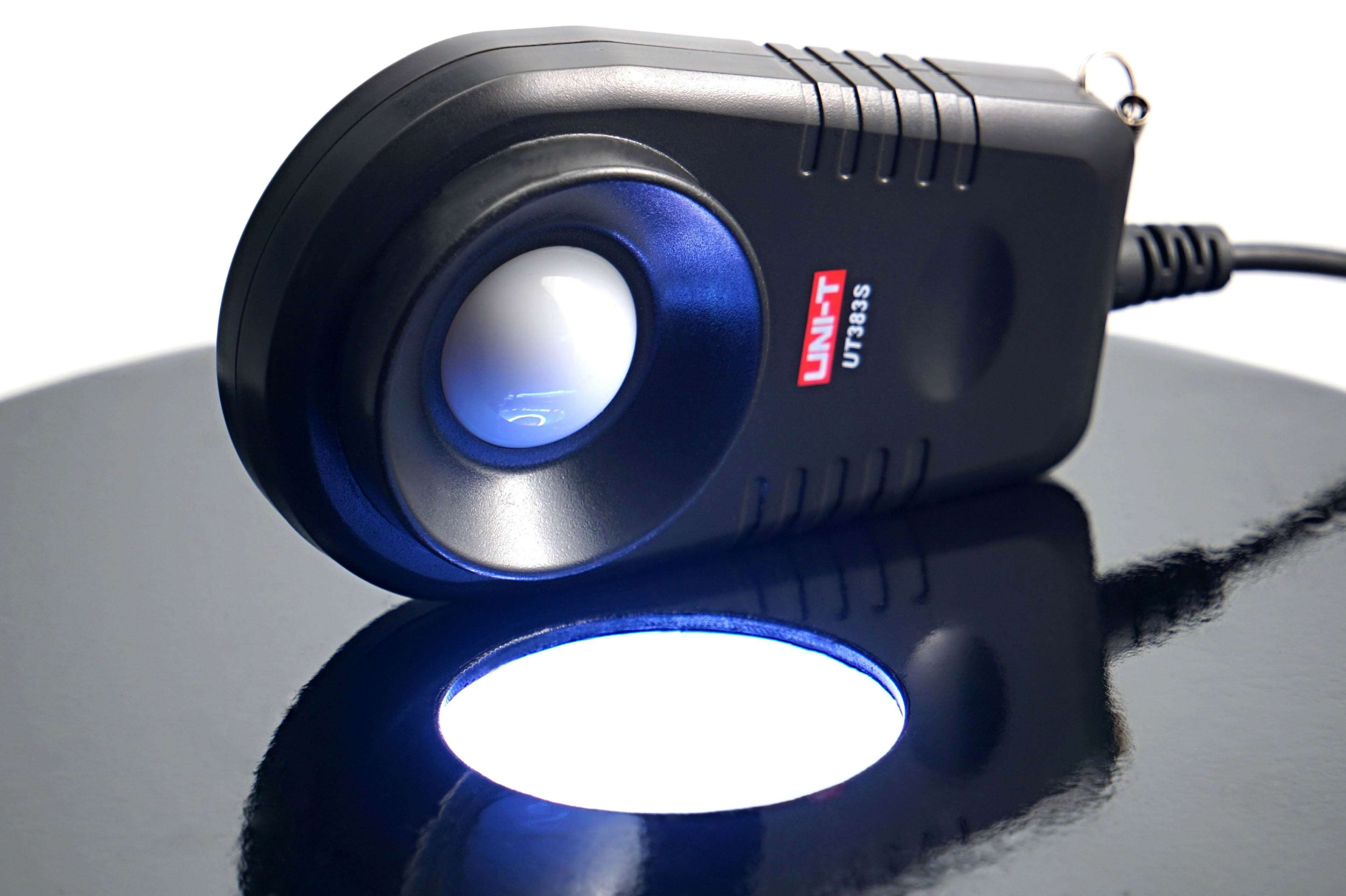
The illumination intensity is measured in the horizontal position of the fan, above which is the lux meter sensor (UNI-T UT383S). This is centered on the illumination intensity sensing chamber.
The illumination is controlled via an IR controller and the hue is set to RGB level 255, 255, 255 (white). We record the brightness at maximum and minimum intensity. According to this, you can easily see if the brightness is high enough, but conversely also if the lower level is low enough for you.
In addition to the brightness intensity, we also measure the power consumption that it requires. This is again through the shunt, which is between the Gophert CPS-3205 power supply and the (A)RGB LED driver. After this we get a reading of the lighting power consumption. In the graphs we show it separately, but also in sum with the motor power consumption as the total maximum fan power.



Overall quite similar behaviour (at same noise levels) vs the ARGB variant. Not too much compromise at lower speeds unlike the P14 Max, which is good to see.
One thing I just noticed is the different stator ribs compared to other fans in the Arctic P family. Now they’re thicker and straight (like many other fans) rather than thin and curved. This perhaps sacrifices a tiny amount of airflow but is needed for supporting the higher RPM and rotor weight.
Good point. The P12 Max fan is about 20 grams heavier than the P12 A-RGB. And it doesn’t even have any LEDs, which also add some weight. While we don’t know the exact difference in material density – since the P12 Max uses PBT for its rotor and the P12 A-RGB likely uses polycarbonate – there’s definitely some variation happening at that level too. 🙂
it seems the spam filter worked better with the older version… the Indonesian university bot seems pretty persistent (that’s the 3rd time I’ve noticed it) 😉
… I’m attaching the response to this thread so you don’t have a problem deleting it
so now, I’m really curious if there will be any answer 😀
…now you chose a different approach instead of deleting… we’ll see 😉
Are there more information regarding about this topic for us to research for? Thank you, Regard Telkom University
Is there any other information you’re interested in? Let us know, and we’ll do our best to provide whatever is within our capabilities. 🙂