


Before Arctic transitions to its new, 7-blade fan design, let’s take a closer look at the one that has characterized the company for many years. And even though the 5-blade fans of the “P” series had certain shortcomings, they demonstrated just how efficient even low-cost designs can be. In the case of high-speed models, such as the tested P12 Max, they also show how far cooling performance can be pushed.
Basis of the methodology, the wind tunnel
Before you start reading the methodology with all the details, take a look at the test tunnel as a whole. This is the heart of the whole system, to which other arteries are connected (manometer, vibrometer, powermeter, …). The only solid part of the tunnel from the measuring instruments is the anemometer.
The shape of the wind tunnel is inspired by the Venturi tube, which has long been used to measure the flow of liquids and gasses. The Venturi effect for wind speed measuring is also known from the aerospace industry. However, the design for measuring computer fans has its own specificities, which this proposal of ours reflects.
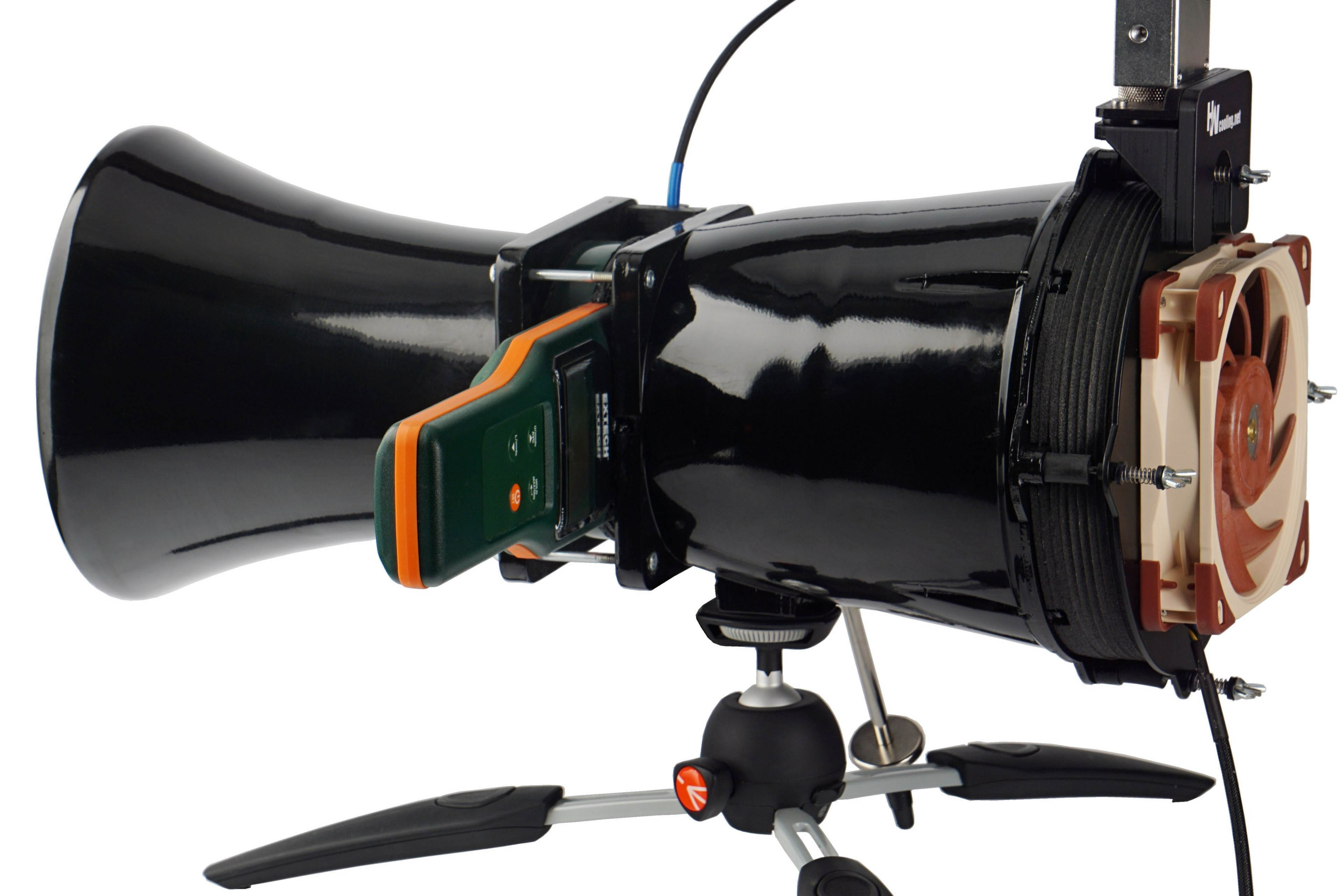
The individual parameters of the HWC wind tunnel for fan tests are the result of physical simulations and practical debugging. All the details (folds, material or finish used) have a rationale behind them and are designed this way for a specific reason. We will discuss the individual design details in turn in the description of the sub-variable measurements.
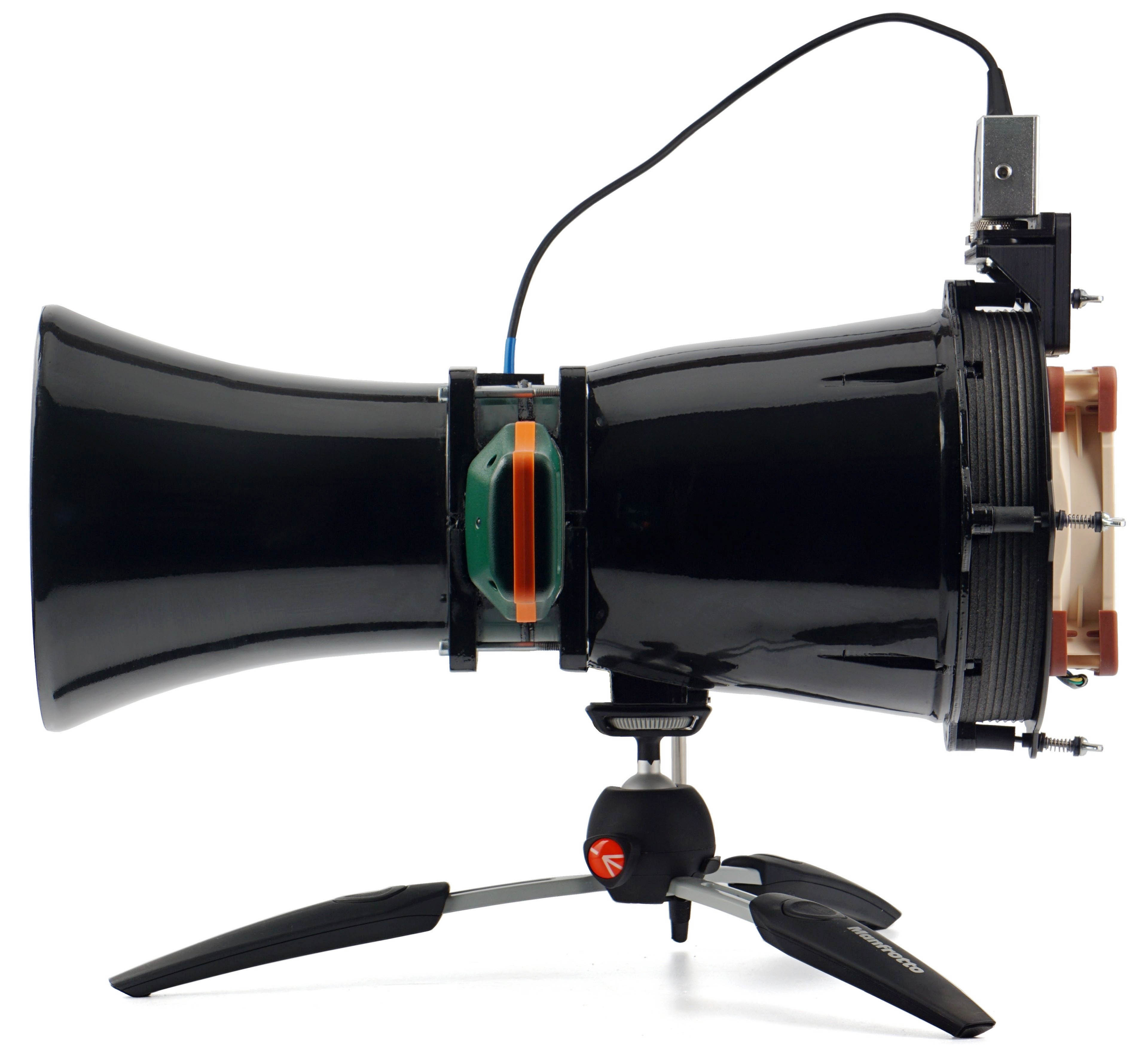
Now we will briefly elaborate on some things that do not fit thematically into the text of the following chapters. Namely, for example, that the skeleton of the wind tunnel is the work of a 3D printer (PLA). The rough print was, of course, then thoroughly machined by grinding, fusing, polishing and varnishing. Especially important is the smooth finish of the interior walls.
When joining the individual parts, the emphasis was on making sure that they fit together flawlessly, that they were sealed flawlessly (we will come back to this when we describe the test procedures for pressure measurement), but also that the joints were not loosened by use. Everything is disassemblable for servicing purposes, but it is ensured that the properties are maintained during use and, for example, even under the stress of vibration. The threads are secured with either lock nuts or thread-locking fluid. It depends on which is more suitable in which place.
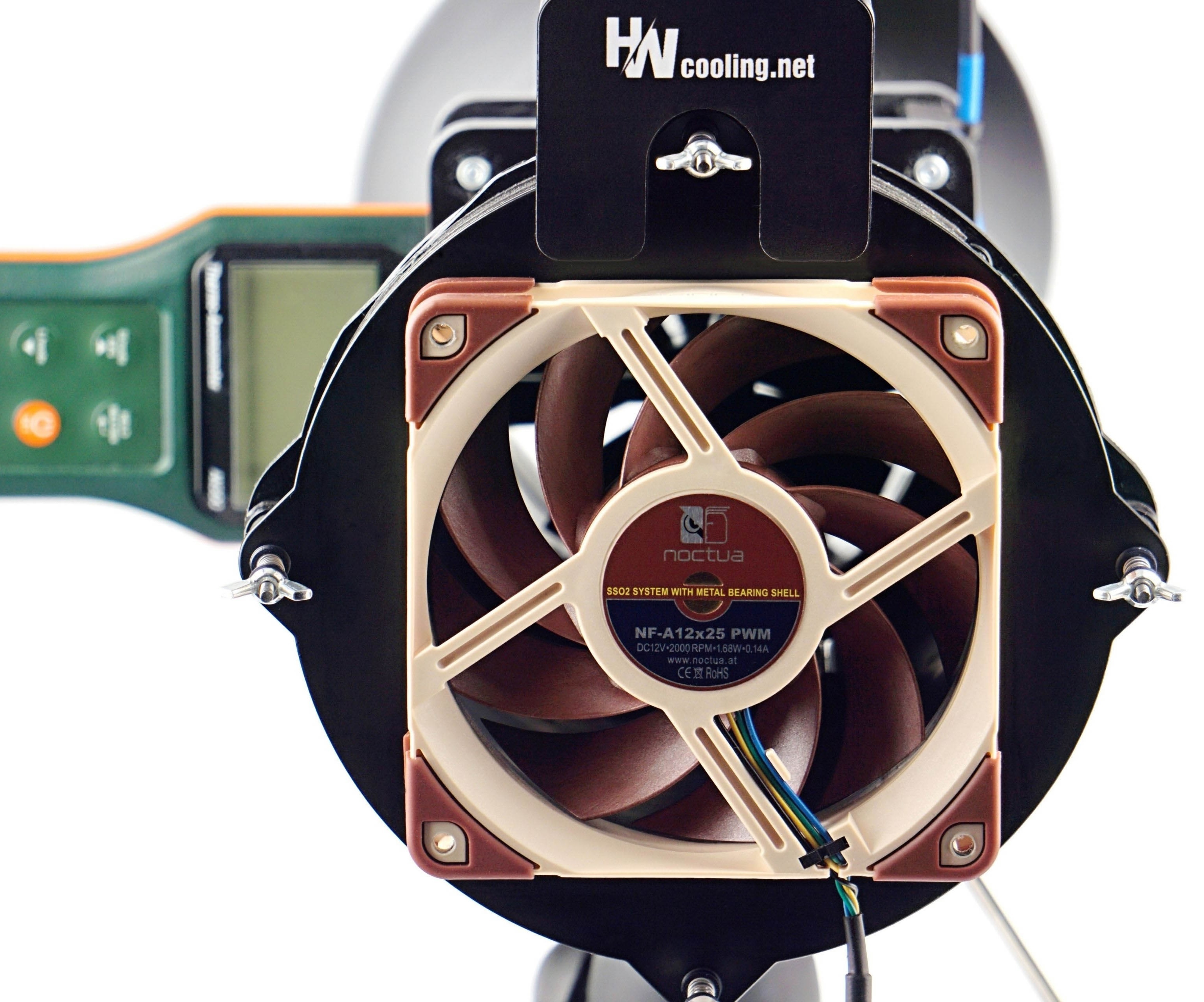
When the wind tunnel is not in use, it is enclosed in a dust-tight chamber. In addition to the technical equipment and its correct storage, it is also important for objective outputs that all measuring instruments are calibrated according to the standard. Without this, it would be impossible to stand behind your results and rely on the manufacturers’ specifications. Calibration protocols are therefore an important part of the methodology. Testing is carried out at an ambient air temperature of 21–21.3 °C, humidity is approximately 45 % (± 2 %).
Fans come to us for testing in at least two pieces of the same model. If the deviations of any of the measured values are greater than 5 %, we also work with a third or fourth sample and the average value is formed by the results of the fans that came out the most similar and the differences between them fit under 5 %.




Overall quite similar behaviour (at same noise levels) vs the ARGB variant. Not too much compromise at lower speeds unlike the P14 Max, which is good to see.
One thing I just noticed is the different stator ribs compared to other fans in the Arctic P family. Now they’re thicker and straight (like many other fans) rather than thin and curved. This perhaps sacrifices a tiny amount of airflow but is needed for supporting the higher RPM and rotor weight.
Good point. The P12 Max fan is about 20 grams heavier than the P12 A-RGB. And it doesn’t even have any LEDs, which also add some weight. While we don’t know the exact difference in material density – since the P12 Max uses PBT for its rotor and the P12 A-RGB likely uses polycarbonate – there’s definitely some variation happening at that level too. 🙂
it seems the spam filter worked better with the older version… the Indonesian university bot seems pretty persistent (that’s the 3rd time I’ve noticed it) 😉
… I’m attaching the response to this thread so you don’t have a problem deleting it
so now, I’m really curious if there will be any answer 😀
…now you chose a different approach instead of deleting… we’ll see 😉
Are there more information regarding about this topic for us to research for? Thank you, Regard Telkom University
Is there any other information you’re interested in? Let us know, and we’ll do our best to provide whatever is within our capabilities. 🙂